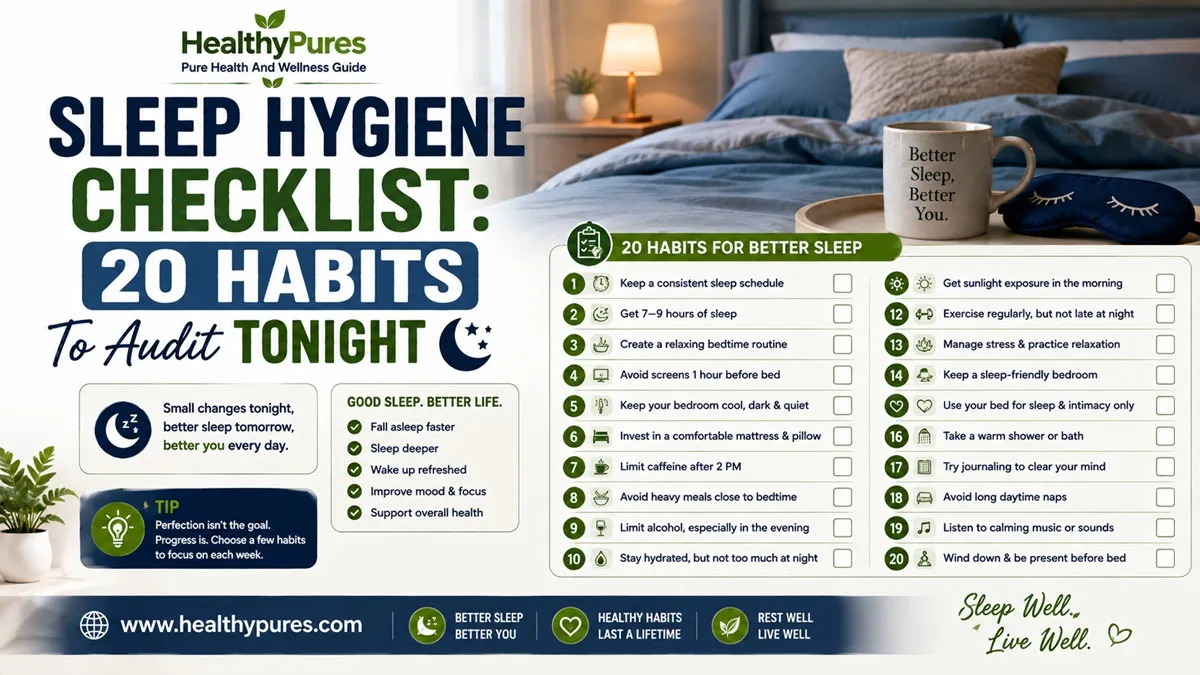
Achieving consistent, restful sleep is crucial for overall well-being. Many factors influence sleep quality, from daily habits to your immediate sleep environment. Establishing a robust sleep-wake cycle helps regulate your body’s natural rhythms.
Our team at Healthy Pures understands the impact of poor sleep. This comprehensive guide offers a practical sleep hygiene checklist with 20 actionable habits. These steps can help you audit and improve your nightly routine.
Quick Summary
- Prioritize a consistent sleep schedule, even on weekends.
- Optimize your bedroom environment to be dark, quiet, and cool.
- Limit caffeine, alcohol, and heavy meals several hours before bedtime.
- Integrate relaxation techniques into your evening wind-down routine.
Quick Facts
| Aspect | Details |
|---|---|
| Definition | Practices and habits necessary for good sleep quality. |
| Key Goal | To promote restorative sleep and reduce sleep disturbances. |
| Benefits | Improved mood, focus, energy, and overall health. |
| Components | Environment, daily habits, evening routines. |
| Timeline | Improvements can be seen in a few days to weeks. |
Who This Guide Is For
- ✔ Adults experiencing occasional sleeplessness who need a practical sleep hygiene checklist.
- ✔ People who want to improve their bedroom environment and evening routine.
- ✔ Readers seeking a structured approach to more consistent rest.
- ✔ Anyone interested in practical, sustainable sleep habits.
What Is Sleep Hygiene?
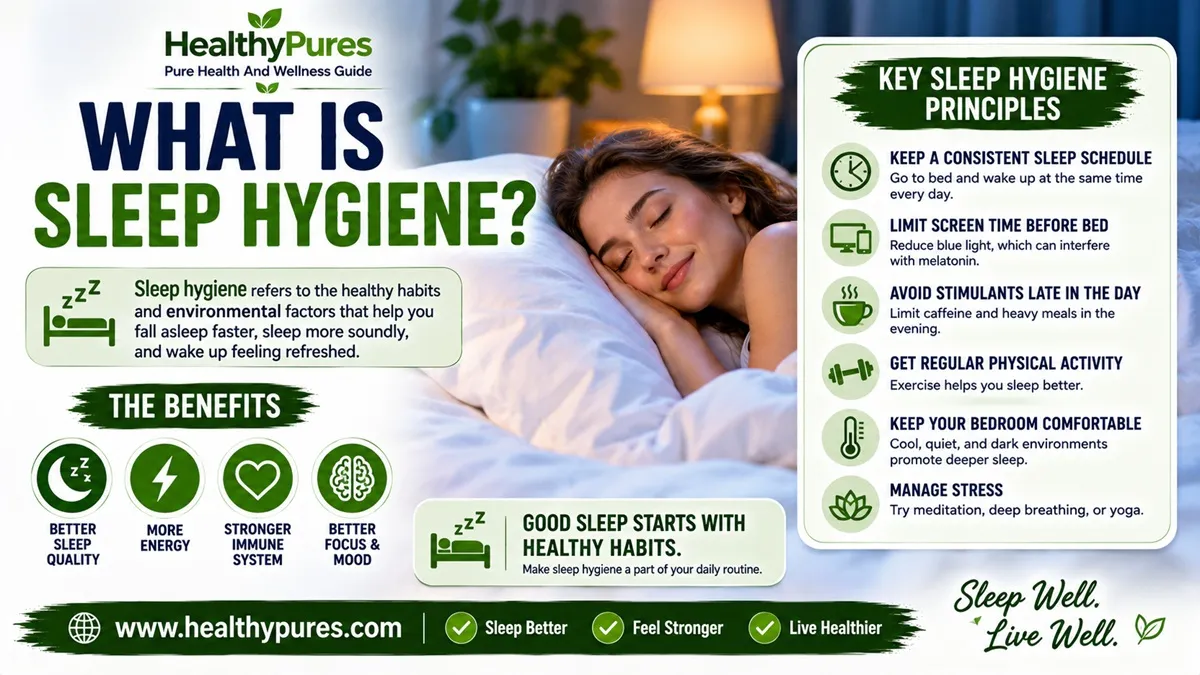
Sleep hygiene refers to practices essential for good sleep. It involves creating a conducive environment. Daily routines also support restorative sleep, forming a strong sleep hygiene checklist.
Good sleep hygiene can significantly improve how well you rest. It addresses factors promoting healthy sleep patterns. This sleep hygiene checklist tackles disruptions.
Why Is Sleep Hygiene Important?
Quality sleep is foundational for physical and mental health. Poor sleep hygiene can lead to fatigue, irritability, and decreased cognitive function.
Consistent sleep allows your body to repair and rejuvenate. It supports your immune system, mood regulation, and cognitive performance.
Creating Your Ideal Sleep Environment
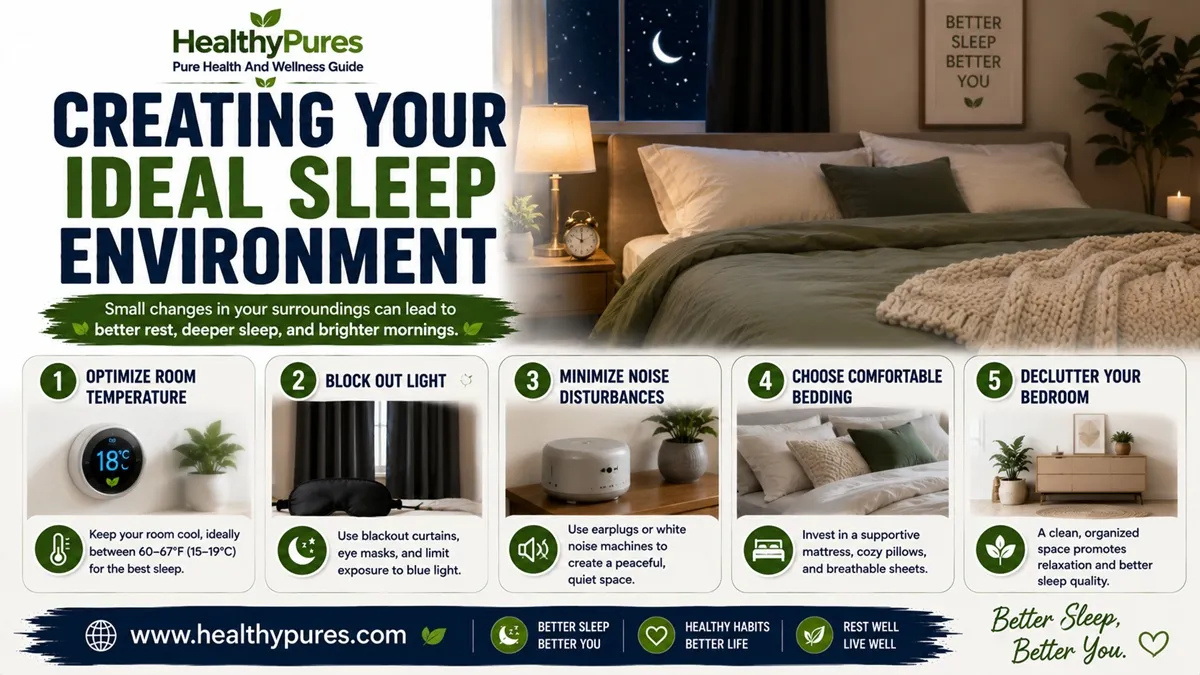
Your bedroom should be a sanctuary for sleep. Optimizing this space is a critical part of any effective sleep hygiene checklist.
1. Optimize Room Temperature
A cool room promotes better sleep. Many people prefer 60-67 degrees Fahrenheit (15-19 degrees Celsius). Add your preferred range to the sleep hygiene checklist.
Adjust your thermostat for comfort. An overly warm room disrupts sleep cycles. Checking this is vital for sleep hygiene.
2. Block Out Light
Darkness signals melatonin production. Use blackout curtains or an eye mask. This simple step improves sleep hygiene.
Even small amounts of light can interfere with your natural circadian rhythm. Ensure your room is as dark as possible.
3. Minimize Noise Disturbances
A quiet environment is crucial for uninterrupted sleep. Consider earplugs or a white noise machine. This supports excellent sleep hygiene.
Sudden noises can prevent falling asleep. Create a peaceful soundscape for your bedroom. This greatly enhances your sleep hygiene.
4. Choose Comfortable Bedding
Your sleep hygiene checklist should include mattress, pillow, and sheet comfort. Choose bedding that supports your body and preferred sleeping position.
Your bedding should be clean and allow for proper temperature regulation. Replace old, worn-out items when necessary.
5. Declutter Your Bedroom
A tidy, organized bedroom can promote a calm mind. Remove work-related items, electronics, and clutter that cause stress.
Keep your bedroom reserved primarily for sleep and relaxation. This helps your brain associate the space with rest.
Healthy Pures Expert Tip
Consider a pre-bedtime airflow check to ensure your bedroom is well-ventilated and not stuffy.
Evening Routines For Better Sleep
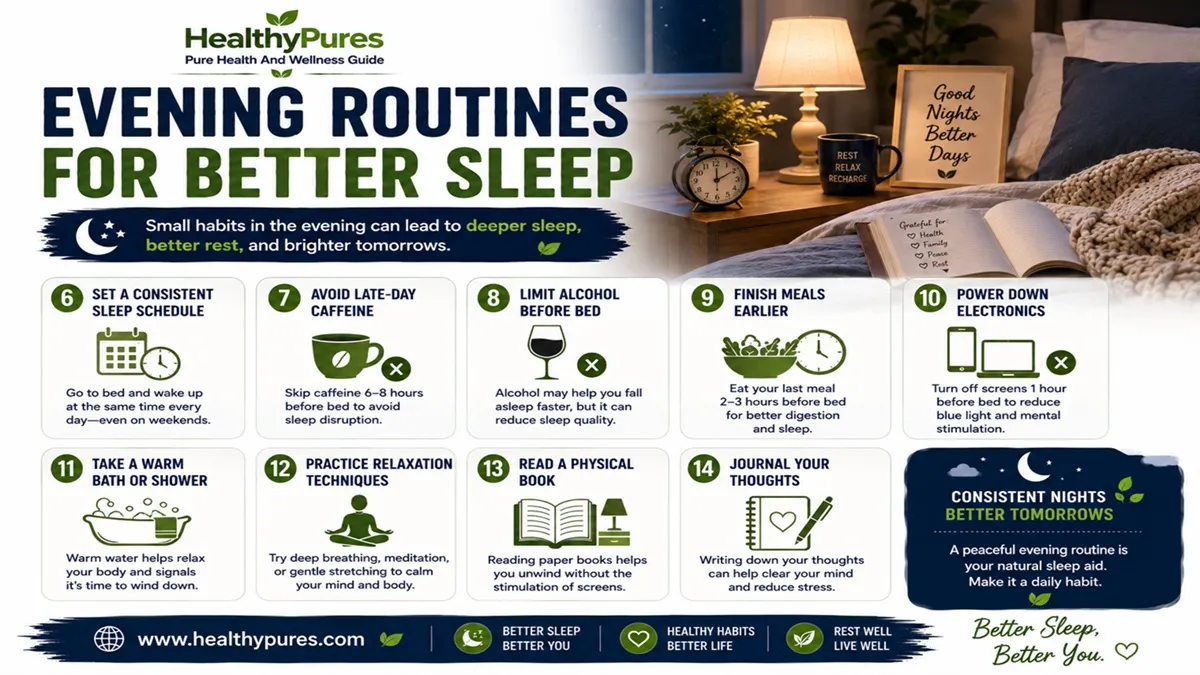
The hours leading up to bedtime significantly influence sleep quality. Establishing a consistent evening routine is a key component of your sleep hygiene checklist.
For additional guidance, read our Healthy Evening Routine For Better Sleep & Less Stress.
6. Set A Consistent Sleep Schedule
A useful sleep hygiene checklist begins with consistent sleep and wake times. Follow the schedule every day, including weekends.
Consistency trains your body for optimal sleep and waking. It reinforces healthy sleep patterns over time.
7. Avoid Late-Day Caffeine
Caffeine is a stimulant that can stay in your system for many hours. Avoid coffee, tea, and energy drinks at least 6-8 hours before bed.
Even a small amount of caffeine can disrupt sleep architecture. It may prevent you from reaching deeper sleep stages.
8. Limit Alcohol Before Bed
While alcohol may initially induce drowsiness, it fragments sleep later in the night. It also interferes with REM sleep, which is vital for cognitive function.
Your sleep hygiene checklist should include an alcohol cutoff several hours before bedtime. For more information, visit our 5 Worst Foods For Sleep Quality To Avoid.
9. Finish Meals Earlier
Eating large or heavy meals close to bedtime can lead to indigestion. This discomfort can make it difficult to fall asleep.
Aim to finish your last significant meal at least 2-3 hours before sleep. If hungry, opt for a light, easily digestible snack.
10. Power Down Electronics
The blue light emitted from screens can suppress melatonin production. Turn off phones, tablets, and computers at least an hour before bed.
Engaging with stimulating content can also keep your mind active. This makes it harder to transition into a relaxed state.
11. Take A Warm Bath Or Shower
A warm bath or shower can help you relax before bed. The subsequent drop in body temperature after exiting the water can promote sleepiness.
This simple ritual can signal that it is time to wind down. Keep the routine comfortable, simple, and consistent.
12. Practice Relaxation Techniques
Add one realistic relaxation technique to your sleep hygiene checklist. Options include deep breathing, meditation, or gentle stretching.
Relaxation practices can reduce stress and prepare your mind for sleep. They help ease the transition from wakefulness to rest.
13. Read A Physical Book
Reading a physical book can be a calming pre-sleep activity. Avoid engaging with stimulating content that might keep your mind awake.
The act of reading can shift your focus away from daily worries. Choose light fiction or non-fiction for best results.
14. Journal Your Thoughts
If your mind races with worries, try journaling before bed. Write down concerns, to-do lists, or positive reflections.
This practice can help clear your mind. It allows you to process thoughts outside of your bed.
Daytime Habits Affecting Nighttime Rest
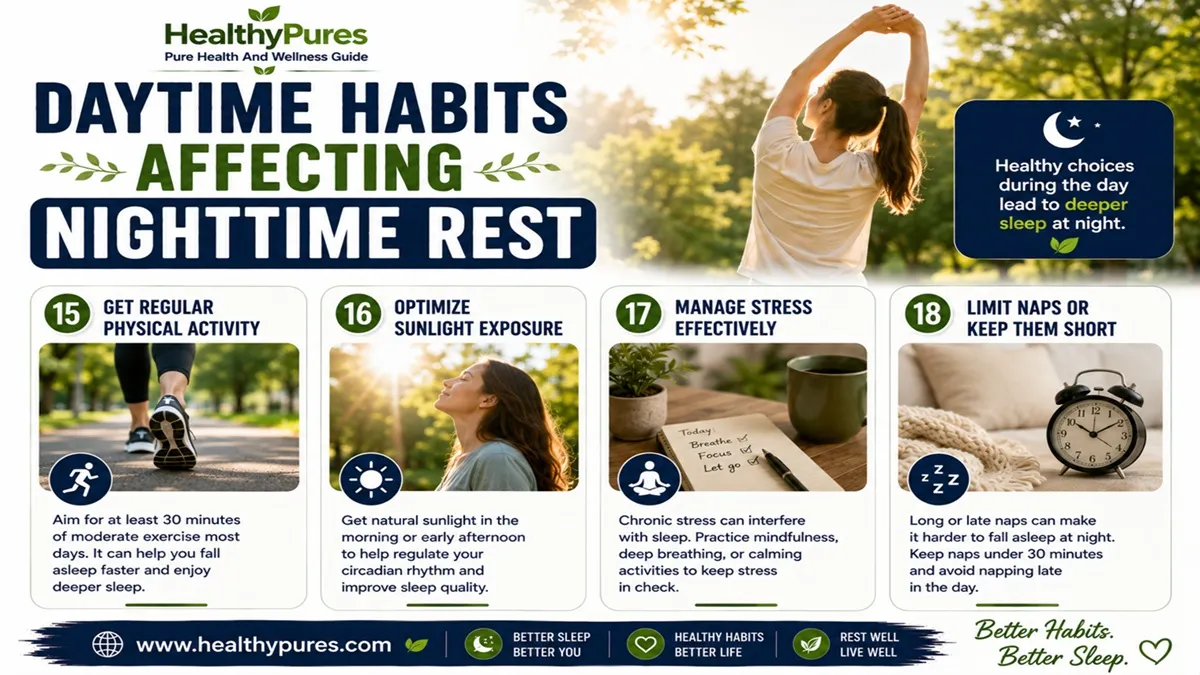
Your choices during the day have a direct impact on your ability to sleep at night. Integrating these into your sleep hygiene checklist is essential.
15. Get Regular Physical Activity
A complete sleep hygiene checklist also considers daytime movement. Aim for at least 30 minutes of moderate activity most days.
However, avoid intense workouts too close to bedtime. Vigorous exercise can be stimulating and make it harder to fall asleep.
16. Optimize Sunlight Exposure
Exposure to natural light, especially in the morning, helps regulate your circadian rhythm. It signals to your body that it’s daytime.
Try to get outside for at least 15-30 minutes early in the day. This helps anchor your sleep-wake cycle.
Healthy Pures Pro Tip
Consider a blue light filtering app for any electronics you absolutely must use in the evening hours.
17. Manage Stress Effectively
Add a practical stress-management habit to your sleep hygiene checklist. Consider yoga, meditation, or time in nature.
Addressing your stress can significantly improve sleep quality. Persistent worries can keep your mind active and alert.
18. Limit Naps Or Keep Them Short
While short power naps can be beneficial, long or late-day naps can disrupt nighttime sleep. They can reduce your body’s natural sleep drive.
If you must nap, keep it to 20-30 minutes and take it early in the afternoon. This helps maintain your nighttime sleep schedule.
Common Sleep Hygiene Mistakes To Avoid
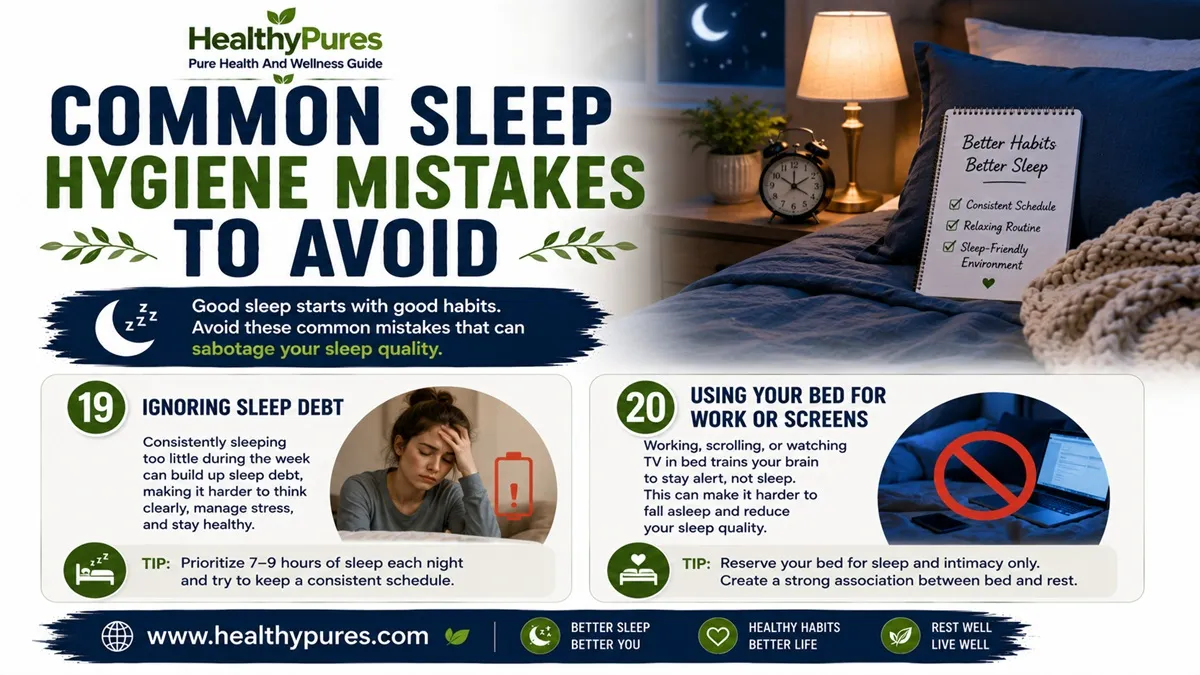
Even with good intentions, some habits can inadvertently sabotage your sleep. Review these common pitfalls on your sleep hygiene checklist.
19. Ignoring Sleep Debt
Consistently getting less sleep than your body needs creates “sleep debt.” This deficit can lead to chronic fatigue and impaired function.
While catching up on sleep is difficult, aim for consistent adequate sleep. Prioritize enough rest each night to avoid accumulating debt.
20. Using Your Bed For Work Or Screens
Your brain should associate your bed solely with sleep and intimacy. Working, watching TV, or using your phone in bed weakens this association.
Move all stimulating activities out of the bedroom. This reinforces the idea that your bed is a place for rest.
When To See A Doctor
While a sleep hygiene checklist can be very effective, sometimes professional help is needed. Consider seeing a doctor if you experience chronic sleep issues.
Seek medical advice for persistent insomnia, excessive daytime sleepiness, or loud snoring. These symptoms might indicate an underlying sleep disorder.
A healthcare professional can diagnose conditions like sleep apnea or restless legs syndrome. They can also provide personalized treatment plans.
Frequently Asked Questions About Sleep Hygiene
How Long Does It Take For Sleep Hygiene To Work?
Improvements can often be noticed within a few days or weeks. Consistency is key for establishing new, healthier sleep patterns.
It may take longer for some individuals to see significant results. Patience and persistence are important.
Can Poor Sleep Hygiene Cause Health Problems?
Yes, prolonged poor sleep hygiene can contribute to various health issues. These include weakened immunity, weight gain, and increased risk of chronic diseases.
It can also impact mental health, leading to mood swings or heightened stress. Prioritizing good sleep hygiene is a preventative measure.
Is It Okay To Nap If I Have Poor Sleep Hygiene?
While short power naps can offer a temporary boost, long or late-day naps can worsen poor sleep hygiene. They might reduce your drive to sleep at night.
Use your sleep hygiene checklist consistently before changing several habits together. Then, evaluate whether short, early afternoon naps remain helpful.
What Is The Best Temperature For Sleep?
The optimal temperature for sleep is typically between 60 and 67 degrees Fahrenheit (15-19 degrees Celsius). This range helps facilitate the body’s natural drop in core temperature during sleep.
Should I Avoid All Screens Before Bed?
Our team recommends avoiding screens for at least an hour before bedtime. The blue light from screens can disrupt melatonin production. This can make it harder to fall asleep.
For additional guidance, read our 7 Effective Sleep Care Tips To Improve Sleep Quality.
Prioritizing Your Rest
Implementing a comprehensive sleep hygiene checklist can transform your nights. Consistent effort in these areas leads to better sleep quality. Prioritize these habits to support your overall health and vitality.
Just a friendly reminder from our team: Because health needs vary from person to person, these wellness tips are meant to support your lifestyle but do not replace professional medical advice. Feel free to explore our full Medical Disclaimer for more details!