Busy days can make smart snacking feel harder than it should. High fiber snacks can add more fiber without turning every break into a meal-prep project. This guide gives you 20 practical choices for work and home, plus simple ways to choose and portion them.
Fiber needs vary by age, sex, calorie needs, and health status.
Current U.S. guidance gives a Daily Value of 28 grams. NIDDK notes that many adults need about 22 to 34 grams daily. High fiber snacks can make that target easier to work toward.
FDA fiber label guidance and NIDDK fiber guidance support gradual increases and adequate fluids.
Quick Summary
- Choose whole foods such as fruit, legumes, vegetables, oats, nuts, and seeds when practical.
- Use portion size and the Nutrition Facts label to compare packaged options.
- Increase fiber gradually if your current intake is low, and drink enough fluids.
- Mix fiber sources across the day instead of relying on one food every day.
Quick Facts
| Aspect | Details |
|---|---|
| Daily Value | FDA lists 28 grams of dietary fiber per day on Nutrition Facts labels. |
| Adult Range | NIDDK lists about 22 to 34 grams daily for adults, depending on age and sex. |
| Best Sources | Fruits, vegetables, whole grains, legumes, nuts, and seeds are practical sources. |
| Packaged Foods | Compare fiber grams, serving size, sodium, added sugars, and the ingredient list. |
| Comfort Tip | Add fiber gradually and maintain adequate fluid intake. |
Who This Guide Is For
- ✔ Adults who want easier ways to add fiber between meals.
- ✔ People packing snacks for an office, commute, or workday.
- ✔ Home snackers who want practical fruit, legume, grain, nut, and seed options.
- ✔ Anyone comparing packaged snacks with less processed choices.
Why High Fiber Snacks Can Be Useful
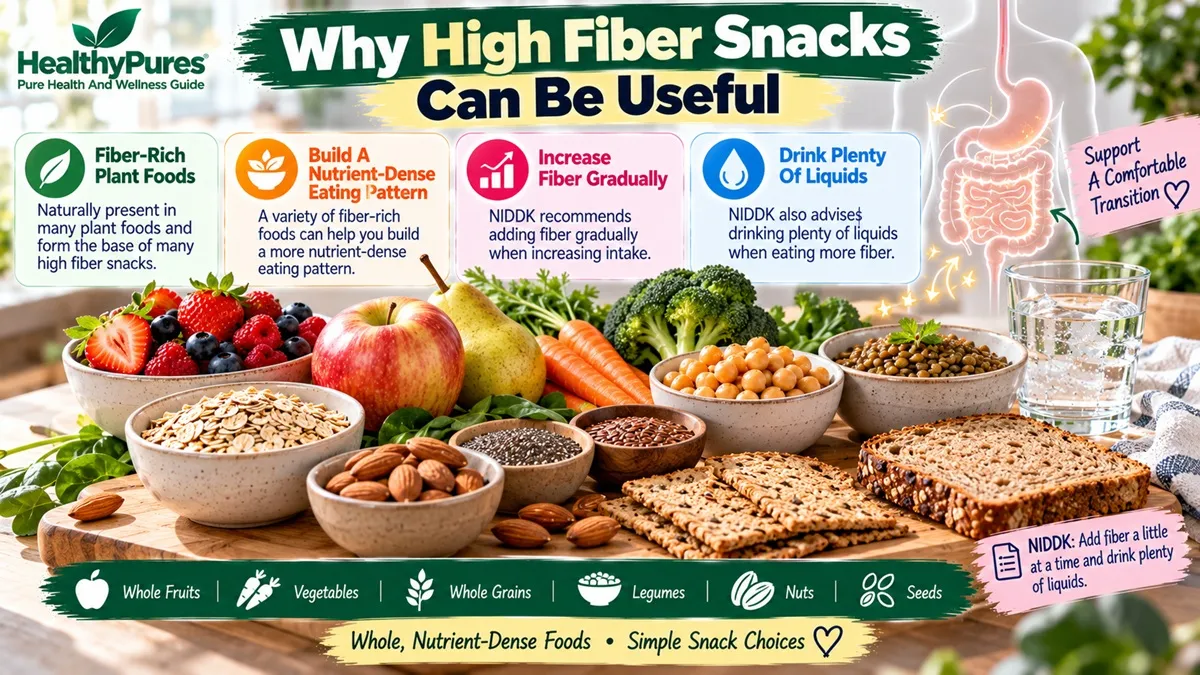
Fiber is a type of carbohydrate that the body does not fully digest. It is naturally present in many plant foods. These foods form the base of many high fiber snacks. Eating a variety of fiber-rich foods can help you build a more nutrient-dense eating pattern.
NIDDK recommends adding fiber gradually when increasing intake. It also advises drinking plenty of liquids when eating more fiber. These steps can help reduce the chance of temporary digestive discomfort.
The current Dietary Guidelines for Americans emphasize whole, nutrient-dense foods. They include fruits, vegetables, whole grains, legumes, nuts, seeds, and other minimally processed choices. Current Dietary Guidelines provide the broader framework.
20 Easy High Fiber Snacks For Work And Home
Use the snapshot below to compare the options before choosing one. Fiber values are approximate because food size, recipe, preparation, and brand can change the final amount. This makes the high fiber snacks list easier to scan.
Important: This list includes fiber-forward snack combinations. Not every option reaches the FDA definition of a food that is “high” in fiber. On Nutrition Facts labels, 20% Daily Value or more is generally considered high for a nutrient.
High Fiber Snacks: 20-Option Fiber Snapshot
| Snack | Practical Serving | Approx. Fiber | Best Fit |
|---|---|---|---|
| 1. Apple With Nut Butter | 1 small or medium apple + 1 tbsp nut butter | About 4–5 g | Desk, commute |
| 2. Raspberries Or Blackberries With Greek Yogurt | 1 cup berries + 1/2 cup yogurt | About 7–8 g | Sweet, refrigerated |
| 3. Edamame | 1/2 cup shelled | About 4 g | Savory, refrigerated |
| 4. Air-Popped Popcorn | 3 cups popped | About 3.5–4 g | Shelf-stable |
| 5. Whole-Grain Crackers With Hummus | Crackers + 2–4 tbsp hummus | About 2–4 g | Desk, refrigerated |
| 6. Chia Seed Pudding | 1 tbsp chia in a small pudding | About 4 g | Make-ahead |
| 7. Roasted Chickpeas | 1/2 cup cooked chickpeas | About 6 g | Savory, portable |
| 8. Pear With Almonds | 1 medium pear + small handful almonds | About 7 g | Portable |
| 9. Vegetable Sticks With Guacamole | Vegetables + several tbsp guacamole | About 2–5 g | Fresh, refrigerated |
| 10. Oatmeal With Berries And Seeds | 1/2 cup dry oats + toppings | About 6–9 g | Warm, make-ahead |
| 11. Small Lentil Soup | 1/2 cup | About 7–8 g | Warm, substantial |
| 12. Prunes Or Dried Apricots | Small serving | About 2–4 g | Shelf-stable |
| 13. Whole-Wheat Toast With Avocado | 1 slice + 1/2 avocado | About 6–8 g | Mini-meal |
| 14. Cottage Cheese With Ground Flaxseed | 1/2 cup cottage cheese + 1 tbsp flax | About 2 g | Refrigerated |
| 15. Hard-Boiled Egg With Spinach | 1 egg + 1 cup raw spinach | Under 1 g | Protein-focused snack |
| 16. Quinoa Salad Cup | About 1/2 cup cooked quinoa + vegetables | About 3–4 g | Make-ahead |
| 17. Black Bean Dip With Bell Peppers | Several tbsp dip + peppers | About 4–8 g | Savory |
| 18. Whole-Grain Fig Bar | 1 bar | Usually about 2–4 g | Portable |
| 19. Roasted Sweet Potato Chunks | About 1 medium sweet potato | About 4 g | Make-ahead |
| 20. Artichoke Hearts | About 1/2 cup drained | About 3–4 g | Savory, refrigerated |
These estimates are intended for comparison, not as laboratory-verified values for a specific recipe or brand. USDA FoodData Central provides food-composition data across multiple food types, while packaged foods should be checked against their own Nutrition Facts labels. USDA FoodData Central
How To Use The Fiber Snapshot
Use this comparison when choosing high fiber snacks for a specific setting, not as a rigid daily prescription.
Look for the snack that fits your setting first. Then check its portion and approximate fiber contribution.
For example, berries and yogurt work well from a refrigerator. Popcorn and whole fruit travel more easily without special preparation.
For packaged foods, treat the table as a guide only. The package label is the more precise source for that product.
The amounts below are practical serving ideas, not mandatory prescriptions. Fiber values can vary with food size, preparation, brand, and exact portion. Use package labels when a packaged product is involved.
Options 1–5: Fast, Familiar Choices

1. Apple Slices With Nut Butter
Pack: Slice one small or medium apple and pair it with 1 to 2 tablespoons of peanut or almond butter.
This is an easy choice among high fiber snacks for a workday.
Why it works: Keeping the apple skin adds more fiber than peeled fruit. Nut butter adds fat and makes the snack more substantial.
Work tip: Pack apple slices in a sealed container and add a squeeze of lemon if browning bothers you.
2. Raspberries Or Blackberries With Greek Yogurt
Pack: Combine about 1 cup of berries with 1/2 to 3/4 cup of plain Greek yogurt.
It is one of the more flexible high fiber snacks for busy mornings.
Why it works: Berries can contribute a meaningful amount of fiber while yogurt adds protein. Choose plain yogurt when you want to limit added sugar.
Work tip: Keep the berries separate until eating if you prefer a firmer texture.
3. Edamame
Pack: Use about 1/2 cup of shelled edamame or a small serving of steamed pods.
This adds variety to a rotation of high fiber snacks.
Why it works: Edamame provides fiber plus plant protein. It can also work as a savory option when fruit feels repetitive.
Work tip: Refrigerate cooked edamame and carry it in a chilled container.
4. Air-Popped Popcorn
Pack: Measure about 3 cups of air-popped popcorn for a larger snack portion.
Why it works: Popcorn is a whole grain when prepared simply. Keep added butter, sugar, and salty toppings modest.
Work tip: Pack it dry in a reusable container so it stays crisp.
5. Whole-Grain Crackers With Hummus
Pack: Pair a small serving of whole-grain crackers with about 2 to 4 tablespoons of hummus.
It is a practical pick when high fiber snacks need to travel.
Why it works: Whole grains and chickpeas can bring complementary fiber sources together. Check the label when comparing cracker brands.
Work tip: Keep hummus chilled and pack crackers separately to avoid sogginess.
For more portable ideas, see our healthy meal prep snacks.
Options 6–10: Make-Ahead Favorites
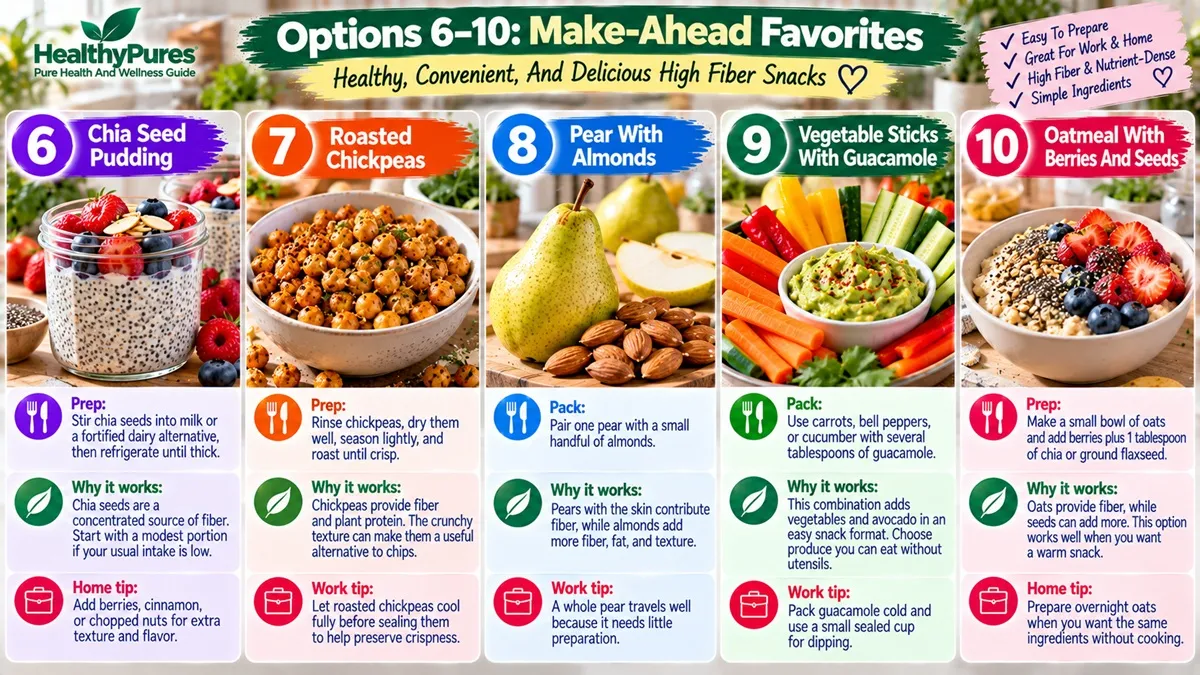
6. Chia Seed Pudding
Prep: Stir chia seeds into milk or a fortified dairy alternative, then refrigerate until thick.
This keeps high fiber snacks ready in the refrigerator.
Why it works: Chia seeds are a concentrated source of fiber. Start with a modest portion if your usual intake is low.
Home tip: Add berries, cinnamon, or chopped nuts for extra texture and flavor.
7. Roasted Chickpeas
Prep: Rinse chickpeas, dry them well, season lightly, and roast until crisp.
Roasted chickpeas are a useful savory choice among high fiber snacks.
Why it works: Chickpeas provide fiber and plant protein. The crunchy texture can make them a useful alternative to chips.
Work tip: Let roasted chickpeas cool fully before sealing them to help preserve crispness.
8. Pear With Almonds
Pack: Pair one pear with a small handful of almonds.
This pairing keeps high fiber snacks simple and portable.
Why it works: Pears with the skin contribute fiber, while almonds add more fiber, fat, and texture.
Work tip: A whole pear travels well because it needs little preparation.
9. Vegetable Sticks With Guacamole
Pack: Use carrots, bell peppers, or cucumber with several tablespoons of guacamole.
It gives high fiber snacks a fresh, crunchy direction.
Why it works: This combination adds vegetables and avocado in an easy snack format. Choose produce you can eat without utensils.
Work tip: Pack guacamole cold and use a small sealed cup for dipping.
10. Oatmeal With Berries And Seeds
Prep: Make a small bowl of oats and add berries plus 1 tablespoon of chia or ground flaxseed.
This is a warm option when high fiber snacks feel repetitive.
Why it works: Oats provide fiber, while seeds can add more. This option works well when you want a warm snack.
Home tip: Prepare overnight oats when you want the same ingredients without cooking.
For packaged snacks, our nutrition label guide covers serving sizes, fiber, added sugar, and other label details.
Options 11–15: Savory Snacks With More Variety
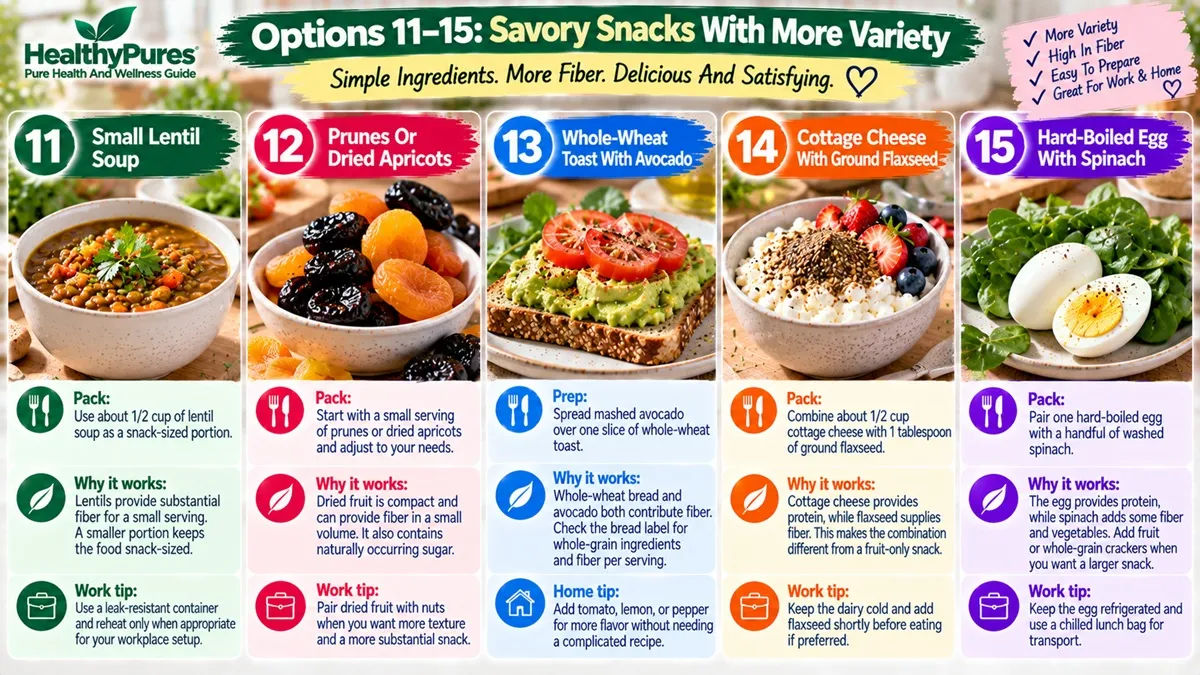
11. Small Lentil Soup
Pack: Use about 1/2 cup of lentil soup as a snack-sized portion.
It brings legumes into a more substantial list of high fiber snacks.
Why it works: Lentils provide substantial fiber for a small serving. A smaller portion keeps the food snack-sized.
Work tip: Use a leak-resistant container and reheat only when appropriate for your workplace setup.
12. Prunes Or Dried Apricots
Pack: Start with a small serving of prunes or dried apricots and adjust to your needs.
Why it works: Dried fruit is compact and can provide fiber in a small volume. It also contains naturally occurring sugar.
Work tip: Pair dried fruit with nuts when you want more texture and a more substantial snack.
13. Whole-Wheat Toast With Avocado
Prep: Spread mashed avocado over one slice of whole-wheat toast.
This makes high fiber snacks work well as a quick mini-meal.
Why it works: Whole-wheat bread and avocado both contribute fiber. Check the bread label for whole-grain ingredients and fiber per serving.
Home tip: Add tomato, lemon, or pepper for more flavor without needing a complicated recipe.
14. Cottage Cheese With Ground Flaxseed
Pack: Combine about 1/2 cup cottage cheese with 1 tablespoon of ground flaxseed.
It adds a protein-rich option to high fiber snacks.
Why it works: Cottage cheese provides protein, while flaxseed supplies fiber. This makes the combination different from a fruit-only snack.
Work tip: Keep the dairy cold and add flaxseed shortly before eating if preferred.
15. Hard-Boiled Egg With Spinach
Pack: Pair one hard-boiled egg with a handful of washed spinach.
Why it works: The egg provides protein, while spinach adds some fiber and vegetables. Add fruit or whole-grain crackers when you want a larger snack.
Work tip: Keep the egg refrigerated and use a chilled lunch bag for transport.
Options 16–20: Plant-Forward Choices
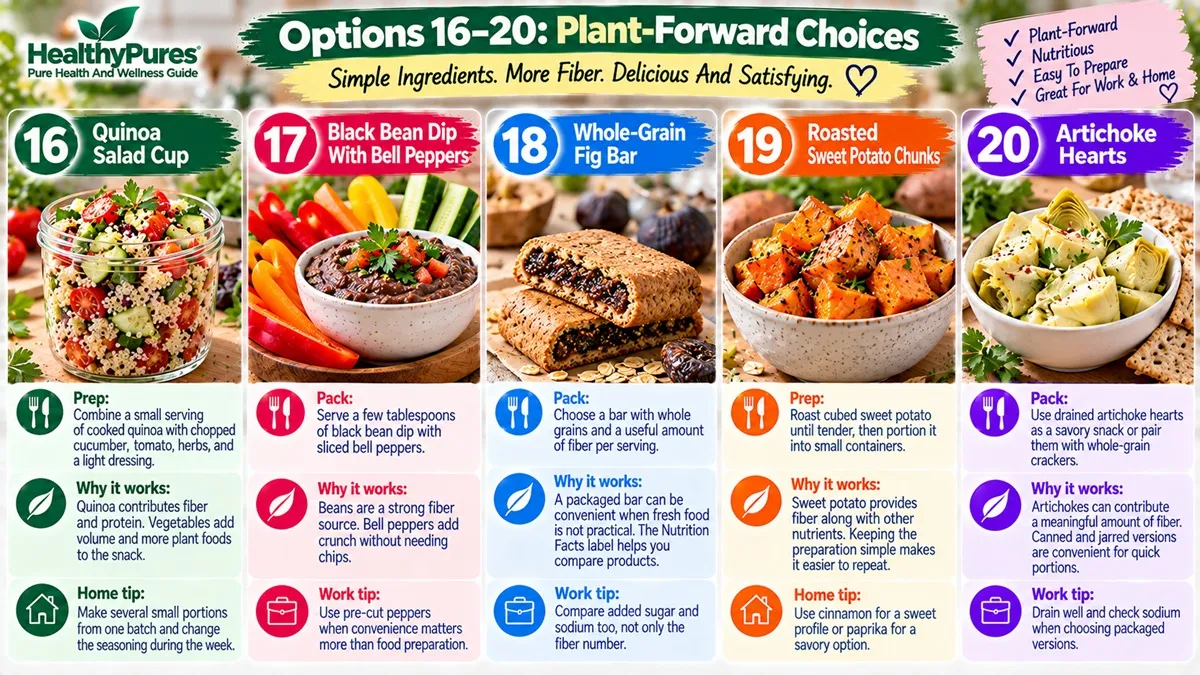
16. Quinoa Salad Cup
Prep: Combine a small serving of cooked quinoa with chopped cucumber, tomato, herbs, and a light dressing.
This keeps high fiber snacks useful beyond fruit and nuts.
Why it works: Quinoa contributes fiber and protein. Vegetables add volume and more plant foods to the snack.
Home tip: Make several small portions from one batch and change the seasoning during the week.
17. Black Bean Dip With Bell Peppers
Pack: Serve a few tablespoons of black bean dip with sliced bell peppers.
It adds beans to a rotation of high fiber snacks.
Why it works: Beans are a strong fiber source. Bell peppers add crunch without needing chips.
Work tip: Use pre-cut peppers when convenience matters more than food preparation.
18. Whole-Grain Fig Bar
Pack: Choose a bar with whole grains and a useful amount of fiber per serving.
This is convenient when high fiber snacks must be shelf-stable.
Why it works: A packaged bar can be convenient when fresh food is not practical. The Nutrition Facts label helps you compare products.
Work tip: Compare added sugar and sodium too, not only the fiber number.
19. Roasted Sweet Potato Chunks
Prep: Roast cubed sweet potato until tender, then portion it into small containers.
This adds a warm vegetable option to high fiber snacks.
Why it works: Sweet potato provides fiber along with other nutrients. Keeping the preparation simple makes it easier to repeat.
Home tip: Use cinnamon for a sweet profile or paprika for a savory option.
20. Artichoke Hearts
Pack: Use drained artichoke hearts as a savory snack or pair them with whole-grain crackers.
Artichoke hearts give high fiber snacks a savory finish.
Why it works: Artichokes can contribute a meaningful amount of fiber. Canned and jarred versions are convenient for quick portions.
Work tip: Drain well and check sodium when choosing packaged versions.
How To Choose The Right Snack For Your Day
For A Desk Snack
Pick foods that travel well and need little preparation. Whole fruit, nuts, roasted chickpeas, and dry popcorn are simple starting points for high fiber snacks.
For A Refrigerator At Work
Use yogurt with berries, edamame, hummus with vegetables, cottage cheese with flaxseed, or small lentil soup portions.
For Home
Use warm oatmeal, avocado toast, sweet potato, quinoa salad, or chia pudding when you can prepare food close to eating time.
For A Sweet Craving
Try berries with yogurt, apple with nut butter, chia pudding, pears with almonds, or a small portion of dried fruit.
For A Savory Craving
Try roasted chickpeas, hummus with crackers, popcorn, lentil soup, black bean dip, or artichoke hearts.
How Much Fiber Should A Snack Provide?
There is no official snack-specific fiber target that applies to everyone. A practical approach is to choose snacks that make a useful contribution to your daily intake without forcing a large portion.
The FDA Daily Value for fiber is 28 grams per day. On packaged foods, the label shows fiber grams and percentage Daily Value per serving. FDA Daily Value guidance explains that 20% DV or more is generally considered high for a nutrient.
For many adults, NIDDK cites about 22 to 34 grams of fiber daily, depending on age and sex. Your own needs can differ because of health conditions, diet, medications, and calorie needs.
How To Increase Fiber Without Feeling Miserable
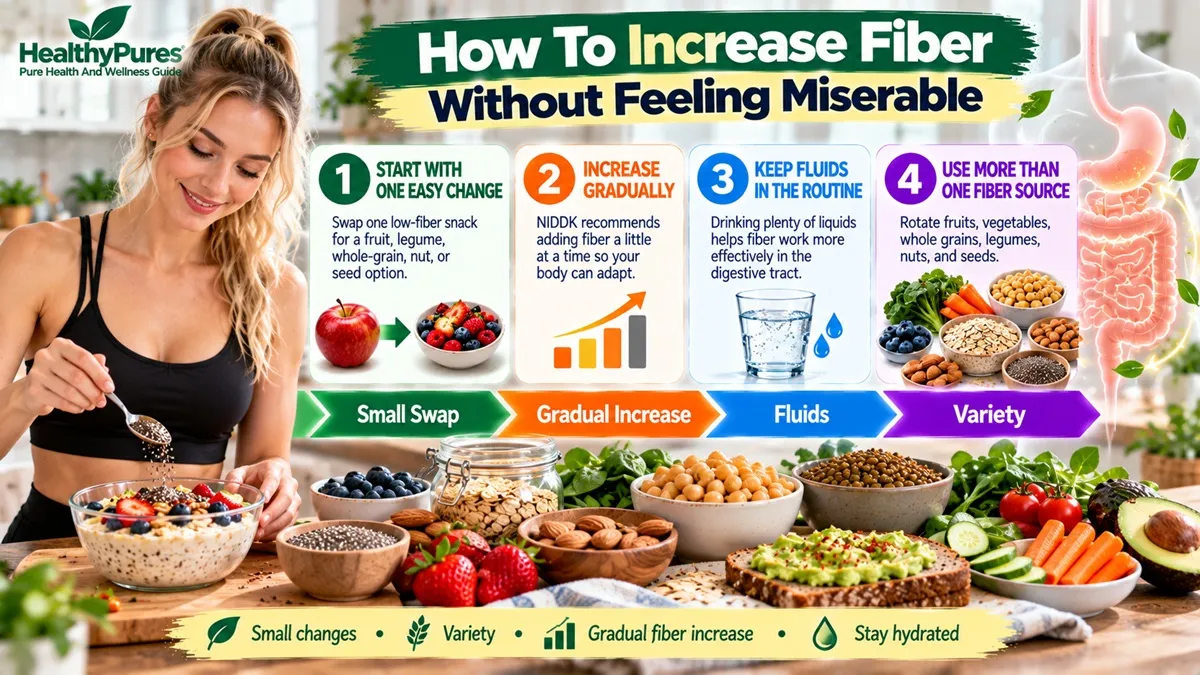
Start With One Easy Change
Swap one low-fiber snack for a fruit, legume, whole-grain, nut, or seed option. Keep the change small enough to repeat.
Increase Gradually
A sudden jump in fiber can cause gas, bloating, or cramping in some people. NIDDK recommends increasing fiber little by little as your body adapts.
Keep Fluids In The Routine
Fluids help fiber work more effectively in the digestive tract. NIDDK recommends drinking plenty of liquids when increasing fiber intake.
Use More Than One Fiber Source
Rotate fruit, vegetables, whole grains, legumes, nuts, and seeds. Variety makes your snack routine easier to maintain and broadens your overall food choices.
How To Read A Snack Label For Fiber
Start with the serving size. A snack may look high in fiber until you notice that the listed amount represents several pieces.
Next, check grams of dietary fiber. The FDA lists 5% DV or less as low and 20% DV or more as high for an individual nutrient.
Then review added sugars, saturated fat, and sodium. A higher fiber number does not automatically make a packaged snack a better overall choice.
Finally, scan the ingredient list. For everyday snacking, look for foods that fit your preferences and eating pattern rather than chasing one nutrition number.
Common Mistakes To Avoid
Eating Too Much Fiber Too Fast
Large increases can feel uncomfortable. Build your intake over time, especially when your current diet is low in fiber.
Ignoring Portion Size
Nuts, nut butters, dried fruit, and packaged bars can be compact sources of energy. Portion them intentionally.
Choosing A Snack Only Because It Says High Fiber
A fiber claim does not tell you everything about the product. Check serving size, added sugar, saturated fat, sodium, and ingredients.
Depending On One Food
Eating the same fiber source every day can make your diet repetitive. Rotate different plant foods across meals and snacks.
When To Talk With A Healthcare Professional
Persistent abdominal pain, severe bloating, major changes in bowel habits, or other ongoing digestive symptoms deserve professional evaluation.
A healthcare professional can also help you adjust fiber intake when you have a digestive condition or another health concern that affects diet choices.
Frequently Asked Questions
What Makes A Snack High In Fiber?
There is no universal snack-specific definition. For packaged foods, the FDA considers 20% Daily Value or more to be high for an individual nutrient.
With a 28-gram Daily Value for fiber, that threshold is about 5.6 grams per labeled serving. Serving size still matters when you compare products.
Can Fiber Cause Bloating?
Yes, a sudden increase can cause gas or bloating for some people. Gradual increases and adequate fluids can make the transition easier.
What Are Easy Work Snacks?
The best high fiber snacks for work are the ones you can portion, transport, and store safely.
Whole fruit, popcorn, nuts, roasted chickpeas, yogurt with berries, and hummus with vegetables are practical options for many work settings.
Do Fiber Supplements Replace Food Sources?
Supplements can be useful in some situations, but whole foods provide fiber alongside other nutrients. Ask a healthcare professional when a supplement is appropriate for you.
How Much Fiber Do Adults Need?
NIDDK lists about 22 to 34 grams of fiber daily for adults, depending on age and sex. Individual needs can differ.
Making High Fiber Snacks Part Of Your Routine
The easiest approach is not to hunt for one perfect snack. Keep two or three dependable choices at home and two portable options for work.
Use fruit, vegetables, legumes, whole grains, nuts, and seeds as your rotation. Then adjust portions based on hunger, meal timing, and your overall diet.
When you increase fiber, give your body time to adapt. Gradual changes and adequate fluids are simple habits that can make the routine more comfortable.
Just a friendly reminder from our team: Health needs vary from person to person, so this information is intended to support general wellness and does not replace professional medical advice. Read our full Medical Disclaimer for more information.

