Understanding probiotics vs prebiotics can make gut-health advice much easier to navigate. The terms sound similar, but they describe different things.
Probiotics are specific live microorganisms with demonstrated health benefits when used adequately. Prebiotics are substrates that certain host microorganisms selectively use for a health benefit.
Quick Summary
- Probiotics are specific live microorganisms that can provide health benefits in adequate amounts.
- Prebiotics are substrates selectively used by host microorganisms to provide a health benefit.
- Not every fermented food automatically qualifies as a probiotic food.
- Probiotic effects can vary by strain, dose, product, and individual.
- Prebiotic-rich foods can be part of a varied, fiber-rich eating pattern.
Quick Facts
| Aspect | Probiotics | Prebiotics |
|---|---|---|
| What They Are | Specific live microorganisms | Substrates used by host microorganisms |
| Main Role | Provide a demonstrated health benefit at an adequate amount | Are selectively used by microorganisms and provide a health benefit |
| Common Food Examples | Some yogurts and fermented foods with documented live cultures | Garlic, onions, leeks, asparagus, oats, and certain bananas |
| Supplement Forms | Often labeled by genus, species, strain, and CFU count | May contain inulin, FOS, GOS, or other qualifying substrates |
| Key Caution | Benefits are strain-specific and not guaranteed for every condition | Large increases can cause gas or bloating in some people |
Who This Guide Is For
- ✔ People comparing probiotics vs prebiotics for the first time.
- ✔ Readers interested in fermented foods, fiber, and gut-friendly eating patterns.
- ✔ Anyone considering probiotic or prebiotic supplements.
- ✔ People who want practical food examples without exaggerated gut-health claims.
Probiotics vs Prebiotics At A Glance
The simplest comparison is live microorganisms versus substances that certain microorganisms use. That distinction is the foundation of probiotics vs prebiotics.
| Question | Probiotics | Prebiotics |
|---|---|---|
| Are they alive? | Yes, qualifying probiotics are live microorganisms. | No, prebiotics are substrates rather than live organisms. |
| Do they “feed” gut microbes? | That is not their defining feature. | Yes, qualifying prebiotics are selectively utilized by host microorganisms. |
| Are all fermented foods included? | No. Fermentation alone does not prove probiotic status. | No. A food needs qualifying prebiotic substrates. |
| Can they be combined? | Yes. Certain combinations may qualify as synbiotics. | |
What Are Probiotics?

Probiotics are live microorganisms that provide a health benefit when administered in adequate amounts. This definition is more specific than simply calling bacteria “good.”
The NIH Office of Dietary Supplements probiotic fact sheet explains their definition, food sources, supplements, and safety. It also notes that products can contain different strains.
That strain detail matters when comparing probiotics vs prebiotics. Results from one probiotic strain should not automatically be applied to another.
Probiotic Names Matter
A probiotic can be identified by genus, species, and strain. Product labels may also list colony-forming units, usually abbreviated as CFUs.
Higher CFU numbers do not automatically mean better results. A useful product needs evidence relevant to its specific strain and intended use.
Where Probiotics Are Found
Some yogurts and other fermented foods contain live microorganisms. Probiotic supplements can also contain one or several documented strains.
However, fermentation does not automatically make a food probiotic. The microorganism must meet the probiotic definition and have evidence for a health benefit.
For food ideas, see our fermented foods for gut health. Check labels when you specifically want live cultures.
What Are Prebiotics?
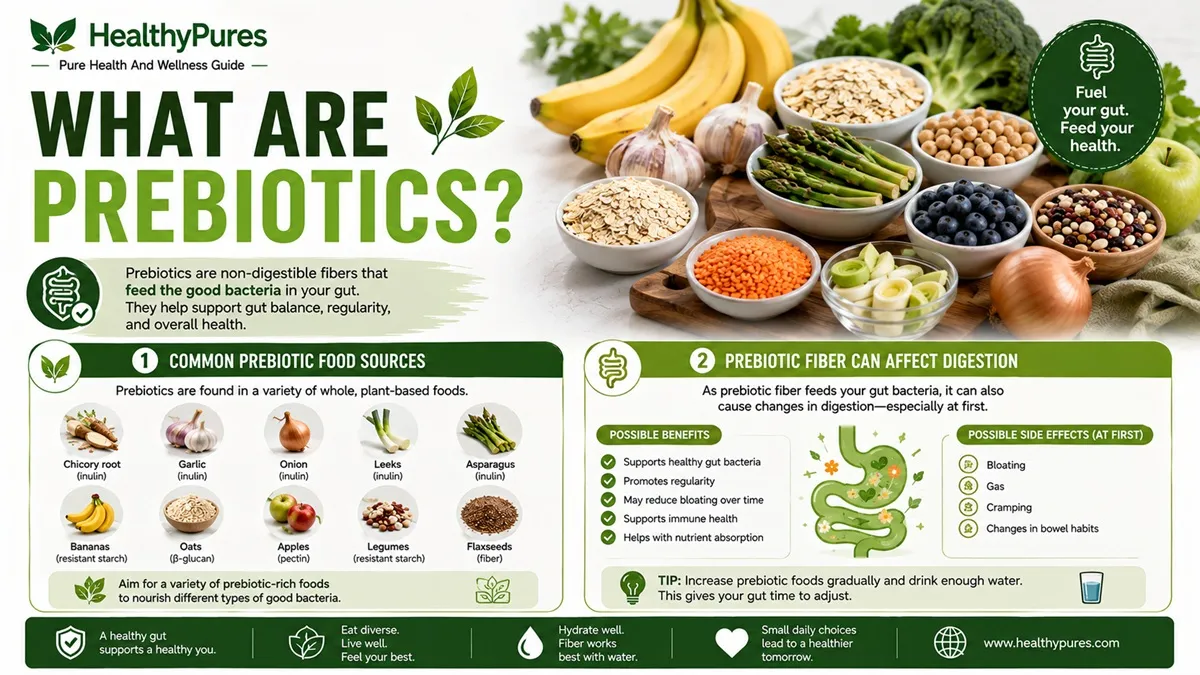
Prebiotics are not bacteria and are not interchangeable with dietary fiber. They are substrates selectively used by host microorganisms that confer a health benefit.
The ISAPP prebiotic definition uses this more precise framework. It helps prevent every fermentable fiber from being labeled a prebiotic.
This is a key difference in probiotics vs prebiotics. Probiotics describe qualifying microorganisms, while prebiotics describe qualifying substrates.
Common Prebiotic Food Sources
Foods containing recognized prebiotic compounds include garlic, onions, leeks, asparagus, oats, and certain bananas. Chicory root is another well-known source.
Whole foods can provide prebiotic compounds alongside other nutrients and fiber. See our best prebiotic foods for gut health for more examples.
Prebiotic Fiber Can Affect Digestion
Fermentation of certain fibers can produce gas. A rapid increase may cause bloating or discomfort in some people.
Start with manageable portions when your current fiber intake is low. Individual tolerance matters more than forcing a specific prebiotic target.
How Probiotics May Affect The Gut

Probiotic effects depend on the microorganism, dose, condition studied, and person using the product. There is no single effect shared by every probiotic.
The NCCIH probiotics safety and usefulness guide notes that much remains unknown. Researchers are still identifying which probiotics help specific conditions.
The probiotics vs prebiotics comparison needs more nuance. Match evidence to the actual product.
Digestive Effects Are Strain-Specific
Some probiotic formulations have been studied for particular digestive conditions. That does not mean every probiotic improves digestion or prevents bloating.
Use condition-specific evidence when evaluating a supplement. Persistent digestive symptoms should not be self-diagnosed as a lack of probiotics.
Immune Claims Need Context
Gut microorganisms interact with immune processes, but broad immune claims can become misleading. A probiotic should not be described as universally “boosting immunity.”
Effects can differ substantially between strains and populations. That is another reason product-specific evidence matters.
How Prebiotics Support Microbial Fermentation

Certain prebiotic substrates reach gut microorganisms and are fermented. That process can produce metabolites, including short-chain fatty acids.
These mechanisms help researchers understand probiotics vs prebiotics. They do not mean every high-fiber food produces the same microbiome effect.
Short-Chain Fatty Acids
Acetate, propionate, and butyrate are common short-chain fatty acids produced during microbial fermentation. Their production depends on substrates, microbes, and other dietary factors.
It is more accurate to describe this as normal microbial metabolism. Avoid treating short-chain fatty acids as guaranteed outcomes from one food or supplement.
Prebiotics Are More Specific Than “Fiber”
Many fibers are useful parts of a balanced diet. However, not every fiber meets the scientific definition of a prebiotic.
This distinction improves the accuracy of probiotics vs prebiotics comparisons. It also helps shoppers evaluate marketing claims more carefully.
Best Food Sources Of Probiotics And Prebiotics
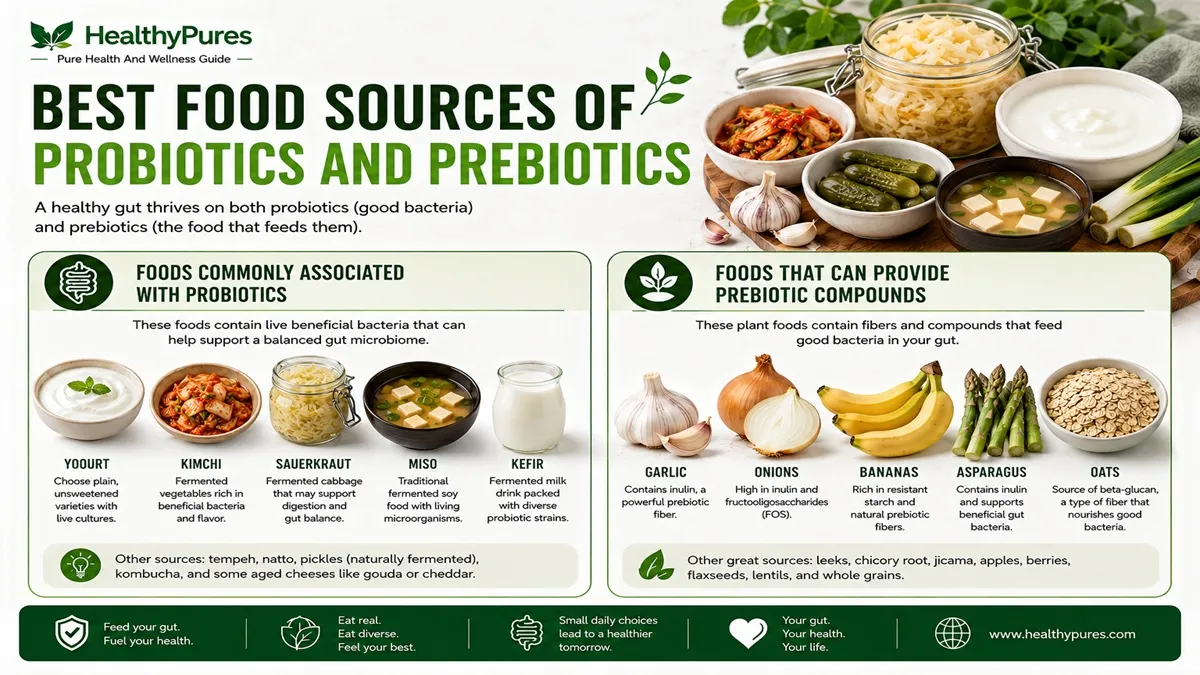
Food can be a practical starting point for many people. It also makes probiotics vs prebiotics easier to understand in everyday meals.
The Harvard Nutrition Source overview of probiotics discusses probiotics, prebiotics, fermented foods, and synbiotics. It also notes limited evidence for many supplement claims.
Foods Commonly Associated With Probiotics
- Yogurt labeled with live and active cultures.
- Kefir containing documented live cultures.
- Some refrigerated fermented vegetables with live microorganisms.
- Certain fermented foods that retain qualifying microorganisms through consumption.
Not every product in these categories qualifies as probiotic. Processing, pasteurization, storage, and strain evidence all matter.
Foods That Can Provide Prebiotic Compounds
- Garlic, onions, and leeks.
- Asparagus and chicory root.
- Oats and barley.
- Some bananas and other plant foods containing fermentable substrates.
These foods can fit a varied eating pattern without turning probiotics vs prebiotics into a supplement-only decision. Variety can also provide broader nutritional benefits.
What Are Synbiotics?

A synbiotic combines live microorganisms with substrates selectively used by host microorganisms. The combination must confer a health benefit to meet the scientific definition.
The ISAPP synbiotic consensus statement distinguishes complementary and synergistic synbiotics. This is more precise than simply mixing any probiotic with any fiber.
That matters when discussing probiotics vs prebiotics together. A random combination does not automatically provide enhanced benefits.
Complementary And Synergistic Synbiotics
Complementary synbiotics combine an established probiotic with an established prebiotic. Each component must meet the minimum criteria for its category.
Synergistic synbiotics use a substrate designed for the co-administered live microorganism. The individual components do not need separate probiotic or prebiotic status.
Consumers do not need to memorize these categories. The practical point is that the combined synbiotic still needs evidence of a health benefit.
Probiotics vs Prebiotics Supplements

Supplements can be convenient, but they are not automatically necessary for healthy adults. The probiotics vs prebiotics choice should start with a clear goal.
When comparing probiotics vs prebiotics supplements, read the label carefully. Look for clear ingredient identities, amounts, storage instructions, and relevant strain information.
What To Check On A Probiotic Label
Look for the genus, species, and strain when available. Check whether the CFU amount applies through the expiration date.
The NIH fact sheet notes there are no official probiotic recommendations for healthy people. A healthcare professional can help when a specific condition is involved.
What To Check On A Prebiotic Label
Identify the actual substrate instead of relying on the word “prebiotic.” Inulin, FOS, and GOS are common examples in supplements.
Start cautiously if concentrated fermentable fibers usually cause discomfort. More is not always better for digestive tolerance.
Healthy Pures Tip: Choose a product for a defined reason. Do not buy a supplement simply because its label promises general “gut balance.”
Common Mistakes When Comparing Probiotics vs Prebiotics

One common mistake is assuming every fermented food contains a proven probiotic. Another is assuming every fiber is automatically prebiotic.
A third mistake is expecting immediate, universal results from probiotics vs prebiotics. Responses can vary by product, diet, health status, and individual microbiome.
Choosing A Probiotic Only By CFU Count
A huge CFU number does not replace evidence for a specific strain. Product quality and viability also matter.
Adding Too Much Prebiotic Fiber Too Quickly
Large increases can lead to gas or bloating. Increase fermentable fiber gradually when needed and adjust according to tolerance.
Using Supplements To Explain Persistent Symptoms
Chronic bloating, diarrhea, constipation, or abdominal pain can have many causes. Supplements should not delay appropriate assessment.
For broader context, see our guide to foods linked with digestive discomfort. Individual reactions can vary considerably.
When To Seek Professional Guidance
People with severe illness or weakened immune systems need extra caution with probiotics. Safety matters when evaluating probiotics vs prebiotics supplements.
Talk with a qualified healthcare professional before new supplements during pregnancy or breastfeeding. The same applies when medications or chronic conditions affect digestion.
Seek medical advice for persistent pain, vomiting, blood in stool, unexplained weight loss, or ongoing bowel changes. These symptoms need proper evaluation.
Frequently Asked Questions
Which Is Better: Probiotics Or Prebiotics?
Neither category is universally better. The useful choice depends on your diet, goal, health status, and the specific product involved.
A comparison of probiotics vs prebiotics should therefore focus on purpose rather than ranking one category above the other.
Can I Take Probiotics And Prebiotics Together?
They can be used together, but a random combination is not automatically a proven synbiotic. Evidence depends on the microorganisms, substrates, doses, and intended benefit.
Do I Need A Probiotic Supplement?
Not necessarily. NIH notes there are no official probiotic recommendations that apply to all healthy people.
Use a supplement for a clear reason rather than as a general requirement. Ask a healthcare professional when you have a medical concern.
Do All Fermented Foods Contain Probiotics?
No. Fermentation alone does not prove that a food contains qualifying probiotic microorganisms at the point of consumption.
Processing and storage can affect microorganism viability. Specific strains also need evidence for the claimed health benefit.
How Long Do Probiotics Or Prebiotics Take To Work?
There is no universal timeline. Results depend on what outcome is being measured, the product, dose, diet, and individual response.
A fixed “few days” or “several weeks” promise is usually too broad. Evaluate products according to evidence for their intended use.
Can Prebiotics Cause Bloating?
Yes, some fermentable prebiotic substrates can increase gas or bloating. Tolerance often depends on the amount and individual digestive sensitivity.
Start with smaller amounts when appropriate. Persistent symptoms should be discussed with a qualified professional.
The Bottom Line On Probiotics vs Prebiotics
The central difference in probiotics vs prebiotics is straightforward. Probiotics are qualifying live microorganisms, while prebiotics are qualifying substrates used by host microorganisms.
Both can fit a gut-conscious eating pattern, but neither category guarantees broad health improvements. Product-specific evidence and individual tolerance remain important.
Start with varied foods when practical and use supplements thoughtfully. Review our Medical Disclaimer before making major dietary or supplement changes.
