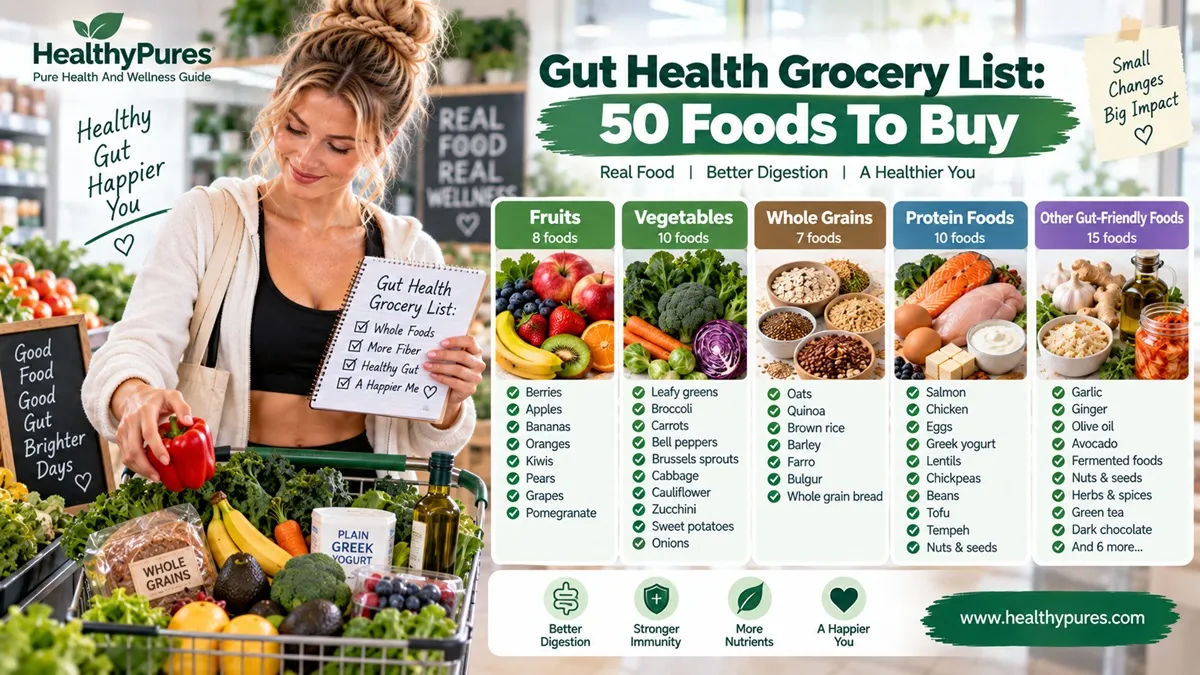
Building a gut health grocery list starts with variety, not one “perfect” food. A mix of fiber-rich plants, whole grains, legumes, and selected fermented foods can support a balanced eating pattern.
Your gut microbiome includes many microorganisms that interact with the foods you eat. Diet is one factor that can influence the types and activity of those microbes, especially through dietary fiber. Gut microbiome and diet guidance explains how fiber-rich foods interact with the microbiome.
This guide gives you 50 practical grocery choices for a gut health grocery list. It also shows how to build meals without treating any food as a cure. Tolerance matters because some high-fiber foods can cause gas or bloating when added too quickly.
Quick Summary
- Prioritize a wide variety of fiber-rich fruits, vegetables, whole grains, and legumes.
- Use fermented foods selectively, and check labels because not every fermented food provides a proven probiotic.
- Increase fiber gradually and drink enough fluid, especially when your current intake is low.
- Choose foods you tolerate well rather than forcing a long list of “gut-friendly” foods.
Quick Facts
| Aspect | Details |
|---|---|
| Primary focus | Fiber-rich plants, whole grains, legumes, and varied minimally processed foods. |
| Adult fiber target | About 22 to 34 grams per day, depending on age and sex. |
| Fermented foods | Some contain live microorganisms, but fermentation alone does not establish a proven probiotic benefit. |
| Best approach | Build variety gradually and adjust portions based on tolerance. |
| When to seek care | Persistent, severe, or concerning digestive symptoms need professional evaluation. |
Who This Guide Is For
- ✓ Adults who want a more varied, fiber-rich grocery cart.
- ✓ People looking for practical foods to support regular digestion.
- ✓ Shoppers comparing fresh, frozen, canned, and fermented options.
- ✓ Anyone who wants a simple starting framework without promising a single “best” gut food.
How To Build A Gut Health Grocery List
A useful gut health grocery list does not need every food below.
Start with foods you already enjoy, then add variety across several categories on your gut health grocery list.
Fiber is one of the most practical anchors. NIDDK notes that adults generally need about 22 to 34 grams of fiber daily, depending on age and sex. It also recommends increasing fiber gradually and drinking enough liquids to help it work well. Fiber and digestive health guidance provides the details.
Fermented foods can add variety, but they need more careful wording. The NIH Office of Dietary Supplements notes that not all fermented foods contain probiotics with proven health benefits. Probiotic food guidance explains the difference.
People with IBS or other digestive sensitivities may react differently to high-fiber foods. NIDDK notes that dietary changes affect people differently. See IBS diet guidance for context.
Fiber-Rich Fruits For Gut Health
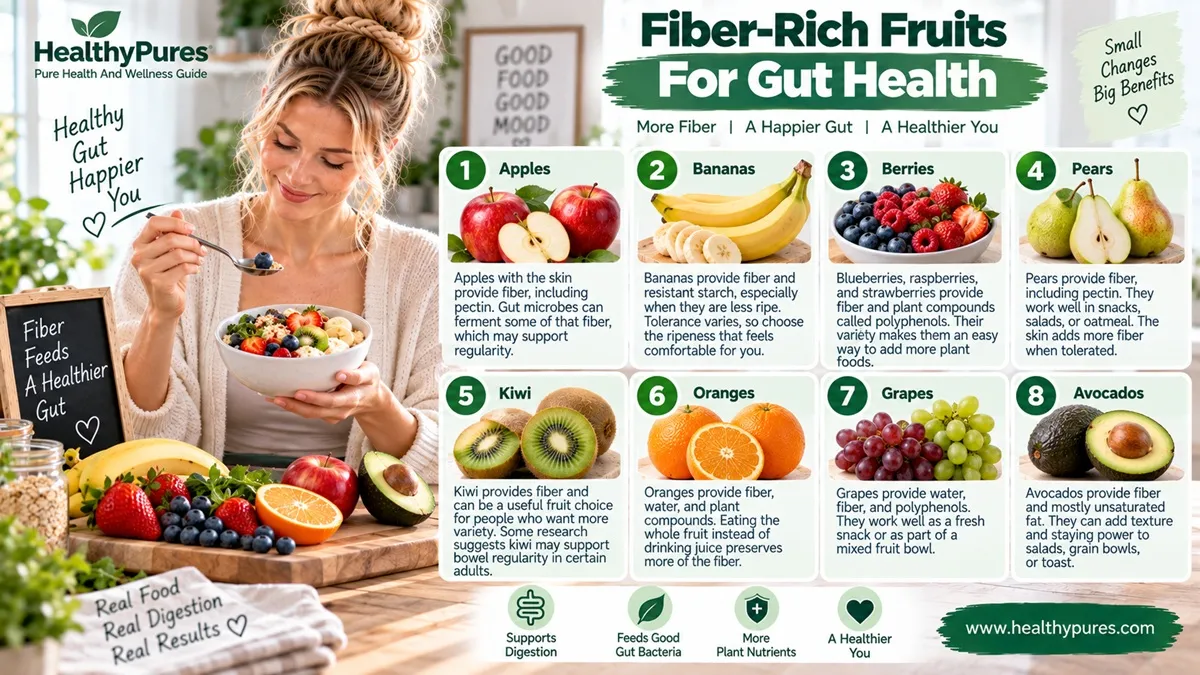
Fruit is an easy way to strengthen a gut health grocery list with fiber, water, and plant compounds. Use several kinds across the week.
1. Apples
Apples with the skin provide fiber, including pectin. Gut microbes can ferment some of that fiber, which may support regularity.
2. Bananas
Bananas provide fiber and resistant starch, especially when they are less ripe. Tolerance varies, so choose the ripeness that feels comfortable for you.
3. Berries
Blueberries, raspberries, and strawberries provide fiber and plant compounds called polyphenols. Their variety makes them an easy way to add more plant foods.
4. Pears
Pears provide fiber, including pectin. They work well in snacks, salads, or oatmeal. The skin adds more fiber when tolerated.
5. Kiwi
Kiwi provides fiber and can be a useful fruit choice for people who want more variety. Some research suggests kiwi may support bowel regularity in certain adults.
6. Oranges
Oranges provide fiber, water, and plant compounds. Eating the whole fruit instead of drinking juice preserves more of the fiber.
7. Grapes
Grapes provide water, fiber, and polyphenols. They work well as a fresh snack or as part of a mixed fruit bowl.
8. Avocados
Avocados provide fiber and mostly unsaturated fat. They can add texture and staying power to salads, grain bowls, or toast.
Vegetables To Add To Your Gut Health Grocery List

Vegetables broaden the range of fibers and plant compounds in a gut health grocery list. Harvard notes that fermentable fibers can influence the gut microbiota and short-chain fatty acid production. Add higher-fiber vegetables gradually when needed. See Gut microbiome and diet guidance for background.
9. Leafy Greens
Spinach, kale, and collard greens provide fiber and a broad range of vitamins and minerals. Rotate among greens to increase plant-food variety.
10. Broccoli
Broccoli provides fiber and is part of the cruciferous vegetable family. It can be roasted, steamed, or added to soups and grain bowls.
11. Cauliflower
Cauliflower provides fiber and glucosinolate compounds. It can replace some refined starches in meals while adding another vegetable to the plate.
12. Asparagus
Asparagus provides fiber and naturally occurring prebiotic compounds. Add it gradually if you are not used to eating many high-fiber foods.
13. Garlic
Garlic contains fructans, a type of fermentable carbohydrate that can serve as a prebiotic substrate. It can also cause gas or bloating in some people.
14. Onions
Onions contain fructans and other plant compounds. They can contribute to a varied high-fiber diet, but people with IBS may find them difficult to tolerate.
15. Leeks
Leeks are related to onions and garlic and contain fermentable fibers. Their flavor works well in soups, stews, and cooked vegetable dishes.
16. Artichokes
Artichokes are a notable source of inulin-type fructans and fiber. Because these fibers ferment in the colon, large portions may cause gas in sensitive people.
17. Sweet Potatoes
Sweet potatoes provide fiber, potassium, and carotenoids. Keep the skin when practical for extra fiber, and increase portions gradually when needed.
18. Carrots
Carrots provide fiber and carotenoids. They can be eaten raw, roasted, steamed, or added to soups and salads.
19. Bell Peppers
Bell peppers provide fiber, vitamin C, and colorful plant compounds. They are an easy way to add more variety to meals.
20. Zucchini
Zucchini provides fiber and water while offering a mild flavor. It can be grilled, roasted, sautéed, or added to soups.
Whole Grains And Legumes For Gut Support

Whole grains and legumes can make a gut health grocery list more filling while adding fiber and fermentable carbohydrates. They are also useful building blocks for affordable meals.
When your current diet is low in fiber, do not jump from a small amount to very large servings overnight. A gradual increase is easier to tolerate for many people, especially when fluid intake is adequate.
21. Oats
Oats provide soluble fiber, including beta-glucan. They are a practical breakfast base and can be combined with fruit, yogurt, seeds, or nuts.
22. Quinoa
Quinoa provides fiber and plant protein. It can be used in grain bowls, salads, or as a side dish when you want more whole-food variety.
23. Brown Rice
Brown rice provides more fiber than refined white rice and can add variety to meals. Pairing it with vegetables and legumes creates a more fiber-rich plate.
24. Lentils
Lentils are rich in fiber and plant protein. They can support regularity and provide fermentable carbohydrates for gut microbes.
25. Chickpeas
Chickpeas provide fiber, plant protein, and resistant starch. Use them in salads, soups, bowls, or hummus.
26. Black Beans
Black beans provide fiber, protein, and fermentable carbohydrates. They work well in tacos, bowls, chili, and salads.
27. Kidney Beans
Kidney beans provide fiber and plant protein. As with other legumes, introduce larger amounts gradually if your usual diet is low in fiber.
28. Edamame
Edamame provides protein, fiber, and soy isoflavones. It works well as a snack, salad addition, or bowl topping.
Fermented Foods For A Gut Health Grocery List

Fermented foods are a useful category in a gut health grocery list, but avoid treating every fermented product as a probiotic. NIH explains that some fermented foods contain live microorganisms without meeting the definition of a probiotic with demonstrated health benefits. Probiotic food facts explain why the distinction matters.
Healthy Pures Tip: Look for product labels that identify live cultures when that feature matters to you. Refrigeration and post-fermentation heating can affect whether live microorganisms remain in a food.
Fermented foods may also be high in sodium, sugar, or acidity depending on the product. Choose portions that fit your overall diet.
29. Plain Yogurt
Plain yogurt with live cultures can provide beneficial microorganisms. Check the label for live cultures, and choose a style that fits your nutrition needs.
30. Kefir
Kefir is a fermented milk drink that can contain live microorganisms. Products differ, so the label matters, and individual tolerance varies.
31. Sauerkraut
Sauerkraut is fermented cabbage. Some refrigerated versions contain live microorganisms, while heat-treated products may not, so check the label and storage instructions.
32. Kimchi
Kimchi is a fermented vegetable food that may contain live microorganisms. Sodium and spice levels vary, so choose a portion and product that fits your needs.
33. Tempeh
Tempeh is a fermented soy food that provides protein and other nutrients. Fermentation does not automatically mean every product provides a proven probiotic benefit.
34. Miso
Miso is a fermented soybean paste used in soups, sauces, and dressings. It can be a flavorful way to add variety, but it is also often high in sodium.
35. Kombucha
Kombucha is fermented tea. Some products contain live microorganisms, but not every fermented beverage meets the definition of a probiotic with a demonstrated health benefit.
Healthy Fats And Nuts For Gut Balance

Nuts, seeds, and extra virgin olive oil can make a gut health grocery list more varied. They provide fiber, unsaturated fats, and plant compounds. They are supportive foods, not treatments for digestive disease.
36. Extra Virgin Olive Oil
Extra virgin olive oil provides mostly monounsaturated fat and plant compounds. It can be used in dressings, cooked vegetables, and grain-based meals.
37. Flaxseeds
Ground flaxseeds provide fiber, including soluble fiber, plus plant-based omega-3 fat. Start with small amounts and increase gradually when your diet is low in fiber.
38. Chia Seeds
Chia seeds provide substantial fiber and can absorb water into a gel. Pair them with adequate fluids and increase the amount gradually if needed.
39. Almonds
Almonds provide fiber, protein, and unsaturated fat. A modest portion can add texture and nutrients to yogurt, oats, salads, or snacks.
40. Walnuts
Walnuts provide fiber, unsaturated fats, and plant compounds. They are an easy addition to oatmeal, salads, or snacks.
41. Pecans
Pecans provide fiber and unsaturated fat. They can be useful for adding variety to meals without relying on highly processed toppings.
42. Pistachios
Pistachios provide fiber, protein, and unsaturated fat. They can also add variety to snacks and salads.
Lean Proteins And Other Gut-Friendly Choices

Protein foods can round out a gut health grocery list, while herbs and beverages add flavor and variety. They do not need special “gut-healing” powers to earn a place in a balanced grocery cart.
43. Salmon
Salmon provides high-quality protein and omega-3 fats. It is best viewed as part of a varied diet rather than as a food that directly treats gut problems.
44. Chicken Breast
Chicken breast is a lean protein source that can help round out meals built around vegetables, whole grains, or legumes.
45. Turkey
Turkey provides protein and can fit many balanced meals. Choose preparations with less added sodium when that better matches your dietary needs.
46. Eggs
Eggs provide protein and several nutrients, including choline. They can be paired with vegetables, whole grains, or fruit for a balanced meal.
47. Bone Broth
Bone broth can provide fluid and protein-derived compounds, but claims about repairing the intestinal barrier or treating gut conditions remain limited. Use it as a food, not a treatment.
48. Ginger
Ginger is a flavorful root used in many cuisines. It may help some people with nausea or digestive discomfort, but tolerance and results vary.
49. Turmeric
Turmeric contains curcumin and other plant compounds. Food amounts can add flavor and variety, while concentrated supplements have different considerations.
50. Herbal Teas
Peppermint and chamomile teas can be soothing for some people. They are optional beverages and should not be treated as a cure for persistent digestive symptoms.
Which Foods Should You Buy First?
| If You Want To… | Start With… |
|---|---|
| Increase fiber | Oats, berries, apples, lentils, chickpeas, beans, carrots, and leafy greens. |
| Add more plant variety | Choose two fruits, three vegetables, one whole grain, and one legume each week. |
| Try fermented foods | Plain yogurt with live cultures, kefir, or a refrigerated fermented vegetable product that fits your tolerance. |
| Build easy meals | Oats, frozen berries, canned beans, brown rice, eggs, chicken, olive oil, and a few vegetables. |
| Reduce digestive overload | Start with smaller portions and add high-fiber or fermentable foods gradually. |
How To Use Your Gut Health Grocery List During The Week
A practical gut health grocery list works best when you think in combinations. A breakfast might pair oats, yogurt, berries, and chia. Lunch could combine brown rice, black beans, vegetables, and olive oil.
A balanced gut health grocery list can support a simple dinner of salmon, roasted vegetables, and a whole grain. Snacks can include fruit, nuts, yogurt, or another food that you already tolerate well.
This approach makes your gut health grocery list useful without requiring a complicated meal plan. Variety across the week matters more than buying every item at once.
Common Mistakes To Avoid

Adding Too Much Fiber Too Quickly
A sudden increase in beans, onions, garlic, seeds, or other fermentable foods can increase gas and bloating. Build a gut health grocery list gradually. Harvard recommends smaller portions first for sensitive people.
Assuming Every Fermented Food Is A Probiotic
Fermented and probiotic are not interchangeable terms. A fermented food can contain live microorganisms without having a specific strain and demonstrated benefit that meets the probiotic definition.
Focusing On One “Best” Food
There is no single food that fixes every digestive issue. A varied diet gives you different types of fiber, plant compounds, and nutrients.
Ignoring Personal Tolerance
Some people tolerate large servings of legumes or fermented foods well. Others may notice bloating or discomfort. Your gut health grocery list should reflect what you can comfortably eat and sustain.
When To See A Doctor
Food choices from a gut health grocery list can support general wellness, but they should not be used to self-treat persistent or severe symptoms. Seek medical advice for ongoing abdominal pain, blood in the stool, unexplained weight loss, persistent vomiting, or major changes in bowel habits.
People with IBS, inflammatory bowel disease, kidney disease, or other medical conditions may need a more individualized nutrition plan.
Frequently Asked Questions
What Is The Best Food For Gut Health?
There is no single best food for every gut health grocery list. A varied pattern built around fiber-rich plants, whole grains, legumes, and suitable fermented foods is a more useful goal.
How Much Fiber Should I Get Each Day?
NIDDK states that adults generally need 22 to 34 grams of fiber a day, depending on age and sex. Increase intake gradually when your current diet is low in fiber. Fiber intake guidance provides more detail.
Are Fermented Foods The Same As Probiotics?
No. Some fermented foods contain live microorganisms, but not every fermented food contains a probiotic with a demonstrated health benefit.
Can A Gut Health Grocery List Help With Bloating?
A gut health grocery list may help when it improves overall diet quality and regularity, but more fiber is not automatically better for everyone. Certain fermentable foods can worsen bloating in sensitive people.
What Should I Do If Healthy Foods Make My Symptoms Worse?
Do not force foods that consistently cause symptoms. Reduce the portion, test another preparation, or discuss your symptoms with a qualified healthcare professional. NIDDK notes that dietary responses in IBS can vary from person to person.
Build A Gut-Friendly Cart That You Can Actually Use
The best gut health grocery list is one you can use consistently. Start with a few fiber-rich staples, add different plant foods each week, and include fermented options only when they fit your preferences and tolerance.
Use variety as the main strategy when building a gut health grocery list. You do not need every item on this list in one shopping trip. You also do not need to eliminate foods just because they are not labeled “gut-friendly.”
For a broader meal-planning approach, see our natural gut health diet guide and our easy meal prep ideas.
Just a friendly reminder from our team: Health needs vary from person to person, so this information is intended to support general wellness and does not replace professional medical advice. Read our full Medical Disclaimer for more information.