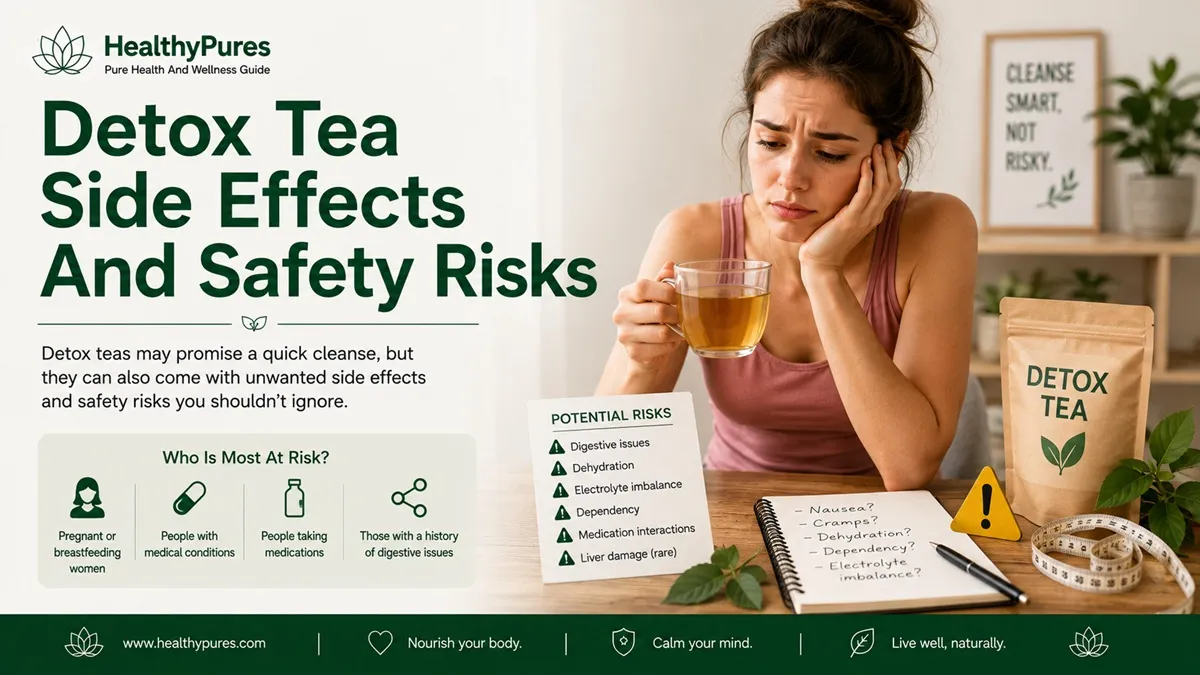
Detox teas are often marketed for cleansing, weight loss, or a quick reset. Those claims can make the products seem gentler than they are.
In reality, detox tea side effects and safety risks depend on the ingredients, dose, frequency, and your health. Some products contain stimulant laxatives, caffeine, or multiple herbs.
This guide explains the main risks without assuming every detox tea is dangerous. It also separates temporary bowel or fluid changes from true detoxification.
Quick Summary
- Some detox teas contain senna or other laxative ingredients that can cause cramps and diarrhea.
- Diarrhea and excessive fluid loss can contribute to dehydration or electrolyte problems.
- Caffeine-containing blends may worsen insomnia, restlessness, anxiety, or a fast heartbeat.
- Herbal ingredients and supplements can interact with medicines or be unsuitable for some health conditions.
- Detox teas are not proven to remove toxins or create lasting fat loss.
Knowing the main detox tea side effects and safety risks can make product labels easier to evaluate.
Quick Facts
| Issue | What To Know |
|---|---|
| Common Ingredients | Senna, caffeine-containing tea leaves, herbs, or multi-ingredient blends |
| Common Side Effects | Cramping, diarrhea, nausea, restlessness, or sleep disruption |
| More Serious Concerns | Dehydration, electrolyte imbalance, interactions, or rare liver injury |
| Weight Loss | Short-term scale changes may reflect fluid or bowel contents |
| FDA Status | Dietary supplements are not FDA-approved for safety and effectiveness before sale |
| Best Approach | Check ingredients and discuss concerns with a qualified healthcare professional |
Who This Guide Is For
- ✔ Anyone considering a detox tea for cleansing or weight loss
- ✔ People who developed diarrhea, cramping, palpitations, or sleep problems after a detox tea
- ✔ Readers taking medications who want to understand possible interaction risks
- ✔ People looking for safer ways to support normal liver, kidney, and digestive function
Why Detox Tea Risks Depend On The Ingredient List
There is no single formula called “detox tea.” Some products contain laxatives, stimulants, or several herbal ingredients.
The NCCIH guide to detoxes and cleanses describes programs using laxatives, herbs, supplements, or large amounts of tea.
NCCIH also states that evidence for removing toxins or creating lasting weight loss is limited. Some programs can be unsafe.
That variability is why detox tea safety should be assessed product by product. The label matters more than the word “detox.”
Healthy Pures Tip: Photograph the ingredient label before trying a new product. It can help a pharmacist or clinician evaluate a reaction later.
1. Laxative Ingredients Can Cause Diarrhea And Cramping

Senna is one of the best-known stimulant laxatives used in some cleansing products. It works by increasing intestinal activity.
The MedlinePlus senna guidance lists stomach discomfort, nausea, cramps, and faintness among possible side effects.
MedlinePlus also advises against frequent or continued senna use without medical guidance. Long-term use can make the bowel rely on laxatives.
When senna is present, diarrhea and cramping are important detox tea risks. They are not proof that toxins are leaving the body.
Why A Bowel Movement Is Not A Detox
A faster bowel movement mainly changes how quickly contents pass through the intestine. It does not demonstrate removal of undefined “toxins.”
Any short-term drop on the scale may reflect stool or water. It should not be confused with meaningful body-fat loss.
Fluid loss is one reason detox tea side effects and safety risks deserve more attention than cleansing claims.
2. Diarrhea Can Lead To Dehydration And Electrolyte Problems
Repeated watery stools can reduce body water and affect electrolyte balance. The risk rises when fluid losses are not replaced.
NCCIH specifically notes that acute diarrhea from laxative-containing detox programs can lead to dehydration. It also warns about electrolyte problems with extreme regimens.
Electrolytes such as sodium and potassium support normal nerve, muscle, and fluid function. Large losses can become medically significant.
For this reason, dehydration is one of the more important safety concerns. Severe weakness, confusion, or fainting deserve prompt medical attention.
Do Not Assume More Water Solves Every Problem
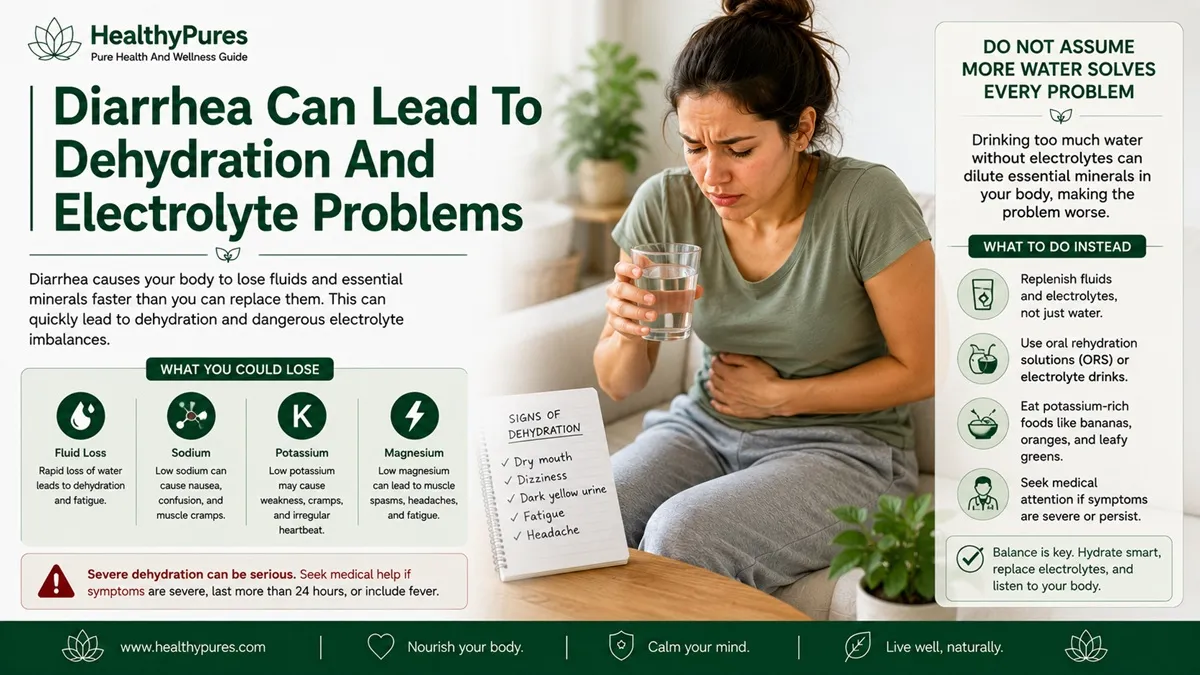
Drinking fluids can help with mild losses, but excessive water is not automatically safer. Some health conditions require individualized fluid advice.
Persistent diarrhea may also require medical assessment. Do not keep using the tea while symptoms continue.
3. Caffeine May Worsen Anxiety, Palpitations, Or Sleep

Some detox products contain green tea, black tea, guarana, or added caffeine. The total caffeine amount may vary by serving.
The MedlinePlus caffeine overview lists restlessness, insomnia, dizziness, fast heart rate, and anxiety among possible effects of excessive caffeine.
People with anxiety, insomnia, arrhythmias, or caffeine sensitivity may notice symptoms at lower amounts. Timing also matters, especially later in the day.
Caffeine-related symptoms are another category of potential side effects. A product marketed for wellness can still contain a meaningful stimulant dose.
Check More Than The Front Label
Words such as “energy,” “metabolism,” or “thermogenic” can signal stimulant ingredients. Review the full Supplement Facts panel when one is provided.
If the caffeine amount is unclear, avoid stacking the product with coffee, energy drinks, or other stimulants.
Medication use can change the importance of detox tea side effects and safety risks.
4. Detox Teas Can Interact With Medicines

Herbal and dietary supplements can interact with prescription or over-the-counter medicines. Multi-ingredient blends make evaluation more complicated.
The FDA guide to dietary supplements notes that supplements can interact with medicines and affect medical care.
Some senna products also need spacing from certain oral medicines. Severe diarrhea can additionally affect absorption of some oral drugs.
Medication interactions are therefore among the most important detox tea safety concerns to discuss with a pharmacist.
Be Careful With Broad Claims About Birth Control
It is too broad to say every detox tea makes birth control ineffective. The actual risk depends on the product and whether vomiting or severe diarrhea occurs.
If you use oral contraception and develop severe gastrointestinal symptoms, follow the medication instructions. Ask a pharmacist when you are unsure.
5. Some Herbal Supplements Have Been Linked To Liver Injury

Most herbal products do not cause liver injury. However, herbal and dietary supplement-related liver injury is well documented.
The NIH LiverTox overview of herbal and dietary supplements describes reported liver injury from a range of products and ingredients.
Multi-ingredient supplements can be difficult to evaluate because formulas vary. Contamination, adulteration, or an unexpected ingredient can also complicate causality.
Rare liver injury belongs in a balanced discussion of detox tea side effects and safety risks. It should not be presented as an inevitable effect of every tea.
Warning Signs Need Medical Attention
Yellow skin or eyes, dark urine, severe fatigue, or persistent upper abdominal pain deserve medical assessment. Stop the suspected product while seeking advice.
For evidence-aware liver health guidance, see our guide to supporting liver health without supplements.
6. Pregnancy, Breastfeeding, And Chronic Conditions Need Extra Caution
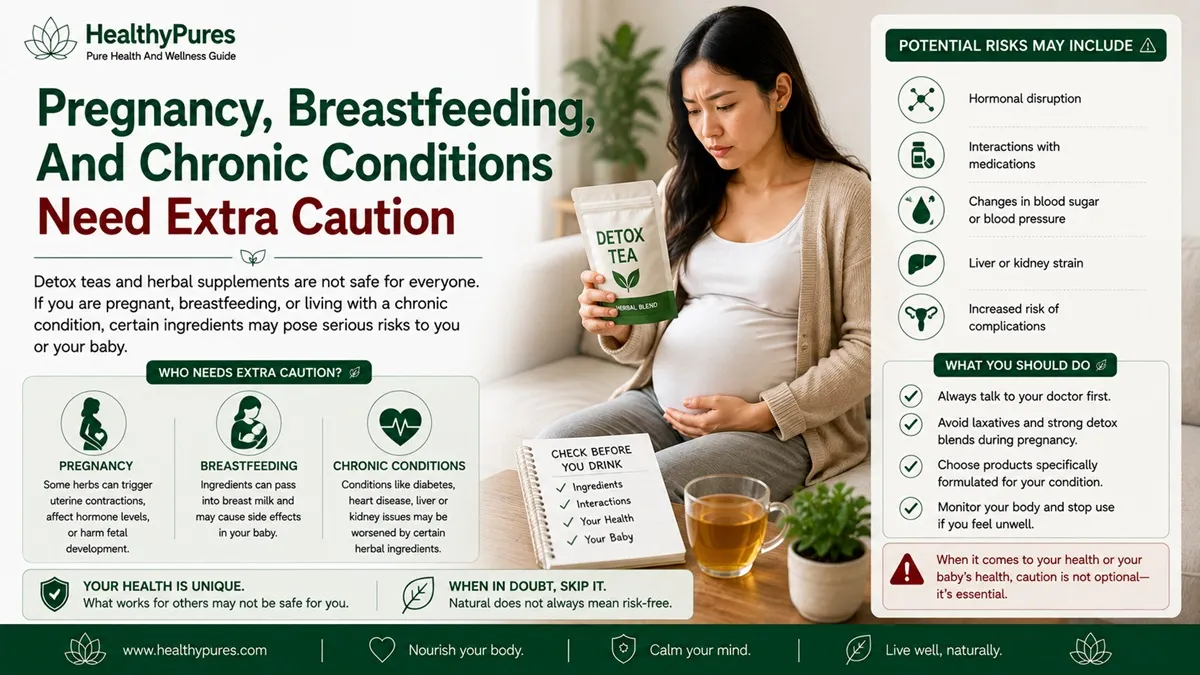
Pregnancy and breastfeeding are not good times to assume an herbal blend is automatically safe. Many supplement ingredients lack adequate safety data.
The NCCIH guidance on supplements in pregnancy recommends discussing non-vitamin supplements with a healthcare professional.
People with kidney disease, heart disease, digestive disorders, or other chronic conditions may also have different risks. Fluid and electrolyte changes can matter more.
These groups should consider detox tea side effects and safety risks before using a product. Personalized medical advice is more useful than a generic label claim.
7. “Natural” Does Not Mean FDA-Approved Before Sale
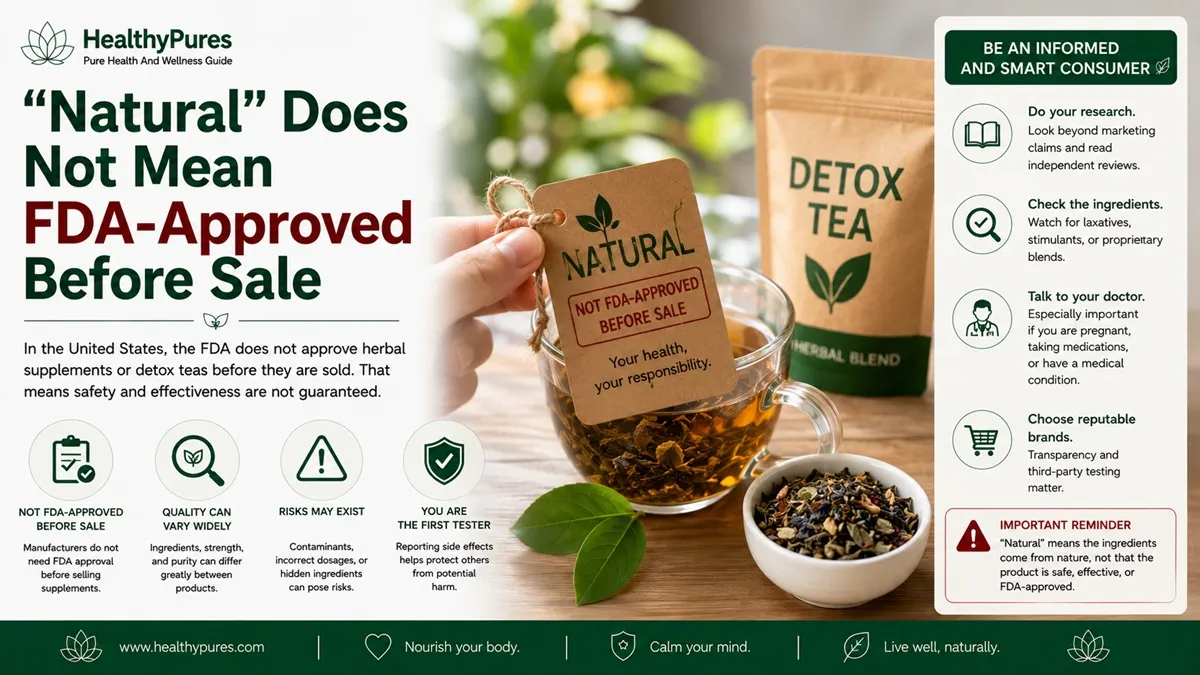
Many detox teas are marketed as dietary supplements. In the United States, dietary supplements are regulated differently from prescription drugs.
FDA does not approve dietary supplements for safety and effectiveness before they reach the market. Companies remain responsible for safety and lawful labeling.
This regulatory difference is relevant when assessing detox tea side effects and safety risks. A product being sold online does not prove that every claim has been independently verified.
Look for a complete ingredient list, serving size, manufacturer information, and clear directions. Be skeptical of disease-treatment or guaranteed weight-loss claims.
What Your Kidneys Actually Do
Your body already has systems that process and remove waste. The kidneys continuously filter blood and help regulate water, salts, and minerals.
The NIDDK kidney function guide explains that healthy kidneys remove wastes and extra water to make urine.
That normal process is different from commercial “cleansing.” Your kidneys do not need diarrhea or excessive urination to function.
This distinction helps put detox tea side effects and safety risks into context. More bowel movements do not equal better detoxification.
For a broader self-care approach, read our safe body cleansing tips.
Understanding detox tea side effects and safety risks also makes safer alternatives easier to compare.
Safer Alternatives To A Detox Tea Routine

You do not need a detox product to support normal health. Basic habits are more predictable and easier to evaluate.
- Drink fluids according to thirst, activity, climate, and health needs.
- Eat a varied diet with vegetables, fruits, protein foods, whole grains, and fiber.
- Use ordinary tea for enjoyment rather than as a laxative or cleanse.
- Sleep consistently and stay physically active within your abilities.
- Discuss persistent digestive symptoms with a healthcare professional.
These habits avoid many detox tea risks. They also do not depend on an unverified promise to remove toxins.
Our good nutrition guide provides a practical foundation for everyday eating.
When To Seek Medical Care
Some detox tea side effects and safety risks are mild. Certain symptoms should not be watched at home for long.
Seek prompt medical care for fainting, confusion, severe weakness, chest pain, trouble breathing, or an irregular heartbeat.
Persistent vomiting, severe diarrhea, reduced urination, signs of dehydration, or significant abdominal pain also deserve assessment.
Stop the product if you develop hives, facial swelling, wheezing, or another possible allergic reaction. Severe breathing symptoms are an emergency.
The FDA adverse-event reporting page explains how consumers can report serious reactions linked to dietary supplements.
Small label details can change the detox tea side effects and safety risks associated with a specific product.
Common Mistakes To Avoid
Marketing language can make detox tea side effects and safety risks easier to overlook. A few mistakes are especially common.
- Do not assume diarrhea means the product is working.
- Do not use a multi-ingredient tea without checking the full label.
- Do not combine several stimulant or laxative products.
- Do not assume herbs cannot interact with medication.
- Do not continue a product that repeatedly causes significant symptoms.
The following questions address common concerns about detox tea side effects and safety risks.
Frequently Asked Questions
Are Detox Teas Effective For Weight Loss?
Detox teas are not proven to create lasting fat loss. Short-term scale changes may reflect fluid loss, reduced food intake, or bowel emptying.
The detox tea side effects and safety risks can outweigh any temporary change on the scale. Sustainable weight management requires a broader approach.
How Long Do Detox Tea Side Effects Last?
Duration depends on the ingredient, dose, and individual response. Mild caffeine or digestive effects may improve after the product is stopped.
Persistent symptoms, dehydration, or an electrolyte problem may last longer. Seek medical advice when symptoms are severe or do not improve.
Can Detox Tea Damage The Liver?
Not every detox tea harms the liver. However, some herbal and dietary supplements have been associated with liver injury.
The risk depends on the specific ingredients and product. Unexplained jaundice, dark urine, or severe fatigue requires medical evaluation.
Can Detox Tea Interfere With Medication?
Yes, some ingredients can interact with medicines. Severe diarrhea may also affect absorption of certain oral medications.
A pharmacist can check the exact product and medication list. This is safer than relying on a broad interaction warning online.
Is It Safe To Drink Detox Tea Every Day?
That depends on what is in the product. A tea containing stimulant laxatives or substantial caffeine should not be treated like ordinary herbal tea.
Daily use can increase some detox tea side effects and safety risks. Follow label directions and seek professional advice for regular use.
Do I Need A Detox Tea To Cleanse My Body?
No special tea is required for normal waste removal. The liver, kidneys, digestive system, lungs, and other systems already perform essential processing functions.
A balanced diet, adequate hydration, sleep, and regular activity are more reliable foundations. They do not require a commercial cleansing claim.
Detox tea side effects and safety risks vary widely because formulas differ. Laxatives, caffeine, herbs, and multi-ingredient blends can create different problems.
The main concerns include diarrhea, dehydration, electrolyte imbalance, stimulant effects, interactions, and rare supplement-related liver injury.
Read the ingredient list before using a product. Stop if significant symptoms develop and seek professional care when warning signs appear.
Most importantly, diarrhea or increased urination should not be mistaken for proof of detoxification. Your body already has normal systems for processing waste.
This article provides general educational information and does not replace individualized medical advice, diagnosis, or treatment. Review our Medical & Affiliate Disclaimer for more information.