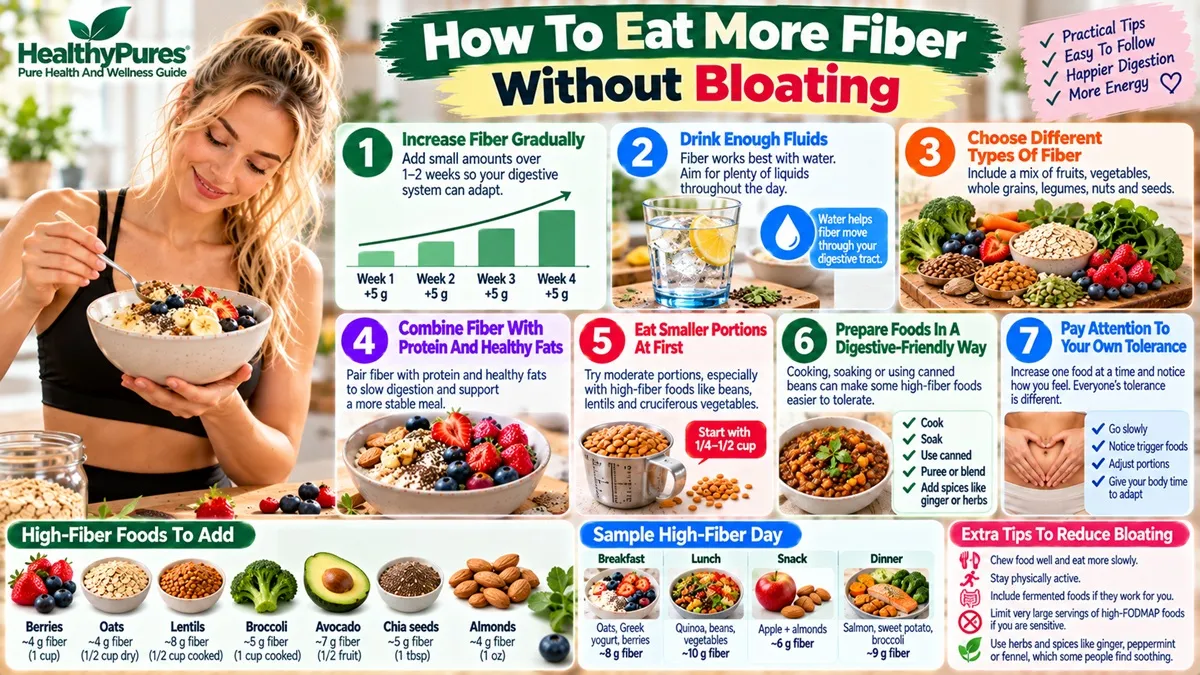
Adding more fiber can improve the quality of your diet, but a sudden increase can bring gas, bloating, or constipation. Learning how to eat more fiber without bloating starts with smaller changes.
Learning how to eat more fiber without bloating is mostly about pacing, food choice, fluid intake, and paying attention to your own tolerance. This approach is more useful than chasing a single “best” fiber food.
This guide turns the original nine tips into a practical routine. It also explains which claims are well supported and which popular shortcuts deserve caution.
Quick Summary
- Use gradual increases as the foundation for how to eat more fiber without bloating.
- Drink enough fluids as you increase fiber, especially when constipation is also present.
- Choose foods and portions that match your tolerance rather than forcing one “best” fiber source.
- Eat slowly, track patterns, and adjust one variable at a time when bloating appears.
Quick Facts
| Aspect | Details |
|---|---|
| Adult Fiber Range | NIDDK lists about 22–34 grams per day for adults, depending on age and sex. See the NIDDK fiber guidance. |
| FDA Daily Value | Nutrition Facts labels use 28 grams per day as the Daily Value for dietary fiber. |
| Why Bloating Happens | Gut bacteria break down some undigested carbohydrates and produce gas during the process. |
| Best First Move | Make small fiber increases and give your digestive system time to adapt. |
| Fluid Strategy | Drink enough liquids to help fiber work effectively through the digestive tract. |
| When To Get Help | Persistent or severe bloating, weight loss, bleeding, vomiting, or significant pain deserves medical evaluation. |
Who This Guide Is For
- ✔ Adults who want to increase fiber after eating a low-fiber diet.
- ✔ People who notice gas or bloating after suddenly adding more fiber.
- ✔ Anyone who wants a practical way to test portions and food choices.
- ✔ Readers who want to increase fiber without relying on rigid water or supplement rules.
Understanding Fiber And Bloating
Fiber is a type of carbohydrate that the small intestine does not fully digest. Some fiber reaches the large intestine, where gut microbes break down parts of it.
That process can produce gas. Gas is a normal part of digestion, but a sudden dietary change can make symptoms more noticeable. NIDDK explains the process in its gas symptom guidance. That distinction matters when practicing how to eat more fiber without bloating.
How your body responds also depends on the food, portion, eating speed, and your digestive sensitivity.
Why A Sudden Fiber Increase Can Feel Uncomfortable
NIDDK advises adding fiber a little at a time so the body can adjust. Harvard Health also notes that a sudden fiber increase can trigger gas, bloating, or cramps. For most people, how to eat more fiber without bloating begins with pace, not restriction.
That is why how to eat more fiber without bloating should not mean chasing the highest-fiber meal you can find.
A better approach is to make one modest change, observe your response, and build from there.
Soluble And Insoluble Fiber: What Matters In Practice
Soluble and insoluble fiber behave differently, but neither type needs to be avoided simply because you experience bloating.
For some people, softer foods such as cooked oats or cooked vegetables feel easier during a transition. Others tolerate raw produce, beans, or whole grains well.
The goal is not to create a permanent “safe fiber” list. The goal is to find a varied pattern that your body handles comfortably.
People with irritable bowel syndrome can also react to FODMAP carbohydrates, which are different from fiber even though some foods contain both. Monash explains this distinction in its FODMAP guidance.
If you have diagnosed IBS, the advice can be more specific. The American College of Gastroenterology recommends soluble fiber, such as psyllium, for overall IBS symptoms. That recommendation does not mean soluble fiber is better for every person without IBS. See the ACG IBS guidance for the condition-specific recommendation.
9 Practical Tips To Eat More Fiber Without Bloating
These nine strategies focus on the most useful behavior changes. Use them together, but introduce major changes gradually.
Tips 1–3: Build A Gentler Starting Point
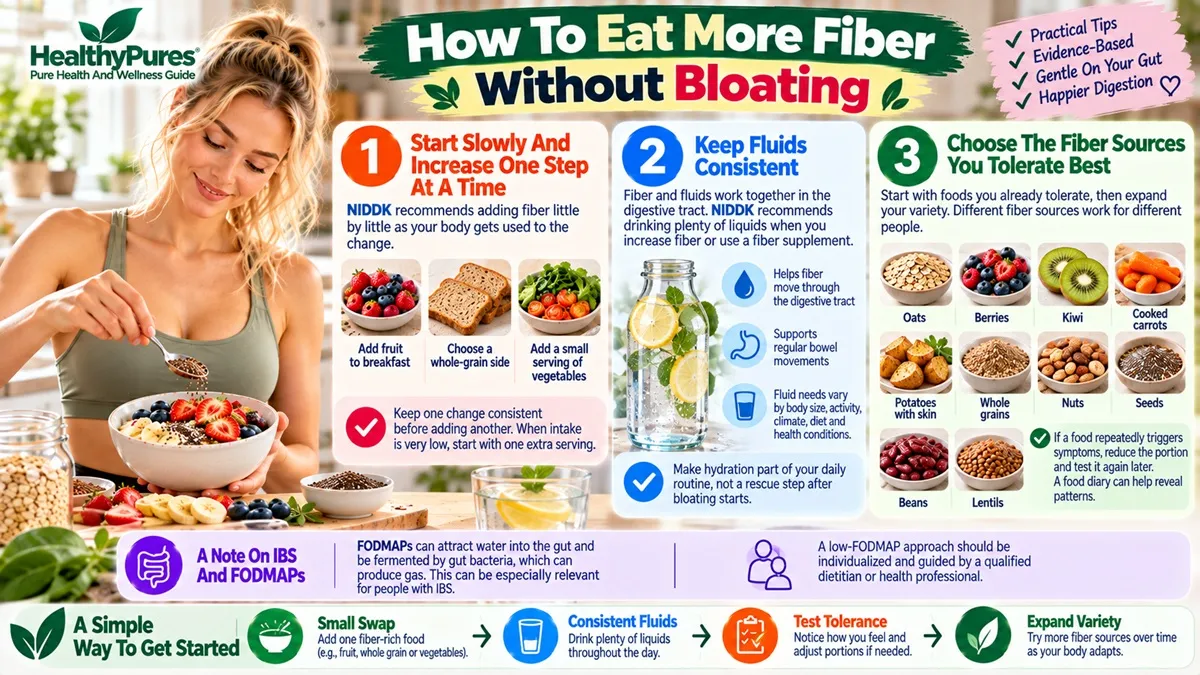
1. Start Slowly And Increase One Step At A Time
The most reliable starting point is a gradual increase. NIDDK recommends adding fiber little by little as your body gets used to the change.
Start with one easy swap. Add fruit to breakfast, choose a whole-grain side, or add a small serving of vegetables.
Keep that change consistent before adding another. This makes it easier to identify what helps and what causes discomfort. That is the simplest version of how to eat more fiber without bloating.
When intake is very low, start with one extra serving. That is a practical way to practice how to eat more fiber without bloating.
2. Keep Fluids Consistent
Fiber and fluids work together in the digestive tract. NIDDK recommends drinking plenty of liquids when you increase fiber or use a fiber supplement.
You do not need to force a fixed “eight glasses” rule. Fluid needs vary with body size, activity, climate, diet, and health conditions. NIDDK explains why fluids matter when adding fiber.
Instead, keep fluids consistent across the day. This is especially important if constipation is part of the problem.
Think of hydration as part of the routine, not a rescue step after bloating starts.
3. Choose The Fiber Sources You Tolerate Best
Do not assume one fiber type will feel better for everyone. Start with foods you already tolerate, then expand your variety.
Oats, berries, kiwi, cooked carrots, potatoes with skin, whole grains, nuts, seeds, beans, and lentils can all contribute fiber.
If a food repeatedly triggers symptoms, reduce the portion and test it again later. A food diary can help reveal patterns.
For people with IBS, FODMAP content may also matter. Monash explains that FODMAPs can pull water into the gut and increase fermentation.
This distinction makes how to eat more fiber without bloating more practical. You can change the food without abandoning the overall fiber goal. Individual tolerance still matters.
Tips 4–6: Make Fiber Easier To Handle
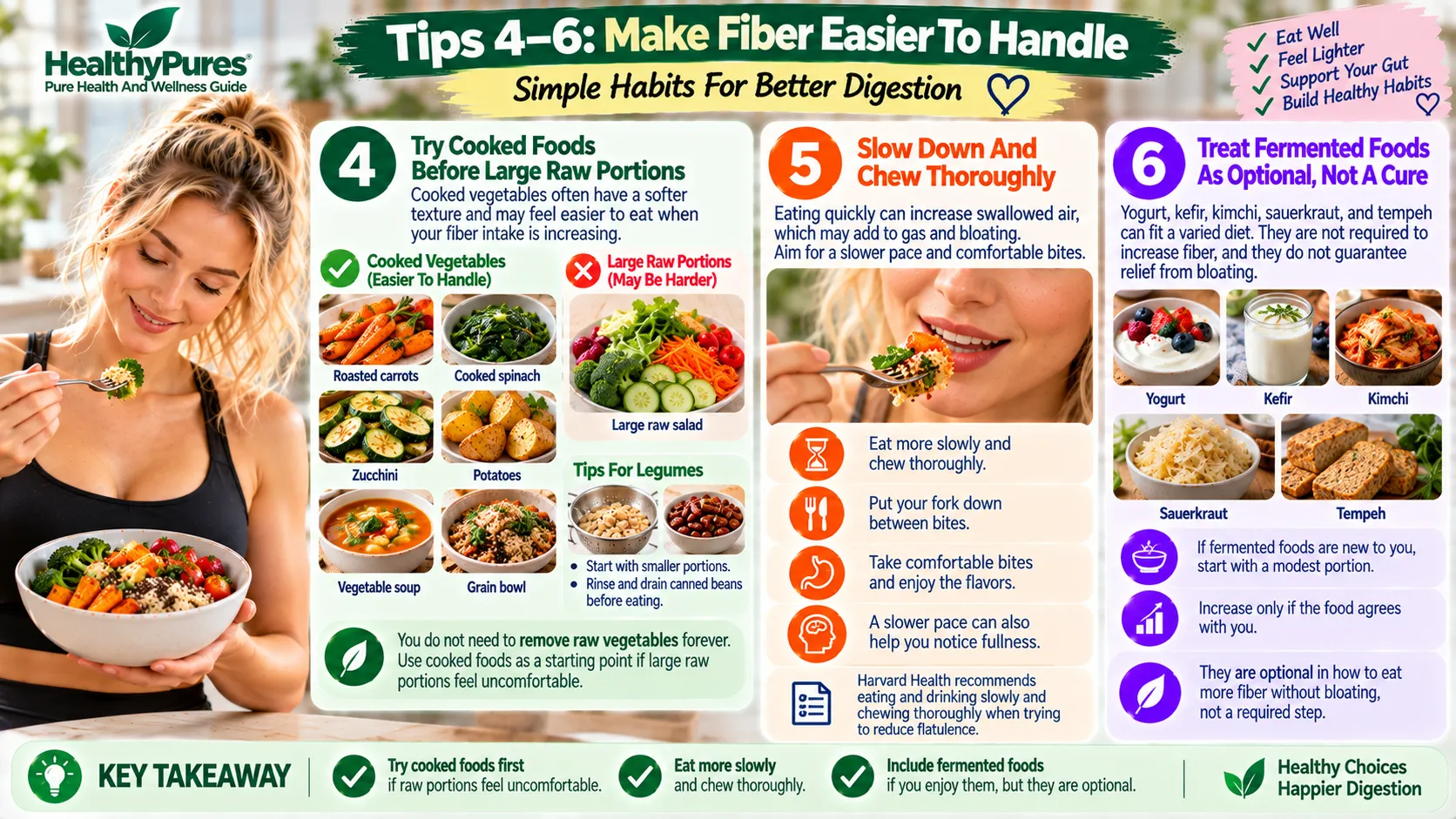
4. Try Cooked Foods Before Large Raw Portions
Raw vegetables can feel bulky for some people when fiber intake is changing quickly. Cooked vegetables often have a softer texture and may feel easier to eat.
Try roasted carrots, cooked spinach, zucchini, potatoes, or soft vegetables in soups and grain bowls.
You do not need to remove raw vegetables forever. Use cooked foods as a starting point if large raw salads feel uncomfortable. For some readers, this small adjustment makes how to eat more fiber without bloating easier.
For legumes, try smaller portions first. Canned beans can also be rinsed and drained before eating.
5. Slow Down And Chew Thoroughly
Eating quickly can increase swallowed air, which may add to gas symptoms. Harvard Health recommends eating and drinking slowly and chewing thoroughly when trying to reduce flatulence.
There is no need to count a fixed number of chews. Aim for a slower pace and comfortable bites.
Put your fork down between bites when meals feel rushed. This simple habit can also help you notice fullness.
For how to eat more fiber without bloating, meal speed matters because bloating is not always caused by fiber alone.
6. Treat Fermented Foods As Optional, Not A Cure
Yogurt, kefir, kimchi, sauerkraut, and tempeh can fit a varied diet. They are not required to increase fiber, and they do not guarantee relief from bloating.
HealthyPures’ fermented foods for gut health guide explains why fermented foods and probiotics are not interchangeable.
If fermented foods are new to you, start with a modest portion. Increase only if the food agrees with you. They are optional in how to eat more fiber without bloating, not a required step.
Tips 7–9: Find Your Personal Tolerance

7. Watch For Non-Fiber Triggers
Not every episode of bloating comes from dietary fiber. Carbonated drinks, sugar alcohols, eating too quickly, food intolerance, constipation, and digestive disorders can also contribute.
Harvard Health notes that carbonated drinks and sorbitol-containing sugar-free products can contribute to flatulence for some people. See its Harvard gas guidance.
Instead of cutting out every high-fiber food, review the whole meal. Look at beverages, sweeteners, portion size, and eating speed. This wider check is part of how to eat more fiber without bloating.
This broader view can make how to eat more fiber without bloating much easier to apply.
8. Track Symptoms And Change One Variable At A Time
A short food and symptom diary can help you identify patterns. Record the food, portion, time, and symptoms that follow. This can make how to eat more fiber without bloating more personalized.
NIDDK notes that doctors may use a food and drink diary when evaluating gas symptoms.
Try changing one variable at a time. For example, reduce a large bean portion before removing every legume from your diet.
This keeps your diet more varied while helping you learn your own tolerance.
9. Use Fiber Supplements Carefully
Food is usually the simplest way to build fiber into a balanced diet. A supplement may be useful in some situations, but it is not automatically better.
Some supplements can increase gas or bloating, especially when the dose rises too quickly.
If you are considering a supplement, start cautiously and follow the product directions. Ask a healthcare professional for individualized advice when needed.
NIDDK notes that fluids are important when increasing fiber or using a fiber supplement.
Do not use a supplement to push fiber higher while ignoring persistent bloating or other digestive symptoms.
Use this baseline before deciding how to eat more fiber without bloating on a day when symptoms already feel unsettled.
A food log can reveal whether bloating follows fiber, meal size, fizzy drinks, or another food. This makes how to eat more fiber without bloating a personalized process.
| Step | What To Do | Why It Helps |
|---|---|---|
| 1 | List your usual fiber foods | Shows where your current intake comes from. |
| 2 | Note portions and symptoms | Connects larger portions with possible discomfort. |
| 3 | Add one small change | Makes it easier to judge your tolerance. |
| 4 | Keep comfortable foods steady | Creates a simple base for the next increase. |
This baseline helps you avoid adding several high-fiber foods at once. That matters when learning how to eat more fiber without bloating. It also makes trigger foods easier to spot.
Before changing your diet, spend a few days noticing how much fiber you already eat. Use food labels and a simple food log. You do not need perfect numbers.
Find Your Fiber Baseline Before Increasing It
A Simple 7-Day Fiber Upgrade
You do not need a perfect meal plan to learn how to eat more fiber without bloating. A simple progression can be easier to maintain. The goal is steady progress, not a perfect number every day.
| Days | Focus | Example |
|---|---|---|
| Days 1–2 | Add one familiar fiber food | Fruit at breakfast or a small serving of oats. |
| Days 3–4 | Add a second source | Add cooked vegetables at lunch or dinner. |
| Days 5–6 | Swap a refined grain | Try whole-grain bread, brown rice, or another whole grain. |
| Day 7 | Review tolerance | Keep foods that feel comfortable and adjust portions that do not. |
This is a practical framework, not a mandatory prescription. Your starting point may require more or fewer steps. Use the approach that makes how to eat more fiber without bloating sustainable.
How To Spread Fiber Across The Day
One large fiber-heavy meal can feel harder to tolerate than smaller amounts spread across the day. This is especially useful when your previous diet was low in fiber. Think about the pattern of the whole day, not just one meal.
| Meal | Simple Fiber Addition | Practical Aim |
|---|---|---|
| Breakfast | Oats, berries, kiwi, or whole-grain toast | Start with one familiar source. |
| Lunch | Cooked vegetables, beans, lentils, or whole grains | Use a moderate portion. |
| Snack | Fruit, nuts, seeds, or a high-fiber snack | Use a small portion if you are sensitive. |
| Dinner | Vegetables plus a whole grain or legume | Avoid making dinner your only big fiber increase. |
This distribution is a practical eating pattern, not a clinical prescription. If you tolerate a meal well, you can gradually increase variety or portion size. The same principle makes how to eat more fiber without bloating easier to sustain.
What To Do If Bloating Gets Worse
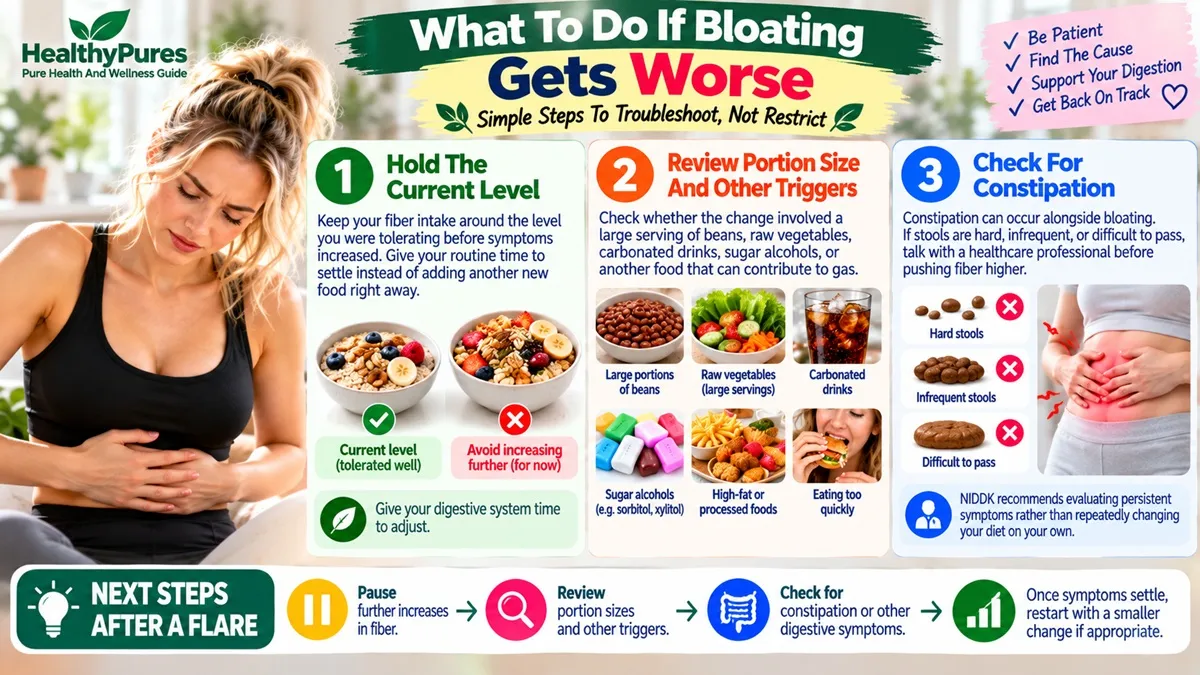
A flare after adding fiber does not automatically mean you need to abandon high-fiber foods. First, stop increasing your intake and review the last change you made.
1. Hold The Current Level
Keep your fiber intake around the level you were tolerating before symptoms increased. Give your routine time to settle instead of adding another new food right away.
2. Review Portion Size And Other Triggers
Check whether the change involved a large serving of beans, raw vegetables, carbonated drinks, sugar alcohols, or another food that can contribute to gas. NIDDK notes that these factors can affect gas symptoms.
3. Check For Constipation
Constipation can occur alongside bloating. If stools are hard, infrequent, or difficult to pass, talk with a healthcare professional before pushing fiber higher. NIDDK recommends evaluating persistent symptoms rather than repeatedly changing the diet on your own.
These steps keep how to eat more fiber without bloating focused on troubleshooting rather than restriction. Once symptoms settle, restart with a smaller change if appropriate.
Fiber Sources That May Feel Easier During A Transition
The best choice depends on your tolerance, but smaller portions and softer textures can be useful when you are starting from a low-fiber diet.
| Food | Practical Starting Idea | Why It Can Help |
|---|---|---|
| Oatmeal | Start with a modest bowl | Soft texture and a familiar breakfast format. |
| Kiwi | Try one fruit serving | Easy to portion and portable. |
| Cooked Carrots | Add a small side | Soft texture and simple preparation. |
| Potatoes With Skin | Use a moderate portion | Easy to combine with protein and vegetables. |
| Chia Or Flax | Start with a small amount | Easy to add to yogurt or oats without changing the meal. |
| Lentils Or Beans | Start with a small serving | Fiber-rich and useful as plant protein. |
Need more ideas? Our High Fiber Snacks guide compares practical portions and approximate fiber amounts.
Foods That May Trigger More Bloating For Some People
Some foods can produce more gas in certain people, especially when portions are large.
Common examples include beans, lentils, some cruciferous vegetables, onions, garlic, carbonated drinks, and products containing certain sugar alcohols. This is one reason how to eat more fiber without bloating requires looking beyond fiber alone.
This does not mean these foods are unhealthy or must be eliminated. Individual tolerance matters.
For a broader discussion, see our guide to foods that may worsen bloating.
How Much Fiber Should Adults Get?
NIDDK says adults should get about 22–34 grams of fiber per day, depending on age and sex.
The FDA uses 28 grams per day as the Daily Value on Nutrition Facts labels. The FDA also says 20% Daily Value or more is generally considered high for an individual nutrient.
These numbers are useful reference points, not personal prescriptions. Your needs can differ because of health conditions, medications, energy needs, and dietary pattern. The FDA also explains that 20% Daily Value or more is generally considered high for a nutrient in its Daily Value guidance.
For practical food ideas, our guide to getting more fiber every day covers simple ways to build intake across meals.
When Bloating Means You Should Get Medical Advice
Occasional gas can be normal. Persistent, severe, or changing symptoms deserve more attention.
NIDDK advises talking with a doctor when gas symptoms are bothersome or occur with abdominal pain, constipation, diarrhea, or weight loss. That matters because how to eat more fiber without bloating should not replace evaluation of persistent symptoms.
Seek medical care promptly for symptoms such as blood in the stool, vomiting, severe abdominal pain, fever, or unexplained weight loss.
Do not keep increasing fiber to solve symptoms that may have another cause. Persistent bloating can occur with constipation, food intolerance, IBS, or other digestive conditions.
Frequently Asked Questions
How Fast Should I Increase Fiber?
There is no universal schedule. Start with one small change and give your body time to adapt before adding another. That is a practical starting point for how to eat more fiber without bloating.
Does Drinking More Water Prevent All Fiber Bloating?
No. Fluids help fiber work effectively, but bloating has many possible causes. Food choice, portion size, eating speed, and digestive conditions can also matter.
Should I Avoid Insoluble Fiber?
No. Both soluble and insoluble fiber can be part of a balanced diet. The better approach is to adjust portions and food choices based on tolerance.
Can I Eat Beans If Beans Make Me Bloat?
Often, you can test a smaller portion rather than removing beans permanently. Rinse canned beans and increase portions only when tolerated.
Are Fiber Supplements Better Than Food?
Not necessarily. Whole foods provide fiber along with vitamins, minerals, and other nutrients. Supplements can be useful for some people under appropriate guidance.
Can Walking Help With Bloating?
Gentle physical activity can support regular digestive movement. NIDDK includes regular physical activity among measures that may help constipation in its constipation treatment guidance.
How Do I Practice How To Eat More Fiber Without Bloating If I Have IBS?
People with IBS may react to specific fermentable carbohydrates as well as fiber amount. Consider discussing persistent symptoms with a clinician or dietitian. A tailored plan may be more useful than broad restriction.
The Bottom Line
Learning how to eat more fiber without bloating is less about finding one perfect food and more about changing your routine gradually.
Start with a small increase. Keep fluids consistent. Eat slowly. Choose portions you tolerate. Then expand your variety over time. These habits form a practical system for how to eat more fiber without bloating.
That approach lets you work toward higher fiber intake without turning every digestive symptom into a reason to remove healthy foods.
Just a friendly reminder from our team: Health needs vary from person to person, so this information is intended to support general wellness and does not replace professional medical advice. Read our full Medical Disclaimer for more information.