How much protein per day to lose weight? A useful starting point is often higher than the basic protein requirement. The answer depends on your body size and goals.
For many adults working toward weight loss, 1.2 to 1.6 grams per kilogram can be practical. This range is a useful framework for how much protein per day to lose weight. Exact needs depend on body size, activity, age, and health status.
This guide explains how much protein per day to lose weight with simple calculations. It also covers meal timing, food choices, and common mistakes.
Quick Summary
- Use body weight, activity, and health status to choose a practical protein range.
- A common weight-loss range is about 1.2 to 1.6 grams per kilogram daily.
- Protein can support fullness and help preserve lean mass during a calorie deficit.
- People with kidney disease or other medical needs should get individualized advice.
Quick Facts
| Aspect | Details |
|---|---|
| Adult RDA | 0.8 grams of protein per kilogram of body weight per day. |
| Common weight-loss range | About 1.2 to 1.6 grams per kilogram per day for many adults. |
| 160-pound example | About 87 to 116 grams daily at 1.2 to 1.6 g/kg. |
| Meal strategy | Spread protein across meals rather than relying on one large serving. |
| Special caution | Kidney disease and some other conditions require personalized protein advice. |
Who This Guide Is For
- ✓ Adults trying to lose body fat while keeping meals satisfying.
- ✓ People who want a simple protein target without tracking every nutrient.
- ✓ Active adults who want to support lean mass during calorie restriction.
- ✓ Anyone comparing food-based protein with convenient supplements.
What Is A Good Daily Protein Target For Weight Loss?

The most practical answer is not one number. Protein needs change with body weight, activity, age, and health status.
For many adults focused on weight reduction, 1.2 to 1.6 grams per kilogram per day is a practical range to discuss. The 2025–2030 Dietary Guidelines for Americans use this range for weight management. Its weight-management protein evidence describes the research behind that range.
The important point is that protein supports a larger weight-management plan. That context matters when deciding how much protein per day to lose weight. A higher intake does not automatically create a calorie deficit.
Why The Target Is Higher Than The Basic RDA
The adult Recommended Dietary Allowance is 0.8 grams per kilogram of body weight per day. That value is designed to meet basic protein needs for generally healthy adults.
Weight-loss diets can have a different goal. When food intake falls, adequate protein can help retain lean mass while the body loses weight.
A 2024 systematic review and meta-analysis found that higher protein intake helped reduce muscle-mass loss in adults with overweight or obesity during weight loss. The authors found benefits particularly above 1.0 grams per kilogram daily. protein and muscle preservation evidence provides the study details.
Protein Helps, But Calories Still Matter
Protein can make meals more filling, but protein alone does not override total energy intake. Weight loss still depends on maintaining an energy deficit over time.
Research also suggests that higher-protein diets can produce modest improvements in body weight and body composition compared with lower-protein diets under energy restriction. high-protein weight-loss evidence summarizes randomized trials.
How To Calculate Your Daily Protein Target
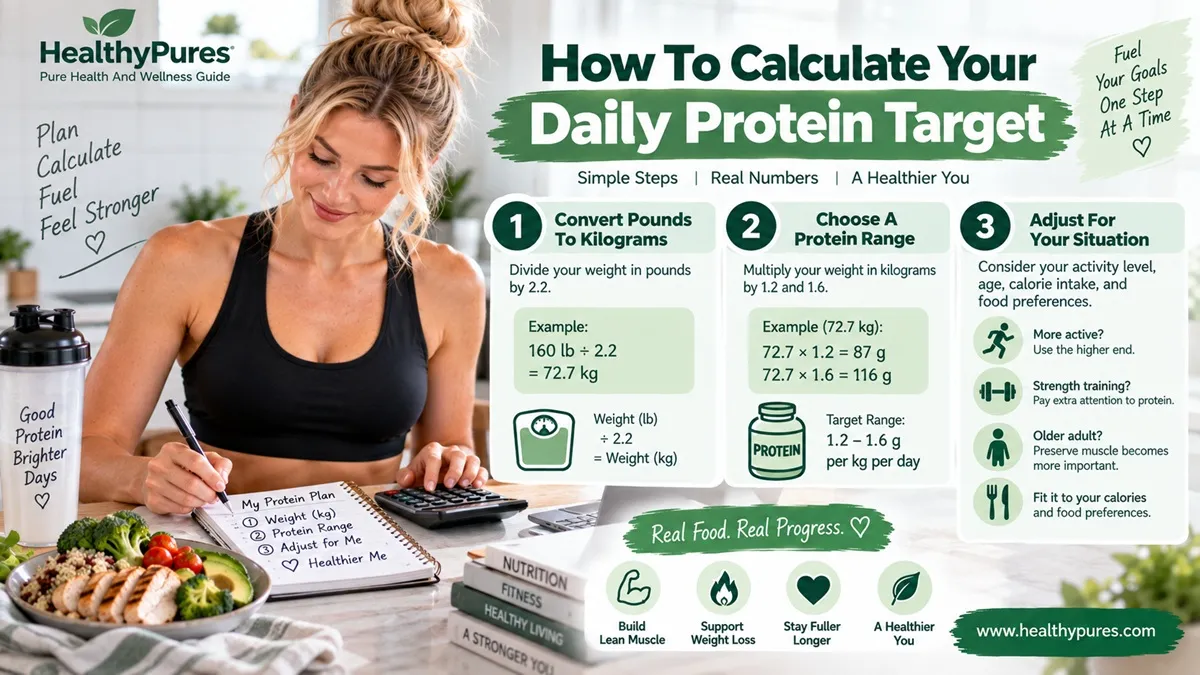
The calculation is simple. Convert your weight to kilograms, then multiply by your chosen range. This makes how much protein per day to lose weight easier to estimate.
Step 1: Convert Pounds To Kilograms
Divide your weight in pounds by 2.2. A person weighing 160 pounds weighs about 72.7 kilograms.
Step 2: Choose A Protein Range
Multiply body weight in kilograms by 1.2 and 1.6. For 72.7 kilograms, the result is about 87 to 116 grams per day.
This gives you a target range instead of one rigid number. A range is more useful than a single universal number. How much protein per day to lose weight should be treated as a practical starting point, not a fixed rule for every person.
Step 3: Adjust For Your Situation
More active adults may prefer the higher end of the range. Strength training also increases the value of paying attention to protein and overall diet quality.
Older adults may have different needs because preserving muscle becomes increasingly important with age. Your target should also fit your calorie intake and food preferences. Those details shape how much protein per day to lose weight in practice.
Should You Calculate Protein From Current Weight?
Using current body weight is convenient, but it is not always the best method for everyone.
People with obesity may receive different protein targets from a qualified professional, especially when using adjusted body weight or another individualized approach.
The goal is to avoid creating a protein target that is unnecessarily high simply because total body weight is high. Your lean mass, activity level, calorie intake, and health history all matter.
For a practical meal framework built around protein, see our high-protein meal plan for weight loss.
How Protein Can Support Weight Loss

It Can Increase Fullness
Higher-protein meals can increase feelings of fullness. A systematic review found that higher protein intake may improve satiety. Evidence strength varied across studies. protein and appetite evidence explains the findings.
For practical eating, this means protein can help when meals leave you hungry soon after eating. That can influence how much protein per day to lose weight feels manageable.
It Can Help Preserve Lean Mass
Weight loss can reduce both fat and lean tissue. Adequate protein helps support muscle retention, especially when combined with resistance training and an appropriate calorie deficit.
It Has A Higher Thermic Effect
Your body uses energy to digest and process food. Protein generally has a higher thermic effect than carbohydrates or fat.
This effect can contribute to energy expenditure, but it is only one part of the overall picture. It should not be treated as a standalone fat-burning strategy.
How To Distribute Protein Across The Day
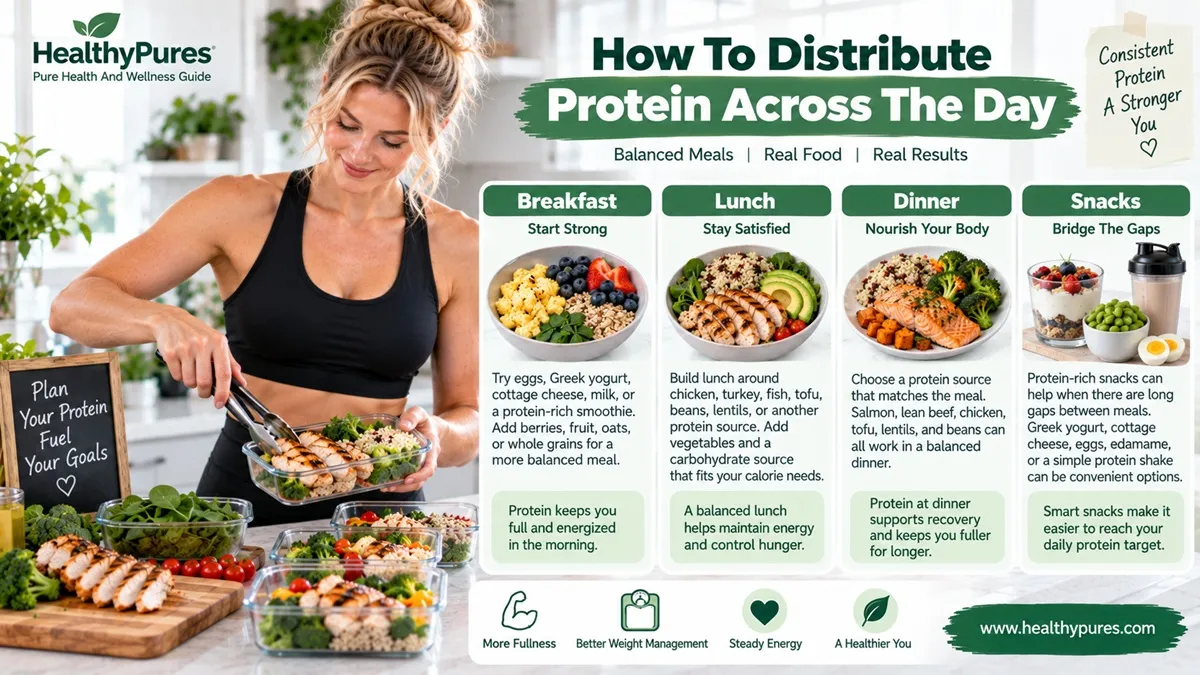
Hitting your daily target is the main goal. Meal distribution can make how much protein per day to lose weight easier to reach. Spreading protein across meals can make that target easier to reach without one unusually large serving.
Breakfast
Try eggs, Greek yogurt, cottage cheese, milk, or a protein-rich smoothie. Adding berries, fruit, oats, or whole grains can make the meal more balanced.
Lunch
Build lunch around chicken, turkey, fish, tofu, beans, lentils, or another protein source. Add vegetables and a carbohydrate source that fits your calorie needs.
For another structured option, see our weight-loss breakfast ideas for simple meal combinations.
Dinner
Choose a protein source that matches the meal. Salmon, lean beef, chicken, tofu, lentils, and beans can all work in a balanced dinner.
Snacks
Protein-rich snacks can help when there are long gaps between meals. Greek yogurt, cottage cheese, eggs, edamame, or a simple protein shake can be convenient options.
Best Protein Foods For Weight Loss

Lean Meat And Poultry
Skinless chicken, turkey, lean beef, and pork can provide substantial protein. Choose portions that fit your overall calorie and saturated-fat goals.
Fish And Seafood
Fish provides protein plus other nutrients. Salmon, tuna, cod, shrimp, and similar options can add variety to a weight-loss eating pattern.
Dairy Foods
Greek yogurt, cottage cheese, milk, and other dairy foods can make protein easier to add to breakfast or snacks.
Plant Proteins
Beans, lentils, chickpeas, tofu, tempeh, edamame, and other soy foods can provide protein and useful nutrients such as fiber.
Plant proteins can fit a weight-loss diet well. Variety matters because different foods provide different nutrients.
Protein Powder
Protein powder is optional. It can help when food alone makes your target difficult to reach.
Choose a product that fits your dietary preferences and calorie needs. A shake should complement a balanced diet rather than replace most whole foods.
How To Reach Your Protein Goal Without Overeating
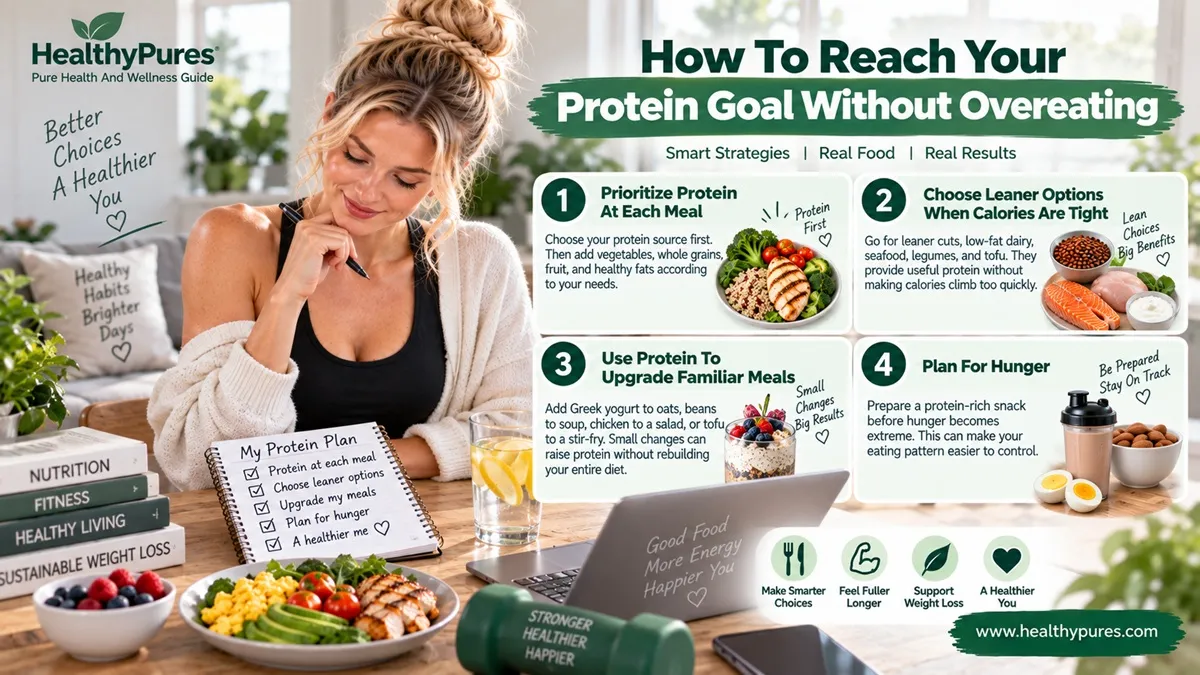
Prioritize Protein At Each Meal
Choosing the protein source first can make meal planning easier. Then add vegetables, whole grains, fruit, and healthy fats according to your needs.
Choose Leaner Options When Calories Are Tight
Protein foods vary in calorie density. That matters when planning how much protein per day to lose weight without overshooting calories. Leaner cuts, low-fat dairy, seafood, legumes, and tofu can provide useful protein without making calories climb too quickly.
Use Protein To Upgrade Familiar Meals
Add Greek yogurt to oats, beans to soup, chicken to a salad, or tofu to a stir-fry. Small changes can support how much protein per day to lose weight without rebuilding your diet. Small changes can raise protein without rebuilding your entire diet.
Plan For Hunger
If you regularly get hungry between meals, prepare a protein-rich snack before hunger becomes extreme. This can make your eating pattern easier to control.
Common Protein Mistakes During Weight Loss

Trying To Eat As Much Protein As Possible
More is not automatically better. Very high intake can crowd out fiber-rich foods, fruits, vegetables, or other nutrients.
Ignoring Total Calories
Protein foods still contain calories. Large portions of fatty meats, cheese, nuts, or shakes can push total intake higher than expected.
Eating Almost All Protein At Dinner
A large dinner may feel difficult when most of your daily protein arrives in one meal. Spreading protein can make your target easier to manage.
Replacing Carbohydrates And Fat Entirely
A balanced diet still needs carbohydrates and fats. Extreme restriction can make the diet harder to sustain and may reduce food variety.
How Much Protein Is Too Much?
There is no single intake level that defines “too much” for every person. The right amount depends on health status and total diet. Duration also matters when considering how much protein per day to lose weight safely.
For healthy adults, moderately higher protein intakes are commonly used in weight-management diets. However, more extreme intakes are not necessary for most people.
People with chronic kidney disease need individualized protein guidance. NIDDK notes that protein intake may need adjustment in CKD and recommends working with a health professional. kidney disease protein guidance explains why.
When To Get Personalized Protein Advice
Talk with a qualified professional before a major protein increase if you have kidney disease or significant liver disease.
Personal advice can also help if you use medication that changes appetite or food intake. Your protein goal should still leave enough room for fiber, healthy fats, carbohydrates, vitamins, and minerals.
Frequently Asked Questions About How Much Protein Per Day To Lose Weight
Is 100 Grams Of Protein A Day Enough?
It can be enough for some adults and too little or more than needed for others. Your body weight and target range matter more than a round number. They help answer how much protein per day to lose weight without relying on guesswork.
Is 1 Gram Per Pound Too Much?
That target equals about 2.2 grams per kilogram. It is above the common 1.2 to 1.6 g/kg range used in many weight-loss plans. Most adults do not need that much.
Should I Eat Protein Before Or After Exercise?
The total daily amount matters most. A protein-containing meal or snack around training can be practical, especially when meals are otherwise spread far apart.
Can Protein Powder Help Me Lose Weight?
Protein powder can help you reach a protein target when food alone is inconvenient. It does not independently cause weight loss.
Do I Need More Protein As I Get Older?
Protein needs can change with age because preserving muscle becomes more important. An individualized target can be useful, especially during weight loss or reduced activity.
Putting Your Protein Target Into Practice
How much protein per day to lose weight is best answered with a range that fits your body and routine. For many adults, 1.2 to 1.6 grams per kilogram daily is a useful starting point.
Calculate your range, divide it across meals, and choose protein foods that fit your calorie and nutrition needs. Then adjust based on hunger, activity, progress, and professional advice when needed.
Protein is one part of successful weight management. It should support a broader plan for how much protein per day to lose weight and maintain a balanced diet. A sustainable eating pattern, regular movement, adequate sleep, and an appropriate calorie deficit still matter.
For broader strategies, see our sustainable weight-loss tips guide.
Just a friendly reminder from our team: Health needs vary from person to person, so this information is intended to support general wellness and does not replace professional medical advice. Read our full Medical Disclaimer for more information.

