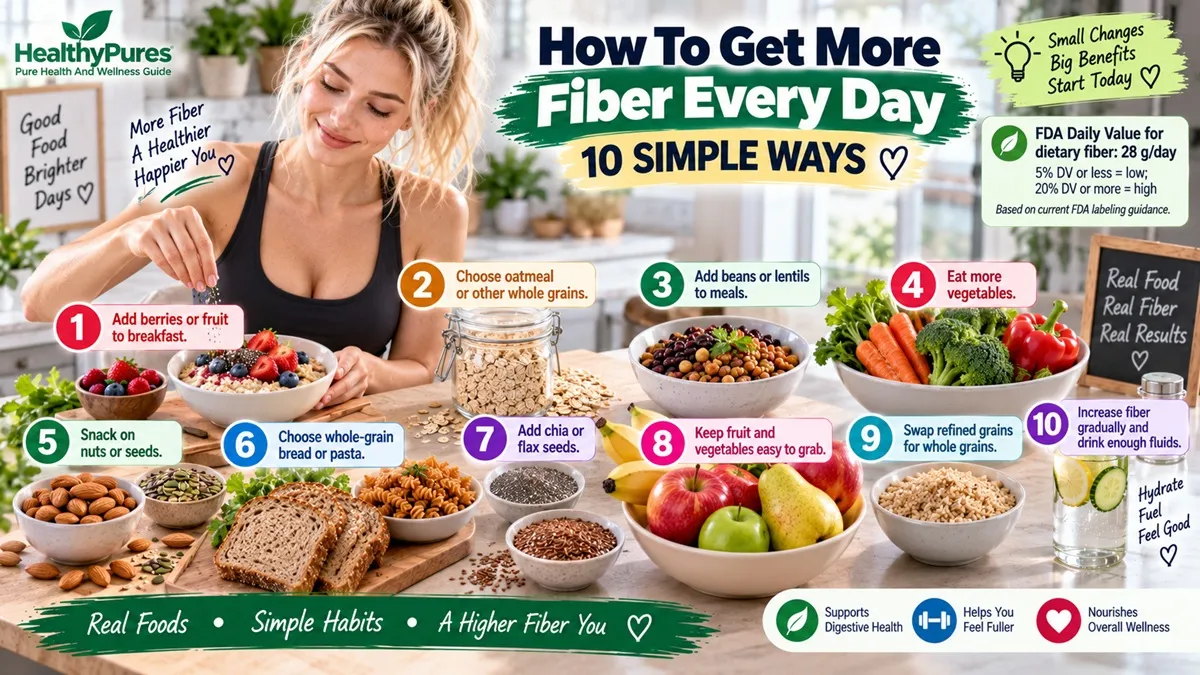
Fiber is one of the easiest nutrients to overlook when meals rely heavily on refined grains and packaged foods. Learning how to get more fiber every day can start with a few simple swaps.
Learning how to get more fiber every day does not require a complicated diet. More beans, whole grains, fruits, vegetables, nuts, and seeds can raise fiber intake while adding variety to meals and snacks.
Quick Summary
- Build meals around vegetables, fruits, beans, lentils, and whole grains.
- Increase fiber gradually instead of making a large jump overnight.
- Drink enough fluids as you increase fiber, especially when constipation is a concern.
- Use the Nutrition Facts label to compare fiber amounts and serving sizes.
- Keep the goal practical by adding one or two higher-fiber choices at a time.
Quick Facts
| Aspect | Details |
|---|---|
| Adult Fiber Needs | Common guidance falls around 22–34 grams per day, depending on age and sex. |
| FDA Daily Value | The current Nutrition Facts Daily Value for dietary fiber is 28 grams. |
| Best Food Sources | Beans, lentils, whole grains, fruits, vegetables, nuts, and seeds. |
| Increase Slowly | A gradual increase can reduce gas, bloating, and cramping. |
| Hydration | Fluids help fiber work properly and can support softer, easier-to-pass stools. |
| Label Shortcut | Use the Dietary Fiber line and serving size when comparing packaged foods. |
Who This Guide Is For
- ✔ Adults who want more fiber without changing their entire diet.
- ✔ People building meals around whole grains, beans, produce, nuts, or seeds.
- ✔ Shoppers who want an easier way to compare fiber on packaged foods.
- ✔ Anyone who wants a gradual approach that is easier on digestion.
How To Get More Fiber Every Day: How Much Do You Need?
Fiber needs vary by age and sex. NIDDK cites a general adult range of about 22 to 34 grams per day. See its fiber and constipation guidance for the current range and food examples.
The FDA Daily Value used on Nutrition Facts labels is 28 grams per day. The Dietary Guidelines for Americans also emphasizes fiber-rich plant foods as part of a healthy eating pattern. That number helps you interpret the label, but your personal target can differ.
If your usual intake is low, do not treat the target like a deadline. A better strategy is to increase fiber in small steps while keeping meals comfortable.
For medical conditions, bowel symptoms, or a specific diet plan, a clinician or registered dietitian can help set a more appropriate target.
10 Simple Ways To Get More Fiber Every Day
Ways 1–5: Build Fiber Into Everyday Meals

1. Start With A Fiber-Rich Breakfast
Breakfast is an easy place to get more fiber every day. A few ingredients can change the whole meal.
Try oatmeal topped with berries, chia seeds, ground flaxseed, or nuts. Whole-grain cereal can also work when the label shows a useful amount of dietary fiber per serving.
Another option is plain yogurt with berries and seeds. Pairing several foods makes it easier to build fiber without relying on one ingredient.
2. Swap Refined Grains For Whole Grains
A simple way to get more fiber every day is to replace some white bread, white rice, or refined pasta with whole-grain versions.
Look for products that identify a whole grain as a main ingredient. Oats, brown rice, barley, quinoa, and whole-wheat pasta can all add fiber to meals.
You do not have to replace every refined grain at once. Start with one meal you already eat often.
3. Add Beans, Lentils, Or Chickpeas
Legumes are among the simplest foods to use when you want to get more fiber every day. They also provide protein and can make meals more filling.
Add lentils to soup, beans to tacos, chickpeas to salads, or black beans to grain bowls.
If beans are new to your diet, start with a smaller portion. Increasing gradually may make the transition more comfortable.
4. Choose Whole Fruits And Vegetables More Often
Whole fruits and vegetables can help you get more fiber every day while also bringing water, vitamins, minerals, and other nutrients.
Good everyday options include apples, pears, berries, oranges, carrots, broccoli, green peas, and potatoes with the skin.
When practical, keep edible skins on foods such as apples and potatoes. Wash produce well before eating.
5. Add Nuts And Seeds To Foods You Already Eat
Nuts and seeds can help you get more fiber every day without requiring a new meal.
Add chia or ground flaxseed to oatmeal. Sprinkle pumpkin seeds on salads. Add almonds or walnuts to yogurt or fruit.
Because nuts and seeds are calorie-dense, use portions that fit your overall eating pattern.
Ways 6–10: Easy Add-Ons And Smarter Choices

6. Keep Produce Skins When They Are Edible
Keeping edible skins can be a simple way to get more fiber every day. Apples and potatoes are simple examples.
Leaving the skin on does not work for every food or every recipe. Choose based on texture, safety, and preference.
Wash produce under running water before eating it raw or cooking it.
7. Add Fiber To Baked Foods
These swaps can help you get more fiber every day. Replace part of refined flour with whole-grain flour.
Oat bran, ground flaxseed, chia seeds, grated vegetables, and some whole-grain ingredients can also work in recipes.
Start with a modest substitution. Large changes can alter texture and moisture.
8. Use Fiber-Fortified Foods Strategically
Some packaged foods can help you get more fiber every day when whole-food options are not practical. These can be convenient when whole-food options are not practical.
When you get more fiber every day from packaged foods, do not judge a product by its fiber number alone. Check added sugars, saturated fat, sodium, calories, ingredients, and serving size too.
Whole foods remain useful because they provide more than fiber alone.
9. Drink Enough Fluids As You Increase Fiber
Fluids help fiber work better in the digestive system. NIDDK recommends drinking enough liquids with more fiber.
You do not need to force a fixed number of glasses for everyone. Fluid needs vary with body size, activity, climate, health, and other factors.
If constipation is your concern, increase fiber and fluids together. Avoid a sudden large fiber increase.
10. Read The Fiber Line On Food Labels
The Nutrition Facts label can help you get more fiber every day by showing dietary fiber in grams per serving. Use that number when comparing similar packaged foods.
The current FDA Daily Value for fiber is 28 grams. A food with 5 grams of fiber provides about 18% of that Daily Value.
Check the serving size before comparing products. Two foods can look very different when their serving sizes are not the same.
See the FDA Nutrition Facts label guide for more detail on serving size and % Daily Value.
How To Build A Higher-Fiber Day
| Meal | Simple Add-On | Why It Helps |
|---|---|---|
| Breakfast | Oatmeal + berries + chia | Combines a whole grain, fruit, and seeds. |
| Lunch | Bean or lentil soup + whole-grain bread | Adds legumes and a whole grain. |
| Snack | Apple + almonds | Easy fruit-and-nut combination. |
| Dinner | Brown rice + vegetables + beans | Builds fiber into the main meal. |
To get more fiber every day, the goal is not to hit a perfect number at every meal. Spreading fiber across the day can make the change easier to manage.
How To Increase Fiber Without Feeling Miserable

A rapid increase can cause gas, bloating, or cramping. NIDDK recommends adding fiber little by little so your body can adjust.
Use Small Changes First
To get more fiber every day, add one new fiber-rich food at breakfast. Then add another at lunch or dinner after your body has adapted.
Spread Fiber Across The Day
When you get more fiber every day, several moderate portions may feel easier to tolerate than one large fiber-heavy meal.
Keep Fluids In The Routine
Drink fluids regularly rather than waiting until you feel very thirsty. Water and other suitable beverages can support the change.
For people with irritable bowel syndrome, some high-fiber foods can increase gas or bloating. NIDDK recommends discussing symptoms and dietary changes with a health professional when needed.
For more practical meal ideas, see our high-protein lunch meal prep guide. You can also browse our healthy meal prep snacks for easy add-ons.
Fiber Types: Soluble And Insoluble
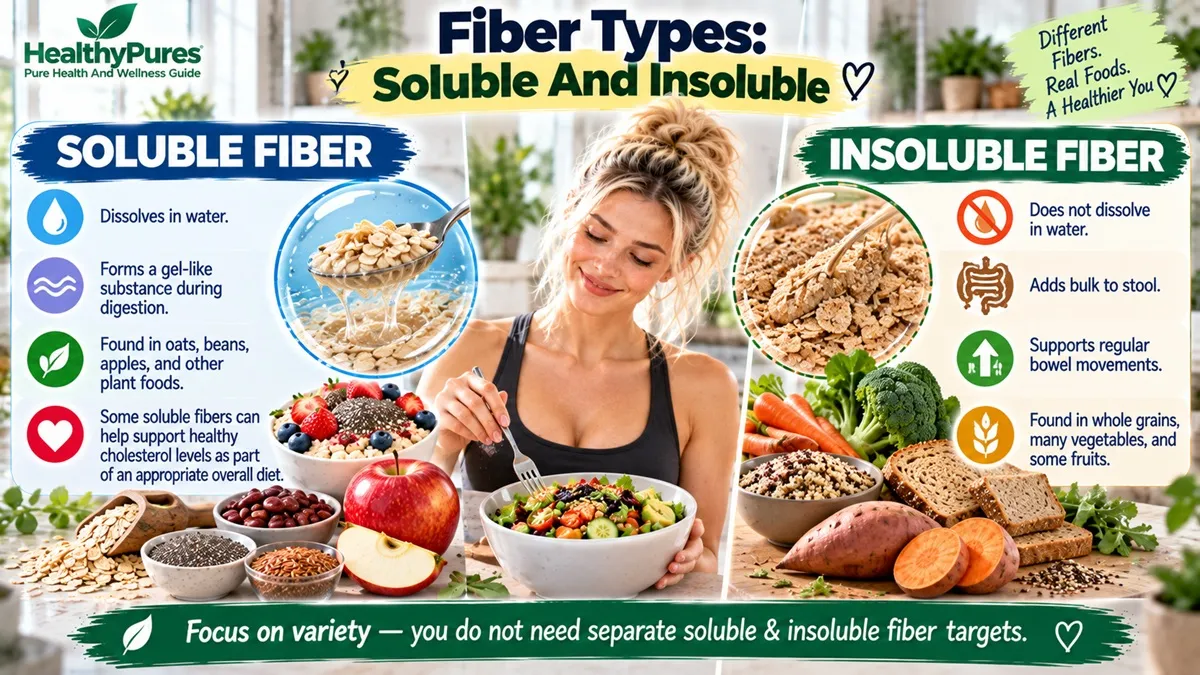
Soluble Fiber
Soluble fiber dissolves in water. Oats, beans, apples, and some other plant foods contain soluble fiber.
Soluble fiber can be part of a heart-healthy eating pattern and may help support normal cholesterol levels when the overall diet is appropriate.
Insoluble Fiber
Insoluble fiber does not dissolve in water. Whole grains, many vegetables, and some fruits provide it.
It adds bulk to stool and can support regular bowel movements.
You do not need to calculate separate soluble and insoluble fiber targets. Focus on getting a variety of plant foods throughout the week.
What To Look For On A Fiber Label
| Label Detail | What To Ask |
|---|---|
| Serving Size | How much food does the listed fiber amount represent? |
| Dietary Fiber | How many grams do I get in one serving? |
| % Daily Value | How much does one serving contribute to the current Daily Value? |
| Added Sugars | Does the product add a lot of sugar while increasing fiber? |
| Ingredients | Is the product built mainly from foods that fit my needs? |
FDA guidance uses 5% DV or less as low and 20% DV or more as high. The same framework can help you compare fiber on packaged foods.
- Use one new idea when you want to know how to get more fiber every day.
- Breakfast can make how to get more fiber every day much easier.
- Whole grains are a practical tool for how to get more fiber every day.
- Beans are another easy answer when you want to get more fiber every day.
- Fruit can help you get more fiber every day without much preparation.
- Nuts and seeds can support how to get more fiber every day.
- Produce skins offer another simple way to get more fiber every day.
- Small recipe changes can help you get more fiber every day.
- Label reading makes how to get more fiber every day more consistent.
- Spread these foods across meals to get more fiber every day.
- Start small when learning how to get more fiber every day.
- Use fluids to support how to get more fiber every day.
Consistency matters when you get more fiber every day.
Common Mistakes When Adding More Fiber

Adding Too Much Too Fast
A big overnight increase can cause digestive discomfort. Increase gradually instead.
Relying Only On Bars Or Powder
Convenience products can help, but a varied diet also gives you fiber from whole grains, legumes, produce, nuts, and seeds.
Ignoring Serving Size
A label may list a large fiber number for a small serving. Check the portion you actually eat.
Forcing Foods You Cannot Tolerate
Not every high-fiber food works for everyone. Choose alternatives from different food groups when a particular food causes problems.
Forgetting The Rest Of The Diet
Fiber is important, but it is only one part of an overall eating pattern. Keep protein, healthy fats, fruits, vegetables, whole grains, and other nutrient needs in view.
- Try these ideas when you want to get more fiber every day.
- Use fruit to help you get more fiber every day.
- Use beans to help you get more fiber every day.
- Use whole grains to help you get more fiber every day.
- Use seeds when you want to get more fiber every day.
- Keep the easiest steps when you get more fiber every day.
- Keep this short checklist when learning how to get more fiber every day.
- Use one meal as your starting point for how to get more fiber every day.
- Whole grains can make how to get more fiber every day feel easier.
- Beans can make how to get more fiber every day more filling.
- Fruit can make how to get more fiber every day more convenient.
Repeat the foods that make how to get more fiber every day comfortable. Keep the routine simple.
When To Talk With A Healthcare Professional
Occasional gas or mild bloating can happen when you increase fiber too quickly. Persistent or severe symptoms deserve more attention.
- Severe or persistent abdominal pain.
- Repeated vomiting.
- Unexplained or significant changes in bowel habits.
- Blood in the stool.
- Ongoing constipation that does not improve with basic changes.
People with digestive conditions may need an individualized fiber plan. This is especially important when symptoms are persistent or when a clinician has recommended a specific diet.
Frequently Asked Questions
How Quickly Should I Increase Fiber?
Increase it gradually. Adding a few grams at a time can be easier to tolerate than making a large change overnight.
What Foods Have The Most Fiber?
Legumes, whole grains, nuts, seeds, fruits, and vegetables can all provide meaningful amounts. Variety is more useful than relying on one food.
Does Cooking Destroy Fiber?
Cooking can change texture and water content, but dietary fiber generally remains present. Cooking may make some high-fiber foods easier to eat.
Do I Need A Fiber Supplement?
Not necessarily. Whole foods can provide fiber plus other nutrients. A supplement may be useful in some situations, but discuss ongoing needs with a healthcare professional.
Can More Fiber Help With Constipation?
It can help many people, especially when paired with enough fluids. NIDDK recommends enough fiber and plenty of liquids as part of constipation care.
Is Fiber Good For Everyone?
Fiber is important for health, but the best amount and food choices vary. Some digestive conditions require individualized advice.
- Keep this checklist handy when you get more fiber every day.
- Choose one meal to practice how to get more fiber every day.
- Whole grains make how to get more fiber every day easier.
- Legumes are a reliable way to get more fiber every day.
- Fruit is a convenient choice when you want to get more fiber every day.
- Seeds can make how to get more fiber every day more practical.
- Use the label whenever you get more fiber every day from packaged foods.
Repeat the easiest changes to get more fiber every day.
A Simple 7-Day Fiber Upgrade
- Day 1: Add berries or fruit to breakfast.
- Day 2: Replace one refined grain with a whole grain.
- Day 3: Add beans or lentils to one meal.
- Day 4: Add nuts or seeds to a snack.
- Day 5: Keep an edible fruit or vegetable skin when practical.
- Day 6: Compare fiber on two packaged foods.
- Day 7: Combine two or three changes that felt comfortable.
This stepwise approach can make how to get more fiber every day feel practical instead of restrictive.
The Bottom Line
Learning how to get more fiber every day is mostly about making repeatable food choices.
Learning how to get more fiber every day can start with beans, whole grains, fruits, vegetables, nuts, and seeds. Our good nutrition basics guide can help connect these choices to the wider eating pattern. Increase fiber gradually, keep fluids in your routine, and use food labels to compare packaged foods.
You do not need a perfect number every day. A steady pattern of higher-fiber foods is a practical way to support digestive health and a balanced eating pattern.
Just a friendly reminder from our team: Health needs vary from person to person. This information supports general wellness. It does not replace professional medical advice. Read our full Medical Disclaimer for more information.