At Healthy Pures, we research nutrition and wellness topics to make healthy eating easier to understand. What is good nutrition includes balanced eating patterns, adequate nutrients, and practical habits that can support long-term health.
Good nutrition is not about perfection or following every food trend. It is about building a flexible pattern that fits your needs, preferences, culture, and lifestyle.
For most people, what is good nutrition also means eating enough food to meet energy and nutrient needs. Restriction is not automatically healthier than balance.
Quick Summary
- Good nutrition focuses on adequacy, balance, moderation, and dietary variety.
- Carbohydrates, proteins, fats, vitamins, minerals, and water all have important roles.
- Healthy eating patterns should remain flexible enough to fit individual needs and preferences.
- Nutrition supports health, but it does not replace medical prevention, diagnosis, or treatment.
Quick Facts
| Aspect | Details |
|---|---|
| Core Principles | Adequacy, balance, moderation, and diversity |
| Macronutrients | Carbohydrates, proteins, and fats |
| Micronutrients | Vitamins and minerals |
| Hydration | Fluid needs vary by person, activity, climate, and health status |
| Best Approach | Flexible, varied, nutrient-dense eating patterns |
| Medical Context | Individual conditions may require professional guidance |
Defining Good Nutrition: A Holistic Approach
Understanding what is good nutrition starts with the overall pattern of your diet. Food provides energy, essential nutrients, and building blocks that support normal body functions.
A balanced eating pattern can also support daily energy and general well-being. The WHO healthy diet guidance highlights adequacy, balance, moderation, and diversity as core principles.
For more ideas on choosing nourishing foods, see our guide to nutrient-dense foods for daily life.
Why Embracing Good Nutrition Supports Your Health
Learning what is good nutrition can make everyday food choices more manageable. A varied diet can help you meet nutrient needs while supporting energy, growth, maintenance, and recovery.
Nutrition is only one part of health. Sleep, physical activity, genetics, medical history, stress, and access to healthcare also matter.
The Core Components Of Good Nutrition: Building Your Health Foundation

The answer to what is good nutrition includes both macronutrients and micronutrients. Water and overall dietary variety also play important roles.
Macronutrients: Your Body’s Primary Energy Sources
Carbohydrates, proteins, and fats are the three main macronutrients. They provide energy or serve as building materials for normal body functions.
Carbohydrates are an important energy source. Protein provides amino acids for tissues and enzymes, while dietary fats support cell functions and nutrient absorption.
A balanced approach usually works better than removing an entire macronutrient without a medical reason. The Dietary Guidelines for Americans, 2025–2030 emphasizes nutrient-dense foods and overall dietary patterns.
Portion needs differ from person to person. Understanding what is good nutrition means avoiding one-size-fits-all rules about carbohydrates, protein, or fat.
Micronutrients: Small Amounts, Important Roles
Vitamins and minerals are needed in smaller amounts than macronutrients. They still contribute to many normal processes, including immune, bone, nerve, and metabolic functions.
For example, vitamin C supports normal immune function, while calcium contributes to normal bone health. A varied diet can help provide a broader range of micronutrients.
The Underrated Power Of Hydration
Hydration is another part of what is good nutrition. Water helps regulate body temperature, transport nutrients, lubricate joints, and support normal waste removal.
Fluid needs vary by body size, activity, climate, diet, pregnancy, medications, and health conditions. People with specific medical needs may require individualized guidance.
Water is usually a practical default beverage. However, what is good nutrition does not require a fixed number of glasses for every person.
Practical Steps To Integrate Good Nutrition Into Your Daily Life
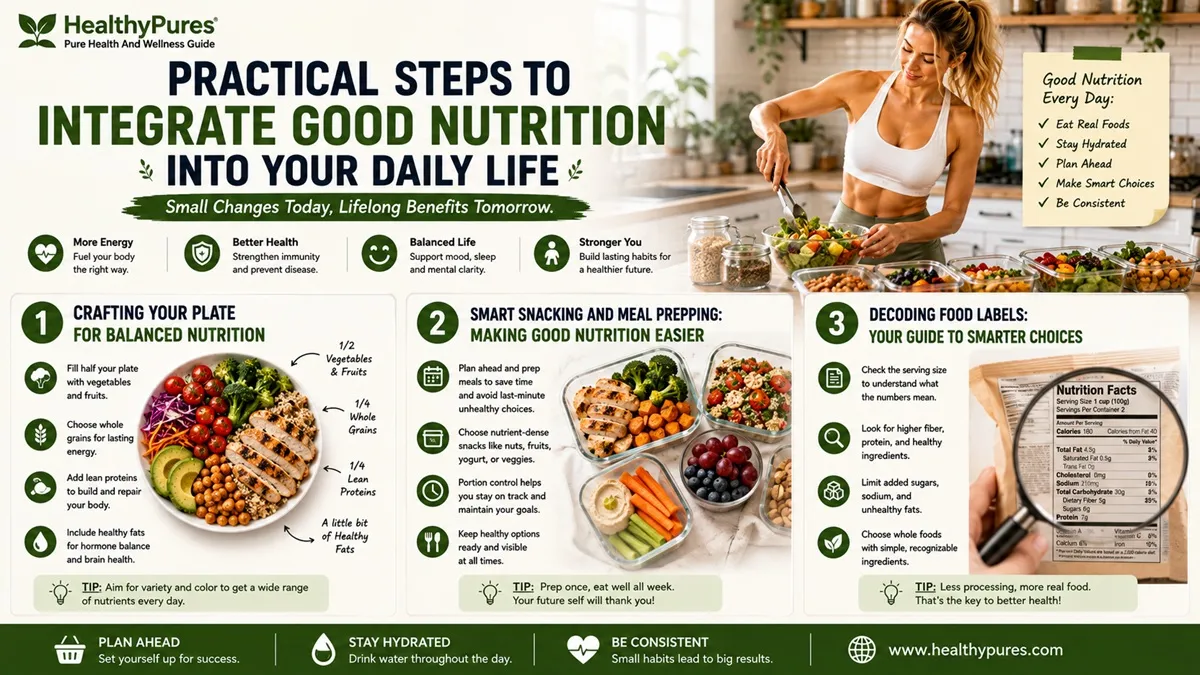
Knowing what is good nutrition becomes more useful when the principles fit everyday life. Small, repeatable habits are often easier to maintain than highly restrictive plans.
Crafting Your Plate For Balanced Nutrition
Build meals around vegetables, fruits, protein sources, whole grains, legumes, and healthy fats. The exact balance can vary with your preferences and nutritional needs.
A simple plate framework can make what is good nutrition easier to visualize. It should be treated as a flexible guide rather than a rigid rule.
Smart Snacking And Meal Prepping: Making Good Nutrition Easier
Meal planning can reduce last-minute food decisions and help you use groceries more efficiently. Simple snacks can also add useful nutrients. Options include fruit with nuts, yogurt, or vegetables with hummus.
Batch cooking can also make balanced meals easier on busy days. For many households, what is good nutrition depends partly on making nutritious choices convenient.
When considering what is good nutrition, convenience matters. A practical plan is more useful when you can repeat it consistently.
Decoding Food Labels: Your Guide To Smarter Choices
Nutrition labels can help you compare packaged foods. Start with serving size, calories, nutrients, added sugars, sodium, and saturated fat.
The FDA guide to using the Nutrition Facts label explains how serving information and Daily Values can support informed choices.
Reading labels is one practical skill for understanding what is good nutrition. It works best alongside attention to your overall eating pattern.
Navigating The Bumps: Overcoming Common Nutrition Challenges
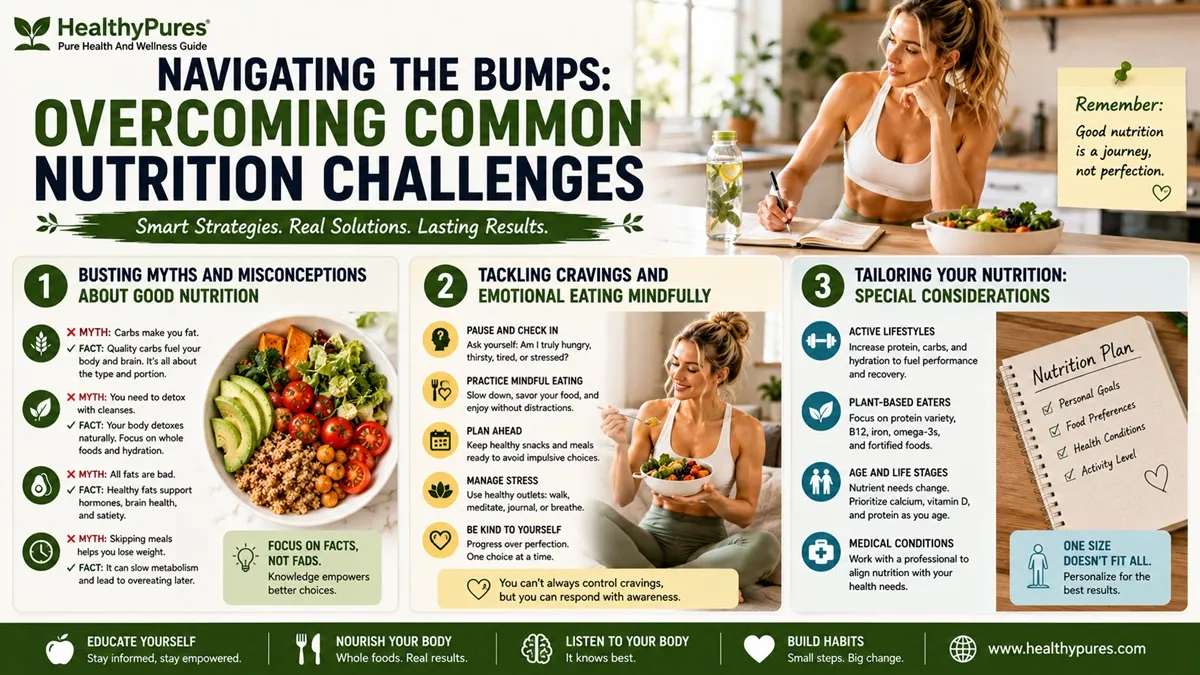
There is no single perfect way to eat well. Budget, time, food access, preferences, medical needs, and culture can all shape what is good nutrition for an individual.
Busting Myths And Misconceptions About Good Nutrition
Nutrition advice often becomes oversimplified. Common examples include claims that all carbohydrates are harmful or that all dietary fat should be avoided.
Instead, consider food quality, portions, overall patterns, and individual needs. Evidence-based guidance is usually more useful than restrictive trends.
Foods do not need to be labeled as completely good or bad. A realistic view of what is good nutrition leaves room for flexibility and enjoyment.
Tackling Cravings And Emotional Eating Mindfully
Cravings can have many possible causes. Hunger, habits, emotions, food availability, and environmental cues can all play a role. Cravings should not automatically be interpreted as a nutrient deficiency or dehydration.
Pausing before eating can help you identify what you need at that moment. Persistent emotional eating may benefit from support from a qualified healthcare professional.
Tailoring Your Nutrition: Special Considerations
Food choices also change across seasons, schedules, and stages of life. A useful eating pattern should remain practical when work, travel, family needs, or food availability changes.
Variety can come from rotating familiar foods rather than constantly buying new products. Simple meals can still provide vegetables, protein, grains, fruit, and healthy fats. Familiar staples can also make weekly planning more affordable and predictable.
Pregnancy, allergies, medical conditions, athletic training, age, and dietary restrictions can change nutritional needs. General guidance cannot cover every individual situation.
A registered dietitian or another qualified healthcare professional can provide individualized advice. That support can help define what is good nutrition for more complex needs.
The Long-Term Value Of Good Nutrition

What is good nutrition is best understood as part of a broader healthy lifestyle. Nutrition can support normal body functions and contribute to long-term health.
Supporting Energy And Mental Performance
Regular meals with adequate nutrients can support daily energy and concentration. However, no eating pattern can guarantee constant energy, focus, or productivity.
Blood glucose responses also vary between individuals and meals. People with diabetes or other metabolic conditions should follow individualized medical guidance.
Supporting Long-Term Health Through Good Nutrition
Healthy dietary patterns are associated with better long-term health. MedlinePlus nutrition guidance also explains that healthy eating provides daily energy and nutrients.
Risk is influenced by many factors, including genetics, smoking, activity, sleep, medical history, and healthcare access. Nutrition should not be presented as a guaranteed method of disease prevention.
This context is important when explaining what is good nutrition. Food choices can support health without replacing medical prevention, screening, or treatment.
Nutrition, Mood, And Mental Well-Being
Diet and mental well-being can influence each other in complex ways. Research also continues to examine connections between the gut microbiome and brain health.
Foods containing fiber, omega-3 fats, and fermented ingredients can be part of a balanced diet. They should not be presented as treatments for anxiety, depression, or other mental health conditions.
A thoughtful approach to what is good nutrition considers mental well-being without promising specific mood or cognitive outcomes.
Frequently Asked Questions About Good Nutrition
What’s The Easiest Way To Start Eating Healthier?
Start with one manageable change. Add vegetables to a regular meal, choose water more often, or replace some refined grains with whole grains.
Consistency matters more than trying to change everything at once. These small steps can make what is good nutrition easier to practice.
How Can I Maintain Good Nutrition On A Budget?
Plan meals before shopping and choose foods you are likely to use. Beans, lentils, eggs, frozen vegetables, oats, and seasonal produce can be practical options.
Buying in bulk can help when the food will be used before it spoils. Good nutrition does not require expensive specialty products.
Frozen and canned foods can also fit what is good nutrition. Compare labels when sodium, added sugars, or other nutrients matter to you.
Can Nutrition Help With Existing Health Conditions?
Nutrition can be an important part of managing some health conditions. However, dietary changes should not be presented as a substitute for diagnosis or treatment.
People managing a medical condition should discuss major dietary changes with an appropriate healthcare professional. Treatment needs can vary considerably between individuals.
How Do I Know If My Nutrition Is Good?
There is no single symptom that proves your diet is nutritionally adequate. Energy, digestion, sleep, and appetite can be influenced by many factors beyond food.
A better approach is to review variety, food groups, nutrient intake, and eating patterns over time. When concerns persist, a qualified professional can assess your individual needs.
Your Journey Towards A Balanced And Nourishing Diet
Understanding what is good nutrition does not require a perfect diet. It means building a varied and realistic eating pattern that helps meet your nutritional needs.
Focus on habits you can maintain while allowing flexibility for preferences and daily life. Healthy eating should support your life rather than become another source of unnecessary pressure.
Disclaimer: This article provides general educational information and does not constitute medical or individualized nutritional advice. Review our full Medical Disclaimer before making major dietary changes.

