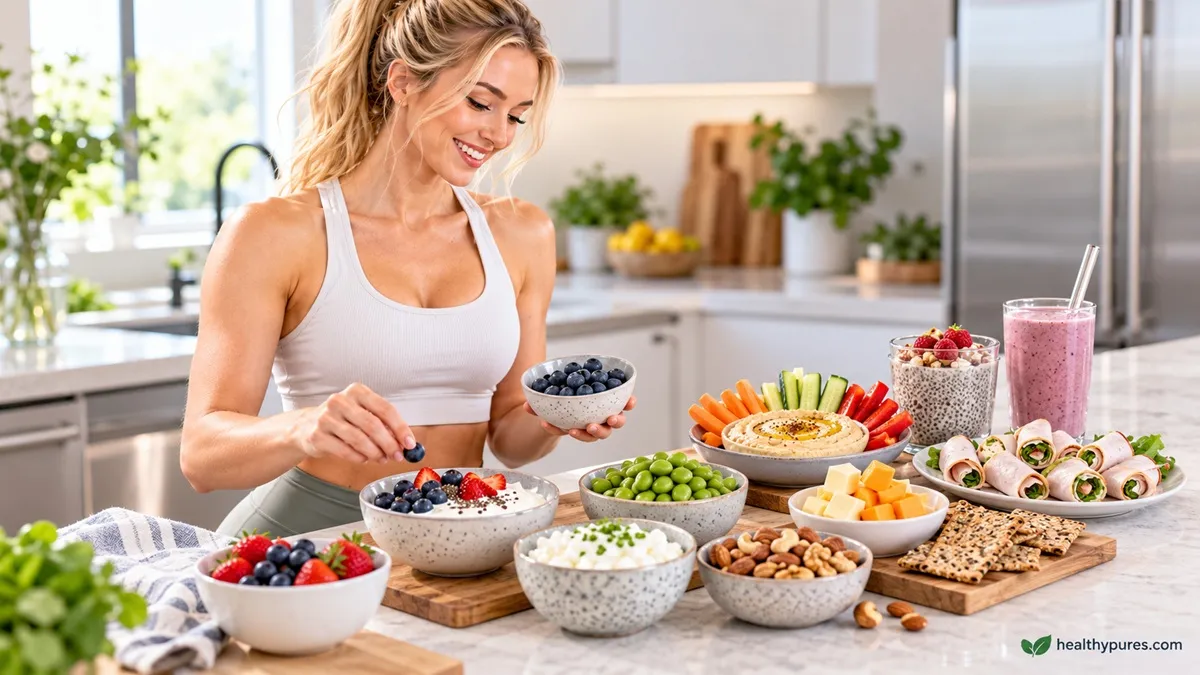
When you need something between meals but do not want to use a stove, a few well-chosen staples can make snack time simple. These high protein snacks without cooking combine ready-to-eat foods, easy pairings, and packaged choices that fit workdays, commutes, and time at home.
The 20 options below include dairy, eggs, legumes, seafood, meat, soy, nuts, and seeds. You will find practical serving examples, estimated protein, preparation time, and a note about whether each snack needs refrigeration. The amounts are examples for comparison, not nutrition goals or a recommendation to eat less.
For batch-prepped meals that involve cooking on another day, see our high-protein lunch meal prep guide.
Quick Picks: Best Options for Different Situations
These high protein snacks without cooking fit different storage conditions; decide whether you have a refrigerator before choosing a perishable option.
- Almost no assembly: an unopened, label-appropriate shake; a protein bar; jerky; ready-to-eat edamame; or a tuna packet.
- With an office refrigerator: Greek yogurt and berries, cottage cheese, eggs with cheese, smoked salmon, or a chia-and-yogurt jar.
- Plant-based: cooked edamame, hummus plus edamame, lentils and pumpkin seeds, roasted soy nuts, and eligible vegan bars or shakes.
- When there is no refrigerator: choose sealed products specifically labeled shelf-stable, such as some bars, jerky, tuna or salmon pouches, and certain shakes.
- With additional fiber: lentils, edamame, hummus with vegetables, roasted chickpeas, or berries with yogurt; see our high-fiber snack ideas for more combinations.
For this guide, without cooking means no stove, oven, or microwave is needed at snack time. Eggs, lentils, beans, and edamame must already be cooked and safe to eat. A product that says “cook before eating” does not qualify until it has been prepared.
How We Estimated Protein—and What the Numbers Mean
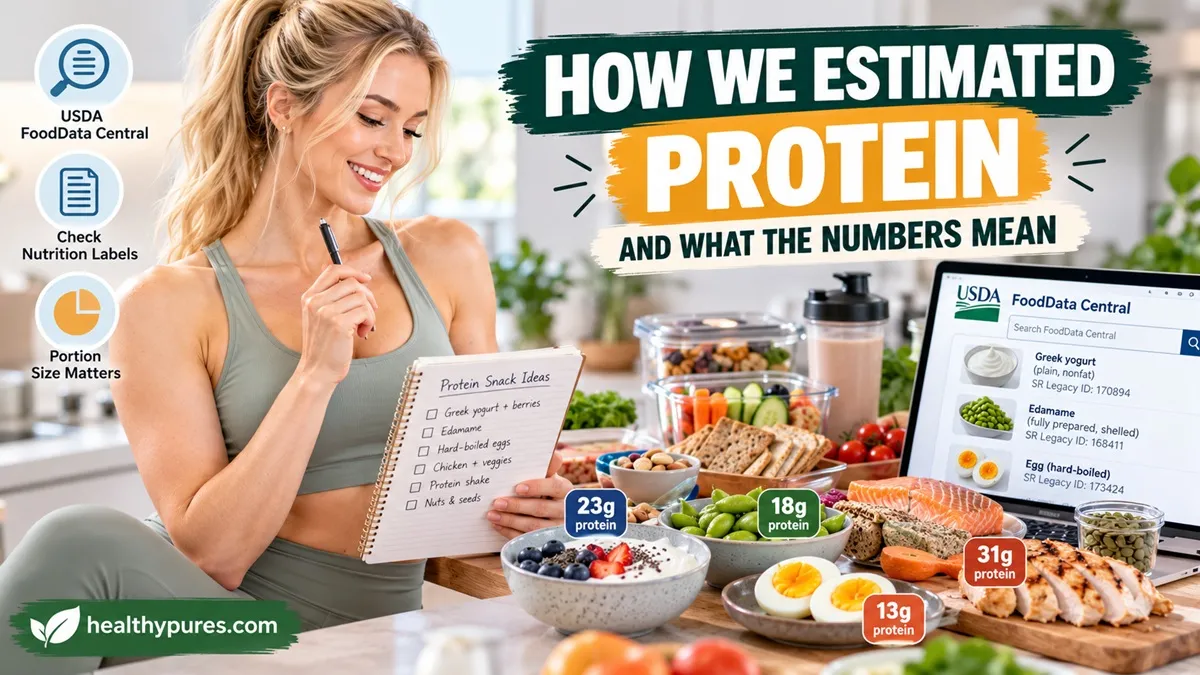
The figures are rounded planning estimates for the example portions, not laboratory measurements or guaranteed nutrition facts. The dairy, egg, bean, fish, seed, and other generic-food estimates can be cross-checked against relevant entries in USDA FoodData Central. Branded bars, shakes, deli meats, roasted snacks, and crackers can differ substantially; when a row says “label-dependent,” the number applies only if you select a product with that amount on its label.
Example USDA-based checks: A 225 g portion of plain nonfat Greek yogurt contributes about 23 g of protein before berries or nuts (FoodData Central SR Legacy ID 170894). A 155 g portion of fully prepared shelled edamame contributes about 18 g (ID 168411). Two edible 50 g hard-boiled eggs contribute approximately 13 g before cheese (ID 173424). These checks apply only to the named generic foods and weights; they do not certify a branded product or the complete snack.
We have not verified a brand-specific label for every packaged example. The FDA explains that Nutrition Facts usually describe one serving, which may not equal the full package. Match the package amount to the FDA guidance on serving size before comparing protein or calories.
There is no single protein target that every snack must meet. These are flexible food ideas, and an appropriate portion depends on what you have already eaten, your appetite, activity, health, and preferences. The Dietary Guidelines for Americans give broader context for variety across protein foods and other nutrient-dense choices.
Compare All 20 No-Cook Protein Snacks
Compare high protein snacks without cooking using the same serving-size assumptions, rather than treating different packages or cup measures as equivalent.
Use this table to choose by convenience and food storage first. “Protein” refers to the listed example portion; the estimate can change if you substitute a brand, change ingredients, or eat a different amount. No calorie target is implied, and specific calories are best checked on the product or calculated from measured ingredients.
| Snack | Example portion | Approx. protein | Active prep | Storage |
|---|---|---|---|---|
| Greek Yogurt With Berries and Nuts | 1 cup (about 225 g) plain Greek yogurt, ½ cup berries, 1 tablespoon chopped nuts | 19–25 g | 2 min | Refrigerate |
| Cottage Cheese With Cucumber and Whole-Grain Crackers | ¾ cup (about 170 g) cottage cheese, sliced cucumber, 4–6 whole-grain crackers | 18–23 g | 3 min | Refrigerate |
| Fully Cooked Eggs With a Cheese Stick | 2 fully cooked large eggs and 1 individually wrapped string-cheese stick | 18–21 g | 1 min | Refrigerate |
| Ready-to-Eat Shelled Edamame | 1 cup (about 155 g) cooked, shelled edamame | 17–19 g | 1–2 min | Refrigerate after preparation |
| Ready-to-Drink Protein Shake | 1 bottle labeled to provide approximately 20–30 g protein | 20–30 g, if selected by label | Under 1 min | Shelf-stable or refrigerated: check label |
| Tuna Packet With Whole-Grain Crackers | 1 ready-to-eat 2.5–3 oz tuna packet plus a small serving of crackers | 19–25 g, depending on pack and crackers | 1 min | Packet may be shelf-stable unopened |
| Smoked Salmon on Rice Cakes | About 3 oz (85 g) refrigerated smoked salmon, 2 plain rice cakes, cucumber slices | 16–21 g | 3 min | Refrigerate |
| Beef or Turkey Jerky | 1–1½ oz packaged jerky, as indicated on the label | Check the product label (serving-dependent) | None | Often shelf-stable unopened |
| Roasted Chickpeas With Greek Yogurt Dip | About ⅓ cup ready-to-eat roasted chickpeas and ½ cup plain Greek yogurt | 14–20 g, depending on brands | 3 min | Chill yogurt dip |
| Cheese Sticks With a Piece of Fruit | 2 standard string-cheese sticks and 1 apple or pear | 12–15 g | 1 min | Refrigerate cheese |
| Apple With Peanut Butter and Greek Yogurt | 1 apple, 2 tablespoons peanut butter, ¾ cup plain Greek yogurt | 20–26 g | 3 min | Refrigerate yogurt |
| Trail Mix With Roasted Soy Nuts | ¼ cup mixed nuts and seeds plus ¼ cup commercially roasted soy nuts | 12–18 g, blend-dependent | 1 min | Usually shelf-stable |
| Ready-to-Eat Protein Bar | 1 bar whose label provides about 10–20 g protein | 10–20 g, if selected by label | None | Follow package directions |
| Deli Turkey or Roast Beef Roll-Ups | 3 oz (85 g) ready-to-eat deli turkey or roast beef; optional 1 cheese slice | Label-dependent (meat type and optional cheese) | 3 min | Refrigerate |
| Make-Ahead Chia and Greek Yogurt Jar | ¾ cup plain Greek yogurt, 1 tbsp chia seeds, 2–3 tbsp milk | 17–22 g | 3 min plus chilling | Refrigerate |
| Hummus, Vegetables, and Edamame | ¼ cup hummus, ½ cup already-cooked shelled edamame, carrot or pepper sticks | 12–16 g | 3 min | Refrigerate dips and cooked beans |
| Ready-to-Eat Lentils With Pumpkin Seeds | ¾ cup cooked, ready-to-eat lentils and 2 tbsp shelled pumpkin seeds | 16–20 g | 3 min | Follow lentil-package directions |
| Kefir or Drinkable Yogurt With Pumpkin Seeds | 1 cup plain kefir or drinkable yogurt plus 1 oz (28 g) pumpkin seeds | 15–21 g, label-dependent | 1 min | Refrigerate dairy |
| Edamame With Feta and Olives | ¾ cup cooked, ready-to-eat shelled edamame, 1 oz (28 g) feta, a few olives | 16–20 g | 3 min | Refrigerate |
| Canned Salmon and White Bean Cup | One 2.5–3 oz ready-to-eat salmon pouch (or equivalent canned salmon) and ⅓ cup drained white beans | 20–27 g, depending on pack size | 3 min | Shelf-stable sealed; refrigerate after opening |
Note: “Shelf-stable” applies only to unopened products whose packaging explicitly allows room-temperature storage. “Active prep” assumes any ingredients requiring prior cooking are already safe and ready to eat.
20 High Protein Snacks Without Cooking
1. Greek Yogurt With Berries and Nuts
Make it: 1 cup (about 225 g) plain Greek yogurt, ½ cup berries, 1 tablespoon chopped nuts. Protein: approximately 19–25 g. Hands-on time: 2 min.
Spoon plain Greek yogurt into a small container, top with berries, and keep the nuts separate until eating if you like extra crunch. Yogurt supplies most of the protein; the fruit adds flavor and the nuts add texture. Plain and flavored yogurts can have very different protein and added-sugar amounts.
Workday or storage tip: Pack yogurt in a leakproof container and chill it until snack time. Skyr can work as a swap, while soy yogurts should be checked individually for protein.
2. Cottage Cheese With Cucumber and Whole-Grain Crackers
Make it: ¾ cup (about 170 g) cottage cheese, sliced cucumber, 4–6 whole-grain crackers. Protein: approximately 18–23 g. Hands-on time: 3 min.
Divide cottage cheese and cucumber into separate sections of a lunch container. Add the crackers just before eating so they stay crisp. This is a savory option when a yogurt-and-fruit combination does not appeal, and cottage cheese brands vary noticeably in sodium.
Workday or storage tip: Try cracked pepper or fresh dill for flavor. If you choose lower-sodium cottage cheese, compare the Nutrition Facts panels rather than assuming all versions are similar.
3. Fully Cooked Eggs With a Cheese Stick
Make it: 2 fully cooked large eggs and 1 individually wrapped string-cheese stick. Protein: approximately 18–21 g. Hands-on time: 1 min.
Use refrigerated, ready-to-eat hard-boiled eggs or eggs cooked beforehand. Peel them before leaving home for an easier break-time snack. The eggs and cheese contribute nearly all the protein, while a piece of fruit or a few vegetables can add variety if you want them.
Workday or storage tip: Both foods are perishable. Do not assume pre-cooked eggs are safe at room temperature just because they are packaged.
4. Ready-to-Eat Shelled Edamame
Make it: 1 cup (about 155 g) cooked, shelled edamame. Protein: approximately 17–19 g. Hands-on time: 1–2 min.
Choose edamame sold ready to eat, or use edamame that has been fully cooked earlier and stored safely. Add lemon and mild seasoning for a savory snack. It offers plant protein and fiber in a single ingredient, without needing a dip or shake.
Workday or storage tip: Many frozen edamame packages instruct you to cook the beans. Follow those directions; do not assume a frozen product is ready to eat straight from the bag.
5. Ready-to-Drink Protein Shake
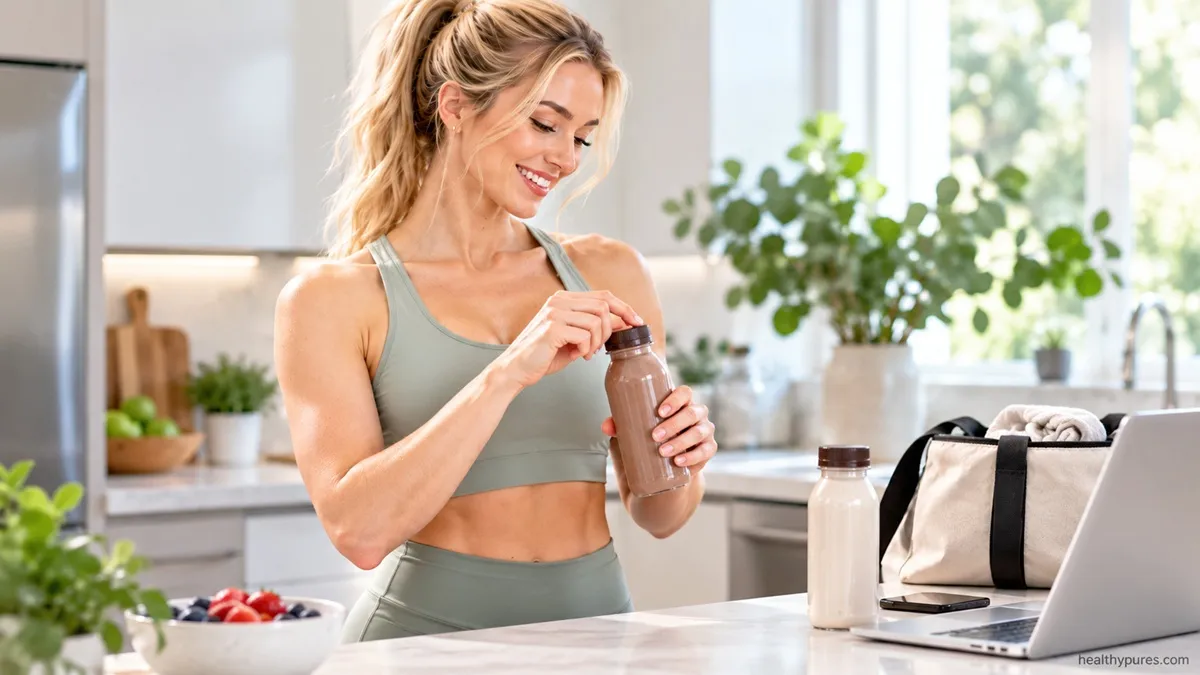
Make it: 1 bottle labeled to provide approximately 20–30 g protein. Protein: approximately 20–30 g, if selected by label. Hands-on time: Under 1 min.
A bottled shake requires almost no preparation, but there is no standard nutrition profile for this category. Compare the actual number of servings per bottle, protein, added sugars, and ingredients. Some shakes are shelf-stable unopened; others must remain cold even before opening.
Workday or storage tip: Choose the product for taste, dietary fit, and practicality—not the largest front-of-pack protein claim. Refrigerate after opening if the label instructs you to.
Want more breakfast-friendly combinations that can be prepared in advance? Visit our high-protein breakfast meal prep guide.
6. Tuna Packet With Whole-Grain Crackers
Make it: 1 ready-to-eat 2.5–3 oz tuna packet plus a small serving of crackers. Protein: approximately 19–25 g, depending on pack and crackers. Hands-on time: 1 min.
Open the tuna packet at snack time and scoop it onto crackers, adding lemon or mustard if you like. The tuna brand, drained weight, and cracker portion determine the actual protein amount. If you eat tuna regularly, rotate among different protein sources and tuna types.
Workday or storage tip: The FDA fish guidance lists canned light tuna among its Best Choices and albacore/white tuna among Good Choices, especially relevant when following pregnancy-related fish guidance. Opened tuna needs appropriate refrigeration.
7. Smoked Salmon on Rice Cakes
Make it: About 3 oz (85 g) refrigerated smoked salmon, 2 plain rice cakes, cucumber slices. Protein: approximately 16–21 g. Hands-on time: 3 min.
Layer the salmon and cucumber just before eating so the rice cakes do not soften. Smoked salmon is salty in many formulations, so check the package when comparing options. Refrigerated smoked fish also carries extra Listeria considerations for people who are pregnant or have weakened immune systems.
Workday or storage tip: For those at increased risk from Listeria, a shelf-stable canned-salmon option is a more suitable no-cook substitution than refrigerated cold-smoked salmon. Keep opened fish cold. See the CDC guidance on Listeria and refrigerated smoked fish for risk-based food choices.
8. Beef or Turkey Jerky
Make it: 1–1½ oz packaged jerky, as indicated on the label. Protein: approximately Check the product label (serving-dependent). Hands-on time: None.
Jerky is convenient on commutes and during travel because many sealed packages do not need refrigeration. Protein, sodium, serving size, and added sugars differ by formulation, so a one-ounce portion from one brand may not resemble another.
Workday or storage tip: Read both the ingredient list and storage instructions. Once opened, use the package’s stated storage and use-by guidance.
9. Roasted Chickpeas With Greek Yogurt Dip
Make it: About ⅓ cup ready-to-eat roasted chickpeas and ½ cup plain Greek yogurt. Protein: approximately 14–20 g, depending on brands. Hands-on time: 3 min.
Stir lemon juice, dill, or paprika into the yogurt. Serve it as a dip alongside store-bought roasted chickpeas. This pairing combines crisp chickpeas with creamy yogurt and adds protein from both legumes and dairy.
Workday or storage tip: Keep the dry chickpeas separate from the cold dip. Check the roasted-chickpea serving weight because cup measures vary with size and crunchiness.
10. Cheese Sticks With a Piece of Fruit
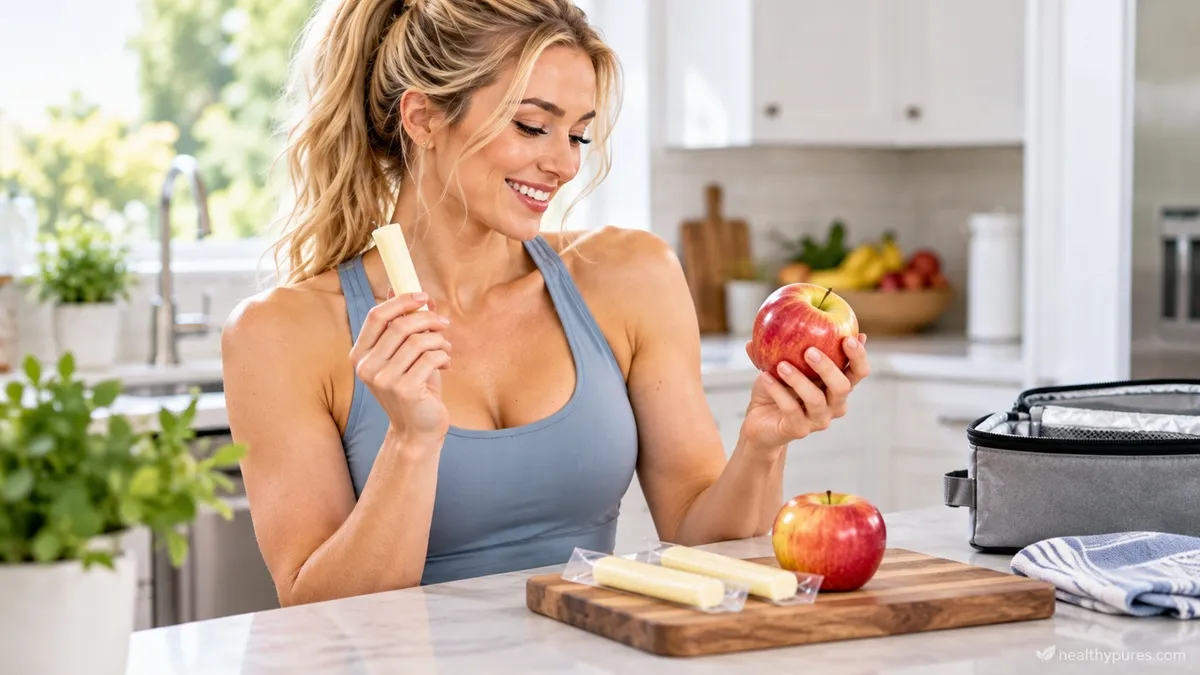
Make it: 2 standard string-cheese sticks and 1 apple or pear. Protein: approximately 12–15 g. Hands-on time: 1 min.
Carry the fruit whole if you will not have a clean place to cut it, and pack individually wrapped cheese in a chilled lunch bag. The cheese is the primary protein source; the fruit adds variety and fiber.
Workday or storage tip: For a savory version, replace the fruit with cherry tomatoes or cucumber. Keep the cheese cold even if it is individually wrapped.
11. Apple With Peanut Butter and Greek Yogurt
Make it: 1 apple, 2 tablespoons peanut butter, ¾ cup plain Greek yogurt. Protein: approximately 20–26 g. Hands-on time: 3 min.
Slice the apple just before eating or pack it whole. Portion the peanut butter into a small cup and bring chilled Greek yogurt alongside. The yogurt contributes most of the protein, while the apple and peanut butter provide a different flavor and texture.
Workday or storage tip: For peanut allergies, choose a safe substitute only after checking the ingredient and cross-contact warnings; seed butters are not automatically safe for everyone.
12. Trail Mix With Roasted Soy Nuts
Make it: ¼ cup mixed nuts and seeds plus ¼ cup commercially roasted soy nuts. Protein: approximately 12–18 g, blend-dependent. Hands-on time: 1 min.
Mix a trail mix you enjoy with roasted soy nuts to make the protein contribution more substantial than nuts and dried fruit alone. The amount of dried fruit, chocolate, nuts, and soy in a commercial mix changes both protein and total energy.
Workday or storage tip: Pack it in a small reusable container for easy travel and check soy and tree-nut allergen statements.
13. Ready-to-Eat Protein Bar
Make it: 1 bar whose label provides about 10–20 g protein. Protein: approximately 10–20 g, if selected by label. Hands-on time: None.
Protein bars are convenient to keep in a desk drawer, but protein claims are not a substitute for comparing the whole label. Review serving size, fiber, saturated fat, sodium, added sugars, and any sugar alcohols that affect your digestion.
Workday or storage tip: Read whether the bar contains milk, soy, nuts, or other allergens. If a bar is heat-sensitive, avoid leaving it in a hot car.
14. Deli Turkey or Roast Beef Roll-Ups
Make it: 3 oz (85 g) ready-to-eat deli turkey or roast beef; optional 1 cheese slice. Protein: approximately Label-dependent (meat type and optional cheese). Hands-on time: 3 min.
Roll ready-to-eat deli slices around cucumber or bell pepper strips; add cheese only if you want it. This is easy to eat without utensils. Protein and sodium vary considerably across deli products, and adding cheese changes the estimate.
Workday or storage tip: Follow refrigerator and use-by instructions. People at greater risk of Listeria should check public-health advice for cold deli meats and consider a lower-risk alternative.
15. Make-Ahead Chia and Greek Yogurt Jar
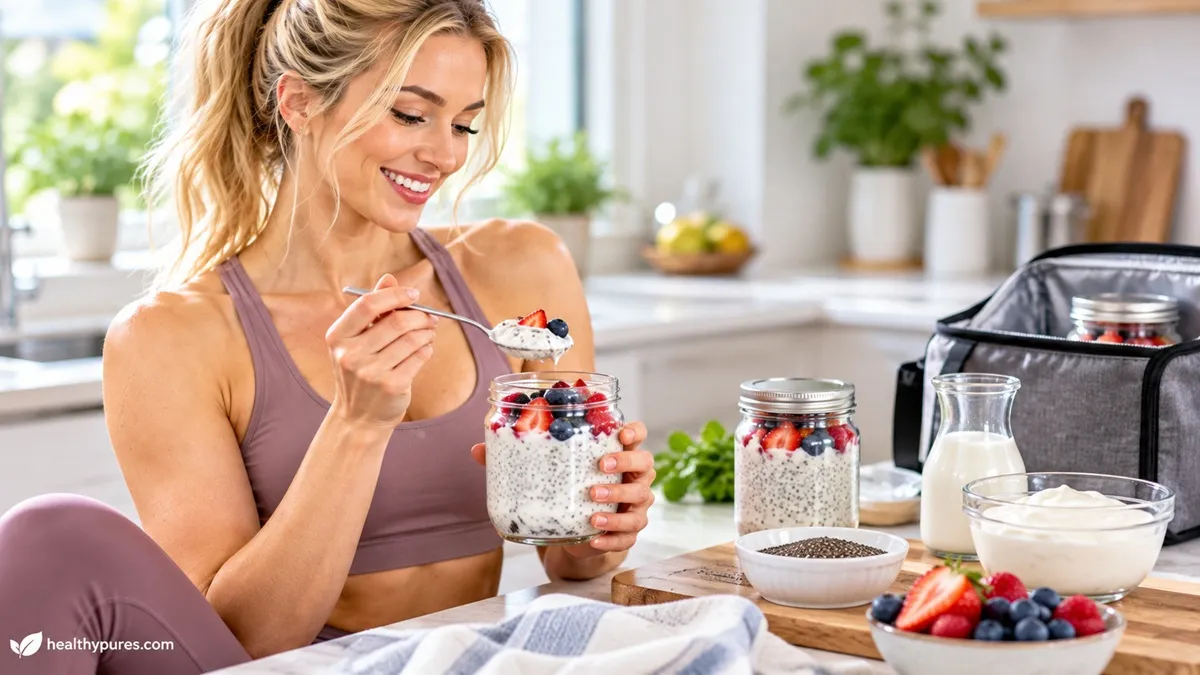
Make it: ¾ cup plain Greek yogurt, 1 tbsp chia seeds, 2–3 tbsp milk. Protein: approximately 17–22 g. Hands-on time: 3 min plus chilling.
Stir the chia into the yogurt and add enough milk for a spoonable consistency. Refrigerate it until the seeds hydrate; overnight is convenient, but the active work takes only a few minutes. Add berries just before eating if you like.
Workday or storage tip: This is no-cook, not zero-prep. Prepare it the night before and carry it chilled rather than leaving it at room temperature.
16. Hummus, Vegetables, and Edamame
Make it: ¼ cup hummus, ½ cup already-cooked shelled edamame, carrot or pepper sticks. Protein: approximately 12–16 g. Hands-on time: 3 min.
Pack hummus in a lidded cup and pair it with vegetables and cooked edamame. Hummus by itself is not especially high in protein at a typical dip-sized portion; edamame makes this combination more protein-forward.
Workday or storage tip: Use only cooked, ready-to-eat edamame and keep the dip cold. Sesame is a common allergen in hummus made with tahini.
17. Ready-to-Eat Lentils With Pumpkin Seeds
Make it: ¾ cup cooked, ready-to-eat lentils and 2 tbsp shelled pumpkin seeds. Protein: approximately 16–20 g. Hands-on time: 3 min.
Drain a fully cooked lentil pouch or can intended for ready-to-eat use, then mix with lemon, herbs, and pumpkin seeds. The seeds add a contrasting crunch, while the lentils supply both protein and fiber.
Workday or storage tip: If the package instructs you to cook the lentils, this is not a no-cook option until they have been cooked ahead. Refrigerate leftovers after opening.
18. Kefir or Drinkable Yogurt With Pumpkin Seeds
Make it: 1 cup plain kefir or drinkable yogurt plus 1 oz (28 g) pumpkin seeds. Protein: approximately 15–21 g, label-dependent. Hands-on time: 1 min.
Pour the kefir into a cup and eat the pumpkin seeds alongside it. Plain kefir and sweetened drinkable yogurt often differ in protein and added sugars, so use the label for the drink you choose.
Workday or storage tip: If you use a plant-based drink, the protein could be lower or higher than dairy kefir. Recalculate from its label rather than carrying over the dairy estimate.
19. Edamame With Feta and Olives
Make it: ¾ cup cooked, ready-to-eat shelled edamame, 1 oz (28 g) feta, a few olives. Protein: approximately 16–20 g. Hands-on time: 3 min.
Toss chilled edamame with crumbled feta, chopped olives, and a squeeze of lemon. The edamame supplies most of the protein; feta adds a salty flavor. A small container works well for a desk snack when you have access to refrigeration.
Workday or storage tip: Season lightly before tasting, since feta and olives can already contribute considerable sodium.
20. Canned Salmon and White Bean Cup
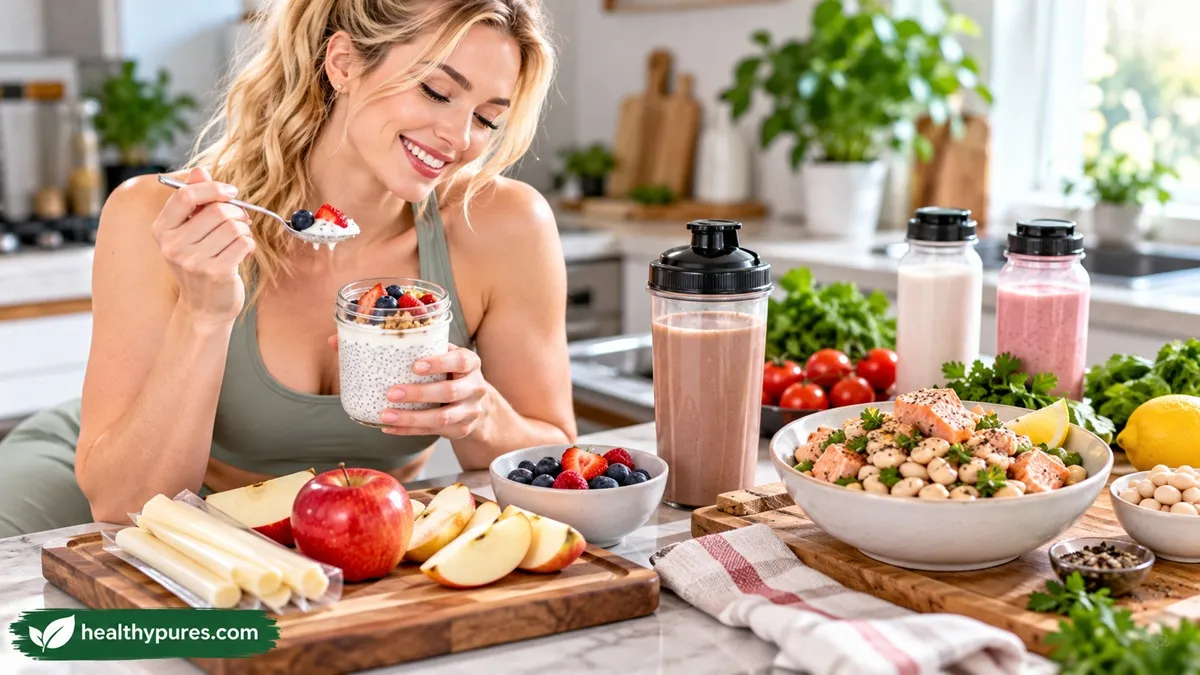
Make it: One 2.5–3 oz ready-to-eat salmon pouch (or equivalent canned salmon) and ⅓ cup drained white beans. Protein: approximately 20–27 g, depending on pack size. Hands-on time: 3 min.
Drain the salmon and white beans if needed, toss them with a little lemon and pepper, and serve in a small bowl or sealed container. Both ingredients can be stocked in shelf-stable packaging until opened, when the product label permits.
Workday or storage tip: Check the salmon serving weight and whether the beans are fully cooked and ready to eat. Refrigerate any leftovers promptly.
How to Make a No-Cook Snack More Practical
Choose the protein source first
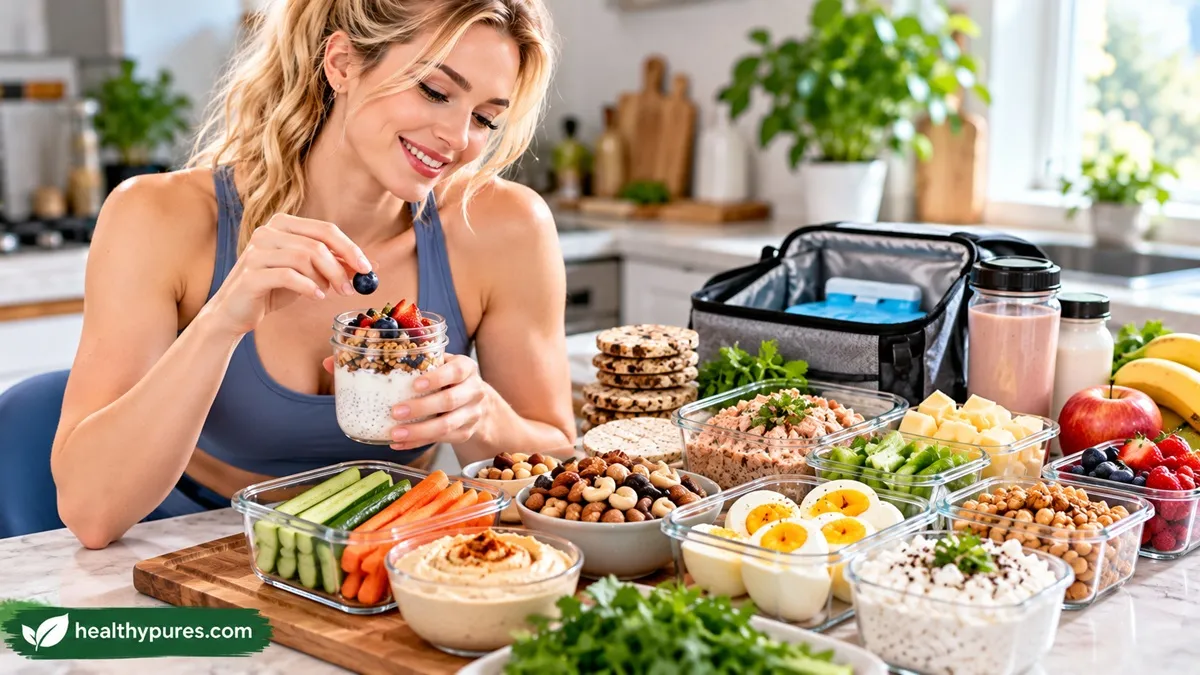
Start with something genuinely ready to eat—such as chilled yogurt, a sealed pouch of cooked fish, commercially cooked beans, or eggs prepared earlier. Add fruit, vegetables, crackers, herbs, or seeds for taste and variety. If a snack provides less protein than expected, check the actual ingredient portion instead of relying on the name or packaging.
Match the food to your storage options
For a desk without a refrigerator, unopened shelf-stable packages are usually easier to manage. For a long commute with yogurt, eggs, cheese, cold-smoked fish, or deli meat, bring an insulated lunch bag with frozen gel packs and refrigerate the food as soon as possible. These high protein snacks without cooking are only convenient if they can be handled safely.
Keep flavor and texture interesting
Try one creamy option, one crunchy option, and one savory option rather than purchasing five identical snacks. Store crackers and dry toppings separately from moist foods. A small stash of shelf-stable backups helps when you forget a refrigerated snack, while a few chilled ingredients give more variety at home.
How to Read Labels on Bars, Shakes, and Packaged Foods
Branded high protein snacks without cooking can look similar but have different ingredients and portions, which makes the full label more useful than a product name.
Read the serving size and number of servings per container first. Then compare grams of protein and the ingredients actually present. A large “20 g protein” claim on the front of a package is less useful if you are not looking at the serving size used for that claim. Use the FDA guide to understanding the Nutrition Facts label when checking sodium, added sugars, saturated fat, fiber, and other nutrients.
Also check the allergen statement, especially for snacks that contain milk, eggs, fish, peanuts, tree nuts, soy, wheat, or sesame. The FDA food-allergy overview explains how major allergens are labeled. For a step-by-step example, see HealthyPures’ guide to reading nutrition labels.
Food Safety: No Cooking Does Not Mean No Refrigeration
Keep foods that require refrigeration at 40°F (4°C) or colder. Perishable items generally should not sit at room temperature for longer than two hours, or one hour when the surrounding temperature exceeds 90°F (32°C). These precautions are described by FoodSafety.gov’s four steps to food safety.
- Do not treat frozen edamame as ready to eat unless its instructions explicitly permit it; many packages require cooking.
- Keep yogurt, cottage cheese, eggs, deli meat, and refrigerated smoked fish properly chilled.
- Do not assume tuna, salmon, beans, bars, or shakes are shelf-stable simply because they are sealed; follow that exact package’s directions.
- After opening shelf-stable fish or bean packages, refrigerate leftovers promptly and use them according to the label.
- When traveling, use frozen gel packs in an insulated lunch bag; do not rely on how cool a package feels to your hand.
Common Mistakes to Avoid
- Calling every nut- or hummus-based snack “high protein”: the typical serving may provide less protein than the label-style name suggests. Compare the actual portion and ingredients.
- Confusing ready-to-eat with ready-to-cook: frozen beans, certain lentil pouches, and some deli or refrigerated products may need a step before eating.
- Assuming the same nutrition for every brand: yogurt, bars, jerky, shakes, and crackers vary, so label-specific values matter.
- Forgetting storage after opening: a shelf-stable, sealed food may become perishable once it is opened.
- Ignoring allergies: plant-based is not synonymous with allergen-free, and shared-equipment statements may matter for some people.
Frequently Asked Questions
The questions below cover safe storage, plant-based choices, and what to expect from high protein snacks without cooking in everyday use.
How much protein should a no-cook snack contain?
There is no universal amount for every person or every snack. You can use the protein figures here as a comparison tool, then decide what suits your appetite, regular meals, and personal needs. If you need an individualized target, a qualified dietitian can help.
Are there vegan high protein snacks without cooking?
Yes. Ready-to-eat edamame, lentils with pumpkin seeds, roasted soy nuts, hummus paired with cooked edamame, and suitable vegan bars or shakes are options. For packaged foods, check protein grams and allergens on the exact label.
Which options are shelf-stable for work or travel?
Some unopened tuna or salmon pouches, jerky, protein bars, roasted soy nuts, and protein shakes can be shelf-stable. Not every product in those categories is. Confirm the storage directions and follow the instructions after opening.
Can I eat frozen edamame without heating it?
Only if the product is explicitly labeled ready to eat and its directions allow that. Many frozen edamame products must be cooked first. Previously cooked edamame that was cooled and stored safely can be eaten chilled.
Are protein bars automatically healthier than other snacks?
No. Bars vary in serving size, protein, sodium, fiber, saturated fat, allergens, and added sugars. Compare the entire label with the foods you would otherwise choose rather than relying on one front-of-pack claim.
Can I prepare these snacks the night before?
Many can be portioned in advance. Keep dairy, eggs, meat, fish, cooked beans, and prepared dips refrigerated, and add crunchy components shortly before eating. Shelf-stable items can remain sealed until needed when their labels permit it.
A Flexible No-Cook Snack Routine
Choose two or three foods you enjoy and can store safely, then vary the flavors and ingredients during the week. Keeping a yogurt option, a plant-based choice, and a sealed shelf-stable backup available can make snack breaks easier without making them complicated.
The best high protein snacks without cooking are the ones that fit your schedule, preferences, and food-handling setup. Check the actual label before relying on a packaged product’s protein number, and remember that protein is only one part of a varied eating pattern.
Editorial and medical note: This is general educational content, not individualized nutrition or medical advice. The example protein values are estimates, not lab results. Learn about HealthyPures’ health-content editor on the Lucas Miller profile and see our Medical, Health & Affiliate Disclaimer for additional context.