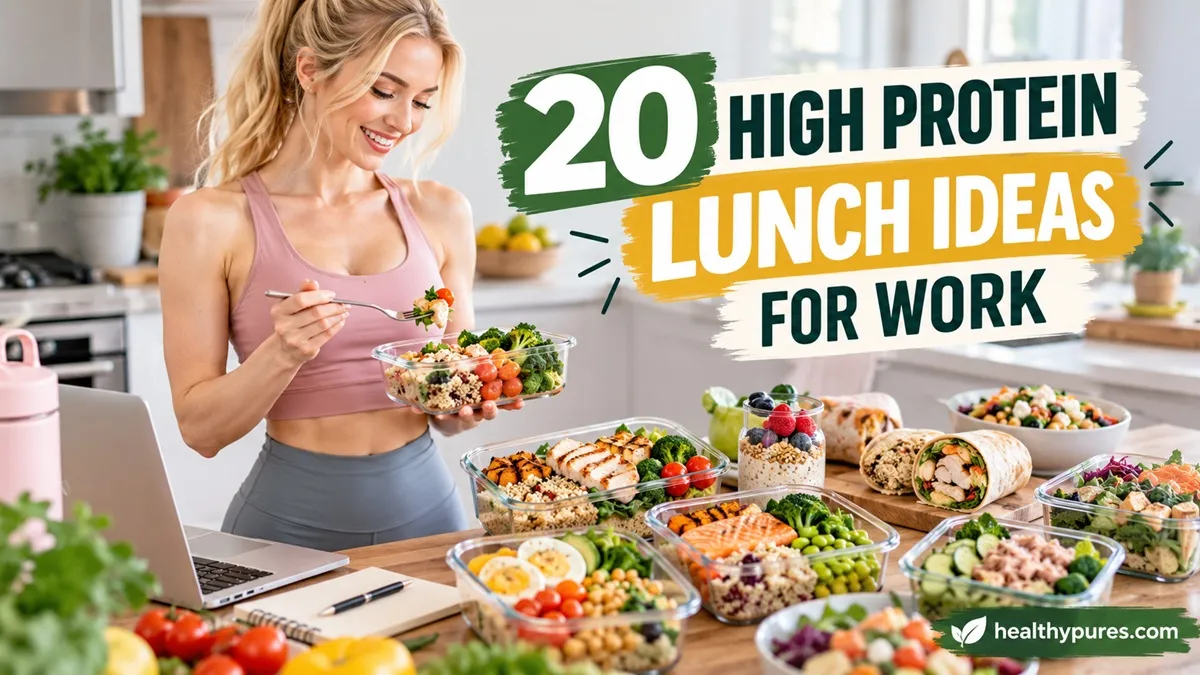
A packed lunch can be practical, satisfying, and easy to eat between meetings. These high protein lunch ideas for work include bowls, salads, wraps, soups, and vegetarian meals that fit different schedules and kitchen setups. Each example uses a defined ingredient portion so you can understand where the protein comes from, instead of relying on a vague “high-protein” label.
Choose two or three meals you enjoy, prepare a few ingredients in advance, and keep anything perishable cold on the way to work. For smaller options between meals, see our high-protein snacks without cooking.
Quick Picks: Choose a Lunch for Your Workday
- Make ahead: Chicken quinoa bowls, lentil soup, pork tenderloin with rice, and white bean soup.
- No microwave: Turkey lettuce wraps, salmon and white bean salad, tuna-stuffed peppers, or Greek yogurt bowls. These still require cold storage.
- Vegetarian: Black bean burgers, tofu bowls, chickpea quinoa salad, pasta with edamame, and egg-and-hummus plates.
- Fast assembly: Cottage cheese with fruit, Greek yogurt bowls, ready-cooked chicken salad, and tuna-stuffed peppers.
- No office refrigerator: Use an insulated lunch bag with frozen gel packs or unopened products expressly labeled shelf-stable until opened.
The Dietary Guidelines for Americans, 2025–2030 describe an eating pattern built around a variety of nutrient-dense foods. Protein is one part of the meal; vegetables, fruit, whole grains, and fats also contribute to a varied lunch. There is no single protein amount that every person needs at every lunch. When choosing high protein lunch ideas for work, start with your office setup and pick meals you can store and serve safely.
Compare 20 High Protein Lunch Ideas for Work
How to read this table: Protein and calorie figures are calculated examples from the precisely weighed ingredients shown below. They are not laboratory analyses or product Nutrition Facts values. The models use USDA FoodData Central reference foods for major ingredients and labeled assumptions for other generic or packaged items. Cooking oils and substantial additions are included; herbs, water, salt, and small amounts of lemon are not. Values are rounded and may change with brands, cooking yield, and substitutions.
| Lunch idea | Protein, approx. | Calories, approx. | Assembly time | Serve |
|---|---|---|---|---|
| Chicken and Vegetable Quinoa Bowl | 44 g | 450 kcal | 10 min | Hot or cold |
| Lentil Soup With Whole-Grain Bread | 24 g | 420 kcal | 5 min | Hot |
| Turkey and Avocado Lettuce Wraps | 36 g | 300 kcal | 10 min | Cold |
| Hard-Boiled Eggs and Hummus Plate | 31 g | 560 kcal | 10 min | Cold |
| Salmon and White Bean Salad | 36 g | 490 kcal | 10 min | Cold |
| Cottage Cheese With Berries, Nuts, and Toast | 32 g | 420 kcal | 5 min | Cold |
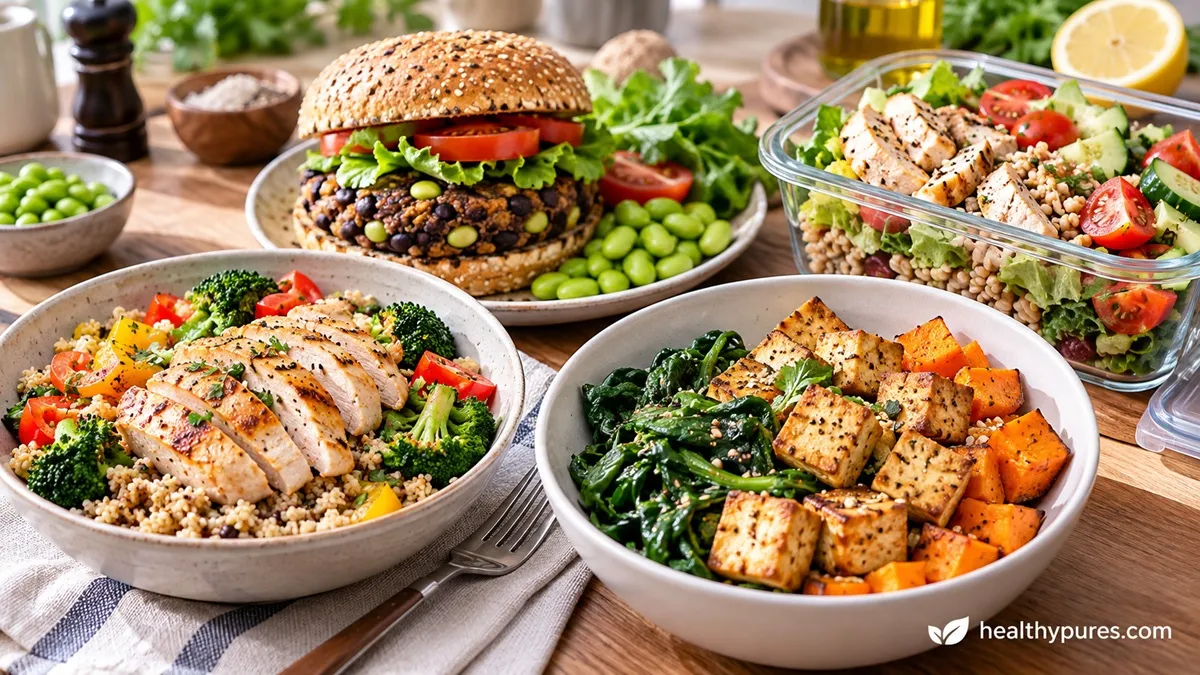
| Black Bean Burger With Edamame | 33 g | 600 kcal | 10 min | Hot or cold |
| Greek Yogurt Bowl With Granola and Fruit | 38 g | 510 kcal | 5 min | Cold |
| Edamame and Whole-Wheat Pasta Salad | 27 g | 490 kcal | 10 min | Cold |
| Tuna Salad Stuffed Bell Peppers | 39 g | 360 kcal | 10 min | Cold |
| Quinoa, Chickpea, and Feta Salad | 24 g | 600 kcal | 10 min | Cold |
| Lean Beef and Vegetable Rice Bowl | 38 g | 490 kcal | 10 min | Hot |
| Shrimp and Asparagus With Quinoa | 43 g | 410 kcal | 10 min | Hot or cold |
| Tofu, Spinach, and Sweet Potato Bowl | 36 g | 490 kcal | 10 min | Hot |
| Chicken Caesar Salad With Dressing on the Side | 46 g | 530 kcal | 10 min | Cold |
| White Bean and Kale Soup With Bread | 29 g | 510 kcal | 5 min | Hot |
| Pork Tenderloin With Broccoli and Brown Rice | 36 g | 420 kcal | 10 min | Hot |
| Egg-and-Vegetable Muffins With Cottage Cheese | 31 g | 350 kcal | 5 min | Hot or cold |
| Peanut Butter-Banana Wrap With Greek Yogurt | 35 g | 610 kcal | 5 min | Cold |
| Leftover Chicken Salad With Farro | 45 g | 490 kcal | 10 min | Cold |
Time note: Assembly time assumes proteins, beans, grains and vegetables have already been cooked as applicable. It does not include cooking from raw, batch preparation, chilling or commuting. Recipes with cooked chicken, eggs, fish or meat require additional cook time if you start with raw ingredients.
How We Calculated These Protein and Calorie Examples
For each lunch, we specified ingredient weights in grams. The mathematical method is sum of (ingredient grams ÷ 100 × nutrient amount per 100 g). For example, 113 g of cooked skinless chicken breast contributes about 35 g protein using the USDA reference value of 31 g per 100 g. A further 140 g of cooked quinoa contributes roughly 6 g. Vegetables and other ingredients complete the total.
Our starting point is USDA FoodData Central and its downloadable datasets. Reference foods are matched to the preparation state (for example, cooked chicken rather than raw chicken). Some other ingredients—including whole-grain bread, granola, tortillas, burger buns and dressings—use generic benchmark assumptions rather than exact brand records. For those foods, the product label takes precedence. The complete ingredient-weight and calculation ledger is available to the editorial team for reconciliation; these figures must not be represented as verified label values.
Use this comparison to explore high protein lunch ideas for work, not to set a personalized nutrition target. Actual protein and calories can differ because of brands, drained weights, cooked yields, cooking oil, sauces and portion sizes.
20 High Protein Lunch Ideas for Work
1. Chicken and Vegetable Quinoa Bowl
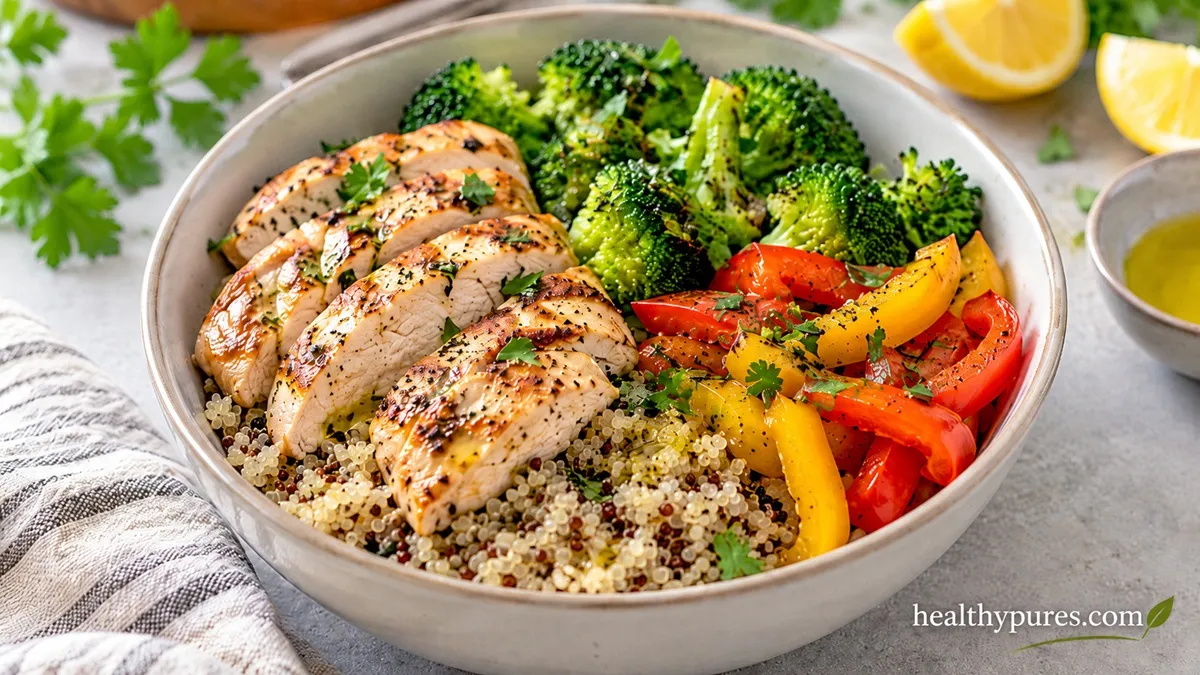
One example serving: 113 g cooked chicken breast; 140 g cooked quinoa; 90 g broccoli; 60 g bell pepper; 5 g olive oil.
Calculated example: about 44 g protein and 450 calories. Assembly: 10 minutes with cooked or ready-to-eat components.
How to make it: Cook chicken thoroughly and cook quinoa according to its package. Steam broccoli, slice pepper and arrange everything in a lunch container. Add oil, lemon and herbs after cooling.
Workday tip: Cook chicken and quinoa in one prep session; chill promptly and keep cold until serving.
2. Lentil Soup With Whole-Grain Bread
One example serving: 180 g cooked lentils; 200 g vegetable broth; 60 g carrot; 40 g onion; 75 g tomato; 5 g olive oil; 40 g whole-grain bread.
Calculated example: about 24 g protein and 420 calories. Assembly: 5 minutes with cooked or ready-to-eat components.
How to make it: Sauté onion and carrot in oil, then simmer with broth, tomatoes and pre-cooked lentils until tender. Pack bread dry on the side.
Workday tip: Protein depends on the actual weight of lentils per bowl; do not substitute a thin packaged soup without recalculating.
3. Turkey and Avocado Lettuce Wraps
One example serving: 113 g cooked turkey breast; 65 g avocado; 50 g lettuce; 60 g cucumber; 40 g carrot; 10 g mustard.
Calculated example: about 36 g protein and 300 calories. Assembly: 10 minutes with cooked or ready-to-eat components.
How to make it: Wash and dry lettuce, layer on sliced cooked turkey, avocado, cucumber and carrot, then fold. Pack mustard separately if needed.
Workday tip: This calculation uses cooked turkey breast, not deli slices; deli brands vary in protein and sodium.
4. Hard-Boiled Eggs and Hummus Plate
One example serving: 3 cooked large eggs (150 g edible); 80 g hummus; 55 g whole-wheat pita; 70 g carrot; 70 g cucumber.
Calculated example: about 31 g protein and 560 calories. Assembly: 10 minutes with cooked or ready-to-eat components.
How to make it: Boil eggs until fully set and chill. Pack with hummus, carrot and cucumber; keep pita separate to preserve texture.
Workday tip: Use refrigerated eggs; packaged hummus and pita differ by brand.
5. Salmon and White Bean Salad
One example serving: 113 g cooked Atlantic salmon; 90 g cooked white beans; 70 g greens; 90 g tomato; 70 g cucumber; 10 g olive oil.
Calculated example: about 36 g protein and 490 calories. Assembly: 10 minutes with cooked or ready-to-eat components.
How to make it: Cook the salmon fully, chill safely, then flake over greens and beans. Add vegetables and a lemon-oil dressing at lunchtime.
Workday tip: The reference uses cooked farmed Atlantic salmon; another species or canned salmon changes the result.
6. Cottage Cheese With Berries, Nuts, and Toast
One example serving: 226 g 2%-fat cottage cheese; 80 g berries; 15 g walnuts; 40 g whole-grain toast.
Calculated example: about 32 g protein and 420 calories. Assembly: 5 minutes with cooked or ready-to-eat components.
How to make it: Spoon cottage cheese and berries into a sealed tub. Pack walnuts and toast separately to keep crisp.
Workday tip: Use the actual cottage-cheese label for protein and sodium; the example uses a generic 2%-fat reference.
7. Black Bean Burger With Edamame
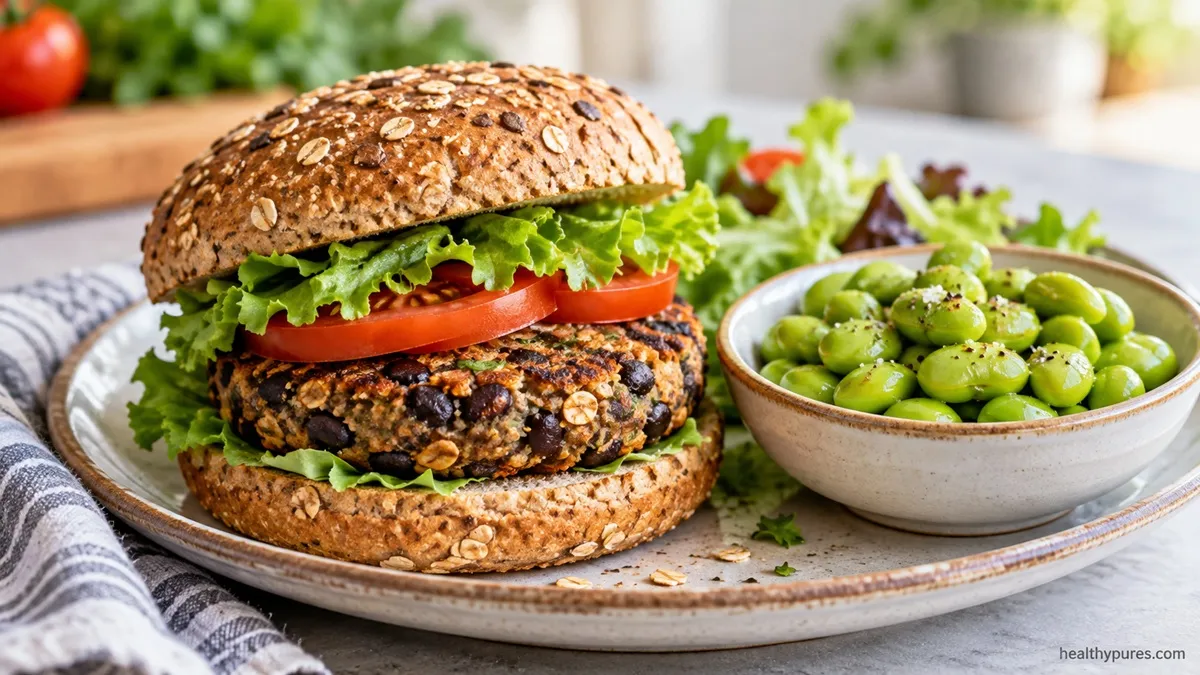
One example serving: 140 g cooked black beans; 20 g oats; 70 g whole-grain bun; 80 g cooked shelled edamame; 30 g lettuce; 50 g tomato; 5 g oil.
Calculated example: about 33 g protein and 600 calories. Assembly: 10 minutes with cooked or ready-to-eat components.
How to make it: Mash cooked beans with oats and seasoning, shape into a patty and cook in a little oil until hot through. Serve on a bun with vegetables and edamame on the side.
Workday tip: Ingredient calculation is for a homemade patty; it should not be applied to a commercial burger without checking its label.
8. Greek Yogurt Bowl With Granola and Fruit
One example serving: 300 g plain nonfat Greek yogurt; 45 g granola; 130 g berries; 10 g walnuts.
Calculated example: about 38 g protein and 510 calories. Assembly: 5 minutes with cooked or ready-to-eat components.
How to make it: Add berries to chilled yogurt. Keep granola and walnuts in a separate container until ready to eat.
Workday tip: Greek yogurt and granola vary widely among brands; the model assumes plain strained nonfat yogurt.
9. Edamame and Whole-Wheat Pasta Salad
One example serving: 150 g cooked shelled edamame; 140 g cooked whole-wheat pasta; 70 g cucumber; 90 g tomato; 8 g olive oil.
Calculated example: about 27 g protein and 490 calories. Assembly: 10 minutes with cooked or ready-to-eat components.
How to make it: Cook and chill edamame and pasta according to package instructions. Mix with diced vegetables, lemon, herbs and olive oil.
Workday tip: Whole-wheat, chickpea and regular pasta have different protein levels; check the chosen pasta label.
10. Tuna Salad Stuffed Bell Peppers
One example serving: 113 g drained canned light tuna; 40 g plain Greek yogurt; 150 g bell pepper; 45 g celery; 35 g whole-grain crackers; 10 g mustard.
Calculated example: about 39 g protein and 360 calories. Assembly: 10 minutes with cooked or ready-to-eat components.
How to make it: Mix drained tuna, yogurt, celery and mustard. Fill pepper halves just before lunch and serve with crackers.
Workday tip: Use drained tuna weight, not the can’s total weight. Keep filling cold once opened.
For high protein lunch ideas for work that do not need reheating, tuna-stuffed peppers are convenient when you can keep the filling chilled. If tuna is a regular lunch choice, the FDA/EPA advice about eating fish distinguishes canned light tuna from albacore for mercury considerations, with additional guidance for pregnant people, breastfeeding people and children.
11. Quinoa, Chickpea, and Feta Salad
One example serving: 185 g cooked quinoa; 125 g cooked chickpeas; 28 g feta; 80 g cucumber; 80 g tomato; 8 g olive oil.
Calculated example: about 24 g protein and 600 calories. Assembly: 10 minutes with cooked or ready-to-eat components.
How to make it: Chill cooked quinoa and chickpeas. Toss with cucumber, tomato, crumbled feta, lemon and oil; pack dressing separately if desired.
Workday tip: Canned chickpea draining and feta brand choice change the final weights, sodium and totals.
12. Lean Beef and Vegetable Rice Bowl
One example serving: 113 g cooked lean beef; 140 g cooked brown rice; 100 g zucchini; 80 g bell pepper; 5 g olive oil.
Calculated example: about 38 g protein and 490 calories. Assembly: 10 minutes with cooked or ready-to-eat components.
How to make it: Cook the beef to a safe temperature appropriate for its cut. Sauté zucchini and pepper, then layer over cooked rice and sliced beef.
Workday tip: Do not apply the example to fatty beef cuts or beef cooked in additional oil without recalculating.
13. Shrimp and Asparagus With Quinoa
One example serving: 142 g cooked shrimp; 140 g cooked quinoa; 120 g asparagus; 8 g olive oil.
Calculated example: about 43 g protein and 410 calories. Assembly: 10 minutes with cooked or ready-to-eat components.
How to make it: Cook shrimp fully and roast or sauté asparagus. Place over prepared quinoa, then add lemon and olive oil.
Workday tip: This model uses cooked shrimp weight; weigh after cooking rather than before.
14. Tofu, Spinach, and Sweet Potato Bowl
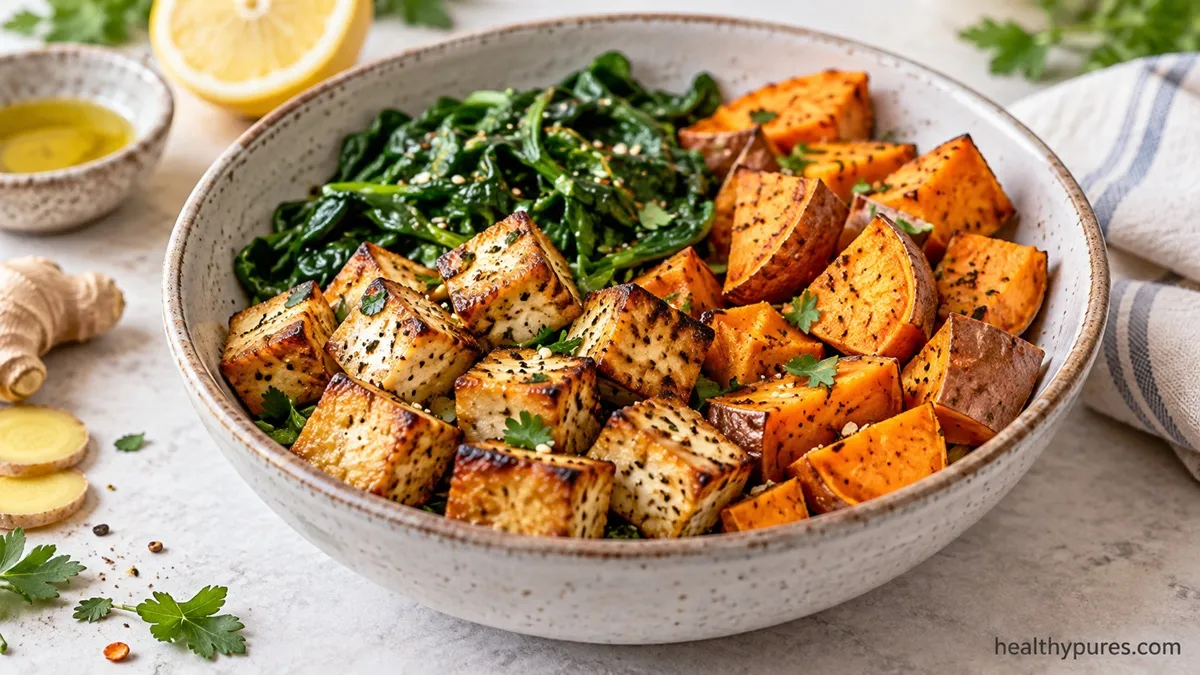
One example serving: 170 g firm calcium-set tofu; 90 g cooked spinach; 180 g baked sweet potato; 7 g olive oil.
Calculated example: about 36 g protein and 490 calories. Assembly: 10 minutes with cooked or ready-to-eat components.
How to make it: Roast sweet potato; brown tofu cubes in a nonstick pan with measured oil. Add spinach and season with ginger or lemon.
Workday tip: Tofu can range greatly in protein depending on firmness and coagulant; check the package. Edamame is NOT included in this model.
15. Chicken Caesar Salad With Dressing on the Side
One example serving: 113 g cooked chicken breast; 100 g romaine; 15 g Parmesan; 30 g croutons; 30 g Caesar dressing.
Calculated example: about 46 g protein and 530 calories. Assembly: 10 minutes with cooked or ready-to-eat components.
How to make it: Slice chilled chicken and layer over dried romaine. Pack Parmesan, croutons and dressing separately; toss before eating.
Workday tip: Dressing varies greatly by product; the displayed value uses a generic full-fat dressing proxy.
16. White Bean and Kale Soup With Bread
One example serving: 210 g cooked white beans; 80 g kale; 60 g carrot; 40 g onion; 180 g broth; 5 g olive oil; 40 g whole-grain bread.
Calculated example: about 29 g protein and 510 calories. Assembly: 5 minutes with cooked or ready-to-eat components.
How to make it: Simmer kale, carrots and onion in broth, stir in cooked beans, and mash a few for thickness. Bring to a safe serving temperature.
Workday tip: Soup needs enough beans per portion for the calculated protein; a broth-heavy bowl will be lower.
17. Pork Tenderloin With Broccoli and Brown Rice
One example serving: 113 g cooked pork tenderloin; 110 g broccoli; 140 g cooked brown rice; 7 g olive oil.
Calculated example: about 36 g protein and 420 calories. Assembly: 10 minutes with cooked or ready-to-eat components.
How to make it: Cook pork tenderloin to its recommended safe internal temperature and rest as directed. Portion with steamed broccoli and cooked brown rice.
Workday tip: Use lean tenderloin, not shoulder or breaded pork. Extra sauces change nutrition.
18. Egg-and-Vegetable Muffins With Cottage Cheese
One example serving: 2 egg muffins containing together 100 g egg, 40 g cottage cheese, 30 g spinach and 35 g pepper; plus 115 g cottage cheese and 100 g berries.
Calculated example: about 31 g protein and 350 calories. Assembly: 5 minutes with cooked or ready-to-eat components.
How to make it: Whisk 6 eggs (300 g edible) with 120 g cottage cheese and 195 g vegetables. Divide across six muffin cups, bake until centers are set, then serve two muffins with 115 g cottage cheese and berries.
Workday tip: Muffin ingredient amounts are specified as the share of a six-muffin batch; cottage cheese in the two muffins plus the side totals 155 g.
19. Peanut Butter-Banana Wrap With Greek Yogurt
One example serving: 65 g whole-wheat tortilla; 32 g peanut butter; 120 g banana; 200 g plain nonfat Greek yogurt.
Calculated example: about 35 g protein and 610 calories. Assembly: 5 minutes with cooked or ready-to-eat components.
How to make it: Spread peanut butter on the tortilla, add banana and roll snugly. Pack yogurt separately and keep refrigerated.
Workday tip: Peanut butter, tortilla and yogurt labels should be checked, especially for allergens.
20. Leftover Chicken Salad With Farro
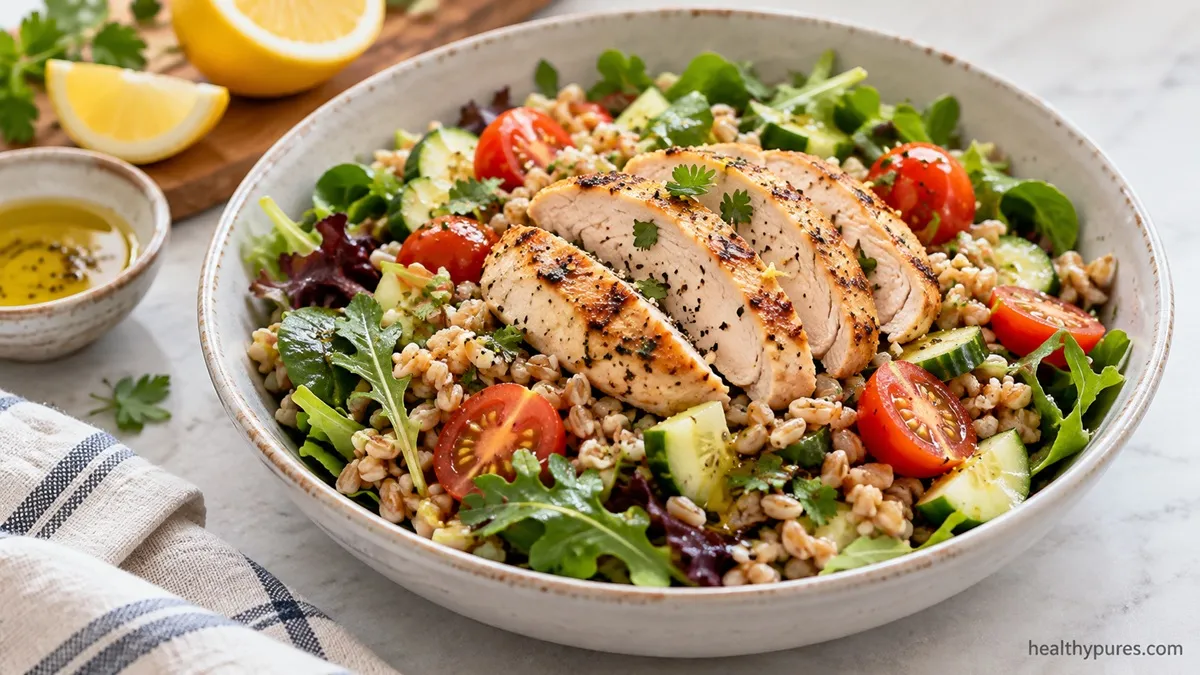
One example serving: 113 g cooked chicken breast; 150 g cooked farro; 85 g greens; 80 g tomato; 80 g cucumber; 8 g olive oil.
Calculated example: about 45 g protein and 490 calories. Assembly: 10 minutes with cooked or ready-to-eat components.
How to make it: Use properly refrigerated leftover chicken. Mix farro with vegetables, then top with chicken and dress with lemon and measured olive oil.
Workday tip: This model includes cooked, not dry, farro. Freeze chicken for later in the workweek if it will exceed the refrigeration window.
A Three-Day Meal Prep Plan Without Three Separate Cooking Sessions
To make high protein lunch ideas for work easier to rotate through the week, start with a batch of plain quinoa, a batch of cooked chicken, and chopped or roasted vegetables. Cool and refrigerate everything promptly. Then use the same components in different meals without eating the exact same lunch every day. Our high-protein lunch meal-prep guide covers additional ways to batch-cook and rotate ingredients.
- Monday: Pack a chicken quinoa bowl with steamed broccoli, bell pepper and lemon.
- Tuesday: Mix leftover cooked quinoa with chickpeas, cucumber, tomato, feta and a lemon-oil dressing.
- Wednesday: Pack a cold chicken salad using the reserved chicken, greens and grains. Use quinoa in place of farro if that is what you prepared.
Shopping tip: Buy only the ingredients needed for meals you will actually make. Keep leafy greens, dressings, crunchy toppings and cut avocado separate until serving. If the planned storage time exceeds the safe refrigerated window, freeze suitable portions earlier rather than keeping every meal in the refrigerator all week.
Pack and Store Work Lunches Safely
Follow FoodSafety.gov’s four steps to food safety when cooking, packing and storing meat, seafood, eggs, dairy, rice, pasta, soups and cooked beans. Clean your hands and surfaces, avoid cross-contamination, cook foods safely, and chill perishable food promptly.
- Keep refrigerated foods at 40°F (4°C) or colder.
- Refrigerate perishables within 2 hours, or within 1 hour when exposed to temperatures above 90°F (32°C).
- Divide large batches into shallow containers and cool promptly.
- Use an insulated cooler or lunch bag with frozen ice packs if a refrigerator is not available.
- Reheat cooked leftovers to 165°F (74°C), measuring with a food thermometer when needed.
- Do not rely on smell alone to judge whether food left unrefrigerated is safe.
The FoodSafety.gov cold food storage chart gives food-specific refrigerator and freezer storage windows, while its safe minimum internal temperature chart explains the correct cooking temperatures for different meats, poultry, eggs and seafood. For most cooked leftovers, plan to use refrigerated portions within 3–4 days, or freeze them sooner.
Make These Lunches Fit Your Workplace
If You Have Only Ten Minutes
Build lunch with a safely prepared protein food, a ready-to-eat grain or whole-grain item, vegetables, and an easy dressing. The fastest examples in the table are cottage cheese plates, yogurt bowls, tuna peppers and salads using properly stored leftovers. The times in the table do not include advance cooking.
If You Eat Vegetarian Meals
Lentils, beans, tofu and edamame are useful foundations. The black bean burger, edamame pasta salad, tofu bowl and chickpea quinoa salad provide different textures and flavors. If you include dairy or eggs, cottage cheese, yogurt and egg plates are additional choices. Compare tofu and meat-replacement labels because protein amounts vary.
If You Need to Compare Packaged Foods
Two products described as “high protein” may have different serving sizes or quantities of protein, sodium and fat. The FDA guide to reading Nutrition Facts labels shows how to compare the same serving basis, especially for yogurt, deli meat, pasta, granola, hummus, buns and dressing. The ingredient-weight model in this article should always be recalculated when a product differs.
Mistakes That Make Packed Lunches Less Practical
- Counting an unweighed protein portion: 100 g of cooked chicken is not the same as 100 g of raw chicken, and a 5-oz tuna can does not necessarily contain 5 oz drained tuna.
- Forgetting high-variation ingredients: a generous drizzle of oil or brand-specific dressing can change the energy estimate; use measured amounts when comparing example numbers.
- Confusing assembly time with total time: a five-minute soup lunch assumes soup is already cooked.
- Leaving perishable food unrefrigerated: use a refrigerator or an insulated cooler with appropriate ice packs.
- Repeating the same meal unwillingly: share a few prepared components across different vegetables, grains and seasonings to maintain variety.
Frequently Asked Questions
How much protein should a work lunch contain?
There is no one-size-fits-all target for every person or meal. Needs vary with age, health circumstances, activity and the rest of the day’s diet. MedlinePlus explains the role of protein in the diet. If you have specific nutrition needs, ask a registered dietitian or qualified clinician for guidance.
Can I cook every work lunch on Sunday?
You can batch-cook and divide meals into portions, but do not assume five or more days of refrigerated storage is safe for every cooked food. Use suitable refrigerated leftovers within 3–4 days and freeze later-week portions. Always follow food-specific instructions.
Which options work without a microwave?
For high protein lunch ideas for work without a microwave, try turkey and avocado lettuce wraps, cold salmon and white bean salad, tuna-stuffed bell peppers, cottage cheese plates, Greek yogurt bowls and edamame pasta salad. Keep perishable foods chilled.
Are these exact Nutrition Facts values?
No. The figures are rounded, calculated examples from weighed ingredients and reference nutrient values. They are not measured for specific products, brands or batches. Check product labels and ingredient weights to calculate your own meal.
Are high-protein lunches automatically better?
Not necessarily. Protein content does not determine the overall nutritional quality of a meal. Food variety, preferences, allergies, safe storage, sodium and other nutrients can all matter. Choose food that fits your circumstances.
Make Workday Lunches Easier to Repeat
Start with a couple of lunches you enjoy and keep the ingredients flexible. A small stock of cooked grains, ready-to-eat vegetables and safely stored protein foods makes it easier to rotate bowls, salads and wraps without cooking from scratch every morning.
These high protein lunch ideas for work are meant to help you plan, not prescribe one ideal way to eat. Use the calculated figures as examples, adjust to your appetite and preferences, and check individual food labels whenever precision matters.
This article is educational and is not individualized medical or nutrition advice. Read the HealthyPures Medical, Health & Affiliate Disclaimer for more information.