Digestive discomfort can make everyday meals feel harder than they should. A structured gut healing meal plan can give you a simple starting point without promising a medical cure.
Quick Summary
This gut healing meal plan is a flexible food framework, not a treatment for a digestive disorder.
- This gut healing meal plan centers on whole, nutrient-dense foods and flexible portions.
- Each day in the gut healing meal plan includes breakfast, lunch, dinner, and one practical focus.
- The gut healing meal plan increases fiber gradually rather than forcing large portions.
- Fermented foods are optional in this gut healing meal plan, and tolerance matters more than trends.
Quick Facts
| Aspect | Details |
|---|---|
| Duration | 7 days |
| Meal Pattern | Breakfast, lunch, dinner, plus optional snacks |
| Main Food Focus | Vegetables, fruits, whole grains, legumes, protein foods, nuts, seeds, and tolerated fermented foods |
| Fiber Approach | Increase gradually if your current intake is low |
| Difficulty | Beginner to intermediate |
| Best Use | A short planning framework, not a treatment protocol |
Who This Guide Is For
- ✔ Adults who want a structured week of balanced meals from a gut healing meal plan.
- ✔ People who want more fiber and plant variety without extreme restriction.
- ✔ Readers who prefer simple meals with flexible ingredient swaps.
- ✔ Anyone who wants to track food tolerance before making larger changes.
What “Gut Healing” Really Means
A useful goal is to support digestive health rather than chase a “cleanse” or a guaranteed repair. The current Dietary Guidelines for Americans emphasize whole, nutrient-dense foods, including vegetables, fruits, whole grains, protein foods, dairy or fortified soy, and healthy fats. Current Dietary Guidelines provide the broader framework.
Your gut microbiome includes bacteria and other microorganisms that interact with the foods you eat. Diet is one factor that can influence this ecosystem. Fiber-rich foods can support regular bowel function and provide substrates that gut microbes can use.
That does not mean one food can “rebalance” your microbiome on demand. It also does not mean every symptom comes from food. Persistent symptoms can have many causes.
How This 7-Day Plan Is Built
1. Build Meals Around Variety
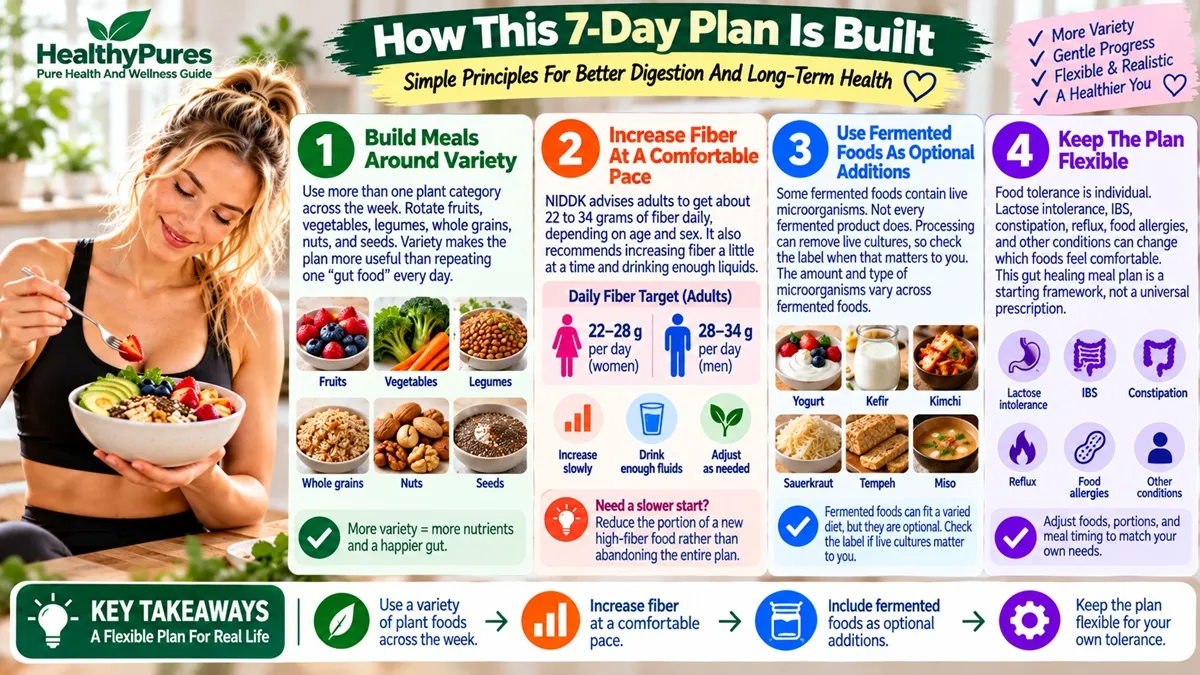
Use more than one plant category across the week. Rotate fruits, vegetables, legumes, whole grains, nuts, and seeds. Variety makes the plan more useful than repeating one “gut food” every day.
2. Increase Fiber At A Comfortable Pace
NIDDK advises adults to get about 22 to 34 grams of fiber daily, depending on age and sex. It also recommends increasing fiber a little at a time and drinking enough liquids. NIDDK fiber guidance supports this gradual approach.
Need a slower start? Reduce the portion of a new high-fiber food rather than abandoning the entire plan. A food can be healthy and still be poorly tolerated in a large portion.
3. Use Fermented Foods As Optional Additions
Some fermented foods contain live microorganisms. Not every fermented product does. Processing can remove live cultures, so check the label when that matters to you. Harvard Health also notes that the amount and type of microorganisms vary across fermented foods. Harvard fermented-food guidance explains this nuance.
4. Keep The Plan Flexible
Food tolerance is individual. Lactose intolerance, IBS, constipation, reflux, food allergies, and other conditions can change which foods feel comfortable. This gut healing meal plan is a starting framework, not a universal prescription.
Before You Start: A Simple Baseline Check
Use the baseline to choose the most comfortable starting point for this gut healing meal plan.
Use the gut healing meal plan as a short planning experiment. Write down your usual fiber intake, common symptoms, and foods you already tolerate.
| Track | Simple Note |
|---|---|
| Fiber | Low, moderate, or already high |
| Bloating | None, mild, moderate, or frequent |
| Bowel Pattern | Regular, constipation, loose stools, or variable |
| New Foods | List foods you rarely eat |
| Known Triggers | List foods already linked to symptoms |
Your 7-Day Digestive Meal Plan
This gut healing meal plan uses moderate portions, familiar whole foods, and flexible swaps. It is designed as a practical seven-day framework, not a treatment diet.
The estimated fiber ranges are approximate. Your needs, food brands, recipes, and tolerance can change the numbers, so use symptoms and professional guidance to adjust portions.
7-Day Plan At A Glance
Use this overview to see the rhythm of the gut healing meal plan before you shop or prep. Fiber ranges are rough estimates from the listed portions, not prescriptions.
| Day | Main Focus | Approx. Fiber | Meal Pace | Practical Note |
|---|---|---|---|---|
| 1 | Gentle start | ~20–24 g | Low to moderate | Use familiar foods; moderate portions |
| 2 | Fiber + fermented foods | ~25–30 g | Moderate | Keep legumes and sauerkraut portions small if new |
| 3 | Protein + cooked vegetables | ~23–28 g | Moderate | Cook produce if raw foods feel uncomfortable |
| 4 | Color + variety | ~24–29 g | Moderate | Avoid oversized raw-vegetable portions |
| 5 | Fruit + warm meal | ~22–27 g | Moderate | Use fruit for variety, not as a digestive cure |
| 6 | Small reintroduction | ~20–25 g | Low to moderate | Test one new food at a time |
| 7 | Repeatable pattern | ~25–30 g | Moderate | Keep tolerated favorites and rotate foods |
7-Day Shopping List For One Adult
Produce
- 8 cups mixed greens
- 5 cups spinach
- 2 medium bananas
- 6 cups berries
- 2 kiwis
- 2 small oranges
- 1 small pear
- 1 cup papaya
- 1 cup pineapple
- 3 avocados
- 2 medium sweet potatoes
- 2 cups broccoli
- 2 cups carrots
- 2 cucumbers
- 2 cups tomatoes
- 1 bunch asparagus
- 2 cups mushrooms
- 2 lemons
- 1 small piece fresh ginger
Proteins
- About 1 1/2 lb chicken
- 8 oz salmon
- 5 oz cod
- 8 oz lean turkey
- 4 oz lean beef or 1 plant-based patty
- 6 large eggs
- 14 oz firm tofu
- About 4 cups plain or Greek yogurt combined
- 1 serving plant protein powder
- 1 1/2 cups cooked lentils
- 1 1/2 cups cooked chickpeas
- 1 1/2 cups cooked beans
Grains and starches
- 1 1/2 cups dry rolled oats
- 1 loaf whole-grain or tolerated gluten-free bread
- About 3 cups cooked brown rice
- About 2 cups cooked quinoa
- About 2 cups cooked mixed grains
- 1 small pack whole-grain or gluten-free crackers
Nuts, seeds, and pantry
- Chia seeds
- Almonds
- Walnuts
- Pumpkin seeds
- Almond butter
- Tahini
- Olive oil
- Mild curry spices
- Herbs
- Lemon juice
- Low-sodium soup ingredients
- Sauerkraut with live cultures if available
Dairy or alternatives
- About 64 oz unsweetened milk or fortified soy milk
- Choose lactose-free or dairy-free options if you already know dairy is a trigger
Buy approximately the amounts below for one adult. These quantities support the gut healing meal plan without requiring every ingredient to be used in one batch.
Buy approximately the amounts below for one adult. Adjust upward or downward for appetite, household size, brand packaging, and foods you already have.
How To Use The Plan Without Overloading Your Gut
Start near the lower end of the listed portions if your usual fiber intake is low. If a meal increases bloating, return to the previous comfortable portion instead of pushing through symptoms.
You do not need to finish every optional snack. The plan works as a flexible template, so hunger, appetite, activity, and tolerance can guide the amount you eat.
Days 1–3: Build A Gentle Foundation
Day 1: Gentle Start With Familiar Whole Foods
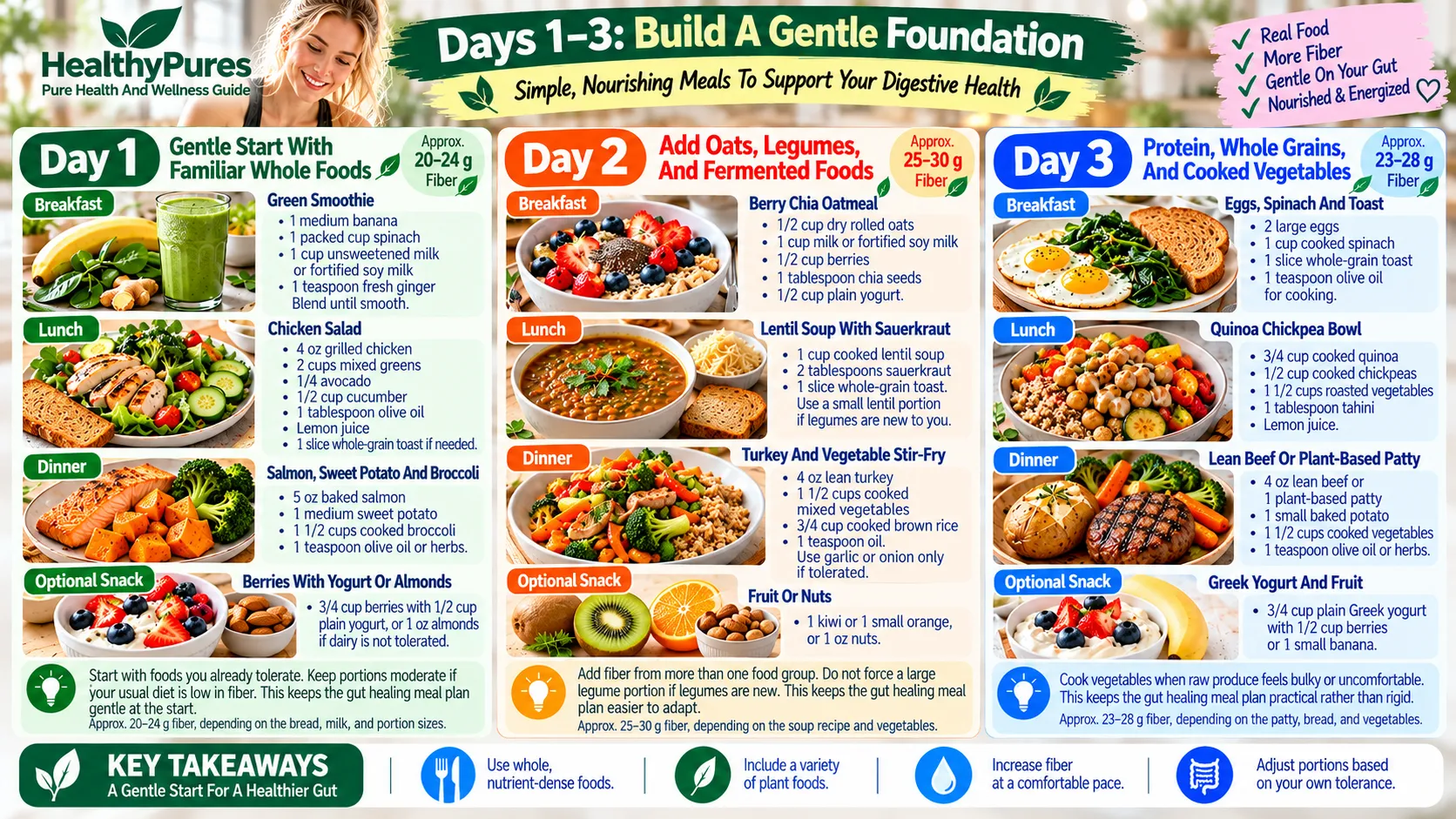
Breakfast: Green smoothie. 1 medium banana; 1 packed cup spinach; 1 cup unsweetened milk or fortified soy milk; 1 teaspoon fresh ginger. Blend until smooth.
Lunch: Chicken salad. 4 oz grilled chicken; 2 cups mixed greens; 1/4 avocado; 1/2 cup cucumber; 1 tablespoon olive oil; lemon juice. Add 1 slice whole-grain toast if needed.
Dinner: Salmon, sweet potato, and broccoli. 5 oz baked salmon; 1 medium sweet potato; 1 1/2 cups cooked broccoli; 1 teaspoon olive oil or herbs.
Optional snack: Berries with yogurt or almonds. 3/4 cup berries with 1/2 cup plain yogurt, or 1 oz almonds if dairy is not tolerated.
Start with foods you already tolerate. Keep portions moderate if your usual diet is low in fiber. This keeps the gut healing meal plan gentle at the start. Approx. 20–24 g fiber, depending on the bread, milk, and portion sizes.
Day 2: Add Oats, Legumes, And Fermented Foods
Breakfast: Berry chia oatmeal. 1/2 cup dry rolled oats; 1 cup milk or fortified soy milk; 1/2 cup berries; 1 tablespoon chia seeds; 1/2 cup plain yogurt.
Lunch: Lentil soup with sauerkraut. 1 cup cooked lentil soup; 2 tablespoons sauerkraut; 1 slice whole-grain toast. Use a small lentil portion if legumes are new to you.
Dinner: Turkey and vegetable stir-fry. 4 oz lean turkey; 1 1/2 cups cooked mixed vegetables; 3/4 cup cooked brown rice; 1 teaspoon oil. Use garlic or onion only if tolerated.
Optional snack: Fruit or nuts. 1 kiwi or 1 small orange, or 1 oz nuts.
Add fiber from more than one food group. Do not force a large legume portion if legumes are new. This keeps the gut healing meal plan easier to adapt. Approx. 25–30 g fiber, depending on the soup recipe and vegetables.
Day 3: Protein, Whole Grains, And Cooked Vegetables
Breakfast: Eggs, spinach, and toast. 2 large eggs; 1 cup cooked spinach; 1 slice whole-grain toast; 1 teaspoon olive oil for cooking.
Lunch: Quinoa chickpea bowl. 3/4 cup cooked quinoa; 1/2 cup cooked chickpeas; 1 1/2 cups roasted vegetables; 1 tablespoon tahini; lemon juice.
Dinner: Lean beef or plant-based patty. 4 oz lean beef or 1 plant-based patty; 1 small baked potato; 1 1/2 cups cooked vegetables; 1 teaspoon olive oil or herbs.
Optional snack: Greek yogurt and fruit. 3/4 cup plain Greek yogurt with 1/2 cup berries or 1 small banana.
Cook vegetables when raw produce feels bulky or uncomfortable. This keeps the gut healing meal plan practical rather than rigid. Approx. 23–28 g fiber, depending on the patty, bread, and vegetables.
Days 4–7: Expand Variety And Build A Repeatable Routine
Day 4: Colorful Produce And Simple Protein
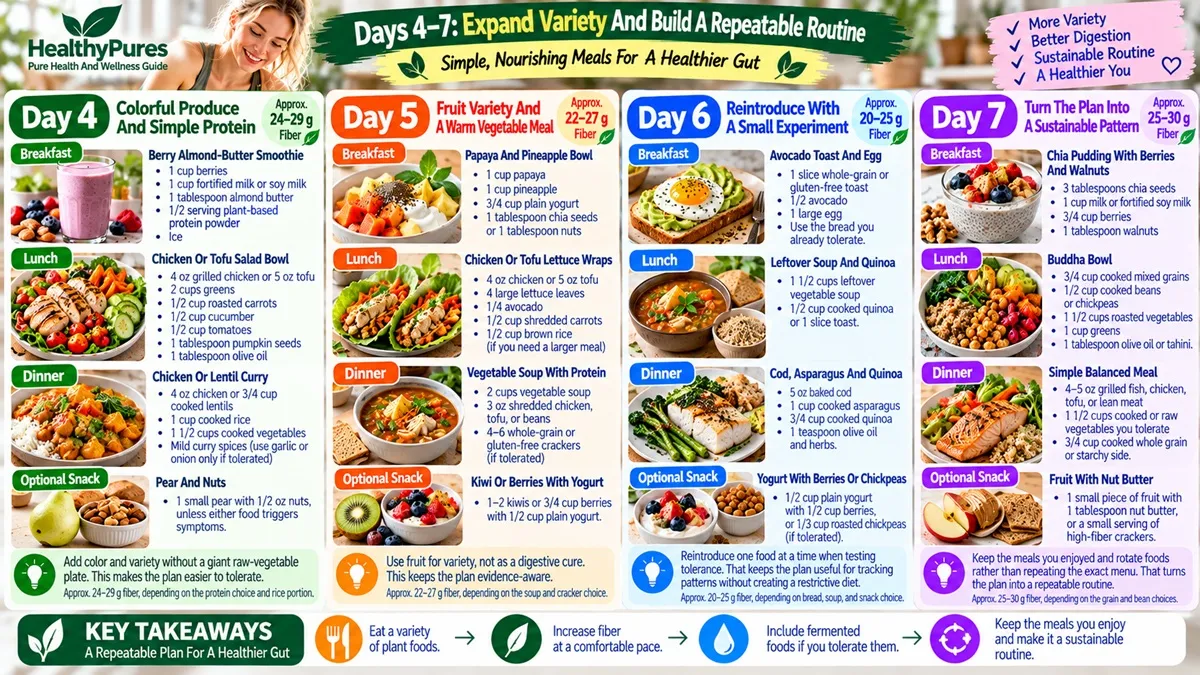
Breakfast: Berry almond-butter smoothie. 1 cup berries; 1 cup fortified milk or soy milk; 1 tablespoon almond butter; 1/2 serving plant-based protein powder; ice.
Lunch: Chicken or tofu salad bowl. 4 oz grilled chicken or 5 oz firm tofu; 2 cups greens; 1/2 cup roasted carrots; 1/2 cup cucumber; 1/2 cup tomatoes; 1 tablespoon pumpkin seeds; 1 tablespoon olive oil.
Dinner: Chicken or lentil curry. 4 oz chicken or 3/4 cup cooked lentils; 1 cup cooked rice; 1 1/2 cups cooked vegetables; mild curry spices. Use garlic or onion only if tolerated.
Optional snack: Pear and nuts. 1 small pear with 1/2 oz nuts, unless either food triggers symptoms.
Add color and variety without a giant raw-vegetable plate. This makes the gut healing meal plan easier to tolerate. Approx. 24–29 g fiber, depending on the protein choice and rice portion.
Day 5: Fruit Variety And A Warm Vegetable Meal
Breakfast: Papaya and pineapple bowl. 1 cup papaya; 1 cup pineapple; 3/4 cup plain yogurt; 1 tablespoon chia seeds or 1 tablespoon chopped nuts.
Lunch: Chicken or tofu lettuce wraps. 4 oz chicken or 5 oz tofu; 4 large lettuce leaves; 1/4 avocado; 1/2 cup shredded carrots; 1/2 cup brown rice if you need a larger meal.
Dinner: Vegetable soup with protein. 2 cups vegetable soup; 3 oz shredded chicken, tofu, or beans; 4–6 whole-grain or gluten-free crackers if tolerated.
Optional snack: Kiwi or berries with yogurt. 1–2 kiwis or 3/4 cup berries with 1/2 cup plain yogurt.
Use fruit for variety, not as a digestive cure. This keeps the gut healing meal plan evidence-aware. Approx. 22–27 g fiber, depending on the soup and cracker choice.
Day 6: Reintroduce With A Small Experiment
Breakfast: Avocado toast and egg. 1 slice whole-grain or gluten-free toast; 1/2 avocado; 1 large egg. Use the bread you already tolerate.
Lunch: Leftover soup and quinoa. 1 1/2 cups leftover vegetable soup; 1/2 cup cooked quinoa or 1 slice toast.
Dinner: Cod, asparagus, and quinoa. 5 oz baked cod; 1 cup cooked asparagus; 3/4 cup cooked quinoa; 1 teaspoon olive oil and herbs.
Optional snack: Yogurt with berries or chickpeas. 1/2 cup plain yogurt with 1/2 cup berries, or 1/3 cup roasted chickpeas if tolerated.
Reintroduce one food at a time when testing tolerance. That keeps the gut healing meal plan useful for tracking patterns without creating a restrictive elimination diet. Approx. 20–25 g fiber, depending on bread, soup, and snack choice.
Day 7: Turn The Plan Into A Sustainable Pattern
Breakfast: Chia pudding with berries and walnuts. 3 tablespoons chia seeds; 1 cup milk or fortified soy milk; 3/4 cup berries; 1 tablespoon walnuts.
Lunch: Buddha bowl. 3/4 cup cooked mixed grains; 1/2 cup cooked beans or chickpeas; 1 1/2 cups roasted vegetables; 1 cup greens; 1 tablespoon olive oil or tahini.
Dinner: Simple balanced meal. 4–5 oz grilled fish, chicken, tofu, or lean meat; 1 1/2 cups cooked or raw vegetables you tolerate; 3/4 cup cooked whole grain or starchy side.
Optional snack: Fruit with nut butter. 1 small piece of fruit with 1 tablespoon nut butter, or a small serving of high-fiber crackers.
Keep the meals you enjoyed and rotate foods rather than repeating the exact menu. That turns the gut healing meal plan into a repeatable routine. Approx. 25–30 g fiber, depending on the grain and bean choices.
How To Adjust The Plan For Bloating Or IBS
A gut healing meal plan should be adjusted to your tolerance rather than followed rigidly.
IBS changes the conversation because some healthy foods are also high in fermentable carbohydrates. The American College of Gastroenterology suggests a limited trial of a low-FODMAP diet for overall IBS symptom improvement. It also recommends soluble fiber such as psyllium. ACG IBS guidance supports these condition-specific points.
A low-FODMAP diet is not a general “gut healing” diet. Monash describes it as a short, structured approach for people with IBS, followed by reintroduction and personalization. Monash FODMAP guidance explains the three-step process.
This matters because the plan includes lentils, onion, garlic, and several fruits. Some can be high in FODMAPs for some people. Use substitutions when they trigger symptoms.
Simple IBS-Friendly Swaps
| Plan Food | Possible Swap |
|---|---|
| Onion or garlic | Chives, garlic-infused oil, or tolerated herbs |
| Regular yogurt | Lactose-free yogurt if lactose is a trigger |
| Large legume portion | Smaller portion or a better-tolerated protein |
| High-FODMAP fruit | Use a fruit you already tolerate |
| Raw vegetables | Cooked vegetables in a smaller portion |
What To Do If A Meal Makes You Feel Worse
Do not keep increasing fiber just because the plan says to eat more plants. Pause at the current level and review the meal that preceded the symptoms.
1. Check The Portion
A large serving of beans, raw vegetables, or chia can feel very different from a smaller serving. Reduce the portion before removing the food forever.
2. Check For Multiple New Foods
Testing five new foods at once makes the trigger harder to identify. Return to familiar foods, then test one change at a time.
3. Check Constipation And Gas
NIDDK notes that gas symptoms can occur when gut bacteria break down carbohydrates that are not fully digested in the small intestine. Bloating can also occur with constipation and disorders such as IBS. NIDDK gas guidance explains these causes and warning signs.
4. Stop And Seek Help When Symptoms Are Concerning
Talk with a clinician if bloating is persistent, severe, or changing suddenly. Seek prompt help for weight loss, blood in stool, severe pain, frequent vomiting, or symptoms that do not improve. NIDDK indigestion guidance lists warning signs.
Hydration, Sleep, And Movement
These habits can complement the gut healing meal plan without replacing medical care.
Food is only one part of digestive comfort. Adequate fluids can help fiber work effectively. NIDDK recommends plenty of liquids when increasing fiber.
Regular movement can help keep daily routines active and may support bowel regularity. A short walk after a meal is a reasonable habit when you feel well.
Sleep matters for overall health. The American Academy of Sleep Medicine recommends at least 7 hours for adults. Keep the goal realistic and consistent rather than treating sleep as a gut cure.
Meal Prep For The 7-Day Plan
Batch cooking makes the gut healing meal plan easier to follow on busy days.
You do not need to cook seven complete days at once. Prepare a few flexible components that fit the gut healing meal plan.
| Prep Once | Use It For |
|---|---|
| Cooked quinoa or brown rice | Bowls, stir-fries, leftovers |
| Roasted vegetables | Lunch bowls, dinner sides, wraps |
| Hard-boiled eggs | Breakfasts and quick snacks |
| Washed greens | Salads, bowls, smoothies |
| Cooked chicken or tofu | Salads, wraps, bowls |
| Portioned berries and fruit | Breakfasts and snacks |
For another make-ahead breakfast system, see our high protein breakfast meal prep guide.
Food Safety Basics
Cool cooked foods promptly and refrigerate them at 40°F or below. USDA advises using refrigerated leftovers within 3 to 4 days. USDA leftover safety guidance
For longer storage, freeze foods that freeze well. Label containers with the date so you can track how long they have been stored.
What To Do After Day 7
Treat the gut healing meal plan as a starting framework, then rotate foods that you tolerate well.
Do not treat Day 7 as the end. Keep the meals that felt good and adjust the foods that caused problems. That makes the gut healing meal plan a flexible framework.
Choose two breakfasts, two lunches, and two dinners from the week. Repeat those meals for another week if they are practical. Then add one new food or ingredient when you are ready.
The goal is not a permanent elimination plan. The goal is a varied eating pattern that fits your needs and does not make symptoms worse.
Frequently Asked Questions
Can This Gut Healing Meal Plan Repair A Damaged Gut?
No gut healing meal plan can guarantee that outcome. The phrase “gut healing” is a popular wellness term. Persistent symptoms may have medical causes.
How Much Fiber Should I Eat Each Day?
NIDDK lists about 22 to 34 grams of fiber daily for adults, depending on age and sex. Your needs may differ with health conditions, medications, diet, and calorie needs.
Should Everyone Avoid Gluten Or Dairy?
No. Blanket elimination is not appropriate for everyone. If a food repeatedly causes symptoms, discuss the pattern with a clinician before making a restrictive diet a long-term habit.
Are Fermented Foods Required?
No. Fermented foods can add variety, but they are optional. Some products contain live microorganisms and some do not. Choose foods you tolerate and enjoy.
Can I Repeat This 7-Day Gut Healing Meal Plan?
You can reuse the meal framework, but repeating a strict menu without adjustment is not necessary. Rotate foods, portions, and protein sources to keep the pattern flexible.
What If My Bloating Continues?
Do not keep adding foods in an attempt to fix the problem. Track symptoms and seek professional advice if bloating is persistent, severe, or accompanied by weight loss, bleeding, vomiting, significant pain, or major bowel changes.
Building A Long-Term Gut-Supportive Pattern
The goal is to turn the gut healing meal plan into a varied eating pattern you can sustain.
The most useful takeaway from this gut healing meal plan is not a single “healing” ingredient. It is the pattern: varied plant foods, adequate protein, reasonable portions, gradual fiber changes, fluids, movement, and attention to personal tolerance.
Start with meals you can repeat. Keep the foods you tolerate. Change one variable at a time when you test a new ingredient. That approach creates a more useful food pattern than chasing rapid results.
For another evidence-aware look at digestion-supportive foods, read our gut health food guide. For everyday fiber strategies, our high fiber snacks guide can help you build the rest of your week.
Just a friendly reminder from our team: Health needs vary from person to person, so this information is intended to support general wellness and does not replace professional medical advice. Read our full Medical Disclaimer for more information.