Do you often find yourself staring at the ceiling, wishing for sleep to come? The frustration of a restless night is a common struggle. Many of us grapple with the challenge of learning how to fall asleep faster naturally, without relying on medication. It impacts our energy, mood, and overall health. But achieving consistent, quality sleep is more attainable than you might think. Our team at Healthy Pures understands these struggles. We are here to guide you toward a more restful night, every night.
Quick Summary
- Establish a consistent sleep schedule, even on weekends, to regulate your body’s internal clock.
- Optimize your bedroom environment for darkness, quiet, and a cool temperature to promote relaxation.
- Incorporate calming evening routines like reading or gentle stretching to signal your body it is time to wind down.
- Adjust your diet and limit stimulants, especially in the afternoon and evening, for better sleep quality.
Quick Facts
| Category | Recommendation |
|---|---|
| Ideal Sleep Duration | 7-9 hours per night for adults |
| Optimal Bedroom Temperature | 60-67°F (15-19°C) |
| Screen Time Before Bed | Avoid 1-2 hours prior to sleep |
| Caffeine Cut-Off | At least 6 hours before bedtime |
| Target Audience | Adults seeking natural sleep improvement |
Who This Guide Is For
- ✓ You struggle with falling asleep quickly and want natural solutions.
- ✓ You are looking to improve your overall sleep quality and energy levels.
- ✓ You want to understand the science behind good sleep habits.
- ✓ You prefer drug-free methods to enhance your nightly rest.
Understanding Your Body’s Natural Sleep Cycle
The Power Of Your Circadian Rhythm
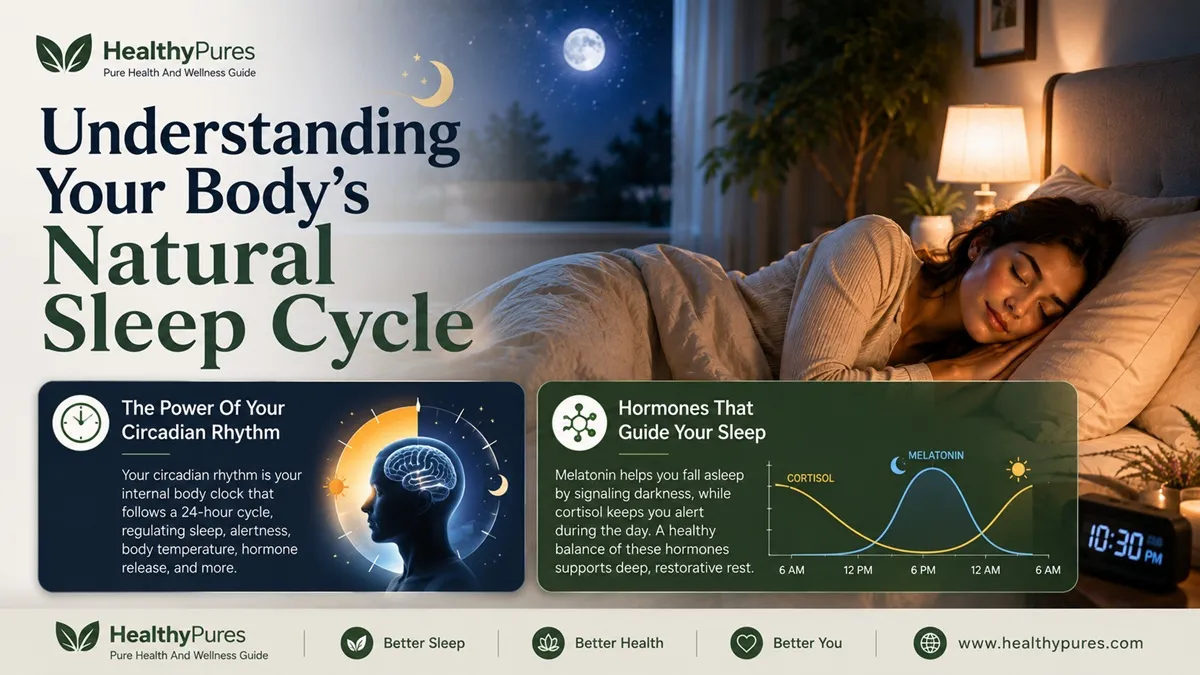
Your body operates on an internal biological clock called the circadian rhythm. This 24-hour cycle regulates various physiological processes, most notably your sleep-wake pattern. Consistent exposure to natural light, especially in the morning, helps to set and reinforce this vital rhythm.
Maintaining a regular sleep schedule, even on weekends, trains your body to expect sleep at a certain time. This consistency is fundamental when learning how to fall asleep faster naturally. Disrupting this rhythm through irregular bedtimes confuses your internal clock.
Hormones That Guide Your Sleep
Melatonin, often called the sleep hormone, plays a crucial role in signaling sleep onset. Its production naturally increases in darkness and decreases with light exposure. Supporting your body’s natural melatonin production is key to understanding how to fall asleep faster naturally.
Conversely, cortisol, a stress hormone, can interfere with sleep. Elevated cortisol levels at night keep your body in a state of alertness. Managing stress through relaxation techniques can help keep cortisol in check, paving the way for better sleep.
Crafting Your Ideal Sleep Environment For Faster Sleep
Optimizing Darkness And Light Exposure
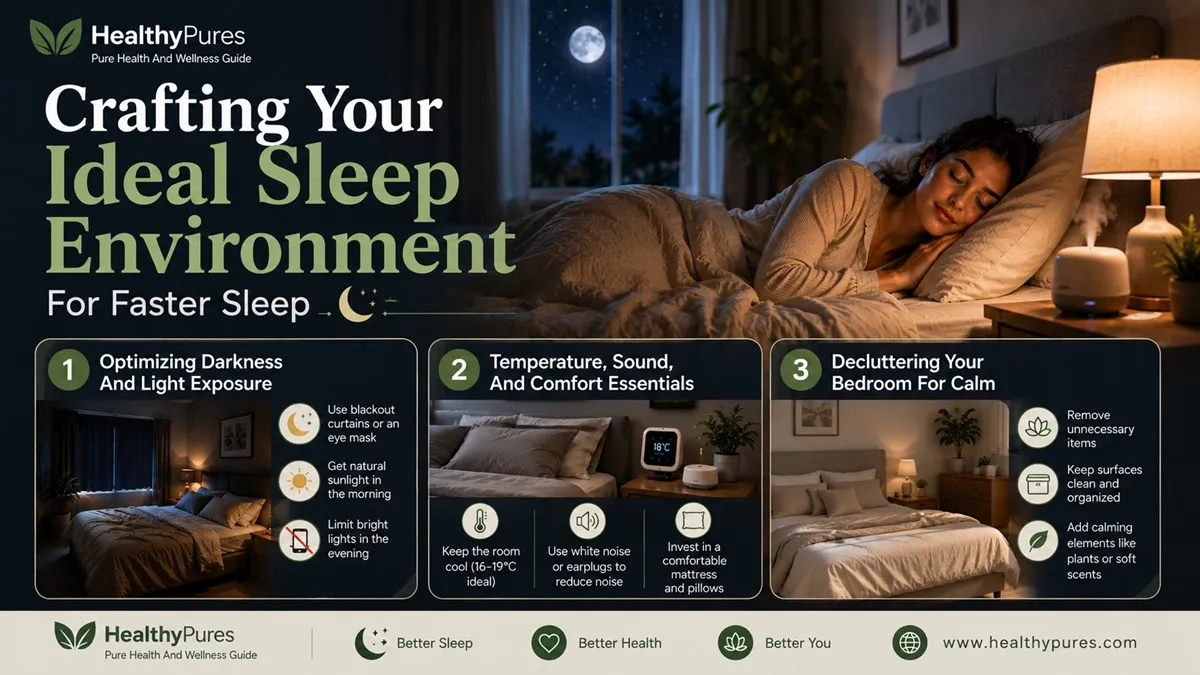
Artificial light, particularly blue light emitted from screens like phones and tablets, suppresses melatonin production. This disruption makes it harder to initiate sleep. Minimizing exposure to bright lights, especially blue light, 1-2 hours before bed is essential.
Consider using blackout curtains, an eye mask, or dimming lights in the evening to create a truly dark environment. A dark room signals to your brain that it is time to wind down. This simple adjustment is critical for learning how to fall asleep faster naturally.
Temperature, Sound, And Comfort Essentials
The ideal bedroom temperature for sleep typically ranges from 60-67°F (15-19°C). A room that is too warm can disrupt sleep initiation and maintenance. Keeping your bedroom cool helps your body naturally drop its core temperature, a necessary step for falling asleep.
Minimize noise disturbances with earplugs, a white noise machine, or by ensuring your bedroom is soundproofed. Investing in a comfortable mattress and pillows also makes a significant difference. Optimizing these elements creates a sanctuary, helping you understand how to fall asleep faster naturally.
Decluttering Your Bedroom For Calm
Your bedroom should be a space dedicated to rest and intimacy, not work or worry. A tidy, organized environment can significantly reduce mental clutter and stress. Removing work-related items, electronics, and any general mess contributes to a more peaceful ambiance.
A calm, uncluttered bedroom sends a powerful message to your brain that this space is for relaxation. This psychological aspect is often overlooked but incredibly effective when learning how to fall asleep faster naturally.
Evening Routines To Help You Fall Asleep Faster Naturally
The Bedtime Wind-Down Ritual
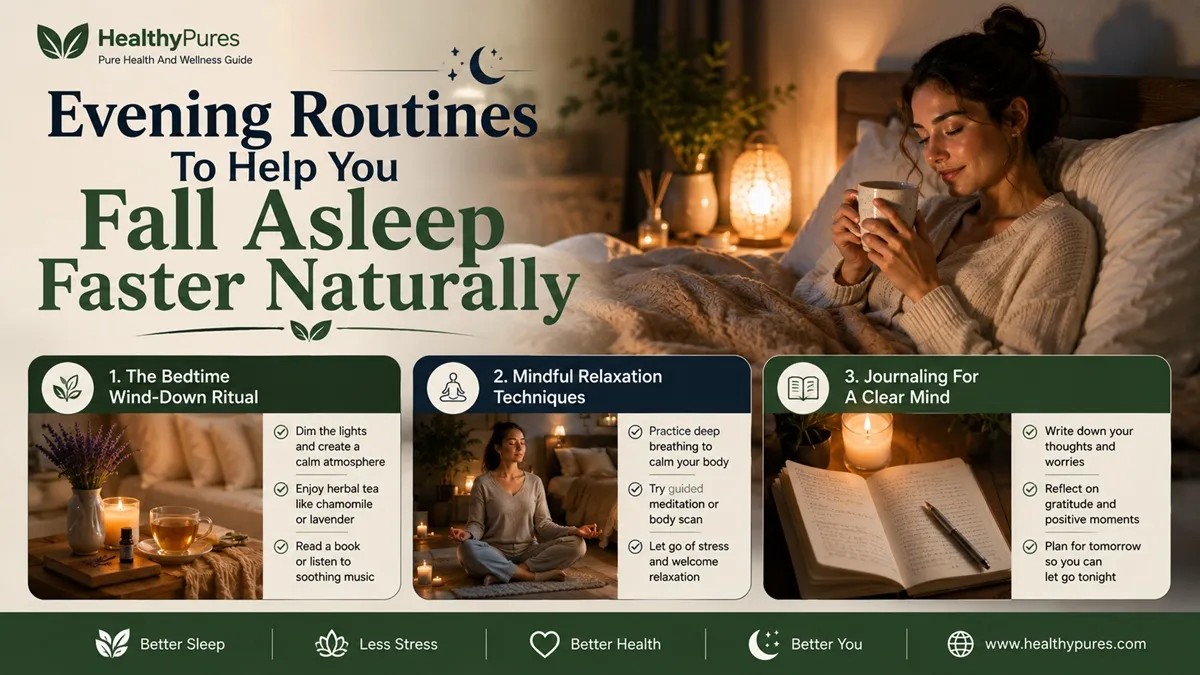
Creating a consistent pre-sleep routine signals to your body that it is time to transition from activity to rest. This ritual should be a period of calm, non-stimulating activities. Avoid anything that raises your heart rate or engages your mind intensely.
Activities like reading a physical book, listening to calming music, or taking a warm bath are excellent choices. A warm bath helps relax muscles and slightly raises your body temperature, which then drops as you cool down, promoting sleep. These routines are powerful tools for anyone wanting to know how to fall asleep faster naturally.
Mindful Relaxation Techniques
Incorporating relaxation techniques can calm an overactive mind and nervous system. Deep breathing exercises, where you focus on slow, deliberate breaths, can significantly reduce anxiety. Progressive muscle relaxation involves tensing and then relaxing different muscle groups throughout your body.
These practices divert your focus from racing thoughts, promoting a state of tranquility. Consistent practice makes them more effective. These mindful relaxation techniques are fundamental steps in learning how to fall asleep faster naturally.
Journaling For A Clear Mind
If your mind often races with worries or a never-ending to-do list at bedtime, try journaling. Spend 10-15 minutes writing down your thoughts, concerns, and tasks for the next day. This practice helps to offload mental burdens before you even get into bed.
Getting your worries out onto paper can prevent them from circulating in your head as you try to sleep. A clear mind is a powerful tool when you are trying to figure out how to fall asleep faster naturally.
Healthy Pures Expert Tip
“Consistency is the bedrock of good sleep. Your body thrives on routine, so aim for the same bedtime and wake-up time every single day, even on weekends.”
Nutrition And Lifestyle Choices For Better Sleep
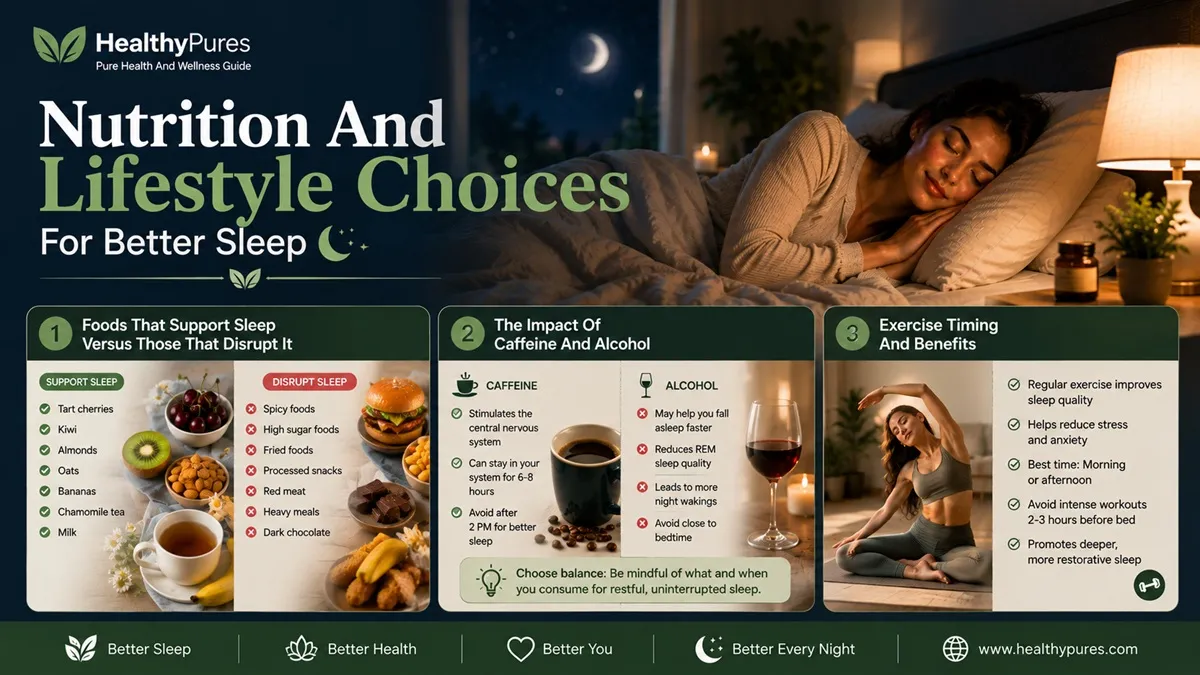
Foods That Support Sleep Versus Those That Disrupt It
Certain foods can actively promote sleep. Tryptophan-rich foods like turkey, chicken, nuts, and seeds provide a precursor to serotonin and melatonin. Magnesium-rich foods such as leafy greens, avocados, and whole grains help relax muscles and calm the nervous system, aiding restful sleep.
Conversely, heavy, spicy, or overly sugary meals close to bedtime can cause indigestion and blood sugar spikes, disrupting sleep. Aim to finish your last large meal at least 2-3 hours before bed. Making smart dietary choices significantly impacts your ability to learn how to fall asleep faster naturally.
The Impact Of Caffeine And Alcohol
Caffeine is a stimulant that can linger in your system for hours. Even a cup of coffee in the late afternoon can disrupt sleep for many individuals. We recommend cutting off caffeine intake at least 6 hours before your intended bedtime to give your body ample time to metabolize it.
Alcohol might initially make you feel drowsy, but it actually fragments sleep later in the night, leading to shallower and less restorative rest. Avoiding alcohol in the hours before bed is crucial. These clear cut-off times optimize your chances of learning how to fall asleep faster naturally.
Exercise Timing And Benefits
Regular physical activity is a powerful natural sleep aid. It can improve both the quality and duration of your sleep. Aim for at least 30 minutes of moderate-intensity exercise most days of the week. Physical exertion helps your body crave rest.
However, timing is important. Intense workouts too close to bedtime can be stimulating, raising your core body temperature and making it harder to fall asleep. Finish strenuous exercise at least 3-4 hours before heading to bed. Consistent, well-timed exercise is a natural aid for those wondering how to fall asleep faster naturally.
Common Mistakes That Prevent You From Falling Asleep Fast
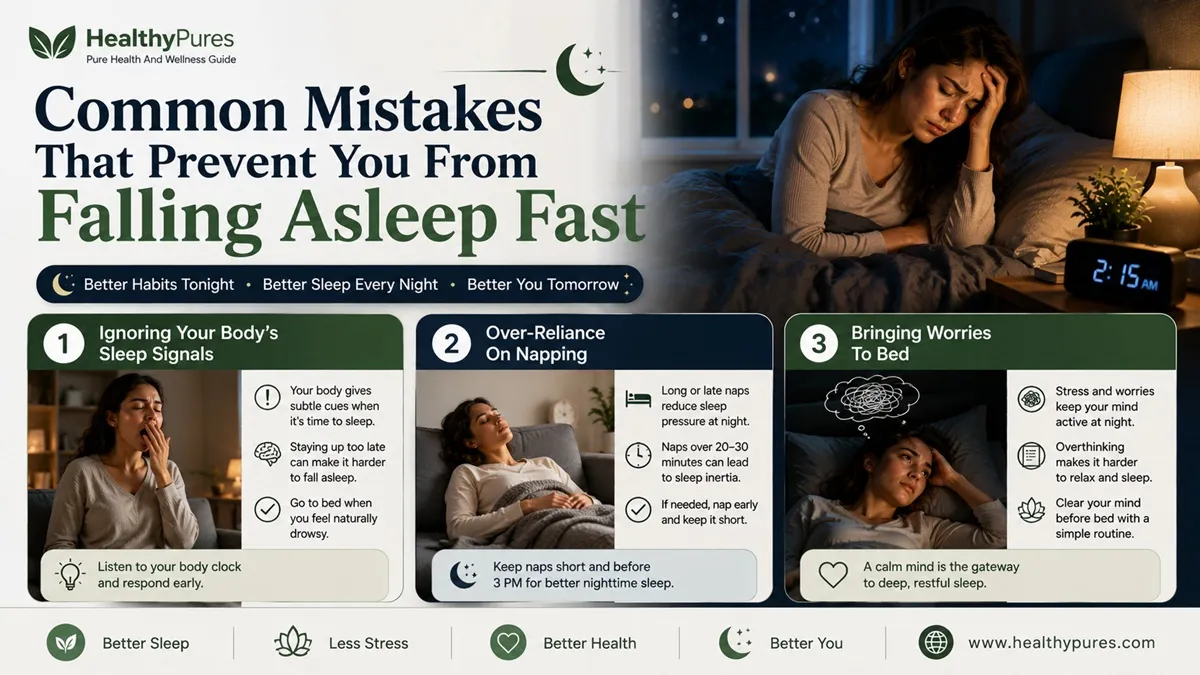
Ignoring Your Body’s Sleep Signals
Your body gives subtle cues when it is ready for sleep, like yawning, heavy eyelids, or a sudden dip in energy. Ignoring these signals and pushing through can make it harder to fall asleep later. This often happens because you pass through your natural sleep window, leading to a second wind.
Listen to your body’s inherent wisdom. When you feel naturally drowsy, head to bed. This simple awareness is a key step in learning how to fall asleep faster naturally.
Over-Reliance On Napping
While short, strategic naps can be beneficial, long or late-afternoon naps can significantly disrupt your nighttime sleep schedule. A nap that is too long (over 30 minutes) or too close to bedtime reduces your body’s sleep drive, making it difficult to fall asleep when it counts.
If you must nap, keep it short (20-30 minutes) and aim for early in the afternoon. Avoiding late or long naps helps maintain your nighttime drive to learn how to fall asleep faster naturally.
Bringing Worries To Bed
A common culprit behind restless nights is a racing mind. Bringing the day’s worries, to-do lists, or unresolved conflicts into bed creates mental activation that opposes sleep. Your brain needs to switch off from problem-solving mode.
Implementing a worry journal or a brief meditation session before bed can help clear your head. Addressing these mental hurdles is crucial for anyone trying to figure out how to fall asleep faster naturally.
Healthy Pures Pro Tip
“If you cannot fall asleep within 20 minutes, get out of bed. Go to another room and do a quiet, non-stimulating activity until you feel tired again. This prevents your brain from associating your bed with wakefulness.”
When To See A Doctor
- Persistent difficulty falling or staying asleep for several weeks that impacts your daily life.
- Daytime fatigue that significantly impairs your functioning, concentration, or safety.
- Loud snoring, gasping for air, or pauses in breathing during sleep, which could indicate sleep apnea.
- Unexplained leg sensations or an irresistible urge to move your legs at night (Restless Legs Syndrome).
- If you suspect an underlying medical condition, chronic pain, or mental health issue is affecting your sleep.
Comparing Relaxation Techniques For Sleep
| Technique | Description | Best For | Pros | Cons |
|---|---|---|---|---|
| Deep Breathing | Slow, controlled breaths focusing on diaphragm expansion. | Quick stress reduction, calming mind. | Immediate effect, can be done anywhere, no equipment needed. | May not address deep-seated chronic anxiety alone. |
| Progressive Muscle Relaxation | Tensing and relaxing muscle groups throughout the body. | Releasing physical tension, body awareness. | Highly effective for physical relaxation, promotes body-mind connection. | Requires more focus and initial time investment to master. |
Frequently Asked Questions About Falling Asleep Naturally
Can I Really Learn How To Fall Asleep Faster Naturally Every Night?
Yes, with consistent effort and by implementing the strategies discussed, you can significantly improve your ability to fall asleep quickly and consistently. It is about building sustainable sleep hygiene habits. You absolutely can learn how to fall asleep faster naturally.
How Long Does It Take To See Results From Natural Sleep Methods?
Many people notice improvements within a few days to a week of consistent practice. Full benefits, especially for long-standing sleep issues, might take 2-4 weeks as your body adjusts to new routines. Patience and consistency are vital when learning how to fall asleep faster naturally.
Is It Okay To Use Melatonin Supplements To Help Me Fall Asleep?
While melatonin can be helpful for short-term issues like jet lag, it is generally not a long-term solution for chronic sleep problems. Consult a doctor before using any supplements, as natural methods focused on sleep quality are often more sustainable for learning how to fall asleep faster naturally.
What If Stress Is The Main Reason I Cannot Fall Asleep?
Stress is a major sleep disruptor. Incorporate stress-reduction techniques like mindful eating, meditation, journaling, or gentle yoga into your daily routine. Managing stress effectively is a powerful step towards learning how to fall asleep faster naturally.
Can I Still Drink Coffee If I Want To Fall Asleep Faster Naturally?
You can, but timing is crucial. We recommend cutting off caffeine intake at least 6 hours before your intended bedtime. This allows your body enough time to metabolize the stimulant and prevents it from interfering with your sleep onset. This is essential for knowing how to fall asleep faster naturally.
Embracing A Restful Future With Natural Sleep Habits
Learning how to fall asleep faster naturally is a journey, not a quick fix. It requires patience, consistency, and a willingness to understand your body’s unique needs. By implementing these practical, evidence-backed strategies, you are not just chasing sleep. You are investing in your overall health, energy, and well-being.
Our team at Healthy Pures believes in empowering you with the knowledge to make lasting positive changes. Start small, stay consistent, and watch your nights transform. You will soon discover how to fall asleep faster naturally and enjoy truly restorative rest.
We love helping readers discover healthier habits, but because health needs vary from person to person, this information is provided for educational purposes only. Learn more by reading our full Medical Disclaimer.