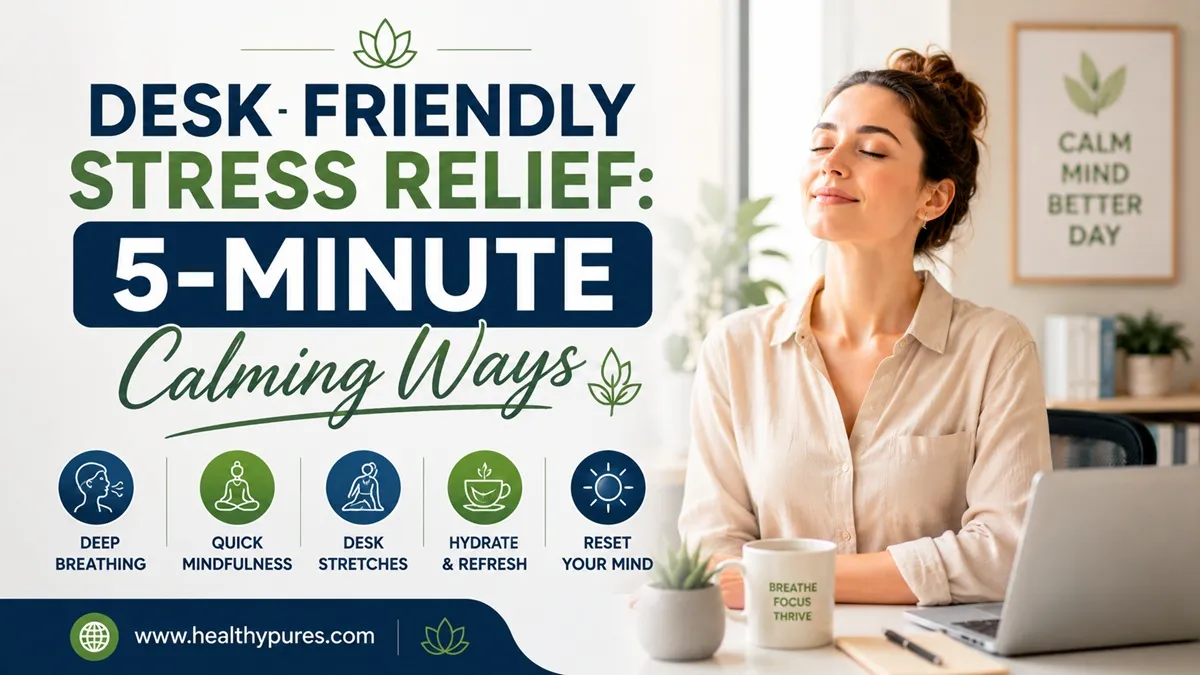
Quick Summary
- Desk friendly stress relief can fit into a five-minute pause.
- Gentle breathing, movement, and sensory breaks may help some people reset.
- Comfort matters more than completing every step or holding a difficult position.
- Short breaks cannot solve excessive workloads, harassment, or unsafe working conditions.
- Persistent or severe stress deserves support from a qualified professional.
Quick Facts
| Aspect | Details |
|---|---|
| Suggested Time | One to five minutes, adjusted around your schedule. |
| Useful Options | Comfortable breathing, gentle movement, visual rest, or a quick workspace check. |
| Equipment | A supportive chair and clear space are usually enough. |
| Main Goal | Create a brief pause and notice what your body needs. |
| Safety Limit | Desk friendly stress relief cannot diagnose or treat a health condition. |
Who This Guide Is For
- ✔ Adults who spend long periods working at a desk.
- ✔ Remote workers seeking short and practical reset ideas.
- ✔ Beginners exploring desk friendly stress relief without unrealistic promises.
- ✔ People who want wellness practices alongside appropriate professional support.
Busy workdays can make tension easy to ignore. Shoulders tighten, attention drifts, and small frustrations can feel larger. Desk friendly stress relief offers a structured reason to pause.
A five-minute break will not remove every source of workplace stress. However, it may create space to breathe, move, and reassess your next step. Desk friendly stress relief should support your day without becoming another demand.
Understanding Desk Friendly Stress Relief
Stress responses vary between people and situations. A technique that feels soothing today may feel unhelpful tomorrow. Effective desk friendly stress relief therefore requires flexibility rather than perfect consistency.
The NCCIH relaxation overview describes breathing and other relaxation practices. It also notes that research quality and results vary. These methods are supportive practices, not guaranteed treatments.
Workplace conditions also matter. A short pause cannot correct unrealistic deadlines, discrimination, or an unsafe environment. Those concerns may require a manager, human resources representative, union, or safety professional.
What A Five-Minute Break Can Realistically Do
A brief pause can help you notice discomfort before it grows. It may also interrupt continuous screen use or repetitive positioning. The effect can be subtle rather than dramatic.
Some breaks will feel useful, while others may not change your mood. Neither result proves success or failure. The goal is to gather information and choose the next reasonable action.
Choose One Need, Not Every Technique
Start by naming one need: movement, quiet, hydration, or a workspace adjustment. Then select one matching action. This keeps desk friendly stress relief simple enough for a busy day.
Trying every technique at once can feel distracting. You can save other options for later. A smaller routine is easier to repeat and evaluate.
A Simple Five-Minute Starting Routine
Use the following sequence as an example. Shorten or skip any step that feels uncomfortable. This desk friendly stress relief routine does not require special equipment.
| Time | Action | Practical Cue |
|---|---|---|
| 0:00–1:00 | Notice your breathing and posture. | Keep the breath natural and unforced. |
| 1:00–2:00 | Relax your jaw and lower your shoulders. | Avoid pulling or pressing on the neck. |
| 2:00–3:00 | Move your hands, wrists, and ankles gently. | Stay within a comfortable range. |
| 3:00–4:00 | Look away from the screen. | Choose a distant, neutral object. |
| 4:00–5:00 | Choose one next task. | Write a single clear action. |
You do not need to feel completely calm afterward. Return to work gradually and notice whether anything needs adjusting. Stop if the routine increases pain, dizziness, fear, or distress.
Gentle Breathing For Desk Friendly Stress Relief
Breathing exercises are commonly included in relaxation practices. The aim is comfortable attention, not taking the deepest possible breath. Desk friendly stress relief should never require straining or prolonged breath holding.
Sit with your feet supported when possible. Loosen any clothing that restricts breathing. Let the breath settle before adding a count.
Easy Paced Breathing
Notice one natural inhale and one natural exhale. If counting feels helpful, count slowly to three during each phase. Keep the rhythm comfortable rather than precise.
Continue for three to five cycles. Then allow normal breathing to return. Stop if you feel lightheaded, short of breath, panicked, or uncomfortable.
Box Breathing With An Optional Pause
Box breathing often uses four equal phases. These are inhaling, pausing, exhaling, and pausing again. Breath holding is optional and does not suit everyone.
Beginners can remove both pauses. Try a comfortable inhale followed by a slightly slower exhale. This gentler version may fit desk friendly stress relief during a demanding task.
When Counting Makes Stress Worse
Counting can become frustrating when you already feel overwhelmed. Return to ordinary breathing and notice your feet against the floor. You may also choose movement instead.
Relaxation practices are generally considered safe for healthy adults. However, the NCCIH notes that some people report increased anxiety or intrusive thoughts. Your response matters more than finishing a pattern.
Gentle Movement For Desk Friendly Stress Relief
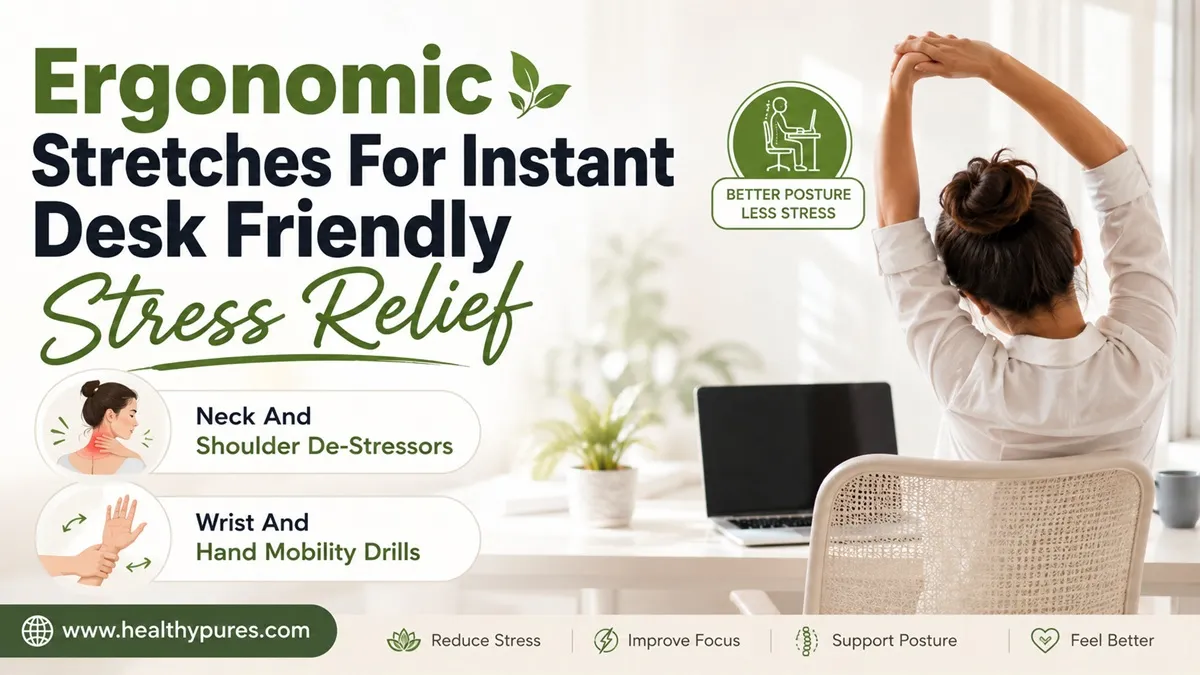
Staying in one position can become uncomfortable. Gentle movement offers a change of position without promising to prevent injuries. Use desk friendly stress relief movements within a painless range.
The OSHA computer workstation guide explains that one arrangement will not fit everyone. It recommends adjusting equipment around the individual user. Comfort and neutral positioning are useful goals.
Shoulder And Upper-Back Reset
Let both arms rest beside your body. Slowly lift your shoulders, then release them without forcing downward. Repeat two or three times.
Next, draw the shoulder blades gently toward each other. Release before the movement becomes tiring. Avoid large neck circles or sudden pulling.
Hands And Wrists
Open and close each hand several times. Turn your palms upward, then return them to neutral. Keep every movement small and controlled.
Check whether the keyboard encourages bent wrists. The OSHA workstation positions page recommends relaxed shoulders and supported feet. It also describes keeping wrists aligned with the forearms.
Stand Or Walk When Appropriate
Stand only when your balance and surroundings make it safe. Walk to refill water or take several comfortable steps. A seated ankle movement is another option.
Movement should not create sharp pain, numbness, or worsening symptoms. Stop and seek guidance when discomfort continues. Short breaks do not replace an ergonomic assessment or medical evaluation.
Sensory Options For Desk Friendly Stress Relief
Sensory breaks shift attention toward simple information in the present moment. They may involve sight, sound, or touch. Choose neutral input that does not overwhelm you.
Look Beyond The Screen
Look toward a distant object for about 20 seconds. Let your eyes blink naturally without forcing focus. This creates a brief change from close screen work.
Lower screen brightness only when visibility remains comfortable. Clean glare from the screen and adjust nearby lighting when possible. Persistent eye pain or vision changes need professional assessment.
Use Sound Carefully
Quiet music or familiar ambient sound may feel pleasant. Keep the volume low enough to remain aware of your surroundings. Headphones may be unsuitable in some workplaces.
Silence can be the better choice when sound feels irritating. Desk friendly stress relief should reduce sensory load rather than add more stimulation. Workplace safety instructions always take priority.
Try A Neutral Touch Point
Notice your hands resting on the desk or chair. Feel the contact of both feet with the floor. Name one texture without judging it.
A smooth object or stress ball is optional. Stop squeezing if your hand becomes painful or tired. Tactile grounding does not need a special product.
Hydration And Food Without Wellness Hype
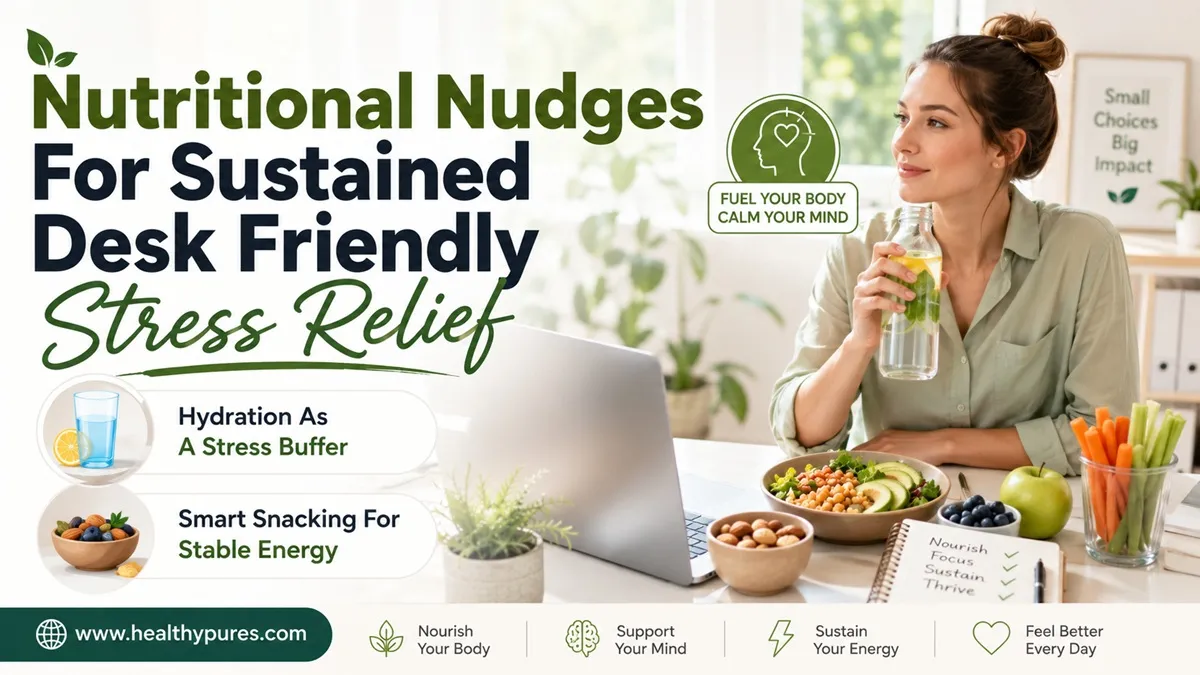
Thirst or hunger can make a long work period feel harder. Water and regular meals support general health, but they are not instant stress treatments. Keep desk friendly stress relief nutrition advice practical.
Make Hydration Convenient
Keep water within reach when workplace rules allow it. Drink according to thirst, activity, climate, and medical guidance. More water is not always better.
Tea can provide a warm pause, although green tea contains caffeine. Our herbal tea overview discusses additional considerations. Check ingredients if you have allergies, take medicines, or are pregnant.
Choose A Familiar Snack
Choose a snack that fits your needs and usual eating pattern. Fruit, yogurt, nuts, or whole-grain crackers are possible options. Follow allergy and workplace safety requirements.
Our healthy snack guide offers more examples. Avoid describing one snack as a cure for stress. Food choices cannot correct an unhealthy workload.
Adjusting Your Workspace For Desk Friendly Stress Relief
A five-minute workspace check can reveal avoidable discomfort. Move frequently used items closer and clear enough space for safe movement. This practical desk friendly stress relief step focuses on usability.
Check The Chair And Screen
Support your feet with the floor or a stable footrest. Keep the screen in front of you when possible. Avoid twisting repeatedly toward a second screen.
One posture is not ideal for an entire day. Change position periodically and use the chair’s available support. Request an ergonomic review when adjustments remain difficult.
Reduce One Source Of Friction
Close an unused tab, silence a nonessential alert, or write down your next task. Choose only one change. Large reorganizations can wait for a planned break.
Decluttering does not automatically calm the brain. It can simply reduce the number of items competing for attention. That modest benefit is enough.
Healthy Pures Expert Tip
Match the break to the signal you notice. Tight shoulders suggest movement, while screen fatigue suggests visual rest. Racing thoughts may call for one written next step.
Use the same desk friendly stress relief option for several workdays. Record whether it felt comfortable and practical. Replace it if the method adds frustration.
Common Mistake: Treating Every Break As A Productivity Tool
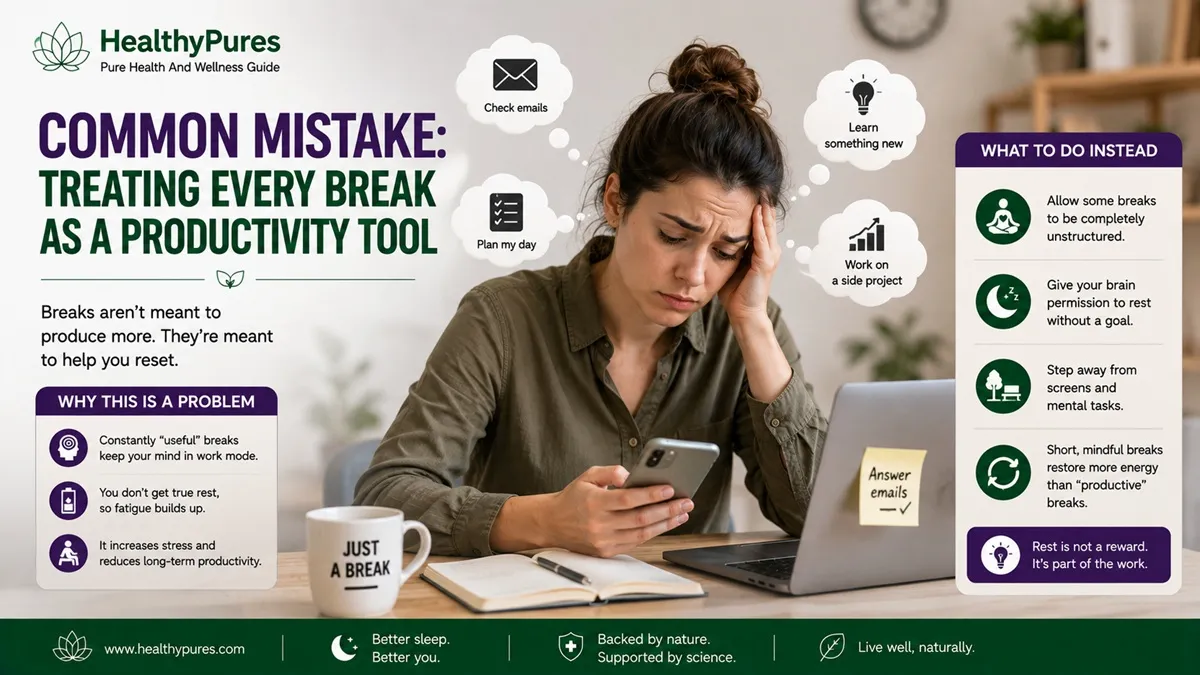
A break does not need to produce better output immediately. Turning relaxation into another performance target can create pressure. Desk friendly stress relief should allow a genuine pause.
Do not score the break as successful or unsuccessful. Notice what changed and what did not. Then choose the next realistic action.
Safety And Important Limits
Most gentle desk breaks are low risk for many adults. Individual health conditions, injuries, medications, and pregnancy can change what feels appropriate. Modify desk friendly stress relief around professional guidance.
Stop movement after sharp pain, numbness, weakness, or dizziness. Stop breathing exercises after breathlessness, panic, or faintness. Seek urgent care for severe or sudden symptoms.
Strong scents can trigger headaches, asthma symptoms, or workplace concerns. Unscented options are often easier to share. Never apply essential oils without checking product instructions and personal risks.
When Workplace Stress Needs More Support
Short practices cannot resolve every problem. Stress may need attention when it affects sleep, relationships, concentration, or daily functioning. The NIMH stress fact sheet explains differences between stress and anxiety.
The NIMH mental health guidance includes several self-care ideas. It also advises seeking professional help for severe or distressing symptoms. Desk friendly stress relief can complement that support, not replace it.
If work conditions are unsafe, document concerns according to workplace policy. Contact an appropriate representative or safety authority. Personal relaxation should never shift responsibility away from harmful conditions.
Seek immediate help if you cannot stay safe. In the United States, call or text 988. The NIMH help page lists crisis and treatment resources.
A Flexible Workweek Plan
This schedule provides variety without demanding daily perfection. Repeat the most comfortable option when needed. You can also explore our simple stress relief activities.
| Day | Main Pause | Optional Follow-Up |
|---|---|---|
| Monday | Three comfortable breathing cycles | Adjust one notification. |
| Tuesday | Shoulder and hand movements | Check keyboard position. |
| Wednesday | Distant viewing break | Clean screen glare. |
| Thursday | Water and a familiar snack | Review hunger and thirst cues. |
| Friday | Write one next action | Note which break felt useful. |
Missed breaks do not require compensation. Resume when a safe opportunity appears. Workplace duties and safety rules remain the priority.
Frequently Asked Questions
Can Five Minutes Really Make A Difference?
Five minutes may provide a useful pause for some people. The effect depends on the person and situation. It does not guarantee calm, focus, or better performance.
How Often Should I Take A Desk Break?
There is no universal schedule for desk friendly stress relief. Work demands, mobility needs, and employer policies differ. Choose practical opportunities without compromising safety.
Is 4-7-8 Breathing Necessary?
No. Breath holding can feel uncomfortable or cause lightheadedness. Gentle breathing without a fixed count is a reasonable alternative.
Can Desk Breaks Prevent Burnout?
No single break can guarantee burnout prevention. Burnout can involve workload, control, support, fairness, and other workplace factors. Organizational changes may be necessary.
Are Essential Oils Required?
No. Scented products can bother coworkers or trigger symptoms. Visual rest, movement, or a neutral touch point requires no fragrance.
What If Relaxation Exercises Increase Anxiety?
Stop the exercise and return attention to your surroundings. Choose a neutral activity or speak with a qualified professional. Relaxation techniques do not suit every person.
Can These Ideas Replace Therapy Or Medication?
No. Do not stop therapy or medication without professional guidance. These ideas are general wellness options rather than mental health treatment.
Desk friendly stress relief can create a short pause within a demanding day. Comfortable breathing, movement, sensory rest, and workspace adjustments offer several options. Results will vary between people and situations.
Start with one five-minute action and keep expectations realistic. Address unsafe or unhealthy work conditions through appropriate channels. Seek professional support when stress becomes persistent, severe, or difficult to manage.
Just a friendly reminder from our team: Health needs vary from person to person, so this information is intended to support general wellness and does not replace professional medical advice. Read our full Medical Disclaimer for more information.