A busy mind can make bedtime feel like another task to complete. Thoughts about work, family, tomorrow’s schedule, or sleep itself can keep attention switched on.
Learning how to fall asleep faster is less about forcing sleep and more about creating conditions that support it. The six techniques below focus on routines, light, relaxation, and evidence-based sleep habits.
This guide focuses specifically on racing thoughts and bedtime mental overload. It is not a general roundup of every natural sleep method.
Occasional difficulty falling asleep does not automatically mean you have insomnia. Persistent sleep problems, daytime impairment, or symptoms such as loud snoring and gasping deserve professional evaluation.
Quick Summary
- Keep a regular sleep and wake schedule, including weekends when possible.
- Use the hour before bed for quiet activities while learning how to fall asleep faster.
- Keep the bedroom cool, dark, quiet, and comfortable.
- Use relaxation techniques as optional tools rather than guaranteed sleep fixes.
- If you remain awake in bed, stimulus-control strategies may be more useful than forcing sleep.
Quick Facts
| Sleep Factor | Practical Approach |
|---|---|
| Bedtime Routine | Use a predictable, low-stimulation wind-down period |
| Bedroom | Keep it cool, dark, quiet, and associated with sleep |
| Light | Get daytime light and reduce bright artificial light before bed |
| Caffeine | Avoid it close to bedtime if it delays sleep |
| Relaxation | Try slow breathing, progressive muscle relaxation, or guided imagery |
| Persistent Insomnia | CBT-I is a well-supported first-line treatment |
Who This Guide Is For
- ✔ Adults whose minds stay active after getting into bed
- ✔ People looking for non-medication sleep habits to try first
- ✔ Busy readers who want a simple six-step evening strategy
- ✔ Anyone unsure when sleep difficulty needs professional attention
Why A Busy Mind Can Delay Sleep
Stress and worrying can increase the risk of insomnia and make sleep feel harder. Watching the clock and worrying about getting enough sleep can also reinforce the problem.
The NHLBI overview of insomnia causes lists stress, changing schedules, caffeine, and evening device use among common contributors.
That is why how to fall asleep faster should not become a nightly performance test. A useful routine reduces stimulation without demanding that sleep happen immediately.
Healthy Pures Tip:
Judge a sleep routine over several nights. One difficult night does not mean the routine failed.
Technique 1: Build A Predictable Wind-Down Routine
A consistent transition from daytime activity to bedtime can reduce last-minute stimulation. This is a practical starting point for how to fall asleep faster.
The NHLBI healthy sleep habits guidance recommends using the hour before bed for quiet time. It also advises limiting bright artificial light during that period.
Your routine might include washing up, preparing clothes for tomorrow, reading, or listening to calm audio. The exact activity matters less than consistency and low stimulation.
If you want to learn how to fall asleep faster, start by protecting this transition period. Avoid turning bedtime into the final hour for emails, intense work, or stressful planning.
Keep Your Sleep And Wake Times Reasonably Consistent
Regular sleep and wake times help support the body’s sleep-wake rhythm. Large shifts between workdays and weekends can make that rhythm harder to maintain.
Perfect consistency is not realistic for everyone. Aim for a schedule that fits work, caregiving, and other responsibilities without creating additional sleep anxiety.
Technique 2: Make The Bedroom Easier To Sleep In
Your sleeping environment cannot guarantee rapid sleep, but it can remove avoidable barriers. That matters when practicing how to fall asleep faster.
NHLBI includes these environmental changes in its insomnia treatment guidance. It also recommends keeping electronic devices from becoming part of the bedtime environment.
For someone working on how to fall asleep faster, simple changes may matter more than buying specialized sleep products.
- Reduce unwanted light with curtains or an eye mask.
- Lower disruptive noise with earplugs or steady background sound.
- Adjust bedding and room temperature for personal comfort.
- Keep work materials away from the bed when practical.
Do Not Chase A “Perfect” Sleep Temperature
Many sleep articles give one narrow temperature range as universal. Comfort differs between people, seasons, bedding, and living environments.
A better rule is to keep the room comfortably cool rather than overly warm. Adjust clothing and bedding until you are not waking from heat or cold.
Technique 3: Use Light And Caffeine More Strategically
Light is an important environmental cue for the body’s internal clock. Bright light late at night can signal wakefulness when you are preparing for sleep.
The NHLBI sleep-wake cycle guide explains that light, darkness, and caffeine can influence circadian timing and alertness.
Morning and daytime light can help reinforce daytime wakefulness. In the evening, dimming bright lights and reducing unnecessary screen exposure may make the transition toward bedtime easier.
If you are testing how to fall asleep faster, also look at caffeine timing. Coffee, tea, energy drinks, chocolate, and some medicines may contain caffeine.
Sensitivity varies, so there is no single cutoff that works for everyone. If caffeine delays sleep, move your last serving earlier and observe the pattern.
Technique 4: Relax The Body Without Promising Instant Sleep
Relaxation practices can support how to fall asleep faster when physical tension accompanies racing thoughts. They are optional tools, not instant nervous-system switches.
The NCCIH sleep and mind-body guidance notes limited evidence for relaxation techniques alone. Evidence for multicomponent CBT-I is stronger for chronic insomnia.
Try Slow, Comfortable Breathing
Take gentle breaths without forcing long holds or strict counting. Let the exhale feel comfortable and return your attention to breathing when your mind wanders.
There is no need to use a specific ratio such as 4-7-8. If breath counting creates tension, stop counting and breathe normally.
Try Progressive Muscle Relaxation
Progressive muscle relaxation involves briefly noticing tension and then relaxing different muscle groups. Keep the effort gentle and avoid areas that are painful or injured.
This can give a busy mind a neutral physical task. It may help some people settle, but it does not guarantee a shorter sleep-onset time.
Technique 5: Stop Fighting Wakefulness In Bed
Trying harder to sleep can create more frustration. For how to fall asleep faster, repeated clock checking may make bedtime feel more pressured.
Stimulus control is one part of cognitive behavioral therapy for insomnia. NHLBI describes it as linking bed with sleep and leaving bed when you cannot sleep.
If you remain awake and increasingly frustrated, get up and choose a quiet activity in dim light. Return to bed when you feel sleepy again.
Do not turn this into another timed rule. The goal when learning how to fall asleep faster is to reduce prolonged struggle, not watch the clock for a deadline.
Common Mistake:
Checking the time every few minutes can increase pressure about tomorrow and make relaxation harder.
Technique 6: Give Racing Thoughts Somewhere Else To Go
Busy minds often rehearse unfinished tasks, conversations, or plans. A short written list can support how to fall asleep faster without forcing relaxation.
Write down tomorrow’s priorities, anything you need to remember, and one next step for unresolved tasks. Then close the notebook rather than continuing to problem-solve in bed.
You can also use gentle guided imagery or mindfulness if you find it calming. Evidence for mindfulness alone in insomnia is limited, so avoid treating it as a cure.
For a broader overview of non-medication sleep habits, see our natural sleep guide without medication.
A Simple 30-Minute Plan For A Busy Mind
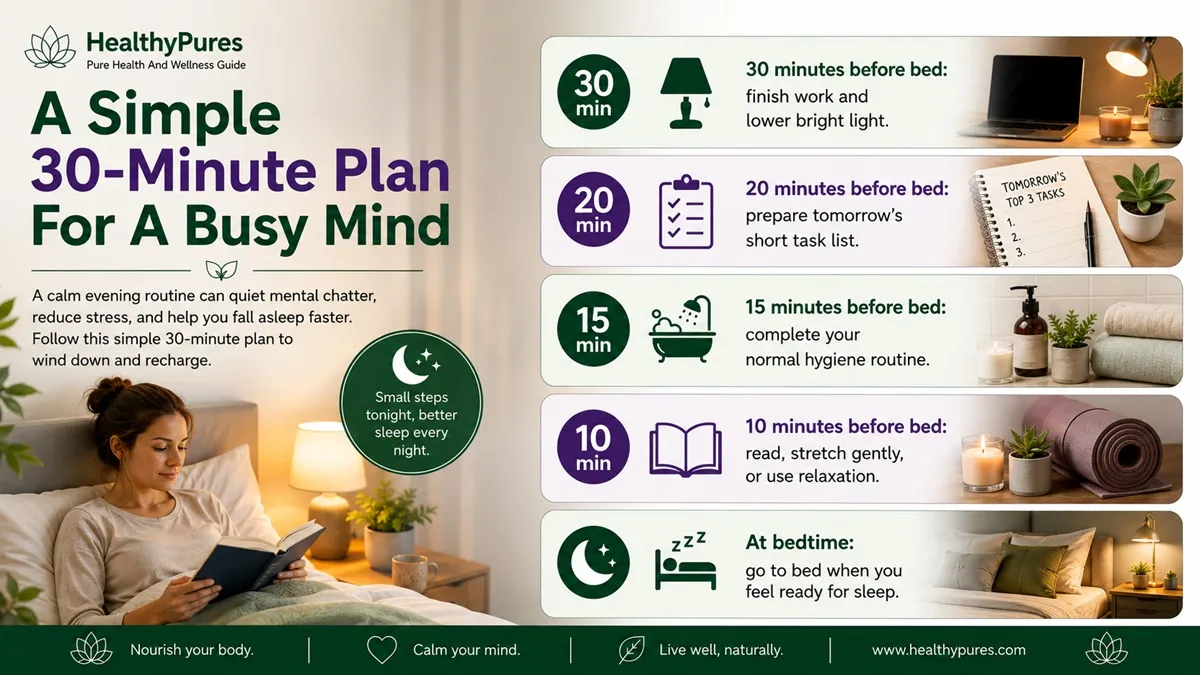
You do not need an elaborate ritual to practice how to fall asleep faster. A short sequence can make the six techniques easier to repeat.
- 30 minutes before bed: finish work and lower bright light.
- 20 minutes before bed: prepare tomorrow’s short task list.
- 15 minutes before bed: complete your normal hygiene routine.
- 10 minutes before bed: read, stretch gently, or use relaxation.
- At bedtime: go to bed when you feel ready for sleep.
This schedule is an example, not a medical protocol. Change the timing to fit your household and normal sleep pattern.
What If These Techniques Do Not Work?
A few nights of slow sleep onset can happen during stress, travel, schedule changes, or illness. Persistent problems need a different approach than adding more sleep hacks.
NHLBI describes chronic insomnia as symptoms occurring at least three nights weekly for more than three months. Diagnosis also considers whether another condition better explains the problem.
For chronic insomnia, CBT-I has stronger evidence than isolated relaxation techniques. NHLBI describes CBT-I as a multicomponent treatment that may include cognitive therapy, sleep education, stimulus control, and relaxation.
Learning how to fall asleep faster should never mean delaying an assessment when poor sleep is affecting daytime function.
When To Talk With A Healthcare Professional
Consider professional guidance when sleep difficulty is persistent or significantly affects concentration, mood, work, driving, or daily functioning.
Loud snoring, breathing pauses, or gasping during sleep can be signs of sleep apnea. The NHLBI sleep apnea symptom guide recommends discussing these symptoms with a healthcare provider.
Also mention restless legs, unusual movements, severe daytime sleepiness, or medicines that may affect sleep. A clinician can help determine whether another condition is contributing.
Frequently Asked Questions
How Long Should It Normally Take To Fall Asleep?
There is no single normal number that applies to every person and every night. Sleep onset changes with stress, schedule, illness, caffeine, and previous sleep.
Focus on repeated patterns and daytime effects rather than timing yourself every night.
Should I Stay In Bed If I Cannot Sleep?
CBT-I stimulus-control strategies often involve leaving bed when you cannot sleep and returning when sleepy. This helps reduce the association between bed and prolonged wakefulness.
Formal CBT-I can provide more individualized instructions if insomnia is persistent.
Does The 4-7-8 Breathing Method Make You Fall Asleep Faster?
There is not strong evidence that this exact breathing ratio reliably produces faster sleep. Slow breathing can still be a comfortable relaxation exercise for some people.
Do not force breath holds if they make you lightheaded, anxious, or uncomfortable.
Can Melatonin Help Me Fall Asleep Faster?
Melatonin may help some sleep problems, but its usefulness depends on the situation and timing. It is not a universal treatment for every form of insomnia.
Discuss supplements with a healthcare professional when you take medicines, have health conditions, are pregnant, or have persistent sleep problems.
What Is The Most Evidence-Based Treatment For Chronic Insomnia?
Multicomponent cognitive behavioral therapy for insomnia has strong guideline support. It addresses thoughts, behaviors, sleep timing, and habits that can maintain insomnia.
Sleep hygiene can support treatment, but it may not be enough by itself for chronic insomnia.
Make Sleep Easier, Not More Pressured
The most practical answer to how to fall asleep faster is not one breathing trick or one perfect bedtime. Sleep is influenced by timing, light, environment, habits, stress, and individual health factors.
Start with a consistent wind-down routine, a sleep-friendly room, thoughtful light and caffeine timing, and gentle relaxation. Use stimulus-control principles when lying awake becomes frustrating.
If the problem continues or affects daytime life, seek appropriate evaluation. Persistent sleep difficulty deserves more than another nightly attempt to force sleep.
Just a friendly reminder from our team: Health needs vary from person to person. This information supports general wellness and does not replace professional medical advice. Read our full Medical Disclaimer for more details.