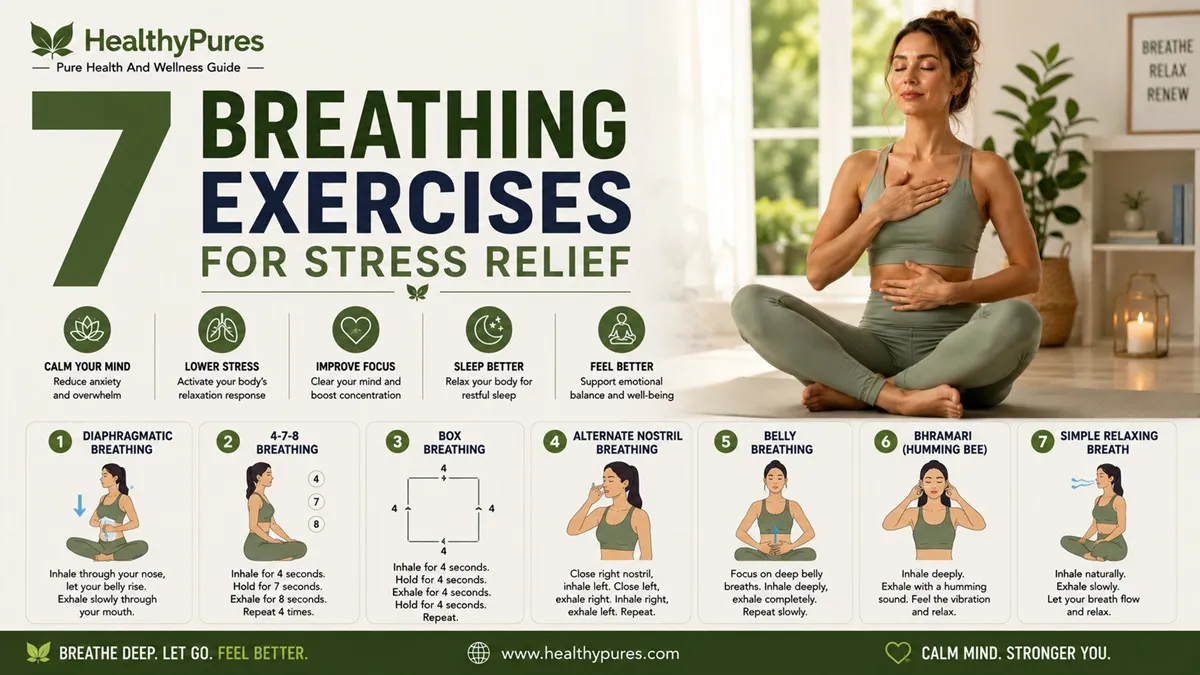
Stress can make breathing feel quick, shallow, or difficult to control. Breathing exercises for stress relief offer a simple way to pause and regain a steadier rhythm.
These practices cannot remove every stressor or replace professional care. However, gentle breathing may support short-term calm when you practice without forcing your breath.
Quick Summary
- Breathing exercises for stress relief should feel slow, comfortable, and easy to stop.
- Beginners can start with belly breathing or a longer, gentler exhale.
- Breath-holding methods are optional and should never cause strain or air hunger.
- Stop if you develop dizziness, chest pain, worsening breathlessness, or unusual discomfort.
Quick Facts
| Aspect | Details |
|---|---|
| Primary Goal | Create a slower, more comfortable breathing rhythm during everyday stress. |
| Beginner Session | Start with one to five minutes and adjust according to comfort. |
| Equipment | None, although a timer may help with paced techniques. |
| Best Position | Sit supported or lie down where you feel safe and comfortable. |
| Important Limit | Longer counts and breath holds are not suitable for everyone. |
Who This Guide Is For
- ✔ Adults seeking portable breathing exercises for stress relief during a demanding day.
- ✔ Beginners who want clear steps without special equipment or advanced training.
- ✔ People comparing gentle breathing methods with counted or breath-holding techniques.
- ✔ Readers who want realistic safety limits before beginning a breathing practice.
How Breathing Exercises For Stress Relief May Help
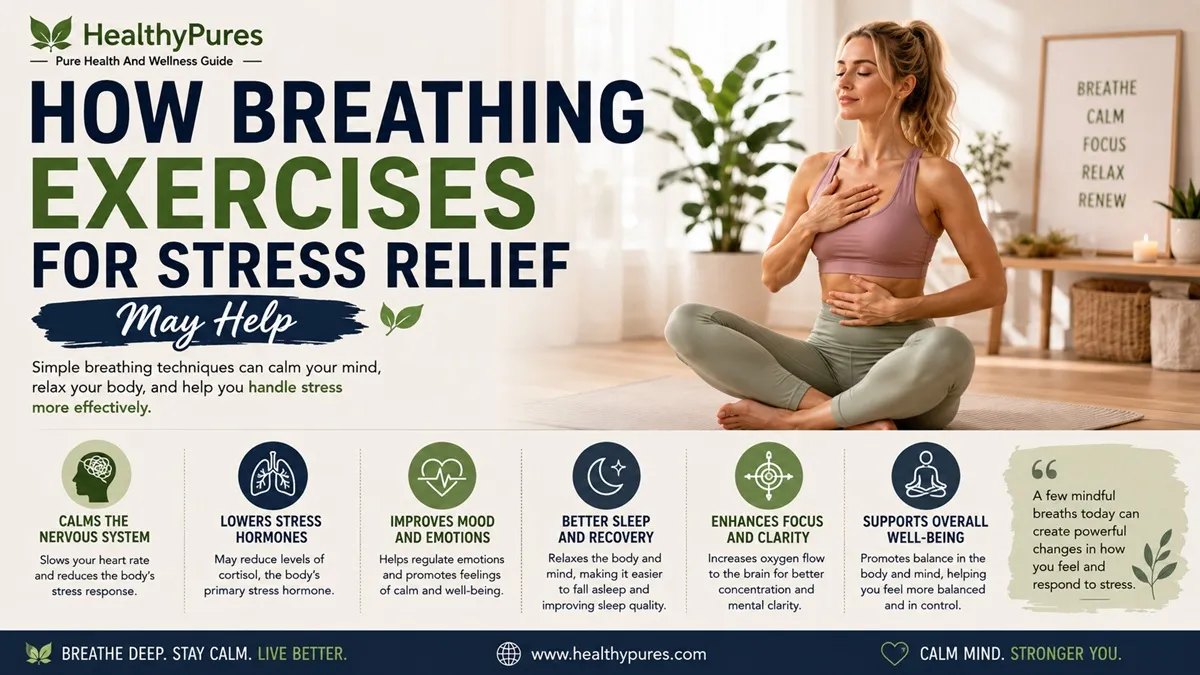
Stress can increase breathing rate and create muscle tension. Slowing the breath may help interrupt that pattern and provide a focused task.
The NHS gentle breathing method emphasizes regular breathing without force. This approach favors comfort and control instead of maximum depth.
Those changes are not guaranteed, and they do not prove that stress has disappeared. Breathing exercises for stress relief work best as coping tools, not medical treatments.
Attention also matters. Counting or noticing each breath can briefly redirect attention from racing thoughts toward a controllable physical action.
This pause may make the next decision feel more manageable. Our practical stress relief techniques offer additional coping options beyond breathing.
Choosing A Comfortable Breathing Method
The best method depends on your comfort, setting, and response to breath holding. Breathing exercises for stress relief should never become a test of endurance.
| Your Preference | Method To Consider | Useful Adjustment |
|---|---|---|
| No Breath Holding | Diaphragmatic or extended-exhale breathing | Use shorter counts and keep every breath gentle. |
| A Clear Counting Pattern | Box or 4-7-8 breathing | Shorten or remove holds whenever they feel uncomfortable. |
| A Brief Reset | Cyclic sighing | Begin with one cycle before attempting a longer practice. |
| Breathlessness During Activity | Pursed-lip breathing | Seek medical advice for new or unexplained breathlessness. |
| A Yoga-Based Practice | Alternate nostril breathing | Skip it when nasal airflow is blocked. |
Common Mistake
Do not chase the longest count. Shorten every phase until your breathing feels smooth and unforced.
Seven Techniques To Try
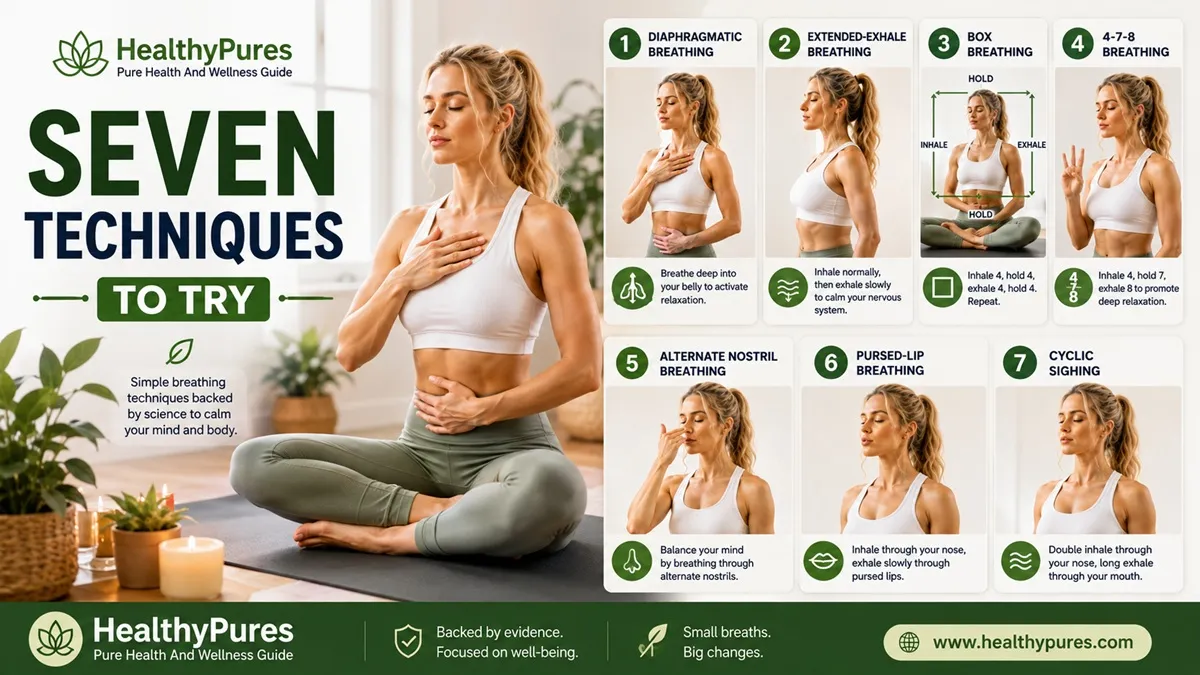
These seven breathing exercises for stress relief range from simple belly breathing to structured counting. Begin with one method instead of practicing every technique in one session.
1. Diaphragmatic Breathing
Diaphragmatic breathing encourages more movement around the abdomen and less movement in the upper chest. It is often a comfortable starting point for beginners.
The Veterans Affairs breathing instructions use a gentle inhale and longer pursed-lip exhale. This pattern can make each breath feel slower and more deliberate.
- Sit supported or lie down with relaxed shoulders.
- Place one hand on your chest and another below your ribs.
- Inhale gently through your nose and notice your abdomen rise.
- Exhale slowly through lightly pursed lips as your abdomen lowers.
- Continue for one to five minutes without forcing depth.
The upper hand should remain relatively still, but perfection is unnecessary. Among breathing exercises for stress relief, this option requires no breath hold.
2. Extended-Exhale Breathing
Extended-exhale breathing makes the outward breath slightly longer than the inward breath. The difference should remain comfortable rather than dramatic.
- Inhale gently through your nose for three counts.
- Exhale through your nose or mouth for four counts.
- Continue without pausing between breaths.
- Try a five-count exhale only when four feels easy.
- Return to natural breathing after one to three minutes.
Shorten both counts if you notice air hunger. Breathing exercises for stress relief should support comfort, not create another source of tension.
This method should create a gentle difference between inhaling and exhaling. A dramatic or uncomfortable change offers no practical advantage.
3. Box Breathing
Box breathing divides one cycle into four equal phases. These phases include inhaling, holding, exhaling, and holding again.
- Exhale normally and relax your jaw and shoulders.
- Inhale through your nose for four comfortable counts.
- Hold gently for four counts without closing your throat tightly.
- Exhale slowly for four counts.
- Pause for four counts, then repeat three or four cycles.
A four-count pattern is not mandatory. Use two or three counts, or remove both holds, if discomfort develops.
Box breathing can suit people who prefer a clear mental task. However, these breathing exercises for stress relief do not require breath holding to be useful.
4. 4-7-8 Breathing
The 4-7-8 pattern uses a longer hold and an even longer exhale. The counting sequence may help some people focus before sleep.
The NHS 4-7-8 instructions recommend four cycles. Beginners should treat these counts as a pattern, not a performance target.
- Inhale quietly through your nose for four counts.
- Hold gently for seven counts.
- Exhale through your mouth for eight counts.
- Repeat up to four cycles when the pattern feels comfortable.
Stop the hold if you feel strained, dizzy, or short of breath. Choose gentler breathing exercises for stress relief when long holds feel unpleasant.
5. Alternate Nostril Breathing
Alternate nostril breathing is a traditional yoga breathing practice. It directs attention through one nostril at a time without requiring deep inhalations.
- Sit upright and keep your face relaxed.
- Close the right nostril gently with your thumb.
- Inhale through the left nostril.
- Close the left nostril and release the right side.
- Exhale through the right, then inhale through the right.
- Switch sides and exhale through the left nostril.
- Repeat three to five comfortable cycles.
Traditional explanations sometimes describe balancing energy channels. That idea should not be presented as a proven medical mechanism.
Skip this method during nasal congestion, irritation, or a nosebleed. Other breathing exercises for stress relief remain available when nasal airflow feels restricted.
6. Pursed-Lip Breathing
Pursed-lip breathing slows exhalation through a narrow lip opening. Pulmonary guidance often uses this technique to make exhaling feel more controlled.
- Relax your neck and shoulders while sitting upright.
- Inhale gently through your nose for two counts.
- Purse your lips as though blowing out a candle.
- Exhale gently for four counts without forcing air outward.
- Repeat until your breathing feels settled.
This method is not proven superior to other breathing exercises for stress relief. Its main practical feature is a slower, controlled exhale.
New or worsening breathlessness needs medical assessment rather than repeated self-treatment. Breathing practice should never delay care for an unexplained symptom.
7. Cyclic Sighing
Cyclic sighing combines one inhale, a smaller second inhale, and a long exhale. The second inhale should remain gentle rather than forceful.
A small randomized study discussed by Stanford Medicine cyclic sighing researchers found promising short-term results. The findings do not guarantee the same response for every person.
- Inhale gently through your nose.
- Take a smaller second inhale without straining.
- Exhale slowly through your mouth until comfortable.
- Take several natural breaths before repeating.
- Begin with one to three cycles.
Repeated deep inhalations can cause lightheadedness in some people. Use slower breathing exercises for stress relief if this pattern feels stimulating.
Healthy Pures Expert Tip
Choose one technique for seven days. Track comfort and usefulness instead of constantly changing methods.
Building A Routine You Can Repeat
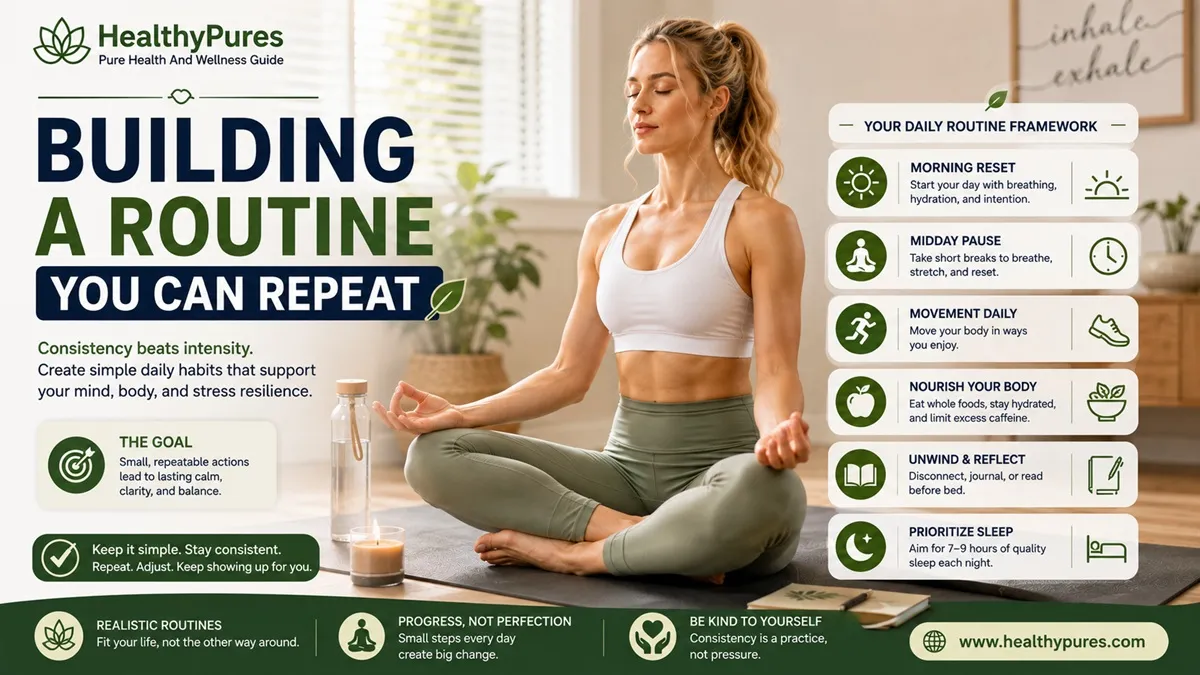
Consistency matters more than session length. Practice breathing exercises for stress relief during calm periods before relying on them under pressure.
Begin with one to five minutes once daily. Add another short session only when the practice remains comfortable and easy to remember.
A morning session can establish familiarity with your chosen rhythm. A brief practice may also support a calmer transition between demanding tasks.
At work, pair breathing with an existing cue, such as closing one task. Our five-minute workplace reset provides a practical companion routine.
Desk-based practice should remain discreet and gentle. These desk-friendly calming methods can add movement when breathing alone feels insufficient.
Evening breathing may help you shift attention away from the day. Breathing exercises for stress relief can complement sleep habits without guaranteeing faster sleep.
Healthy Pures Pro Tip
Attach practice to one reliable cue, such as sitting at your desk or preparing for bed.
Safety Limits For Breathing Exercises For Stress Relief

Gentle breathing is usually low risk, but forceful breathing can cause lightheadedness. Long breath holds may also create discomfort or air hunger.
Stop immediately and return to normal breathing if symptoms appear. Sit or lie somewhere safe until the sensation settles.
The American Heart Association stress guidance advises extra care for people with heart or lung conditions. Discuss new practices with a healthcare professional, especially before using long holds.
Breathing exercises for stress relief should not replace prescribed treatment. They also cannot identify whether breathlessness comes from stress or another condition.
Use other strategies when breathing focus increases anxiety. Our simple stress relief activities include alternatives that do not center on breath counting.
When To See A Doctor About Stress
Seek professional support when stress repeatedly disrupts sleep, appetite, concentration, work, or relationships. Breathing exercises for stress relief may support coping, but persistent symptoms deserve broader assessment.
Contact a healthcare professional for recurring dizziness, palpitations, or unexplained shortness of breath. Do not assume these symptoms come only from stress.
Seek urgent care for chest pain, fainting, severe breathing difficulty, or rapidly worsening symptoms. Stop every breathing exercise while arranging appropriate help.
Grounding may feel easier when panic makes breath counting uncomfortable. Our grounding techniques for anxiety provide several non-breath-focused options.
Frequently Asked Questions
Which Method Should A Beginner Try First?
Diaphragmatic or extended-exhale breathing offers a simple starting point. Neither method requires a long breath hold or complicated sequence.
How Quickly Can Controlled Breathing Feel Calming?
Some people notice a change within a few minutes, while others need longer. A slower breath does not guarantee immediate emotional relief.
Can I Practice Every Day?
Daily gentle practice may be suitable when it remains comfortable. Reduce the duration or frequency if breath focus causes distress.
Why Do I Feel Dizzy During Breathwork?
Breathing too deeply or quickly can contribute to lightheadedness. Stop, resume natural breathing, and seek advice if symptoms persist.
Can Breathing Exercises Replace Therapy Or Medication?
No. Breathing exercises for stress relief are coping tools and should not replace professional treatment or prescribed medication.
Creating A Calmer And Safer Breathing Habit
Start with the gentlest method and use counts that match your comfort. A useful practice should leave you settled, not strained or breathless.
Breathing exercises for stress relief can become one part of a broader stress plan. Consistent, comfortable practice matters more than perfect timing or advanced techniques.