A calmer evening can make the transition from a busy day to bedtime feel more manageable. The goal is not to create a perfect ritual or force sleep on command.
A healthy evening routine for better sleep can reduce common sources of late-night stimulation. It can also support more consistent sleep timing and a quieter end to the day.
This guide covers the broader evening, including caffeine, meals, light, movement, stress, and the final wind-down. It is different from a narrower bedtime routine focused only on the last part of the night.
The advice stays practical rather than relying on “sleep-promoting” foods, detox ideas, or rigid rules. Persistent insomnia or other sleep symptoms may require professional evaluation.
Quick Summary
- Keep sleep and wake times reasonably consistent as part of a healthy evening routine for better sleep.
- Use the hour before bed for quieter activities and lower light exposure.
- Move caffeine, large meals, and intense exercise away from bedtime when they disrupt sleep.
- Keep the bedroom cool, dark, quiet, and comfortable for your own needs.
Quick Facts
| Evening Factor | Practical Approach |
|---|---|
| Sleep Timing | Keep bedtime and wake time reasonably consistent |
| Wind-Down | Use a predictable period of quieter activity before bed |
| Light | Reduce bright artificial light as bedtime approaches |
| Caffeine | Move the last serving earlier if it delays sleep |
| Food And Fluids | Avoid late heavy meals and excessive fluids close to bed |
| Persistent Insomnia | CBT-I has stronger evidence than sleep hygiene alone |
Who This Guide Is For
- ✔ Adults who want a realistic evening routine after a busy day
- ✔ People whose work, screens, or planning tend to spill into bedtime
- ✔ Readers looking for non-medication sleep habits without exaggerated claims
- ✔ Anyone unsure when a sleep routine is not enough
What An Evening Routine Can And Cannot Do
A healthy evening routine for better sleep can support healthy sleep habits, but it is not a treatment for every sleep disorder. Insomnia, sleep apnea, restless legs, pain, medicines, and mental health concerns can all affect sleep.
The NHLBI healthy sleep habits guidance recommends regular sleep timing, quiet time before bed, and less bright artificial light in the evening.
These habits make a healthy evening routine for better sleep easier to maintain. They do not guarantee that every person will fall asleep quickly or wake refreshed every morning.
Healthy Pures Tip:
Build a routine you can repeat on ordinary weekdays. A complicated plan that works only on perfect evenings is harder to sustain.
Step 1: Keep Sleep And Wake Times Reasonably Consistent
Regular sleep and wake times can help reinforce the body’s sleep-wake rhythm. Large schedule shifts between weekdays and weekends may make bedtime feel less predictable.
The NHLBI circadian rhythm guidance recommends regular sleep and waking times along with a relaxing bedtime routine.
That does not mean your schedule must be exact to the minute. A healthy evening routine for better sleep should fit work, caregiving, family life, and your actual sleep needs.
If your schedule has drifted, make gradual changes rather than forcing a dramatically earlier bedtime. Going to bed when you are not sleepy can create more frustration.
Step 2: Create A Low-Stimulation Wind-Down Period
The hour before bed can strengthen a healthy evening routine for better sleep. Choose activities that feel quieter than work, planning, or emotionally intense content.
NHLBI suggests using this period for quiet activities such as reading, soothing music, or a warm bath. These are examples rather than mandatory sleep techniques.
Your healthy evening routine for better sleep might include washing up, preparing tomorrow’s clothes, reading, or doing a few gentle stretches.
Try to finish demanding tasks before the wind-down begins. If something must wait until tomorrow, write it down rather than continuing to solve it in bed.
Step 3: Reduce Bright Light And Screen Stimulation
Light is an important part of a healthy evening routine for better sleep. Bright artificial light late in the evening can interfere with the transition toward sleep.
The NHLBI insomnia treatment guidance recommends avoiding bright electronic-device light around bedtime and keeping the bedroom sleep friendly.
You do not need to fear every screen or buy special glasses. Lower brightness, reduce stimulating content, and stop unnecessary scrolling as bedtime approaches.
A healthy evening routine for better sleep should reduce stimulation without making technology another source of anxiety.
Step 4: Review Caffeine, Dinner, And Evening Fluids
Food can fit a healthy evening routine for better sleep without being marketed as sedating. Comfort and timing are usually more useful than searching for one “sleep food.”
NHLBI advises avoiding caffeine close to bedtime, eating meals on a regular schedule, and limiting late-night dinners. It also suggests reducing excessive fluids near bedtime.
Caffeine sensitivity differs considerably. If coffee, tea, energy drinks, chocolate, or caffeinated medicines delay sleep, move your last serving earlier.
A healthy evening routine for better sleep can include a small snack when you are genuinely hungry. Choose something familiar and comfortable rather than relying on claims about tryptophan or magnesium.
Large, rich, or spicy meals may cause discomfort for some people close to bedtime. Your own repeated symptoms are more useful than a universal cutoff rule.
Step 5: Use Gentle Movement Without Turning It Into A Sleep Cure
Regular physical activity supports overall health and can be part of healthy sleep habits. Intense exercise close to bedtime may feel stimulating for some people.
NHLBI recommends regular daytime physical activity and advises avoiding exercise close to bedtime when it makes sleep harder.
Gentle stretching or an easy walk may fit a healthy evening routine for better sleep when those activities feel relaxing. They do not “detox” muscles or guarantee lower stress hormones.
Keep movements comfortable and avoid pushing into pain. If exercise makes you more alert, move it earlier in the day.
Step 6: Give Stressful Thoughts A Place To Go
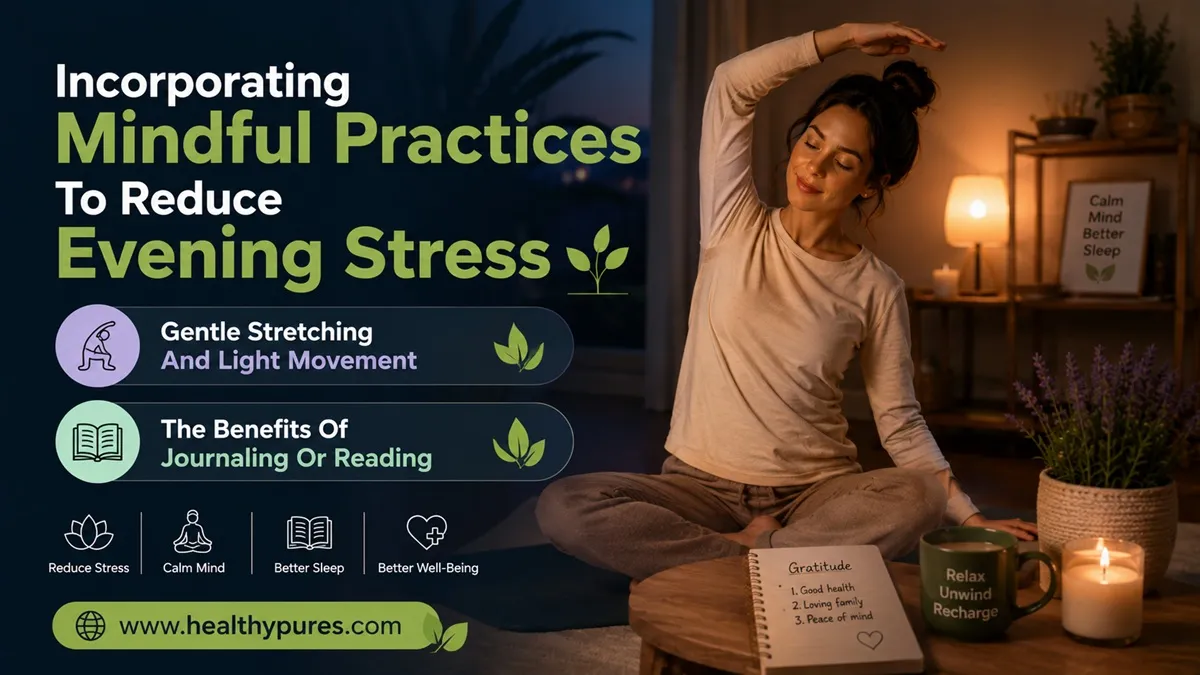
A short written list can support a healthy evening routine for better sleep when unfinished tasks keep circling. It can separate tomorrow’s responsibilities from tonight’s wind-down.
Write down a few priorities and the next action for anything unresolved. Then close the notebook rather than turning journaling into another long planning session.
Relaxation, guided imagery, or mindfulness can also be optional parts of a healthy evening routine for better sleep. Their effects vary between people.
The NCCIH sleep and mind-body overview notes that evidence for relaxation alone is limited. Evidence for multicomponent CBT-I is stronger for chronic insomnia.
If mindfulness makes you more aware of uncomfortable thoughts, choose another quiet activity. Relaxation should not become another test you feel required to pass.
Step 7: Make The Bedroom Support Sleep
A sleep-friendly bedroom supports a healthy evening routine for better sleep by reducing avoidable disturbances. Aim for a room that feels comfortably cool, dark, quiet, and supportive.
You do not need one exact temperature for a healthy evening routine for better sleep. Bedding, climate, health needs, and personal comfort all influence what feels right.
Use curtains, an eye mask, earplugs, or steady background sound when those tools solve a real problem. Keep work materials away from the bed when practical.
If the bedroom has become strongly associated with worrying or working, behavioral insomnia treatment may offer more structured strategies than bedroom upgrades alone.
A Practical 60-Minute Evening Routine
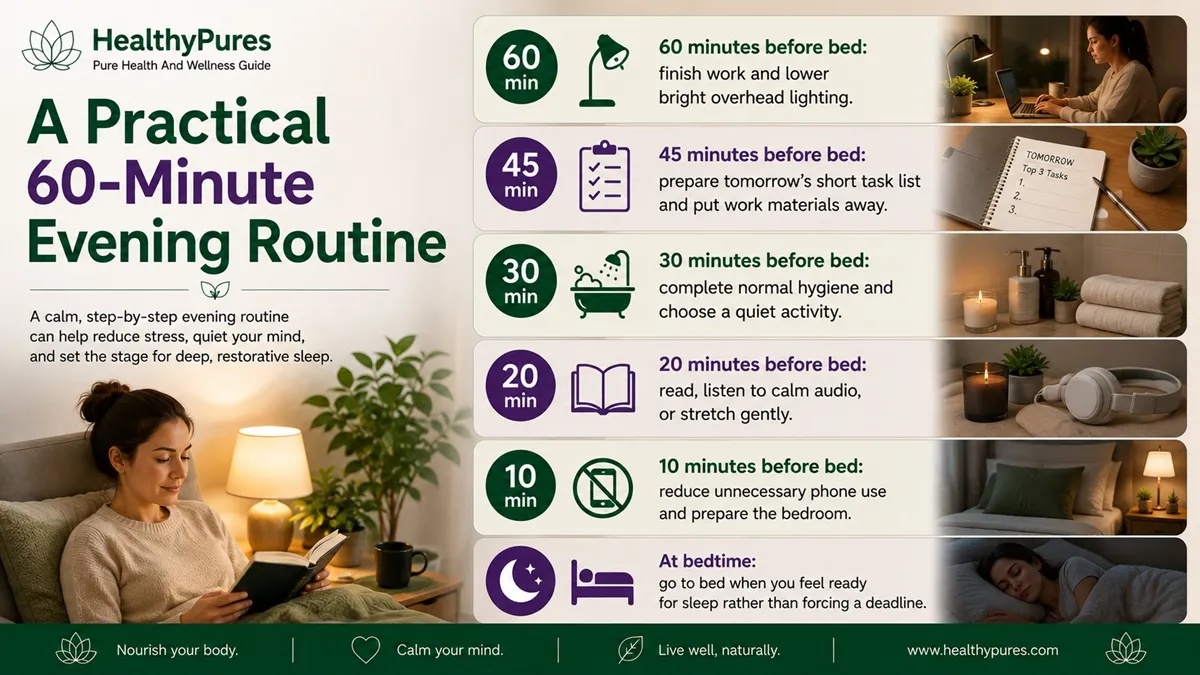
A sample schedule can make these ideas easier to use. Adjust the timing instead of treating it as a medical protocol.
- 60 minutes before bed: finish work and lower bright overhead lighting.
- 45 minutes before bed: prepare tomorrow’s short task list and put work materials away.
- 30 minutes before bed: complete normal hygiene and choose a quiet activity.
- 20 minutes before bed: read, listen to calm audio, or stretch gently.
- 10 minutes before bed: reduce unnecessary phone use and prepare the bedroom.
- At bedtime: go to bed when you feel ready for sleep rather than forcing a deadline.
This healthy evening routine for better sleep is intentionally simple. It leaves room for children, work schedules, travel, and other real-life changes.
For a narrower routine focused on the final part of the night, see our bedtime routine guide.
What About Herbal Tea, Melatonin, Or Supplements?
A nightly routine does not require a supplement. Herbal products and melatonin can have different evidence, dosing concerns, side effects, and potential interactions.
The NCCIH sleep disorders review explains that melatonin may help some specific sleep problems. It is not a universal solution for insomnia.
Do not assume “natural” means risk free. Discuss regular supplement use with a healthcare professional when medicines, pregnancy, health conditions, or persistent sleep problems are involved.
When A Healthy Routine Is Not Enough
Sleep hygiene can be useful, but chronic insomnia often needs more than a better evening schedule. Persistent sleep difficulty can have behavioral, medical, environmental, or psychological contributors.
NHLBI describes CBT-I as a multicomponent approach commonly recommended first for long-term insomnia. It can include cognitive therapy, sleep education, stimulus control, and relaxation.
A healthy evening routine for better sleep can support treatment, but it should not replace evaluation when sleep problems continue or impair daytime life.
Talk with a healthcare professional if you regularly struggle to fall asleep, stay asleep, or function during the day. Loud snoring, breathing pauses, or gasping during sleep also deserve assessment.
Frequently Asked Questions
How Long Does It Take For An Evening Routine To Help?
There is no reliable “21-day” or “66-day” deadline for sleep improvement. Habit formation and sleep response vary between people and behaviors.
Evaluate the routine over time and look for patterns rather than expecting a specific result by a specific night.
Should I Stop Using Screens Exactly One Hour Before Bed?
No universal screen-free interval works for everyone. NHLBI recommends reducing bright artificial light and electronic-device exposure during the period before bed.
Start with a realistic reduction that you can maintain. Content, brightness, and how the device affects you also matter.
Can A Warm Drink Help Me Sleep?
A caffeine-free warm drink can be part of a relaxing routine if you enjoy it. It should not be presented as a treatment for insomnia.
Avoid excessive fluids close to bedtime if nighttime bathroom trips interrupt your sleep.
Is Evening Exercise Bad For Sleep?
Not automatically. People respond differently to exercise timing, intensity, and personal schedules.
If vigorous exercise keeps you alert, move it earlier. Gentle movement may be comfortable for some people during the evening.
What Is The Best Treatment For Chronic Insomnia?
Multicomponent cognitive behavioral therapy for insomnia has strong guideline support. Sleep hygiene alone may not be sufficient for chronic insomnia.
A healthcare professional can help determine whether insomnia or another sleep condition is contributing to ongoing symptoms.
Build An Evening Routine You Can Actually Repeat
The most useful healthy evening routine for better sleep is not the most elaborate one. It is the routine that reduces unnecessary stimulation and fits your normal life.
Start with consistent sleep timing, a quieter final hour, thoughtful caffeine use, comfortable movement, and a sleep-friendly bedroom. Add journaling or relaxation only when those tools feel helpful.
If sleep problems remain persistent or affect daytime functioning, seek appropriate evaluation. A routine can support healthy sleep without replacing evidence-based treatment when treatment is needed.
Just a friendly reminder from our team: Health needs vary from person to person. This information supports general wellness and does not replace professional medical advice. Read our full Medical Disclaimer for more details.