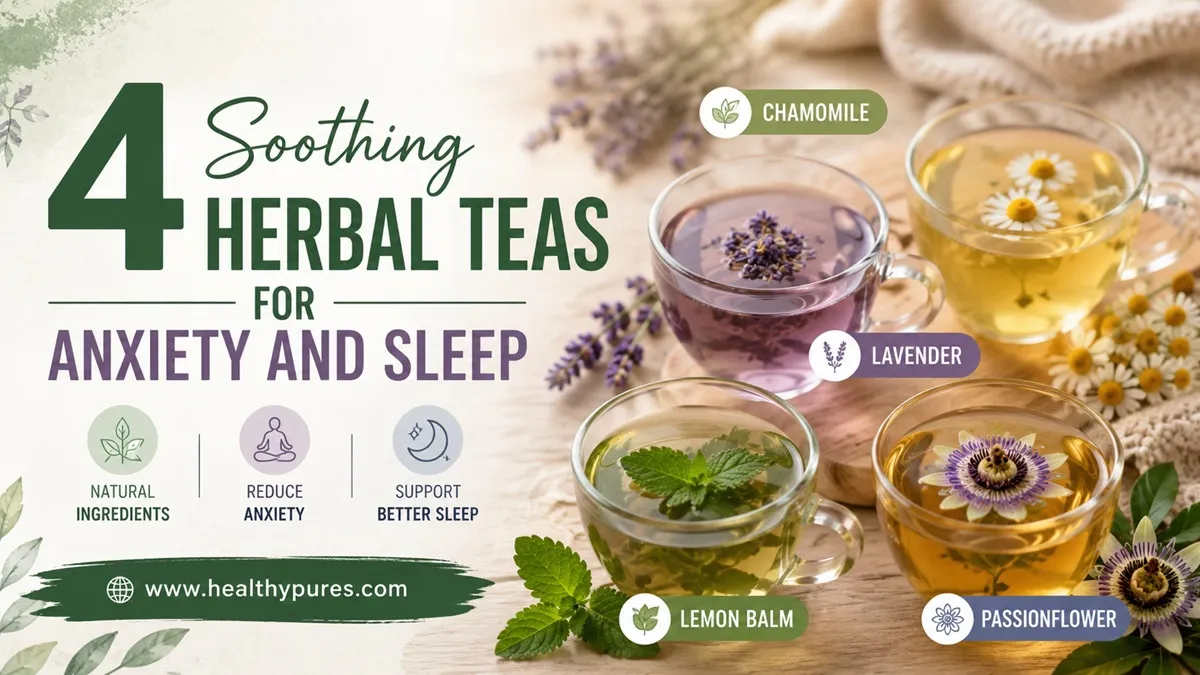
A warm cup of tea can be a comforting part of an evening routine. Many people also explore herbal teas for anxiety and sleep when stress makes it harder to settle down.
However, soothing does not mean proven treatment. Research on herbal teas for anxiety and sleep is limited. Evidence often comes from extracts or supplements rather than brewed tea.
Lucas Miller, Lead Health Content Researcher & Editor at Healthy Pures, reviews four popular options below. The goal is to separate traditional use from stronger evidence and help you make safer choices.
Quick Summary
- Chamomile is widely used for relaxation, but clinical evidence for insomnia remains inconclusive.
- Lemon balm has some promising research for anxiety symptoms, although tea-specific evidence is limited.
- Passionflower has limited evidence for anxiety and sleep, with important medication and pregnancy precautions.
- Valerian has inconsistent sleep evidence and is not recommended as a treatment for chronic insomnia.
- Herbal tea should complement healthy sleep habits, not replace appropriate medical or mental health care.
Quick Facts
| Tea | What The Evidence Suggests | Key Caution |
|---|---|---|
| Chamomile | Preliminary anxiety research; insomnia evidence is limited. | Possible allergy and medication interactions. |
| Lemon Balm | Some studies suggest reduced anxiety symptoms. | Tea-specific evidence and long-term data are limited. |
| Passionflower | Small studies suggest possible anxiety and sleep benefits. | Avoid during pregnancy; may cause drowsiness. |
| Valerian | Sleep findings are inconsistent. | Avoid combining with alcohol or sedatives. |
Who This Guide Is For
- ✔ Adults interested in a caffeine-free evening drink.
- ✔ Readers comparing popular herbal teas for anxiety and sleep.
- ✔ People who want an evidence-aware view of traditional herbal teas.
- ✔ Anyone who wants to understand safety before trying a calming tea.
Can Herbal Tea Really Help With Anxiety And Sleep?
Anxiety and poor sleep can reinforce each other. Worry may make it difficult to unwind, while insufficient sleep can make the next day feel harder.
A tea ritual may support relaxation because it creates a predictable pause before bed. That behavioral effect is different from proving that an herb treats anxiety or insomnia.
The National Heart, Lung, and Blood Institute recommends consistent sleep schedules, quiet wind-down time, and limiting caffeine before bed. These habits have broader support than relying on one tea alone.
When evaluating herbal teas for anxiety and sleep, it also matters how the research was conducted. Studies may use concentrated extracts, capsules, or standardized products that differ from a typical cup of tea.
1. Chamomile Tea: A Familiar Evening Choice
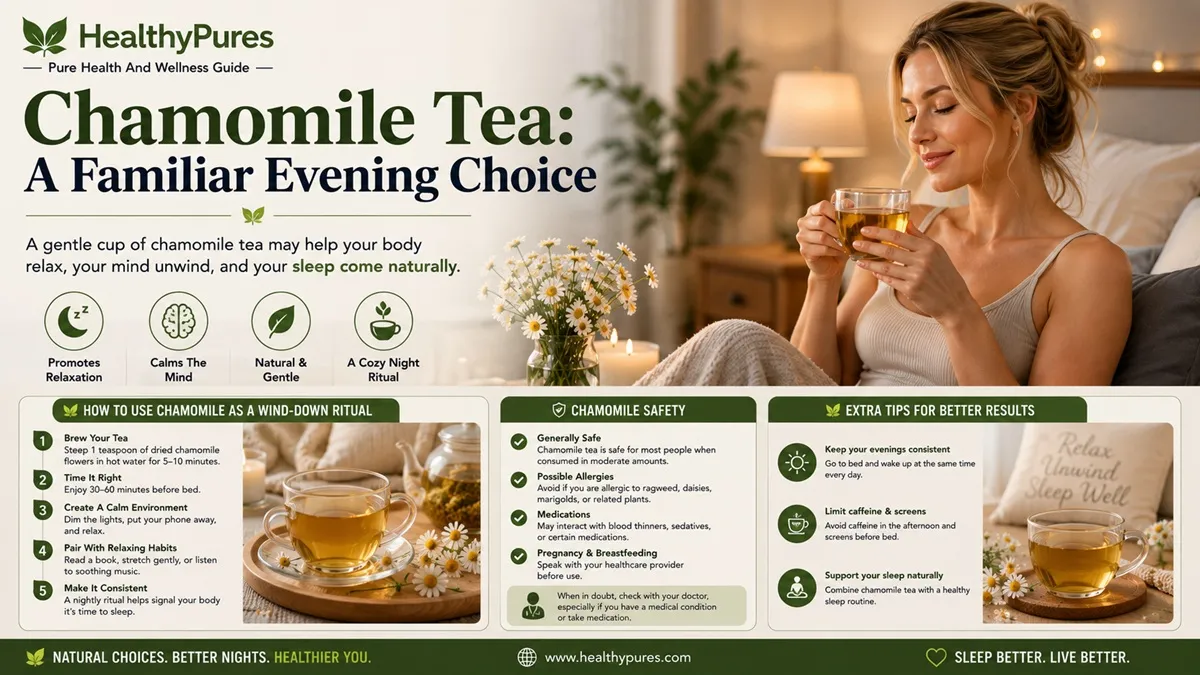
Chamomile is one of the best-known herbal teas for anxiety and sleep. Its mild flavor and caffeine-free profile make it easy to include in a bedtime routine.
According to the National Center for Complementary and Integrative Health, preliminary studies suggest chamomile supplements might help generalized anxiety disorder. Those findings are not conclusive.
Evidence for insomnia is weaker. NCCIH notes that there is very little information on chamomile for insomnia, and one reviewed insomnia study found no benefit.
Chamomile can be a reasonable ritual choice. It does not prove that herbal teas for anxiety and sleep can treat a diagnosed disorder.
How To Use Chamomile As A Wind-Down Ritual
Follow the preparation directions on the tea package rather than assuming stronger tea works better. Consider drinking it during a quiet period before bed.
Pair the tea with dim lighting, reading, or gentle breathing. This keeps the focus on a repeatable bedtime routine rather than expecting a medicinal effect.
Healthy Pures Tip: If chamomile feels relaxing, treat that response as personal experience. It does not prove that chamomile treats insomnia.
Chamomile Safety
Chamomile is generally considered safe in amounts commonly found in tea. However, allergic reactions can occur, especially in people sensitive to ragweed, chrysanthemums, marigolds, or daisies.
NCCIH also reports possible interactions with medicines such as warfarin and cyclosporine. Ask a healthcare professional before regular use if you take medication.
2. Lemon Balm Tea: Promising, But Still Limited
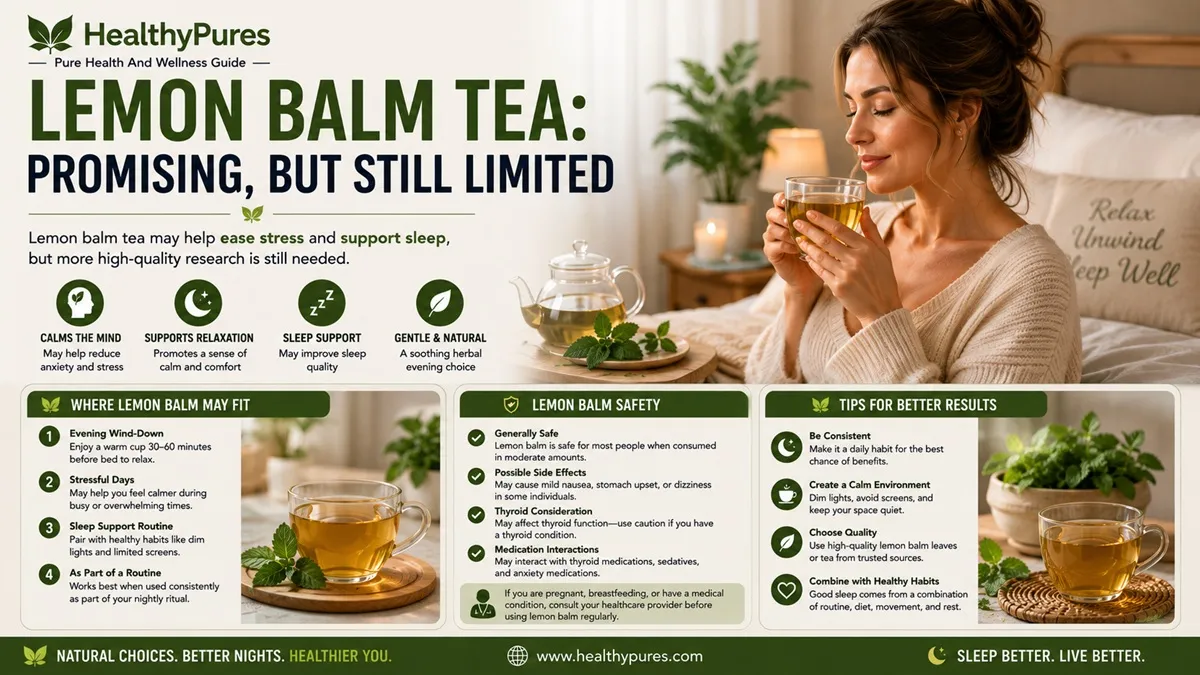
Lemon balm has a light citrus aroma and a long history of traditional use for relaxation. It is another common option among herbal teas for anxiety and sleep.
A systematic review of clinical trials found that lemon balm may reduce anxiety symptoms in some settings. However, study designs varied, and many products were not ordinary brewed tea.
That distinction matters. Evidence from concentrated preparations cannot automatically be applied to a cup made from a tea bag.
Claims about herbal teas for anxiety and sleep should stay modest when studies use a different product form.
Where Lemon Balm May Fit
Lemon balm tea may work best as a pleasant, caffeine-free replacement for late-day coffee or caffeinated tea. Reducing evening caffeine can itself support healthier sleep.
The NHLBI notes that caffeine can interfere with sleep for hours. Choosing a caffeine-free drink later in the day may therefore offer a practical behavioral advantage.
When comparing herbal teas for anxiety and sleep, lemon balm may appeal to people who prefer a brighter flavor. Do not assume it will produce the same effect for everyone.
Lemon Balm Safety
Research on long-term use remains limited. Product strength can also vary, especially between loose herbs, tea bags, extracts, and combination products.
If you use prescription medicines, are pregnant, or are breastfeeding, discuss regular herbal use with a qualified healthcare professional. This is especially important for concentrated products.
3. Passionflower Tea: Limited Evidence With More Precautions

Passionflower is traditionally used as a calming herb. Among herbal teas for anxiety and sleep, it deserves more caution because drowsiness and medication interactions are possible.
NCCIH reports that a small amount of research suggests oral passionflower might reduce some anxiety symptoms. The evidence is not strong enough for definite conclusions.
Research on sleep is also limited. Some studies suggest improved total sleep time, while findings for falling asleep and staying asleep are mixed.
Passionflower therefore belongs among herbal teas for anxiety and sleep with promising but still uncertain evidence.
When Passionflower Requires Extra Care
Passionflower may cause drowsiness, dizziness, or confusion. It can also interact with medicines used around surgery and may add to sedating effects.
NCCIH advises against passionflower during pregnancy because it may cause uterine contractions. Safety during breastfeeding is also uncertain.
Because of these issues, passionflower is not a casual choice for everyone. Anyone taking medicines should discuss it with a healthcare professional first.
4. Valerian Tea: Popular For Sleep, But Evidence Is Inconsistent
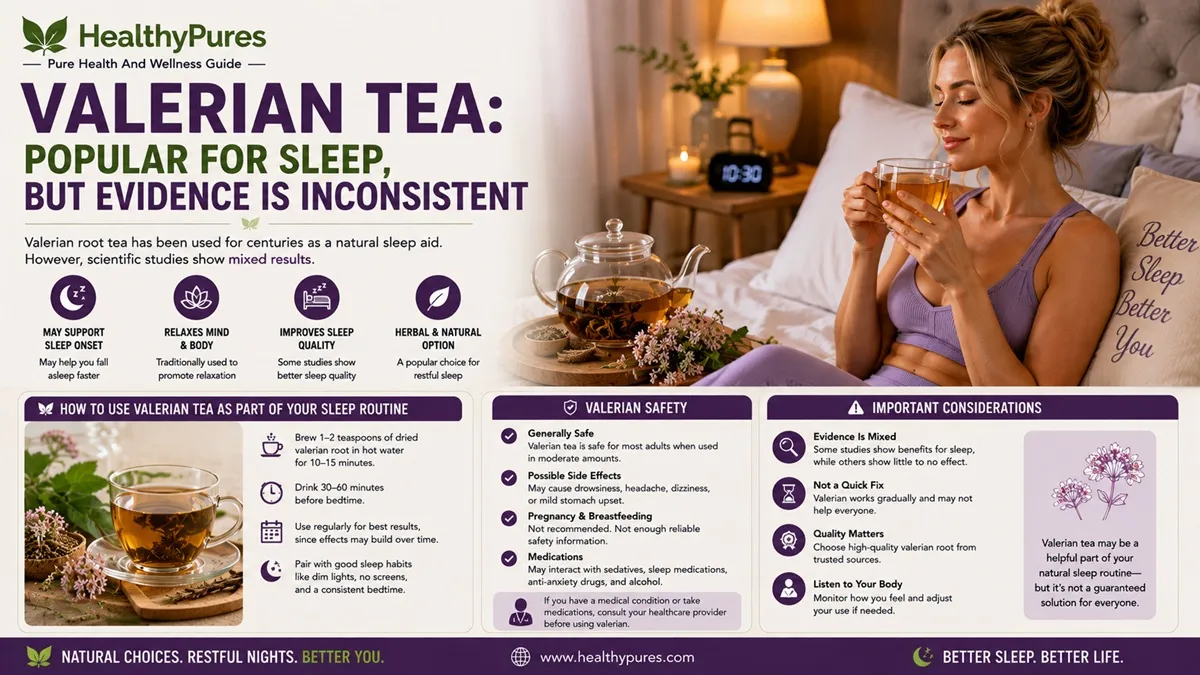
Valerian root is frequently marketed as a sleep herb. It often appears on lists of herbal teas for anxiety and sleep, yet the evidence deserves careful interpretation.
NCCIH states that research on valerian for sleep problems has produced inconsistent results. There is not enough evidence to conclude that valerian is useful for any health condition.
The American Academy of Sleep Medicine previously recommended against valerian for treating chronic insomnia in adults. That is very different from calling valerian a proven sleep inducer.
That distinction is important when comparing herbal teas for anxiety and sleep with established insomnia treatments.
Valerian Safety
Short-term use appears reasonably tolerated by many adults, but long-term safety remains uncertain. Reported side effects include headache, stomach upset, mental dullness, uneasiness, and vivid dreams.
Valerian should not be combined casually with alcohol or sedatives. People using medicines should discuss valerian with a healthcare professional before regular use.
Valerian also has a strong earthy flavor. Some people enjoy it, while others prefer milder herbal teas for anxiety and sleep such as chamomile.
Herbal Teas For Anxiety And Sleep: Side-By-Side Comparison
| Tea | Best Reason To Consider It | Evidence Limitation | Important Safety Point |
|---|---|---|---|
| Chamomile | Gentle caffeine-free evening ritual. | Insomnia evidence is inconclusive. | Watch for ragweed-family allergies and interactions. |
| Lemon Balm | Pleasant caffeine-free alternative. | Many studies use extracts rather than tea. | Long-term and medication data are limited. |
| Passionflower | Traditional calming use with limited clinical research. | Sleep and anxiety findings are not definitive. | Avoid during pregnancy; may cause drowsiness. |
| Valerian | Traditional bedtime use. | Clinical sleep findings are inconsistent. | Do not combine casually with alcohol or sedatives. |
How To Build A Safer Evening Tea Routine
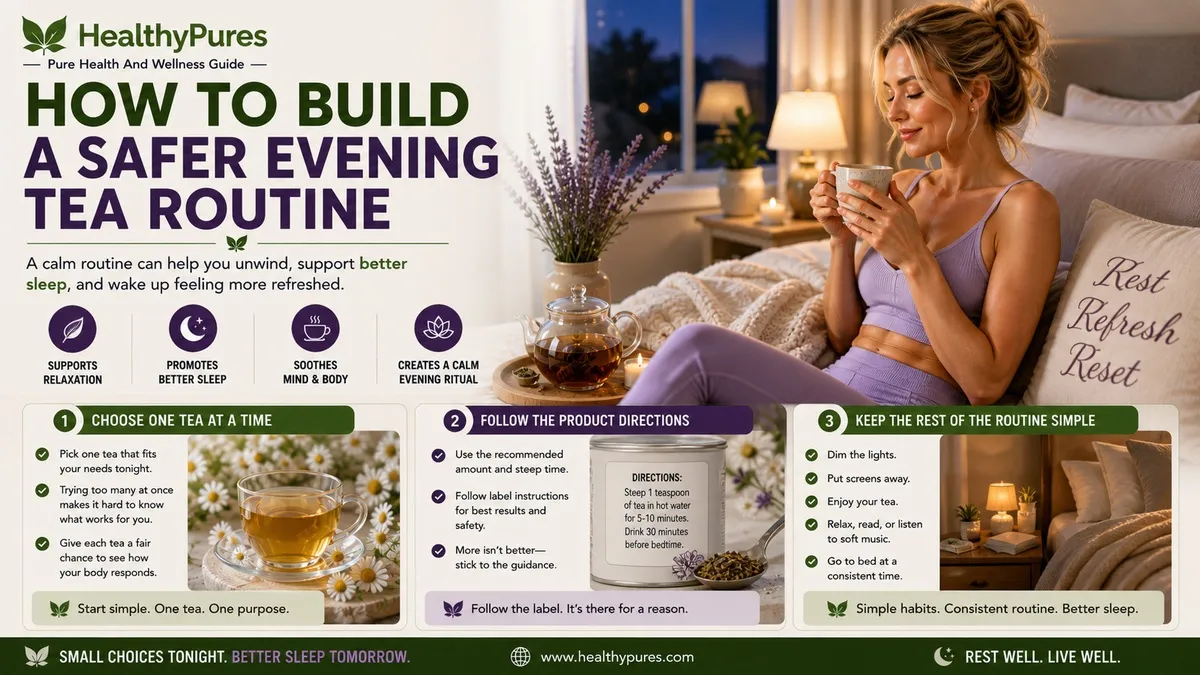
Herbal teas for anxiety and sleep may work best as one small part of a broader wind-down routine. Start with simple habits before adding multiple herbs.
Choose One Tea At A Time
Trying several herbs together makes it harder to know which one caused an unwanted effect. A single-ingredient tea also makes labels easier to understand.
This simple approach makes herbal teas for anxiety and sleep easier to evaluate without changing several variables at once.
Avoid assuming that combining multiple calming herbs creates a stronger or better result. More ingredients can also mean more opportunities for interactions.
Follow The Product Directions
Tea strength varies by brand, plant part, serving size, and preparation method. Use the label directions rather than creating a high-concentration brew.
This is especially important with passionflower or valerian. Avoid adding concentrated extracts unless a qualified professional has advised you to use them.
Keep The Rest Of The Routine Simple
The NHLBI recommends a consistent sleep schedule and a quiet hour before bed. It also advises avoiding bright screens, large meals, nicotine, and caffeine close to bedtime.
For more practical ideas, see our guide to how to fix your sleep schedule. You can also review our foods to eat before bed guide.
Who Should Be More Cautious With Herbal Tea?

Natural does not automatically mean risk-free. Some herbal teas for anxiety and sleep can interact with medicines or may be unsuitable during pregnancy.
Talk with a healthcare professional before regular use if you take sedatives, anticoagulants, antidepressants, or other prescription medicines. The same applies before surgery.
Pregnant or breastfeeding people should seek individualized guidance. Passionflower should be avoided during pregnancy according to NCCIH.
Safety matters more than popularity when choosing herbal teas for anxiety and sleep during pregnancy, breastfeeding, or medication use.
Children should not be given medicinal herbal products for anxiety or sleep without pediatric guidance. Product quality and age-appropriate safety can vary significantly.
When Tea Is Not Enough
Persistent anxiety or sleep problems deserve more than a beverage strategy. Herbal tea should not delay evaluation when symptoms are frequent, severe, or affecting daily life.
Seek professional support if anxiety is difficult to control or interferes with work, relationships, or normal activities. Urgent help is appropriate if there is a risk of self-harm.
For ongoing insomnia, evidence-based treatment may be more appropriate than herbs. The NHLBI insomnia treatment guidance outlines healthy sleep habits and established treatment options.
Frequently Asked Questions
What is the best herbal tea for anxiety and sleep?
There is no single best option for everyone. Chamomile is a gentle choice for a bedtime ritual, while evidence for treating insomnia remains inconclusive.
Passionflower and valerian require more safety consideration. Individual preferences, medicines, allergies, and health conditions should guide the choice.
Can herbal tea replace anxiety or insomnia treatment?
No. Herbal teas for anxiety and sleep should not replace professional care for an anxiety disorder or persistent insomnia.
They may function as a comforting routine for some people. Treatment decisions should be based on symptom severity and individual health needs.
Think of herbal teas for anxiety and sleep as an optional wellness habit rather than a replacement for evidence-based care.
How long before bed should I drink herbal tea?
There is no evidence-based timing rule that applies to every herbal tea. Many people prefer tea during their normal wind-down period before bed.
Avoid drinking so much fluid that nighttime bathroom trips disturb sleep. Follow the product directions and adjust based on comfort.
Can I mix chamomile, lemon balm, passionflower, and valerian?
Do not assume that combining herbal teas for anxiety and sleep is safer or more effective. Combining herbs can increase uncertainty about side effects and interactions.
Starting with one ingredient is simpler. Ask a pharmacist or healthcare professional before mixing herbs with medications or other sedating products.
Are herbal teas safe every night?
Safety depends on the herb, amount, product, medications, and individual health factors. Long-term safety data are limited for several calming herbs.
Chamomile in ordinary tea amounts is generally considered low risk for many adults. Valerian and passionflower require greater caution with regular use.
The Bottom Line
Herbal teas for anxiety and sleep can make an evening routine feel calmer. Evidence is not equally strong for each herb. None of these teas should be presented as a proven cure for anxiety or insomnia.
Chamomile offers a familiar caffeine-free ritual with limited insomnia evidence. Lemon balm has some promising anxiety research, while tea-specific evidence remains limited.
Passionflower has preliminary evidence but more safety restrictions. Valerian remains popular, although clinical findings for sleep are inconsistent.
The most practical approach combines a simple tea ritual with healthy sleep habits and appropriate professional care. That balance keeps expectations realistic while still allowing room for personal preference.
Disclaimer: This article is for general educational purposes and does not provide medical diagnosis or treatment. Herbal products can cause side effects or interact with medicines. Review our full Medical, Health & Affiliate Disclaimer.