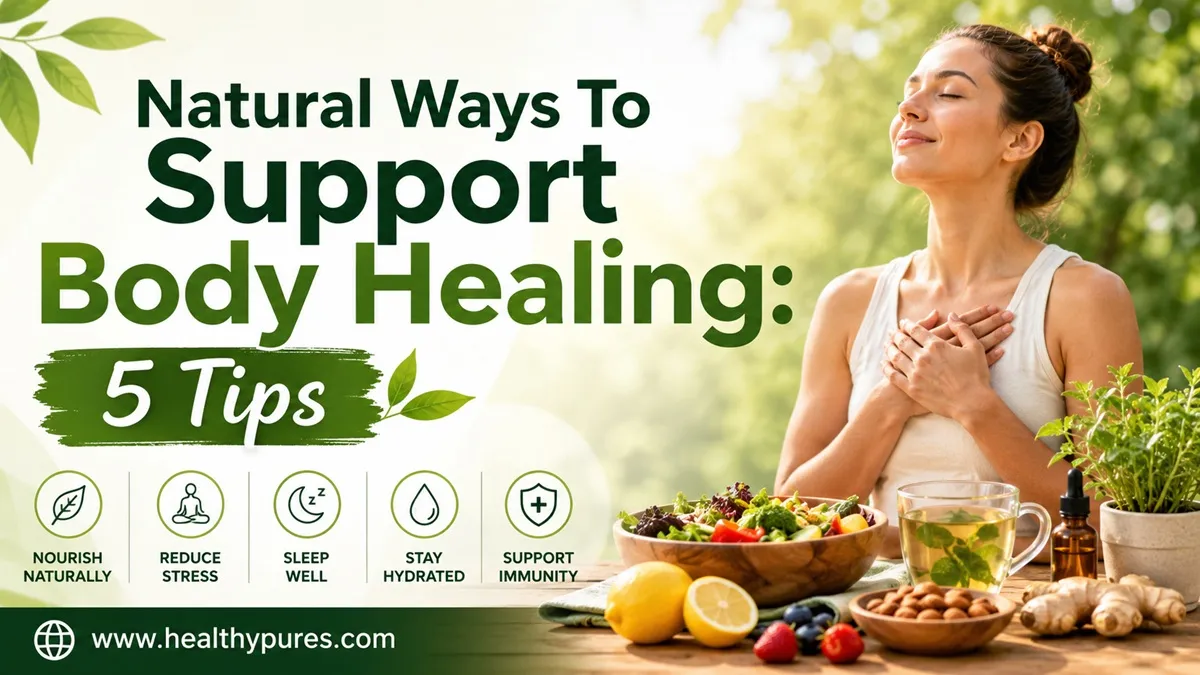
Your body has normal processes for repairing tissues, replacing cells, maintaining immunity, and recovering from everyday physical stress. Lifestyle habits can support those processes, but they cannot guarantee faster recovery.
This guide explains five practical natural ways to support body healing. The focus is nutrition, sleep, appropriate movement, stress management, and hydration.
These natural ways to support body healing are for general wellness and uncomplicated recovery. They should not replace treatment after surgery, serious illness, infection, or significant injury.
Quick Summary
- Eat enough protein and a varied diet rather than relying on “healing” supplements.
- Protect regular sleep because sleep supports normal physical and immune function.
- Use movement that matches your current health, injury status, and recovery plan.
- Manage chronic stress with realistic techniques such as slow breathing or mindfulness.
- Stay hydrated without using “detox” drinks or excessive fluid intake.
Quick Facts
| Area | Practical Focus |
|---|---|
| Nutrition | Enough energy, protein, and nutrient-rich foods |
| Sleep | Consistent schedule and adequate sleep opportunity |
| Movement | Appropriate activity rather than forced exercise |
| Stress | Simple coping and relaxation practices |
| Hydration | Regular fluids based on individual needs |
| Main Limitation | Lifestyle support does not replace medical treatment |
Who This Guide Is For
- ✔ Adults interested in practical recovery-supportive habits
- ✔ People returning to normal routines after minor illness or everyday physical stress
- ✔ Readers who want evidence-aware guidance without “miracle healing” claims
- ✔ Anyone trying to separate supportive habits from unproven detox or supplement promises
What Does “Supporting Body Healing” Really Mean?
The phrase natural ways to support body healing can easily be misunderstood. It does not mean that food, sleep, or herbs can cure a disease on their own.
Normal repair depends on many biological processes. Understanding them helps keep natural ways to support body healing in realistic context.
These processes include immune activity, protein synthesis, circulation, tissue remodeling, and organ function.
Lifestyle habits can provide supportive conditions for those processes. They cannot control the cause, severity, or timeline of every illness or injury.
If you are recovering from surgery or a significant medical condition, follow your healthcare team’s instructions. Your nutrition and activity needs may differ from general advice.
1. Build Meals Around Protein And Nutrient-Rich Foods

Good nutrition is one of the most practical natural ways to support body healing. Your body needs energy, amino acids, vitamins, minerals, and fluids for normal maintenance and repair.
Protein provides amino acids used throughout the body. Useful food sources include fish, eggs, dairy, beans, lentils, tofu, poultry, and lean meat.
Plant foods also contribute fiber, vitamins, minerals, and other compounds. A varied eating pattern is usually more useful than chasing one “healing food.”
Why Vitamin C And Zinc Matter
Vitamin C is required for collagen production and plays roles in immune function. The NIH Office of Dietary Supplements vitamin C fact sheet explains these functions.
Zinc also has important biological roles. However, needing zinc does not mean high-dose zinc supplements will speed normal recovery.
The NIH zinc fact sheet also notes risks from excessive zinc intake. Supplements should address a real need rather than a marketing claim.
Focus On Adequacy, Not “Anti-Inflammatory” Promises
Fruits, vegetables, whole grains, legumes, nuts, seeds, and fish can fit a nutritious pattern. They do not need to be labeled as detoxifying or healing foods.
A balanced diet is one of the safest natural ways to support body healing. It supports normal physiology without promising a specific treatment effect.
You can also review our guide to good nutrition for a broader foundation.
Healthy Pures Tip: If appetite is poor during recovery, smaller meals may feel easier. Significant or persistent appetite loss deserves medical attention.
2. Protect Sleep And Give Recovery Enough Time
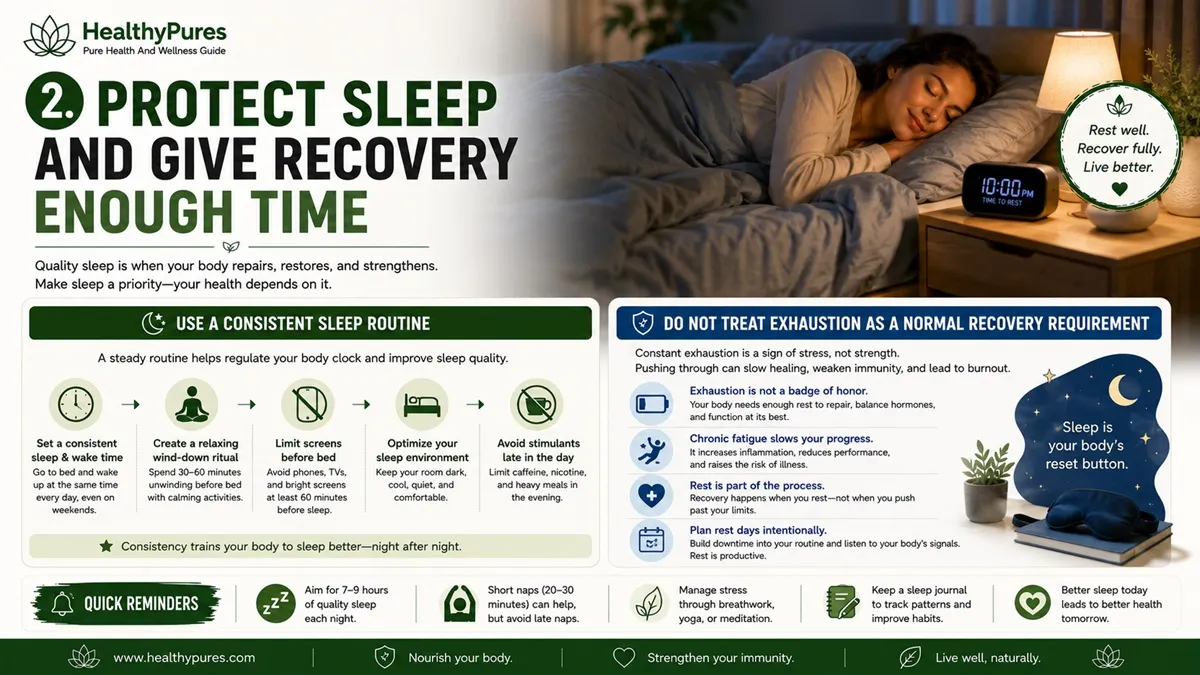
Sleep is another important part of natural ways to support body healing. Sleep supports healthy brain function, physical health, and immune function.
The NHLBI sleep guidance explains that sleep plays an important role in maintaining physical health.
That does not mean one long night will “repair” an illness. Recovery depends on the condition, treatment, age, nutrition, and many other factors.
Use A Consistent Sleep Routine
A regular bedtime and wake time can support sleep habits. A quiet, dark, and comfortable bedroom can also make sleep easier.
The NHLBI healthy sleep habits guide also recommends limiting late caffeine and bright light before bed.
These simple behaviors make sleep one of the more accessible natural ways to support body healing. They do not require supplements or complicated routines.
If sleep problems are persistent, our sleep schedule guide offers additional behavioral strategies.
Do Not Treat Exhaustion As A Normal Recovery Requirement
Feeling tired can occur during illness or after increased activity. Severe or unexplained fatigue should not automatically be blamed on “healing.”
Seek medical advice if fatigue persists, worsens, or occurs with concerning symptoms. This is especially important after serious illness or surgery.
3. Use Appropriate Movement Instead Of Forcing Exercise
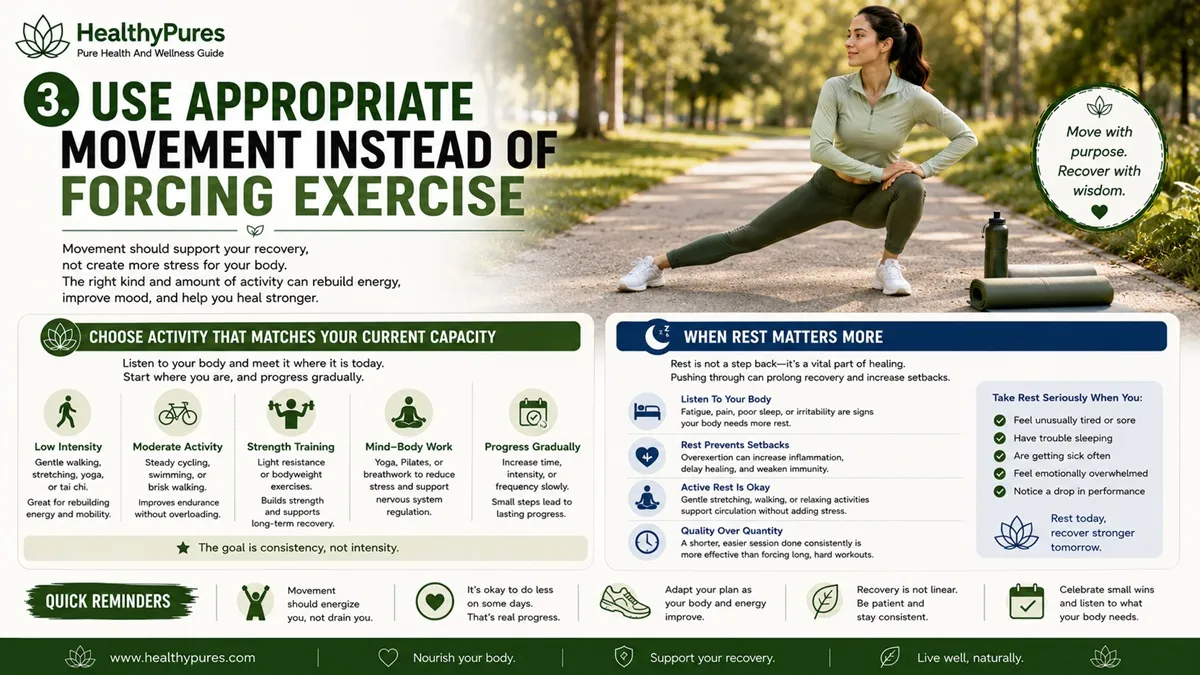
Movement can be part of natural ways to support body healing, but the right amount depends on the situation. More exercise is not always better during recovery.
For generally healthy adults, regular physical activity supports health and physical function. Current U.S. physical activity guidance encourages people to move more and sit less.
However, an injury, infection, surgery, or chronic condition can change what activity is appropriate. In those situations, follow medical or rehabilitation guidance.
Choose Activity That Matches Your Current Capacity
Walking, gentle mobility, or ordinary daily movement may be enough on some days. Stop if activity causes sharp pain, faintness, or unusual shortness of breath.
Progress gradually rather than trying to “push through.” Exercise should not be used to prove that recovery is happening.
Appropriate movement is one of the most individualized natural ways to support body healing. A physical therapist can provide specific guidance after many injuries or procedures.
For general fitness after recovery, our morning home workout provides a beginner-friendly option.
When Rest Matters More
Fever, acute injury, significant weakness, or medical restrictions may require reduced activity. Rest recommendations vary with the underlying problem.
Do not use generic exercise advice to override instructions from a clinician. Recovery plans should match the diagnosis and stage of healing.
4. Reduce Unnecessary Stress Without Promising Faster Healing
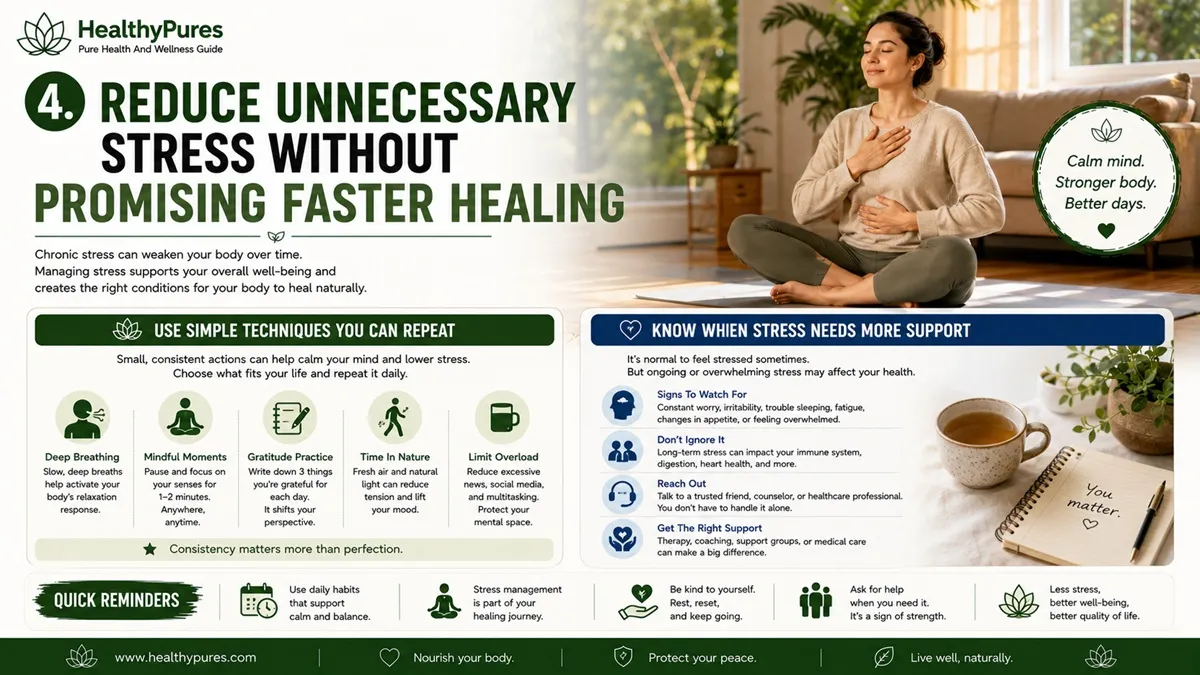
Stress management belongs among natural ways to support body healing because prolonged stress can affect sleep, mood, and daily habits. It is not a direct cure for physical illness.
The NCCIH stress overview explains that long-term stress may contribute to or worsen several health problems.
NCCIH also describes relaxation methods such as slow breathing, guided imagery, and progressive relaxation. Evidence differs by technique and health condition.
Use Simple Techniques You Can Repeat
Try several minutes of slow breathing, a short mindfulness practice, or quiet time without screens. Choose a method that feels manageable.
These habits can support coping and may help some people feel calmer. They should not replace treatment for anxiety, depression, trauma, or another mental health condition.
A realistic stress routine is one of the easiest natural ways to support body healing to practice consistently. The goal is regulation, not perfection.
Our simple stress relief activities provide more everyday options.
Know When Stress Needs More Support
Persistent distress, panic, inability to function, or worsening mental health deserves professional attention. Complementary techniques should not delay appropriate care.
If relaxation exercises make you feel worse, stop and choose another approach. Different people respond differently to stress-management methods.
5. Stay Hydrated Without Falling For Detox Claims
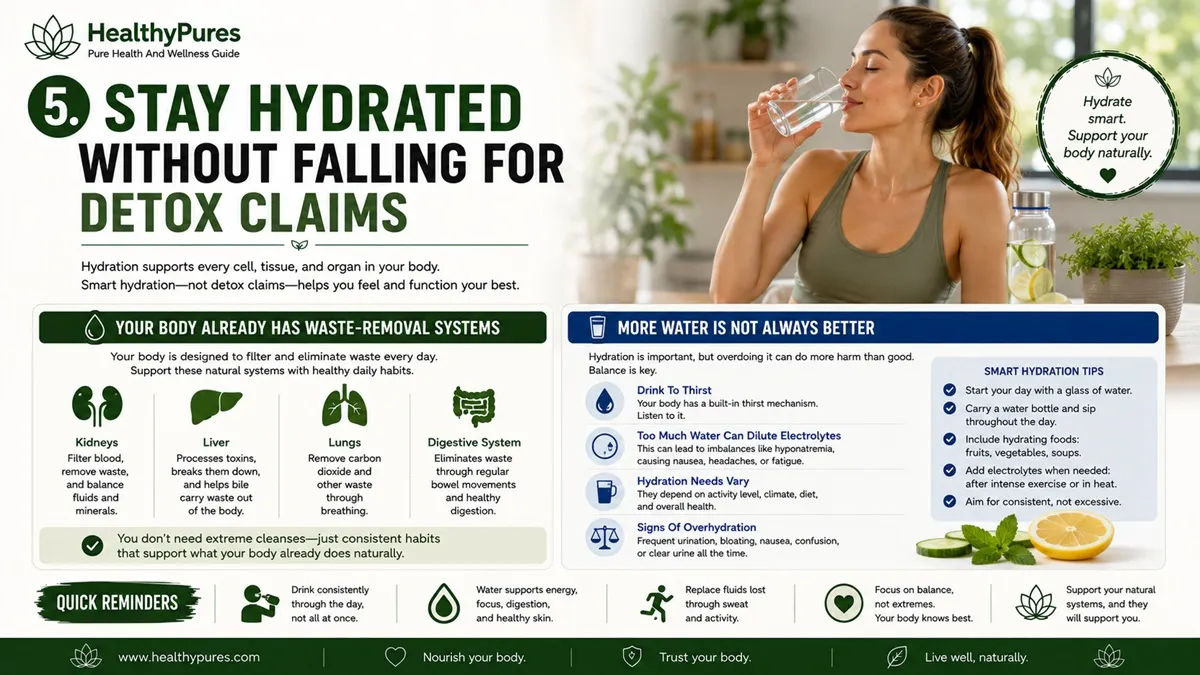
Hydration is one of the simplest natural ways to support body healing. Water helps the body regulate temperature and perform normal daily functions.
The CDC hydration guidance notes that water helps prevent dehydration and supports normal body function.
Fluid needs vary with age, activity, climate, pregnancy, illness, and other factors. There is no single amount that is ideal for everyone.
Your Body Already Has Waste-Removal Systems
You do not need a detox drink to “flush toxins” from your body. Healthy kidneys continuously filter blood and remove wastes and extra water.
The NIDDK kidney function guide explains this normal filtration process.
Hydration supports ordinary physiology. It should not be marketed as a way to cleanse organs or accelerate recovery.
This makes normal hydration one of the most practical natural ways to support body healing without exaggerated detox language.
More Water Is Not Always Better
Excessive fluid intake can also be harmful. Some heart, kidney, or endocrine conditions require individualized fluid advice.
Vomiting or diarrhea may also cause electrolyte losses. In those cases, plain water may not always be enough.
Five Tips At A Glance
| Tip | What To Do | What To Avoid |
|---|---|---|
| Nutrition | Eat enough protein and varied foods | Megadose supplements without a reason |
| Sleep | Protect a consistent sleep opportunity | Treating sleep as a cure |
| Movement | Match activity to current capacity | Pushing through significant symptoms |
| Stress | Use repeatable relaxation practices | Replacing mental health treatment |
| Hydration | Drink regularly based on individual needs | Detox claims or excessive water intake |
Common Mistakes To Avoid
The biggest mistake with natural ways to support body healing is expecting a lifestyle habit to replace diagnosis or treatment.
- Do not assume every symptom is part of normal recovery.
- Do not take high-dose supplements because they are described as “healing.”
- Do not exercise through significant pain or medical restrictions.
- Do not use detox products as substitutes for normal liver and kidney function.
- Do not delay care when symptoms are severe or worsening.
When To Seek Medical Care
General natural ways to support body healing are not enough for every situation. Some symptoms require prompt evaluation.
Seek urgent care for trouble breathing, chest pain, severe bleeding, fainting, confusion, or sudden neurological symptoms.
Medical advice is also appropriate for persistent fever, worsening wounds, signs of infection, repeated vomiting, severe dehydration, or unexplained deterioration.
After surgery or major injury, follow the recovery plan from your medical team. Do not substitute internet advice for specific postoperative instructions.
Frequently Asked Questions
What Are The Best Natural Ways To Support Body Healing?
The most useful strategies are often basic. Adequate nutrition, sleep, appropriate movement, stress management, and hydration support normal body functions.
The best natural ways to support body healing depend on your health, symptoms, and reason for recovery.
Can Certain Foods Speed Up Healing?
No single food guarantees faster healing. Adequate energy, protein, vitamins, and minerals help the body perform normal repair processes.
A deficiency may need correction. Extra nutrients beyond your needs do not automatically produce better recovery.
Should I Take Supplements During Recovery?
Not automatically. Supplements may be appropriate when a deficiency, dietary limitation, or clinical need has been identified.
High doses can cause side effects or interactions. Ask a healthcare professional when the situation is medically complex.
Does Sleep Help The Body Recover?
Sleep supports physical health and healthy immune function. Poor sleep can also affect mood, appetite, activity, and daily functioning.
Sleep is one component of natural ways to support body healing, not a replacement for treatment.
Is Exercise Always Good During Recovery?
No. Appropriate activity depends on the cause of recovery and current symptoms.
Some people benefit from gradual movement. Others need temporary rest, rehabilitation, or medical restrictions.
Do Detox Drinks Help The Body Heal?
There is no need for a special drink to perform normal liver or kidney detoxification. Your organs already handle waste processing and removal.
Regular hydration can support normal body function. Marketing claims about “flushing toxins” should be treated cautiously.
Conclusion
The safest natural ways to support body healing are usually the least dramatic. Nutritious food, adequate sleep, sensible movement, stress management, and hydration support normal physiology.
They do not guarantee faster healing or cure a medical condition. Recovery timelines vary according to the underlying problem and individual health.
Use these natural ways to support body healing as supportive foundations. Seek professional care when symptoms are serious, persistent, or outside ordinary self-care.
For additional evidence-aware self-care guidance, see our natural remedies for common ailments guide.
This article provides general educational information and does not replace individualized medical advice, diagnosis, or treatment. Review our Medical & Affiliate Disclaimer for more information.