Dry skin can feel tight, rough, flaky, or uncomfortable. A simple hydrating skincare routine can support comfort without requiring a crowded shelf of products.
The most useful approach is gentle cleansing, regular moisturizing, sensible sun protection, and fewer potential irritants. This guide shows how to build that routine step by step.
Quick Summary
- Use a gentle, fragrance-free cleanser and lukewarm water.
- Apply a cream or ointment to damp skin to help reduce moisture loss.
- Choose hydrating ingredients such as glycerin, hyaluronic acid, or ceramides when useful.
- Use broad-spectrum SPF 30 or higher during the day.
- Limit over-exfoliation and products that sting, burn, or leave skin very tight.
Quick Facts
| Aspect | Details |
|---|---|
| Best Starting Point | Gentle cleanser, moisturizer, and daytime sunscreen. |
| Moisturizer Type | Creams or ointments are often more effective for dry skin than lotions. |
| Useful Ingredients | Glycerin, hyaluronic acid, ceramides, petrolatum, and dimethicone can support moisturization. |
| Water Temperature | Use lukewarm rather than hot water. |
| Sun Protection | Choose broad-spectrum SPF 30 or higher. |
| When To Get Help | Persistent, painful, cracked, bleeding, or worsening dryness may need professional evaluation. |
Who This Guide Is For
- ✔ People with tight, flaky, rough, or easily irritated skin.
- ✔ Anyone who wants a shorter routine focused on moisture and comfort.
- ✔ Readers comparing creams, ointments, serums, or barrier-supporting ingredients.
- ✔ People who notice dryness after cleansing, bathing, cold weather, or indoor heating.
Why Dry Skin Needs A Gentle Hydrating Routine
Dry skin develops when the skin loses too much water. Low humidity, weather, bathing habits, harsh products, age, and some medical conditions can contribute.
A simple hydrating skincare routine can reduce common triggers and support the skin’s normal protective function. It is not a guarantee that every cause of dryness will resolve at home.
For dermatologist-backed basics, see the AAD dry skin guidance.
Dry Skin Vs. Dehydrated Skin: What Is The Difference?
Dry skin and dehydrated skin are often used interchangeably, but they describe different ideas. Dry skin usually refers to lower oil levels. Dehydrated skin describes a lack of water.
That distinction can change how you build a hydrating skincare routine. Dry-feeling skin may benefit from richer creams or ointments, while dehydrated skin may also benefit from water-binding ingredients such as glycerin or hyaluronic acid.
| What You Notice | What It May Suggest | Routine Focus |
|---|---|---|
| Tight, rough, flaky skin | Dry skin or a weakened barrier | Gentle cleansing and richer moisturizer. |
| Tightness with an oily surface | Possible dehydration | Gentle hydration plus a suitable moisturizer. |
| Stinging after basic products | Irritation or barrier disruption | Simplify the routine and avoid new actives. |
These signs are not a diagnosis. They are practical clues for choosing a simpler hydrating skincare routine.
Build Your Hydrating Skincare Routine Step By Step

Step 1: Cleanse Gently
Use a gentle, fragrance-free cleanser where you need it. You do not need a strong lather to clean dry skin effectively.
Use lukewarm water rather than very hot water. After washing, pat your skin dry instead of rubbing it.
A cleanser should leave skin clean without a tight, squeaky feeling. That is a useful checkpoint in a hydrating skincare routine. If your face feels stripped after cleansing, consider a gentler formula.
Step 2: Apply Hydrating Products If You Need Them
A serum is optional. It can add a lightweight hydration layer when you want one.
Glycerin and hyaluronic acid are common humectants. They help attract and hold water in the outer layers of skin.
You do not need several hydrating serums. Start with one product that your skin tolerates and use it consistently.
For broader ingredient context, our healthy skin barrier guide covers practical barrier clues and care.
Step 3: Use A Cream Or Ointment
Moisturizer is the core of a hydrating skincare routine for dry skin. Creams and ointments generally provide more moisture than lotions.
Useful ingredients can support a hydrating skincare routine, including glycerin, hyaluronic acid, ceramides, mineral oil, petrolatum, dimethicone, or shea butter.
Apply moisturizer while skin is still slightly damp after washing. This can help trap water in the skin.
The American Academy of Dermatology recommends fragrance-free creams or ointments for many people with dry skin. Its moisturizer selection guide explains how texture and ingredients can change the feel and moisturizing effect.
Step 4: Finish The Morning Routine With Sunscreen
Dry skin still needs daily sun protection. Choose broad-spectrum SPF 30 or higher, and consider water resistance when appropriate.
For dry skin, a moisturizing sunscreen can make the routine easier. If sunscreen stings, a formula for sensitive skin may be more comfortable.
The AAD recommends SPF 30 or higher sunscreen with broad-spectrum protection.
Step 5: Keep The Evening Routine Simple
At night, follow the hydrating skincare routine with gentle cleansing and moisturizer again. Add a hydrating serum only when it helps your routine.
You do not need a separate product for every sign of dryness. A simple routine is often easier to follow consistently.
For the complete product order, see our evening skincare routine order guide.
Choose Ingredients By Their Job
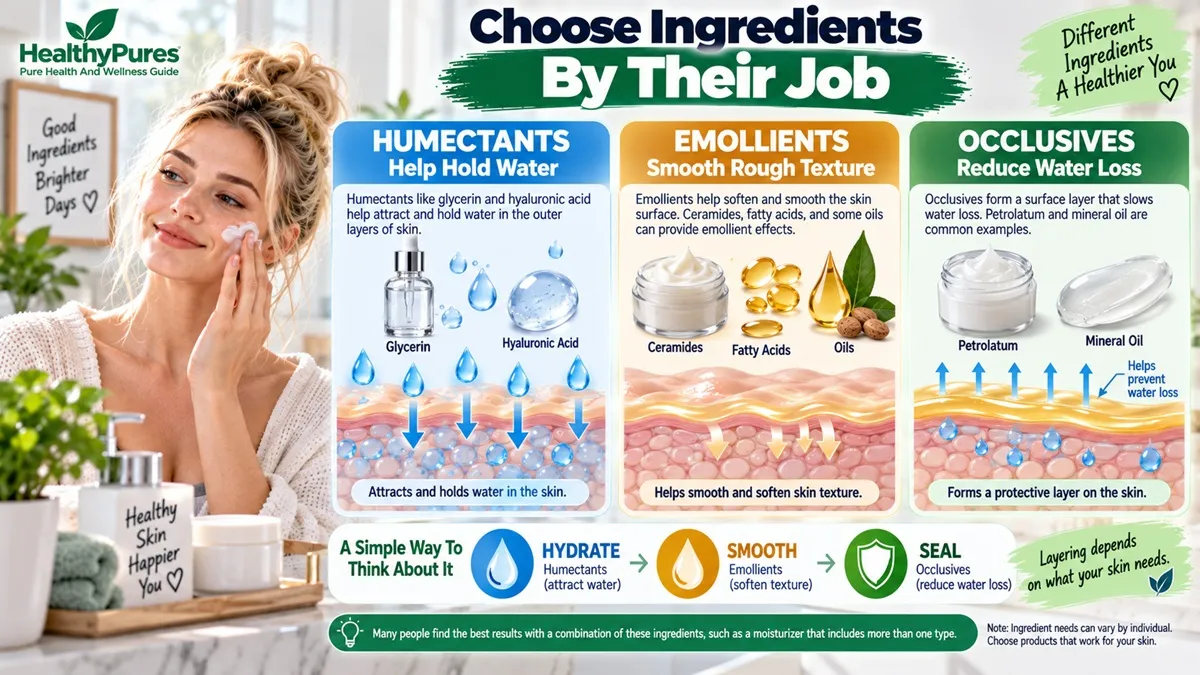
Humectants: Help Hold Water
In a hydrating skincare routine, humectants include glycerin and hyaluronic acid. They are useful when you want a lightweight hydration step.
Humectants work well as part of a larger routine. They do not replace a moisturizer when your skin needs stronger protection from water loss.
Emollients: Smooth Rough Texture
In a hydrating skincare routine, emollients help soften and smooth the skin surface. Ceramides, fatty acids, and some oils can provide emollient effects.
For dry skin, a moisturizer that combines several ingredient types can be easier than layering several separate products.
Occlusives: Reduce Water Loss
In a hydrating skincare routine, occlusives form a surface layer that slows water loss. Petrolatum and mineral oil are common examples.
An occlusive can be especially useful on very dry areas. Apply a small amount over moisturizer when your skin needs extra protection.
Morning Vs. Evening: A Simple Routine
| Time | Routine | Keep It Simple |
|---|---|---|
| Morning | Gentle cleanse, optional hydrating product, moisturizer, sunscreen. | Skip steps your skin does not need. |
| Evening | Gentle cleanse, optional hydrating product, moisturizer. | Use richer textures when they feel more comfortable. |
| Very Dry Area | Moisturizer followed by a small amount of occlusive. | Use only where extra protection is helpful. |
What To Avoid When Skin Feels Very Dry

Hot Water And Long Showers
Hot water and long bathing sessions can worsen dryness for some people. Keep showers short and use warm or lukewarm water.
Strong Fragrance
Fragrance can irritate dry or sensitive skin. Fragrance-free products are usually a better starting point when irritation is a concern.
Over-Exfoliation
Exfoliation is not required for every dry-skin routine. Too much exfoliation can increase irritation and dryness.
The AAD advises choosing an exfoliation method based on skin type and avoiding over-exfoliation. Its safe exfoliation guidance recommends moisturizing after exfoliation and adjusting frequency to your skin.
Products That Sting Or Burn
Persistent stinging is not a sign that a product is working better. Stop and reassess products that cause repeated burning, worsening redness, or irritation.
Do You Need A Hydrating Mask Or Facial Oil?
Neither is essential for a basic hydrating skincare routine. A hydrating mask can be an occasional comfort step when you enjoy it and your skin tolerates it.
Facial oils can reduce surface water loss for some people. They are more useful as supportive occlusive steps than as replacements for a moisturizer.
Choose based on how your skin feels and how simple you want your hydrating skincare routine to be. More products do not automatically mean more hydration. A simple hydrating skincare routine is often easier to maintain.
How To Adjust Your Routine By Skin Feel
| What You Notice | Try | Consider Avoiding |
|---|---|---|
| Tight after cleansing | Gentler cleanser and richer moisturizer. | Strong foaming cleansers. |
| Flaking | More frequent moisturizing. | Frequent exfoliation. |
| Stinging | Reduce routine to gentle cleanser and bland moisturizer. | New actives and fragranced products. |
| Dry but breakout-prone | Lightweight, non-comedogenic moisturizer. | Heavy layers that feel pore-clogging. |
| Seasonal dryness | Richer cream or ointment and shorter showers. | Long hot showers. |
Common Mistakes That Can Disrupt Dry Skin Care
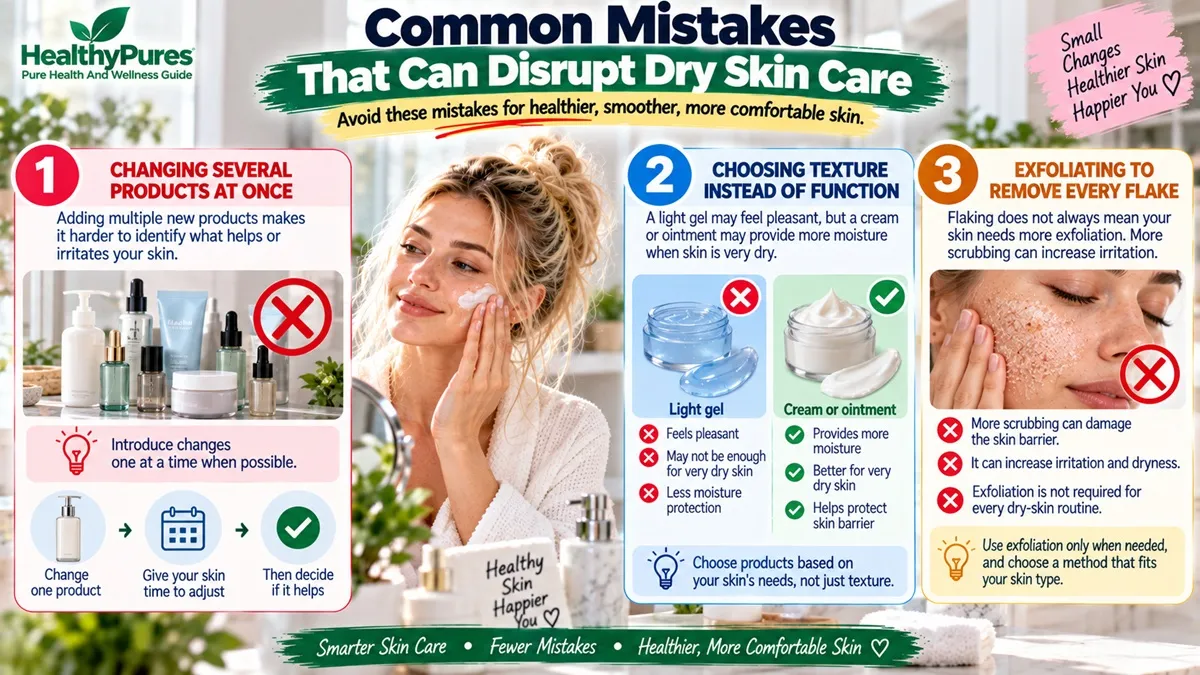
Changing Several Products At Once
Adding multiple new products makes it harder to identify what helps or irritates your skin. Introduce changes one at a time when possible.
Choosing Texture Instead Of Function
A light gel may feel pleasant, but a cream or ointment may provide more moisture when skin is very dry. Choose based on your skin’s needs.
Exfoliating To Remove Every Flake
Flaking does not always mean your skin needs more exfoliation. More scrubbing can increase irritation.
Our guide to common skincare mistakes covers over-cleansing, over-exfoliation, and other routine problems.
When To See A Dermatologist
Persistent or severe dryness can have causes that need medical evaluation. Consider professional care when home changes do not help.
- Dryness remains persistent or keeps worsening.
- Skin becomes painful, cracked, or bleeding.
- You develop significant redness, swelling, or signs of infection.
- Products repeatedly cause burning or strong irritation.
- You have a rash or another symptom that does not fit ordinary dryness.
The AAD notes that persistent or severe dryness can sometimes relate to conditions such as atopic dermatitis or psoriasis. A dermatologist can help identify the cause and treatment.
How Long Should You Follow A New Routine?
Do not judge a hydrating skincare routine after one application. Focus first on comfort, less tightness, and whether your skin tolerates the routine.
Dry skin can improve with consistent self-care, but the timeline varies. If dryness does not improve or becomes painful, seek professional advice rather than adding more products.
Frequently Asked Questions
Should I Apply Moisturizer To Damp Skin?
Yes. Applying moisturizer soon after washing can help retain water. This is especially useful when your skin tends to feel tight after bathing.
Do I Need Hyaluronic Acid For Dry Skin?
No. Hyaluronic acid is optional. A well-formulated cream or ointment can support dry skin without a separate serum.
Is Fragrance Bad For Everyone With Dry Skin?
Not necessarily. However, fragrance can irritate sensitive skin. Fragrance-free products are a useful starting point when dryness and irritation occur together.
Should I Exfoliate Dry Skin?
Not automatically. Dry skin may become more irritated with frequent exfoliation. If you exfoliate, keep the method gentle and adjust frequency to your skin.
Can I Use A Facial Oil Instead Of Moisturizer?
An oil can help reduce water loss, but it does not always replace the functions of a cream or ointment. Many people use oil as an optional final layer.
When Should I Stop A New Product?
Stop and reassess when a product causes repeated burning, strong stinging, worsening redness, swelling, or a new rash. Seek medical advice for severe reactions.
The Bottom Line
A good hydrating skincare routine for dry skin does not need to be complicated. Start with gentle cleansing, a suitable moisturizer, and daily sun protection.
Use hydrating ingredients when they solve a specific need. Keep exfoliation modest, avoid common irritants, and adjust your routine when your skin changes.
Consistency matters more than the number of products. When simple care does not improve persistent dryness, a dermatologist can help identify the cause.
Just a friendly reminder from our team: Health needs vary from person to person, so this information is intended to support general wellness and does not replace professional medical advice. Read our full Medical Disclaimer for more information.

