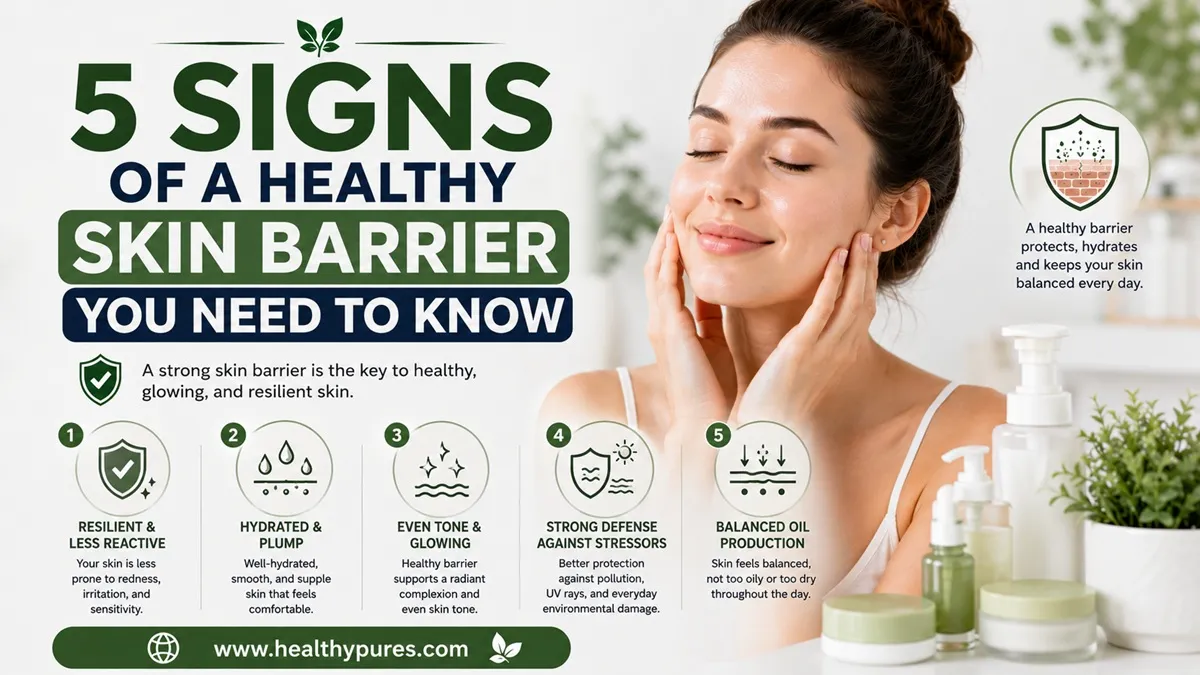
A healthy skin barrier helps your skin hold onto water and respond to everyday environmental exposure. Much of this function is associated with the stratum corneum. Learning the signs of a healthy skin barrier can help you judge whether your routine supports comfort and hydration.
The goal is not perfectly smooth skin every day. Skin naturally changes with weather, age, hormones, products, and other factors. Instead, look for a pattern of calm, comfortable skin that generally tolerates your normal routine.
Quick Summary
- A healthy barrier often feels comfortable, hydrated, and less reactive to routine skincare.
- Smooth texture and low flakiness can be useful visual clues, but they are not a medical test.
- Gentle cleansing, regular moisturizing, and daily sun protection can help support barrier function.
- Persistent burning, severe dryness, cracking, or ongoing inflammation deserves professional evaluation.
Quick Facts
| Aspect | Details |
|---|---|
| Where It Is | The main physical barrier is in the stratum corneum, the outermost part of the epidermis. |
| Key Lipids | Ceramides, cholesterol, and free fatty acids help form the lipid matrix between corneocytes. |
| Main Job | The barrier helps limit water loss and reduces penetration of outside irritants. |
| Useful Clues | Comfort, hydration, low flakiness, and good tolerance of a basic routine are practical signs. |
| Daily Support | Gentle cleansing, moisturizing, and sun protection are useful foundations. |
| When To Get Help | Persistent burning, cracking, severe redness, or worsening symptoms should be assessed by a qualified professional. |
Who This Guide Is For
- ✓ Adults who want to understand what a healthy-looking skin barrier can feel and look like.
- ✓ People trying to simplify a skincare routine after irritation or dryness.
- ✓ Anyone comparing barrier-supportive skincare habits without chasing aggressive treatments.
- ✓ Readers who want practical clues while knowing when symptoms need professional care.
What Is The Skin Barrier?
The skin barrier is not a single sheet or product. Much of its physical function is associated with the stratum corneum, the outermost layer of the epidermis. Corneocytes sit within an organized lipid matrix. That matrix includes ceramides, cholesterol, and free fatty acids.
Together, these clues form the practical signs of a healthy skin barrier that readers can monitor at home.
This structure helps reduce water loss from the skin and limits the movement of substances through the outer layer. Research reviews describe ceramides as important components of the stratum corneum lipid matrix and of normal barrier function. ceramide and barrier research.
That is why a healthy barrier is better judged by several everyday observations rather than one isolated feature. The following signs of a healthy skin barrier are practical clues, not a substitute for a dermatologic examination.
The 5 Signs Of A Healthy Skin Barrier

1. Smooth, Even Texture With Little Flaking
One of the easiest signs of a healthy skin barrier to notice is comfortable, relatively smooth texture. Healthy skin is not perfectly poreless. Small bumps, visible pores, and occasional blemishes can still occur.
What matters is the absence of persistent roughness, obvious scaling, or repeated patches of flaking. A disrupted barrier can be associated with increased dryness and impaired water retention, which may leave skin feeling rough or tight.
Look at your skin over several days rather than judging it after one wash. Weather, shaving, exfoliation, and new products can temporarily change texture without meaning that the barrier is permanently damaged.
2. Skin Feels Hydrated And Comfortable
Comfortable hydration is one of the clearest everyday signs of a healthy skin barrier.
Another practical clue is skin that feels comfortably hydrated rather than chronically tight, dry, or uncomfortable. Moisture in the stratum corneum contributes to flexibility and a smoother surface.
Well-hydrated skin does not have to look glossy or oily. In fact, surface shine alone cannot tell you whether the barrier is functioning well. Your better clue is how the skin feels through the day.
Comfortable hydration is useful among the signs of a healthy skin barrier. It also shows how your skin behaves after cleansing and during the day.
3. Your Skin Tolerates A Basic Routine
Healthy-feeling skin usually handles a simple routine without repeated burning or stinging. That does not mean every active ingredient will feel comfortable. Retinoids, acids, fragrances, and other products can irritate skin even when the barrier is generally healthy.
A useful test is whether a gentle cleanser and bland moisturizer feel comfortable most of the time. Repeated stinging from products that previously felt fine can be a reason to simplify your routine.
Calm product tolerance is a useful sign of a healthy skin barrier. Barrier disruption can increase sensitivity to irritants.
4. Little Persistent Redness, Burning, Or Itching
Calm skin can be one of the more useful signs of a healthy skin barrier to watch over time.
A healthy-looking barrier is usually compatible with skin that feels calm. Persistent redness, burning, itching, or stinging can occur with irritation, inflammation, or a skin condition that needs more than a skincare adjustment.
Do not use redness alone as a diagnosis. Rosacea, eczema, acne, contact dermatitis, and other conditions can look different from person to person. A calm appearance is one clue, but it does not rule out a medical condition.
When considering the signs of a healthy skin barrier, look for an overall pattern of comfort. Do not expect completely redness-free skin.
5. Your Skin Recovers From Everyday Irritation Without Staying Inflamed
Healthy skin has repair systems that respond to everyday environmental stress. Still, “quick recovery” should not be treated as a precise benchmark. Sunburn, friction, aggressive exfoliation, and other injuries can cause inflammation even in otherwise healthy skin.
The useful clue is that mild, ordinary irritation does not repeatedly turn into prolonged burning, cracking, or severe dryness. If the same trigger causes ongoing symptoms, your routine may need to be reconsidered.
This is one of the signs of a healthy skin barrier that should be interpreted cautiously. Recovery time varies with the type and severity of irritation.
What A Healthy Barrier Usually Feels Like
Putting the clues together makes them easier to use. Skin with a well-supported barrier often feels comfortable after cleansing, stays reasonably hydrated, and does not repeatedly sting from basic products.
It may also show little flaking and less persistent redness. These observations are more useful when they remain stable across normal days instead of appearing for a few hours after applying a moisturizer.
For practical self-checking, the signs of a healthy skin barrier should be considered as a group. No single feature proves that your barrier is functioning perfectly.
What Can Disrupt The Skin Barrier?
Knowing the common disruptors helps protect the signs of a healthy skin barrier you already have.
Barrier function can be affected by environmental conditions, excessive cleansing, irritating products, friction, and some skin diseases. The exact cause matters because different problems need different approaches.
Over-Cleansing And Harsh Scrubbing
Frequent washing with harsh products or aggressive scrubbing can leave skin dry and uncomfortable. That does not mean cleansing is harmful. The goal is to remove dirt, sunscreen, makeup, and excess oil without repeatedly stripping or irritating the skin.
Too Much Exfoliation
Acids and physical exfoliants can be useful for specific goals, but more is not automatically better. If your skin becomes persistently dry or sore after increasing exfoliation, consider reducing frequency. Simplifying the routine can also make irritation easier to track.
Weather And Environmental Exposure
Cold, dry air and other environmental conditions can increase discomfort for some people. Daily skincare may need to change with the season, especially when the skin feels tighter or drier than usual.
Underlying Skin Conditions
Eczema, rosacea, contact dermatitis, acne, and other conditions can involve barrier disruption or inflammation. Persistent symptoms should not automatically be blamed on “damaged skin barrier” alone.
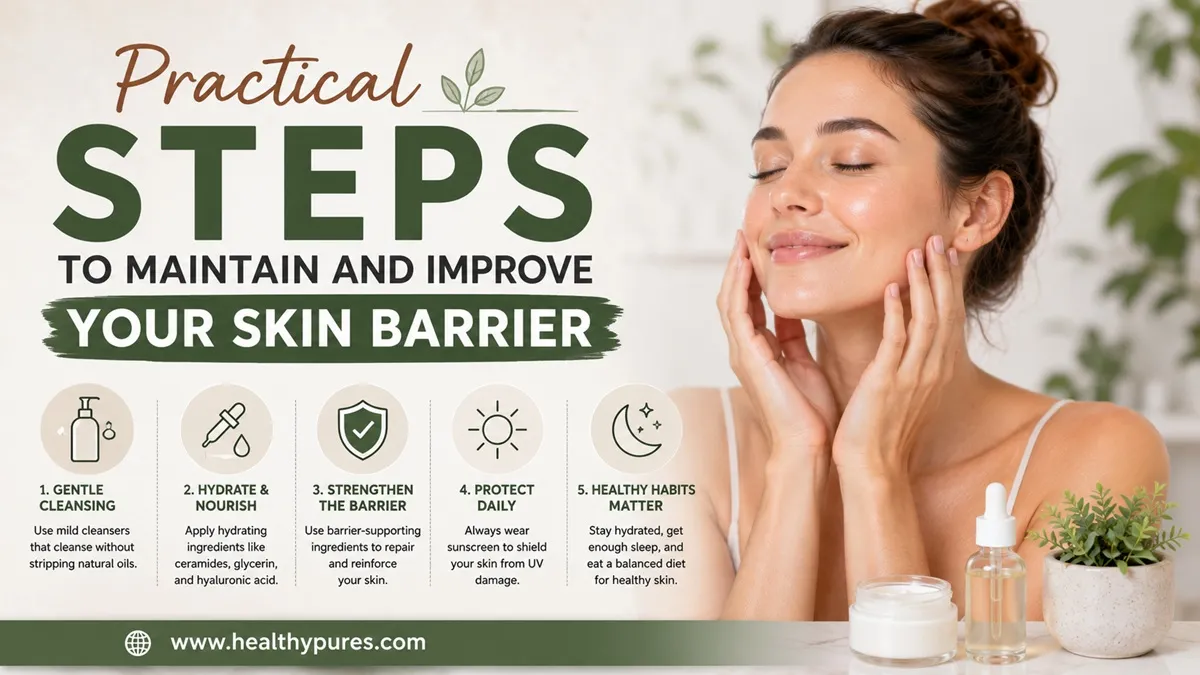
How To Support The Skin Barrier

A simple routine makes the signs of a healthy skin barrier easier to maintain and notice over time.
Use A Gentle Cleanser
Gentle cleansing can help preserve the signs of a healthy skin barrier without adding unnecessary irritation.
Choose a cleanser that leaves your skin comfortable rather than squeaky, tight, or burning. Lukewarm water is generally a better choice than very hot water when your skin is dry or irritated.
Moisturize Regularly
Regular moisturizing supports several of the signs of a healthy skin barrier, especially comfortable hydration.
Moisturizers can reduce water loss from the skin and improve how dry skin feels. Ingredients such as ceramides are common in barrier-supportive formulas. Clinical reviews have found benefits from some ceramide-containing preparations for dry and barrier-disrupted skin. ceramide moisturizer review.
You do not need a long ingredient list. A simple moisturizer that your skin tolerates well can be more useful than constantly switching products.
Protect Your Skin From UV Exposure
Sun protection also supports the long-term signs of a healthy skin barrier by limiting unnecessary environmental stress.
Sun protection is part of maintaining healthy skin, not just preventing visible aging. Use a broad-spectrum sunscreen with SPF 30 or higher on exposed skin when appropriate for your routine and environment. AAD sunscreen guidance.
Pause Irritating Extras During Flares
When skin is burning, peeling, or unusually sensitive, reduce strong acids, retinoids, scrubs, or heavily fragranced products temporarily. This can make a routine easier to tolerate. Add active products back gradually rather than restarting everything at once.
What About Diet And The Gut-Skin Connection?
Nutrition supports overall health and provides nutrients involved in normal skin structure and repair. However, diet alone should not be presented as a guaranteed way to strengthen the skin barrier in every person.
A varied eating pattern can support a balanced approach to skin health. Include protein, fruits, vegetables, whole grains, nuts, seeds, and sources of essential fatty acids. For people exploring nutrition alongside skincare, our gut healing foods guide offers broader food ideas.
The gut-skin connection is still an active area of research. It does not justify promising that a specific food or probiotic will repair someone’s skin barrier. Keep nutrition in perspective and treat persistent skin symptoms as a skincare or medical question when appropriate.
Healthy Barrier Vs. Compromised Barrier
This simple comparison puts the signs of a healthy skin barrier into everyday context.
| Pattern | Often Seen With A Well-Supported Barrier | May Suggest Irritation Or Barrier Stress |
|---|---|---|
| Texture | Mostly smooth and comfortable | Persistent roughness or scaling |
| Hydration | Comfortable with little tightness | Frequent dryness or tightness |
| Tolerance | Basic products usually feel comfortable | Repeated stinging or burning |
| Redness | No persistent irritation pattern | Ongoing redness or itching |
| Recovery | Minor irritation does not stay severe | Symptoms linger or recur easily |
This comparison is not a diagnostic tool. It simply organizes some of the signs of a healthy skin barrier next to patterns that may justify a gentler routine or professional advice.
FAQ
Can You Tell If Your Skin Barrier Is Healthy Just By Looking?
Not with certainty. Appearance can provide useful clues, but barrier function involves biological processes that cannot be judged perfectly from a mirror. Comfort, hydration, product tolerance, and the absence of persistent irritation provide a more useful overall picture.
Is Oily Skin A Sign Of A Healthy Skin Barrier?
Not necessarily. Oiliness reflects sebum production and does not reliably measure barrier function. A person can have oily skin and still experience irritation, dehydration, or barrier stress.
Are Ceramides Good For A Damaged Skin Barrier?
They can be helpful in appropriate formulations. Ceramides are important lipids in the stratum corneum, and reviews support their use in some dry or barrier-disrupted skin conditions. Results depend on the product and the individual.
How Long Does It Take For A Skin Barrier To Feel Better?
There is no reliable single timeline. A mild irritation may settle faster than a persistent condition, and the cause matters. If burning, cracking, redness, or itching continues despite simplifying your routine, consider professional evaluation.
Should I Stop All Skincare When My Barrier Feels Damaged?
Usually, you do not need to stop everything. A simpler routine often makes more sense: gentle cleansing, a well-tolerated moisturizer, and appropriate sun protection. Strong actives can be reduced when they are clearly contributing to irritation.
When To See A Dermatologist
Knowing when symptoms fall outside typical signs of a healthy skin barrier can help you decide when to seek care.
Seek professional advice when symptoms are severe, keep returning, worsen despite simple care, or interfere with normal daily life. Persistent cracking, significant pain, swelling, oozing, widespread rash, or symptoms around the eyes can require more specific evaluation.
A dermatologist can help distinguish simple irritation from eczema, rosacea, contact dermatitis, acne, infection, or another condition. That distinction matters. Treatment depends on the cause.
The Bottom Line
The most useful signs of a healthy skin barrier are not about having flawless skin. Look for comfortable hydration and relatively smooth texture. Also look for good tolerance of a basic routine. Persistent irritation or inflammation may signal a problem.
Keep your routine simple enough to maintain. Cleanse gently, moisturize consistently, protect exposed skin from UV, and be careful with repeated exfoliation or other irritating steps. When symptoms persist or seem unusual, move beyond self-care and get a professional assessment.
Just a friendly reminder from our team: Health needs vary from person to person, so this information is intended to support general wellness and does not replace professional medical advice. Read our full Medical Disclaimer for more information.