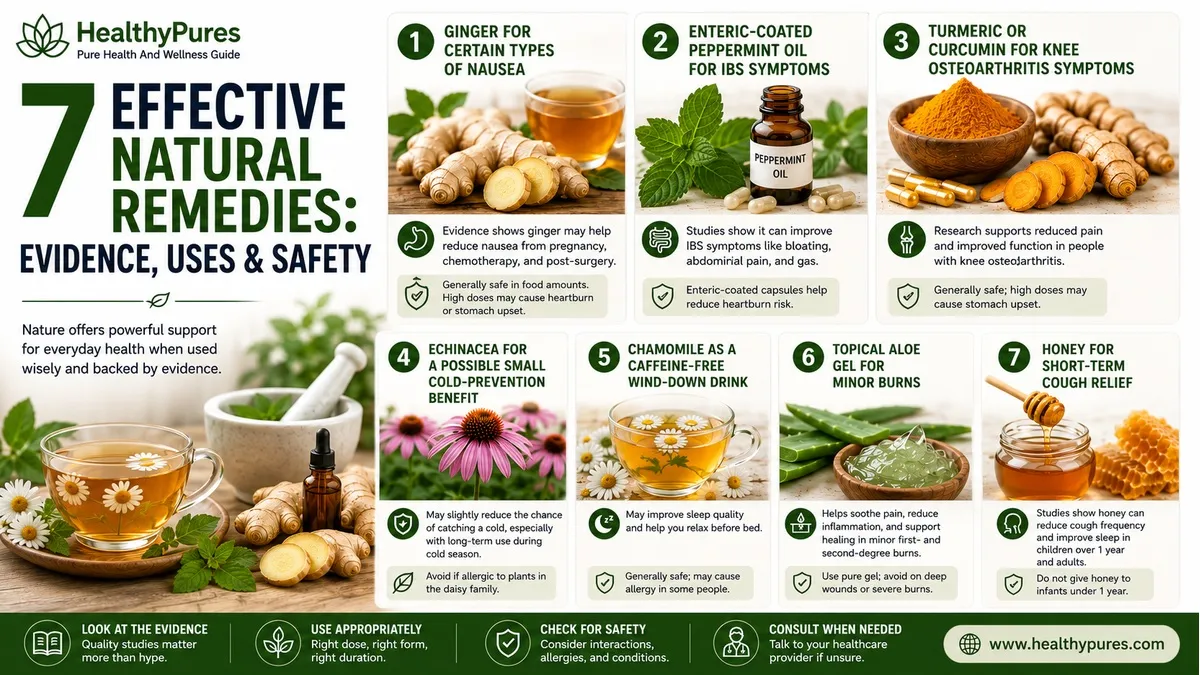
Natural products can sometimes support a specific, minor symptom. Their usefulness depends on the product, preparation, health concern, and person using it.
This guide examines seven effective natural remedies without treating tradition or popularity as proof. Each option includes realistic evidence, limitations, and safety considerations.
These remedies complement appropriate care. They cannot diagnose a condition, replace prescribed treatment, or produce the same result for everyone.
Quick Summary
- Effective natural remedies match one researched preparation to one specific health concern.
- Ginger, peppermint oil, aloe gel, and honey have useful but limited roles.
- Evidence for turmeric, echinacea, and chamomile remains mixed or preliminary.
- Check allergies, pregnancy, health conditions, and medication interactions before using concentrated products.
Quick Facts
| Aspect | Details |
|---|---|
| Main Principle | Effective natural remedies match the preparation and safety limits to one specific concern. |
| Evidence Level | Ranges from modest support to preliminary or inconclusive findings. |
| Safest Starting Point | Prefer food amounts or correctly labeled products when appropriate. |
| Important Limit | Natural does not mean risk-free, interaction-free, or suitable for everyone. |
| When To Ask First | Pregnancy, breastfeeding, childhood, surgery, chronic illness, or regular medication use. |
Who This Guide Is For
- ✔ Adults comparing effective natural remedies for minor, short-term concerns.
- ✔ Readers who want the preparation and evidence explained separately.
- ✔ People checking safety before buying herbs or dietary supplements.
- ✔ Anyone seeking complementary options without replacing medical care.
What Makes Effective Natural Remedies Evidence-Informed?
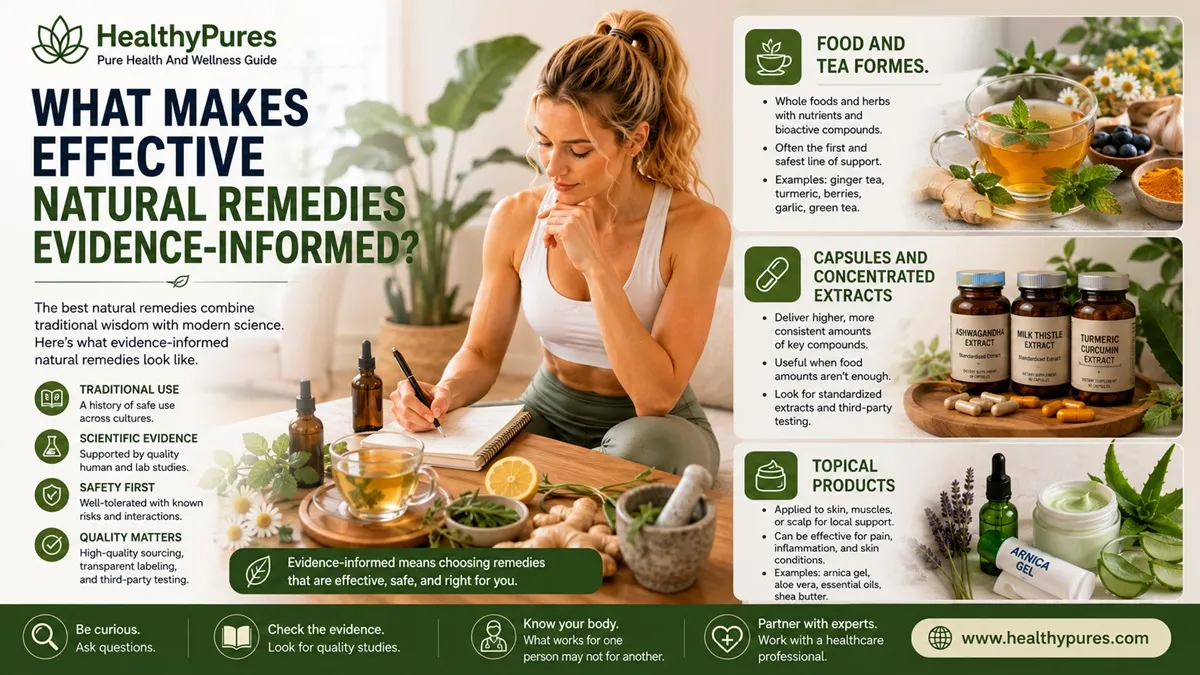
A plant name alone tells us very little. Tea, food, extract, capsule, essential oil, and topical gel can behave differently.
Research on a standardized capsule does not automatically prove that homemade tea provides the same result. This distinction matters when evaluating effective natural remedies.
The health concern must also match the research. Evidence for pregnancy-related nausea cannot be applied automatically to motion sickness or treatment-related nausea.
This precision separates effective natural remedies from products supported only by broad wellness language. A useful claim identifies the symptom, format, evidence, and main limitation.
Food And Tea Forms
Foods and teas usually contain variable amounts of plant compounds. They may fit a routine, but extract research may not transfer to them.
Preparation also changes the experience. Ginger can feel warming, chamomile is caffeine-free, and honey adds substantial sugar.
Capsules And Concentrated Extracts
Concentrated products may provide measured ingredients, but concentration can also increase risk. A standardized label does not prove that a product works.
Independent quality testing may help confirm contents and contamination limits. It does not establish clinical effectiveness for a particular symptom.
Topical Products
Topical and oral forms are not interchangeable. Skin products can still cause burning, itching, irritation, or an allergic reaction.
Test a small area when the label permits. Stop using the product if discomfort or a new rash develops.
Finally, a useful benefit must outweigh likely risks. Our herb-drug interaction guide explains why medications and health history matter.
Healthy Pures Expert Tip
Write down the product, preparation, reason for use, and expected result before starting. This makes vague marketing promises easier to identify.
7 Effective Natural Remedies: What The Evidence Supports
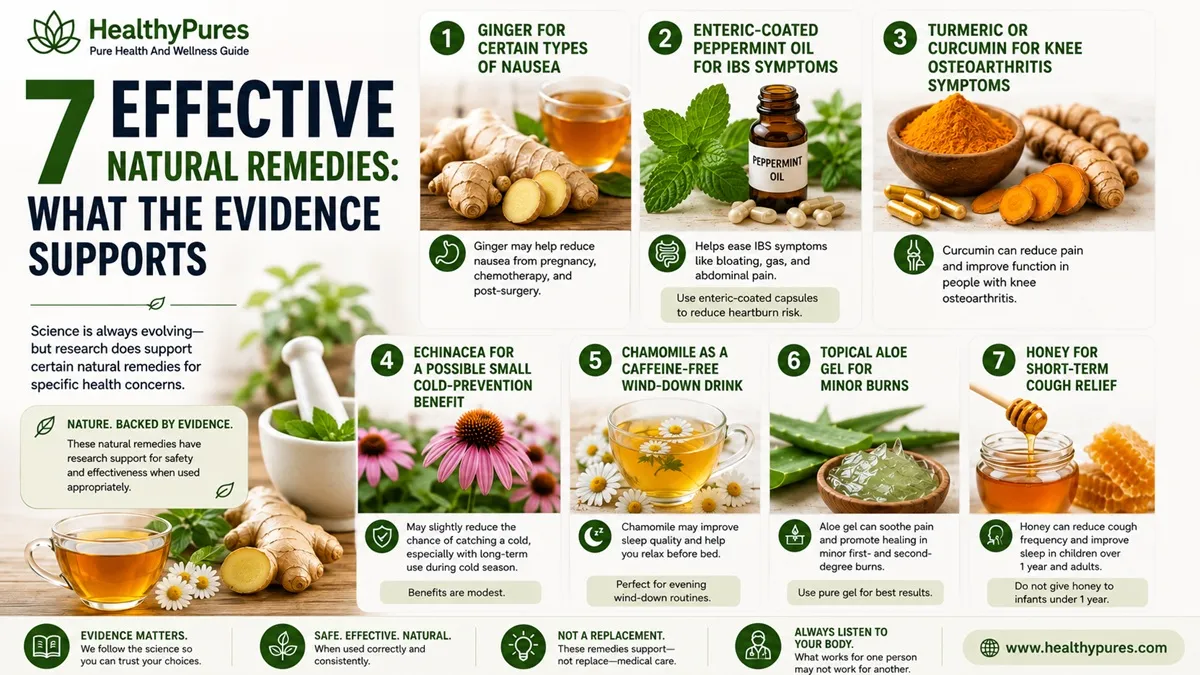
1. Ginger For Certain Types Of Nausea
Ginger is among the better-studied effective natural remedies for nausea. However, results differ according to the cause and preparation.
The NCCIH ginger evidence review reports possible benefits for pregnancy-related nausea. Most motion-sickness studies have not shown a benefit.
Most clinical research tested supplements rather than ordinary food or ginger tea. A warm drink may feel soothing, but that experience does not prove a clinical effect.
Oral ginger can cause heartburn, diarrhea, abdominal discomfort, or mouth irritation. Ask a healthcare professional before supplement use during pregnancy or alongside medication.
2. Enteric-Coated Peppermint Oil For IBS Symptoms
Peppermint oil may modestly reduce short-term IBS symptoms in some adults. The relevant research involves measured, enteric-coated capsules rather than food-grade essential oil.
The NCCIH peppermint oil summary reports limited evidence for abdominal pain and overall IBS symptoms. Long-term usefulness remains uncertain.
This preparation belongs among condition-specific effective natural remedies, not broad digestive treatments. Peppermint leaf tea has not received equivalent research support.
Possible effects include reflux, indigestion, nausea, abdominal pain, and dry mouth. Never swallow undiluted essential oil or improvise a dose from an aromatherapy bottle.
3. Turmeric Or Curcumin For Knee Osteoarthritis Symptoms
Early findings suggest turmeric or curcumin may help some knee osteoarthritis measures. Higher-quality evidence is still needed before drawing firm conclusions.
The NCCIH turmeric safety review also warns about highly bioavailable formulations. Liver injury has been reported with some of these products.
Culinary turmeric can add flavor and color to meals. It should not be presented as equivalent to concentrated supplements used in research.
Turmeric is therefore one of the more conditional effective natural remedies. It may cause reflux, nausea, diarrhea, constipation, or stomach upset.
Avoid self-prescribing concentrated curcumin during pregnancy or while taking medication. Seek care for dark urine, jaundice, poor appetite, or unusual fatigue.
4. Echinacea For A Possible Small Cold-Prevention Benefit
Echinacea is widely marketed for immunity, colds, and influenza. Those broad claims exceed what current research can support.
The NCCIH echinacea findings suggest it may slightly reduce the chance of catching a cold. It remains unclear whether it shortens an existing cold.
Products can use different species, plant parts, and extraction methods. Those differences make echinacea harder to compare with other effective natural remedies.
Some users experience stomach symptoms or allergic reactions. Ask before use with immunosuppressants, other regular medicines, pregnancy, breastfeeding, or treatment involving the immune system.
5. Chamomile As A Caffeine-Free Wind-Down Drink
Chamomile tea can create a quiet, caffeine-free evening ritual. That practical role is different from proving that chamomile treats anxiety or insomnia.
The NCCIH chamomile fact sheet describes anxiety research as preliminary. It also reports insufficient reliable evidence for broad clinical usefulness.
Chamomile may fit a personal routine among gentle effective natural remedies. Readers should not expect a sedative effect or predictable sleep improvement.
Avoid chamomile if it has caused a reaction before. Extra caution applies with ragweed-family allergies, warfarin, sedatives, or hormone-sensitive conditions.
You can also review our herbal tea evidence guide before selecting an evening drink.
6. Topical Aloe Gel For Minor Burns
Topical aloe gel may support healing and pain control in some burns. Existing research does not make aloe the correct first-aid step.
The NCCIH aloe vera guidance distinguishes inner gel, latex, and whole-leaf products. These forms have very different safety profiles.
The NHS burn first-aid guidance prioritizes cool running water for 15 to 30 minutes. It advises against applying creams during immediate first aid.
Ask a pharmacist or clinician whether aloe gel is appropriate later. Do not self-treat deep, infected, extensive, electrical, or chemical burns.
Topical aloe can cause burning, itching, rash, or eczema. Patch testing cannot guarantee that a later reaction will not occur.
We include topical aloe among effective natural remedies, but not oral aloe latex. Oral latex can cause cramping and diarrhea, while aloe leaf extracts have additional safety concerns.
Our healthy skin care tips cover everyday barrier-support habits beyond individual products.
7. Honey For Short-Term Cough Relief
Honey may reduce coughing in children aged one year and older. Adults may also find it soothing, although it is not clearly better than other cough options.
The Mayo Clinic honey overview emphasizes one firm rule. Never give honey to a baby under 12 months because of infant botulism risk.
Honey is one of the simplest effective natural remedies, but it remains added sugar. People managing blood glucose should include it within their overall eating plan.
Kitchen honey is not a substitute for sterile, medical-grade wound products. Do not place ordinary honey on burns, surgical wounds, or infected skin.
Comparing Effective Natural Remedies
| Remedy | Most Reasonable Use | Evidence Limit | Key Caution |
|---|---|---|---|
| Ginger | Certain nausea symptoms | Results depend on the cause | Heartburn and medication questions |
| Peppermint Oil | Short-term IBS symptoms | Product-specific evidence | Reflux and unsafe essential-oil use |
| Turmeric | Possible knee osteoarthritis support | Higher-quality research needed | Digestive effects and liver concerns |
| Echinacea | Possible small cold-prevention benefit | Unclear effect on cold duration | Allergies and potential interactions |
| Chamomile | Caffeine-free wind-down ritual | Not proven for insomnia | Plant allergies and drug interactions |
| Aloe Gel | Topical support for minor burns | Not suitable for serious burns | Avoid oral aloe latex |
| Honey | Short-term cough relief | Not a treatment for the cause | Never give to infants |
This comparison shows why effective natural remedies cannot be ranked with one universal score. The right option depends on the symptom, preparation, and personal risk.
How To Use Effective Natural Remedies More Safely
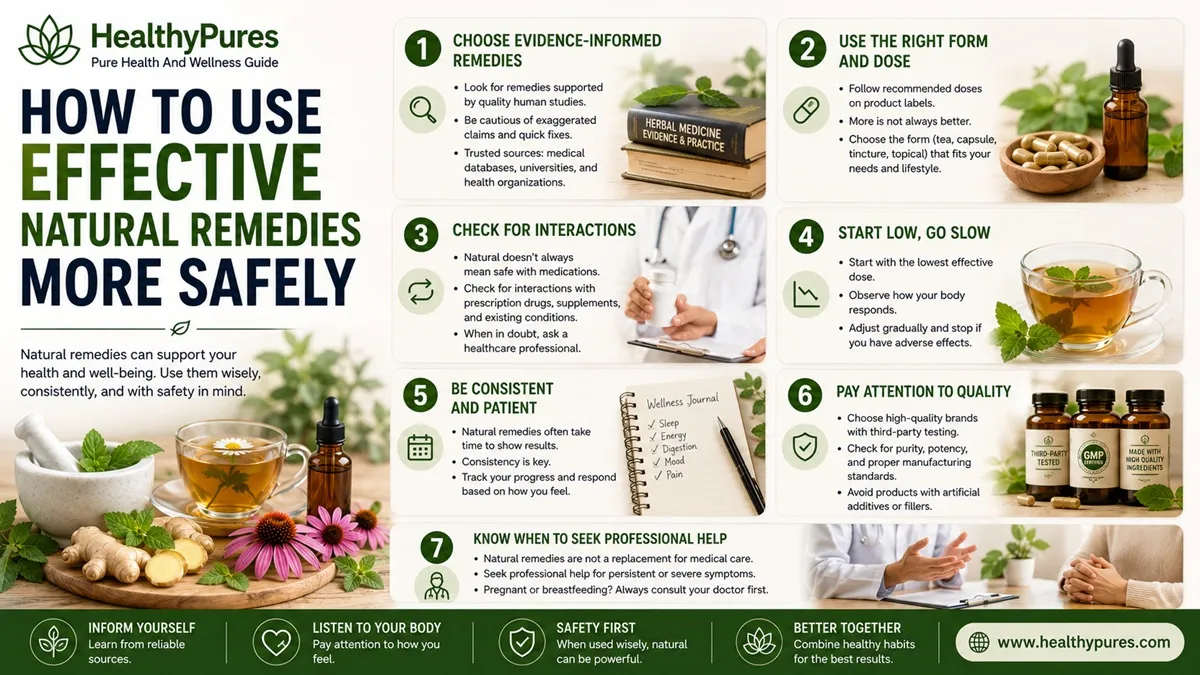
- Define one goal. Choose a specific symptom instead of vague ideas such as detoxing or balancing the body.
- Confirm the preparation. Check whether research used food, tea, extract, capsule, gel, or medical-grade material.
- Review the label. Avoid undisclosed blends, exaggerated promises, and products without clear directions.
- Check interactions. Ask a pharmacist or clinician when you use medication or manage a health condition.
- Track the response. Record benefit, discomfort, and any new symptom without changing several products together.
This process makes effective natural remedies easier to evaluate. It also reduces confusion when a product causes discomfort or provides no noticeable benefit.
Our beginner herbal medicine guide provides more label and preparation questions.
Common Mistake
Do not assume a stronger extract works better. Concentration can increase side effects, interactions, and uncertainty.
When A Home Remedy Is Not Enough
Self-care is most appropriate for mild, familiar, and short-lived concerns. A new, severe, recurring, or worsening symptom deserves appropriate assessment.
Seek urgent care for trouble breathing, fainting, confusion, severe allergic symptoms, uncontrolled bleeding, or intense chest or abdominal pain. Serious burns, dehydration, and persistent vomiting also need prompt evaluation.
Contact a healthcare professional when symptoms interfere with eating, sleeping, work, or ordinary responsibilities. Effective natural remedies should never delay diagnosis or established treatment.
Do not stop or reduce prescribed medication without the prescriber’s guidance. Bring the product label or ingredient list to any medication discussion.
Frequently Asked Questions
Are Effective Natural Remedies Always Safe?
No. Natural products can cause allergies, side effects, contamination concerns, or medication interactions.
How Quickly Should A Natural Remedy Work?
There is no universal timeline. Expected effects depend on the remedy, preparation, symptom, and evidence supporting that use.
Can Natural Remedies Replace Prescription Medication?
No general list can make that decision safely. Discuss any proposed change with the professional managing your prescription.
Are Food And Supplement Forms Equivalent?
Usually not. Extracts and capsules can contain far more concentrated compounds than ordinary food or tea.
How Do I Choose A Higher-Quality Product?
Look for a complete ingredient list, preparation details, warnings, and responsible claims. Independent quality testing can verify contents but cannot prove effectiveness.
Choosing Evidence Over Hype
The best effective natural remedies have a narrow purpose, a clearly defined preparation, and transparent limitations. They do not promise universal healing or certain prevention.
Begin with the lowest-complexity option that fits your needs. Review safety first, observe your response, and involve a qualified professional when appropriate.
Individual health needs vary. This content provides general education and does not replace medical advice, diagnosis, or treatment.
Review our full Medical & Affiliate Disclaimer for more details.