Healthy skin habits are usually simple, repeatable choices rather than complicated routines. Dermatologists focus on protecting skin, limiting irritation, and matching products to individual needs.
This guide breaks down 10 habits that align with dermatologist guidance. Each section explains what to do, why it matters, and where people often go wrong.
The goal is not perfect skin. Healthy skin habits should make daily care simpler, more protective, and easier to maintain.
Quick Summary
- Use gentle cleansing, moisturizer, and broad-spectrum sunscreen as your basic routine.
- Choose products for your skin type and avoid aggressive scrubbing or unnecessary irritation.
- Avoid tanning and smoking, which can accelerate visible skin aging and increase health risks.
- Manage stress, protect sleep, and support your skin with balanced everyday habits.
- Check your skin and seek professional care when a change persists, worsens, or looks unusual.
Quick Facts
| Aspect | Details |
|---|---|
| Daily Sunscreen | Use broad-spectrum SPF 30 or higher on exposed skin. |
| Face Cleansing | Wash when you wake, before bed, and after heavy sweating. |
| Moisturizer | Choose a formula suited to your skin type and current needs. |
| Sleep | Adults ages 18–60 generally need at least 7 hours nightly. |
| Skin Changes | New or changing spots, bleeding, itching, or persistent irritation deserve attention. |
Who This Guide Is For
- ✔ Adults building a simple daily skincare routine.
- ✔ Readers comparing habits before buying more products.
- ✔ People with dry, oily, combination, or sensitive skin.
- ✔ Anyone who wants practical, dermatologist-informed maintenance habits.
The Core Healthy Skin Routine
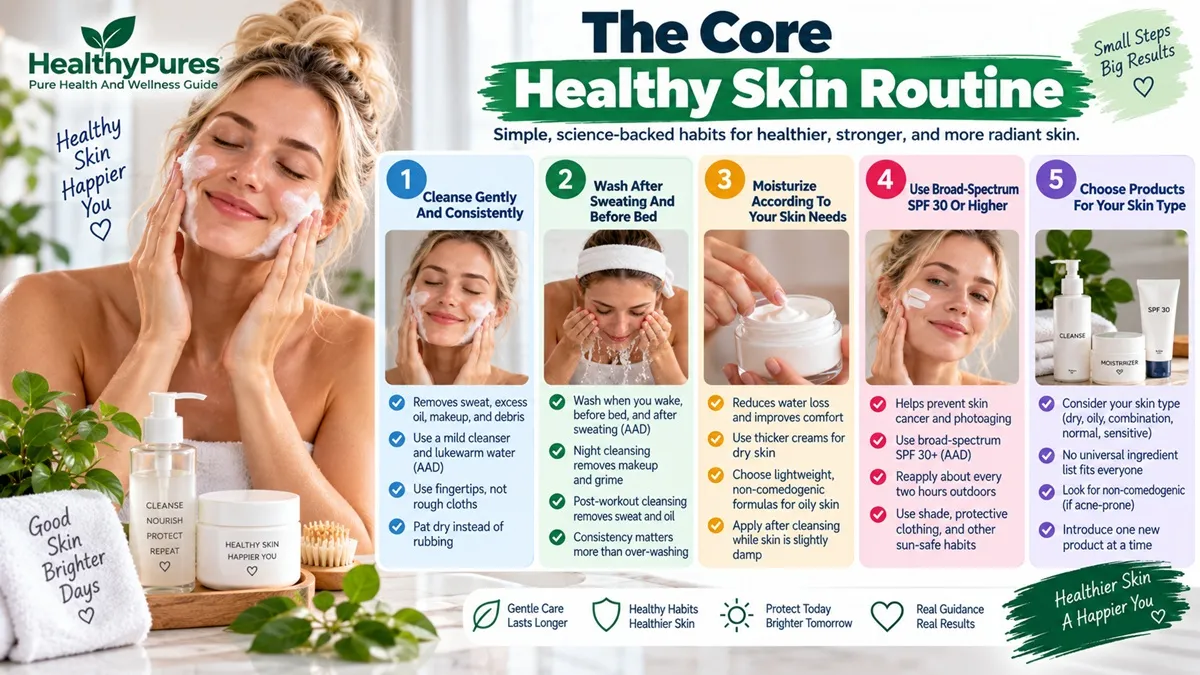
The strongest healthy skin habits are easy to repeat and gentle enough for long-term use. Start with a small number of steps before adding targeted products.
1. Cleanse Gently And Consistently
Gentle cleansing removes sweat, excess oil, makeup, and surface debris without unnecessary friction. The American Academy of Dermatology recommends mild cleansing and lukewarm water.
Use your fingertips rather than a rough cloth or scrubber. Pat skin dry instead of rubbing it vigorously.
For additional guidance, review the AAD’s dermatologist skin care guidance.
2. Wash After Sweating And Before Bed
Timing matters as much as technique. AAD guidance recommends washing your face when you wake, before bed, and after sweating.
Night cleansing removes makeup, grime, and other residue that accumulates during the day. Post-workout cleansing can also remove sweat and oil from the skin surface.
Healthy skin habits work better when cleansing is consistent rather than extreme. More washing is not automatically better.
3. Moisturize According To Your Skin Needs
Moisturizer can reduce water loss and improve skin comfort. It is especially useful when cleansing or dry conditions leave skin feeling tight.
Dry skin often suits thicker creams or ointments. Oily or acne-prone skin may prefer lightweight, non-comedogenic formulas.
Apply moisturizer after cleansing while skin is slightly damp. For dry-skin basics, see the AAD’s fragrance-free moisturizing care.
For more on barrier-focused care, read our healthy skin barrier guide.
4. Use Broad-Spectrum SPF 30 Or Higher
Sun protection is one of the most important healthy skin habits. Ultraviolet exposure contributes to skin cancer and visible photoaging.
The AAD recommends broad-spectrum sunscreen with SPF 30 or higher. Reapply about every two hours during outdoor exposure, and after swimming or sweating.
Use shade, protective clothing, and other sun-safe behaviors when practical. See AAD sunscreen application guidance for detailed technique.
5. Choose Products For Your Skin Type
Product selection should reflect your skin type and current needs.
Your skin may be dry, oily, combination, normal, sensitive, or affected by a diagnosed condition.
There is no universal ingredient list that suits everyone. A formula that feels comfortable and performs well for you can be more useful than a complicated trend.
For acne-prone skin, labels such as non-comedogenic or won’t clog pores can help guide product choices. Introduce one new product at a time.
Habits That Prevent Unnecessary Skin Stress
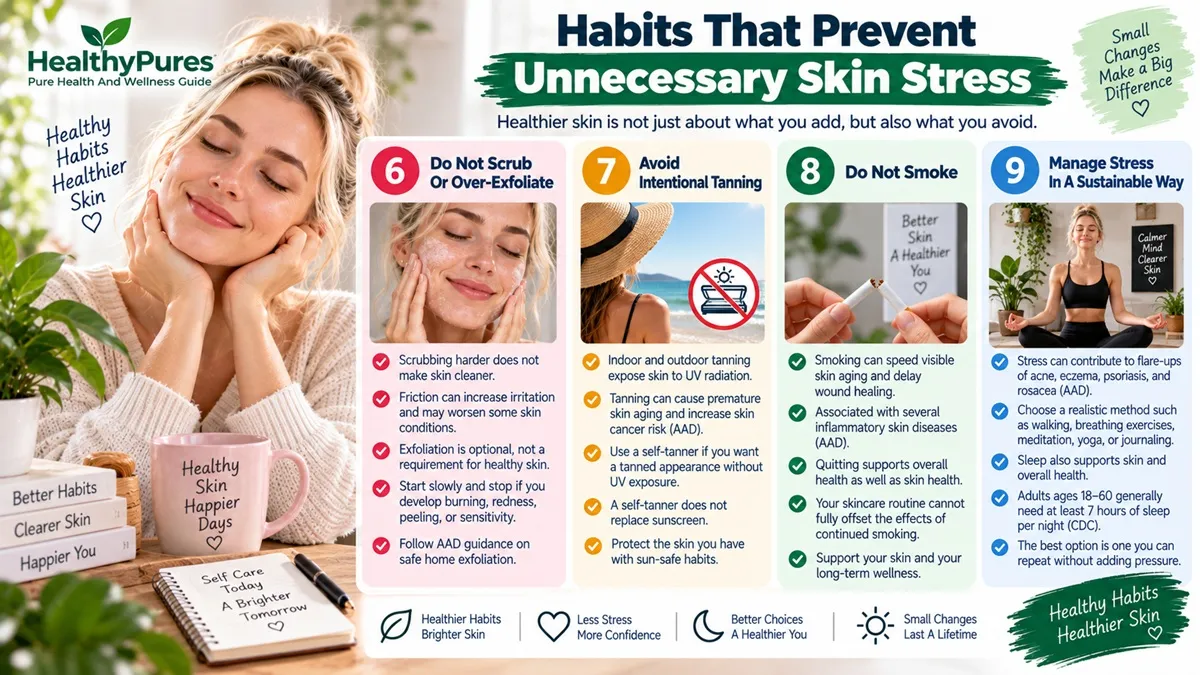
Several healthy skin habits focus less on adding products and more on removing avoidable stressors. That can make a routine easier to tolerate.
6. Do Not Scrub Or Over-Exfoliate
Scrubbing harder does not make skin cleaner. Friction can increase irritation and may worsen some skin conditions.
Exfoliation is optional, not a requirement for healthy skin. If you use an exfoliant, consider your skin type, product strength, and other active ingredients.
Start slowly and stop when you develop persistent burning, redness, peeling, or unusual sensitivity. Follow the AAD’s safe home exfoliation guidance.
7. Avoid Intentional Tanning
Indoor and outdoor tanning expose skin to ultraviolet radiation. AAD guidance links tanning with premature skin aging and higher skin cancer risk.
If you want a tanned appearance, a self-tanner can change skin color without intentional UV exposure. It does not replace sunscreen.
Healthy skin habits should protect the skin you have rather than chase a cosmetic effect that requires repeated UV exposure.
8. Do Not Smoke
Smoking can speed visible skin aging and delay wound healing. AAD guidance also notes associations with several inflammatory skin diseases.
Quitting supports overall health as well as skin health. Your skincare routine cannot fully offset the effects of continued smoking.
This is one of the healthy skin habits that affects more than appearance. It supports a broader long-term approach to wellness.
9. Manage Stress In A Sustainable Way
Stress can contribute to flare-ups of some skin conditions, including acne, eczema, psoriasis, and rosacea. AAD recommends finding healthy ways to manage stress.
Choose a realistic method such as walking, breathing exercises, meditation, yoga, or journaling. The best option is one you can repeat without adding pressure.
Sleep also supports general health. Adults ages 18–60 generally need at least seven hours each night. Read the CDC sleep guidance for current recommendations.
Habits That Help You Notice Problems Early

Good skincare is not only about appearance. Healthy skin habits also include noticing changes and knowing when self-care is no longer enough.
10. Check Your Skin And Know When To See A Dermatologist
Regularly notice new, changing, itching, or bleeding spots. AAD guidance recommends paying attention to skin changes and arranging an evaluation when something looks different.
Persistent rashes, painful lesions, unusual swelling, chronic itching, or worsening acne can also deserve professional assessment. Do not assume every concern is caused by poor skincare.
A dermatologist can diagnose skin conditions and recommend targeted treatment. Our expert skincare routine guide can also help you organize everyday care.
How To Adjust The Routine By Skin Type
Healthy skin habits should fit your skin, not force your skin into a rigid routine. Start with the basics, then adjust one variable at a time.
Dry skin: Favor gentle cleansing and a richer fragrance-free moisturizer. Reduce unnecessary exfoliation when skin feels tight or flaky.
Oily skin: Keep cleansing gentle rather than aggressive. Consider lightweight, non-comedogenic moisturizers and avoid trying to strip every trace of oil.
Sensitive skin: Introduce new products gradually. Fragrance, strong exfoliants, and frequent product changes can increase irritation for some people.
Combination skin: Different areas may need different textures. A lighter product can suit oilier zones while a richer formula may help drier areas.
Acne-prone skin: Avoid scrubbing and choose non-comedogenic products. Persistent or severe acne may need a treatment plan from a dermatologist.
Common Mistakes That Undermine Progress
- Changing products too quickly: Frequent changes make it harder to identify irritation or intolerance.
- Using too many actives: Several strong products can increase irritation when introduced together.
- Scrubbing for a “squeaky clean” feeling: That feeling is not a reliable sign of healthy skin.
- Skipping sunscreen: Other skincare steps do not replace UV protection.
- Copying someone else’s routine: Skin type, climate, medications, and diagnosed conditions can change what is appropriate.
What Healthy Skin Habits Should Look Like In Real Life
A useful routine does not need ten products. A simple morning routine can include gentle cleansing if needed, moisturizer when useful, and broad-spectrum SPF 30 or higher.
An evening routine can focus on removing makeup or sunscreen, gentle cleansing, and moisturizer. Add targeted products only when you understand why you need them.
Healthy skin habits become more useful when each step has a clear purpose and a realistic place in your day.
Healthy skin habits are sustainable when they fit your schedule and budget. A routine you can repeat is often more practical than a long routine you abandon.
A Simple 30-Day Routine
Week 1: Simplify. Keep cleansing gentle, moisturize as needed, and establish daily sunscreen.
Week 2: Review comfort. Remove products that cause repeated stinging, peeling, or redness.
Week 3: Strengthen lifestyle basics. Protect sleep, manage stress, avoid intentional tanning, and avoid smoking.
Week 4: Add only what serves a clear purpose. Keep the healthy skin habits that fit your skin and schedule.
When Skincare Needs Professional Guidance
Self-care is not a substitute for diagnosis. Seek professional advice when symptoms persist, worsen, become painful, or interfere with daily life.
Also seek evaluation for a changing mole or spot, a lesion that bleeds, a persistent unexplained rash, or signs of infection.
These situations can have different causes, so guessing from appearance alone can delay appropriate care. A dermatologist can help determine the next step.
Frequently Asked Questions
Which Skin Habit Matters Most?
No single step solves every concern. Sun protection is a major foundation because ultraviolet exposure contributes to skin cancer and photoaging.
Do I Need Ten Different Skincare Products?
No. The number of products matters less than whether each product has a useful role and suits your skin.
Should Everyone Exfoliate?
No. Exfoliation is optional. Some people tolerate it well, while others become irritated easily. Your skin type and other products should guide the decision.
Can Drinking More Water Fix Dry Skin?
Water is essential for health, but drinking extra water is not a guaranteed treatment for dry skin. Topical moisturization and gentle care can address skin-surface dryness more directly.
How Long Should I Try A New Routine?
There is no universal timeline. Give the routine enough time to assess tolerance, but stop products that cause significant or persistent irritation.
The Bottom Line
The best healthy skin habits are practical, protective, and repeatable. Focus first on gentle cleansing, appropriate moisturizing, sun protection, suitable products, and avoiding unnecessary irritation.
Then build around those basics with sleep, stress care, no smoking, no intentional tanning, and regular attention to changes in your skin.
Every person’s skin is different. Adjust the routine for your skin type, climate, medications, and diagnosed conditions rather than copying someone else’s routine.
Just a friendly reminder from our team: Health needs vary from person to person, so this information is intended to support general wellness and does not replace professional medical advice. Read our full Medical Disclaimer for more information.