A damaged skin barrier can leave your skin dry, tight, flaky, red, or unusually sensitive. The good news is that a simpler routine can often reduce irritation and support recovery.
Learning how to repair a damaged skin barrier starts with removing common triggers and restoring moisture. That usually means gentle cleansing, regular moisturizing, and daily sun protection rather than adding more active products.
This guide explains what the barrier does, what can weaken it, and how to build a practical recovery routine. It also covers ingredient choices, common mistakes, and signs that your symptoms may need professional evaluation.
Quick Summary
- Pause aggressive exfoliation and other products that sting or irritate.
- Use a gentle, fragrance-free cleanser and a cream or ointment regularly.
- Apply moisturizer to slightly damp skin after washing or bathing.
- Use broad-spectrum SPF 30 or higher when exposed to daylight.
Quick Facts
| Aspect | Details |
|---|---|
| Skin barrier | The outer skin layer helps limit water loss and protect against irritants. |
| Common triggers | Harsh cleansing, over-exfoliation, fragrance, dry air, and environmental exposure can contribute to irritation. |
| Best first step | Simplify your routine and focus on gentle cleansing and consistent moisturization. |
| Moisturizer choice | Fragrance-free creams or ointments are often useful for dry or sensitive skin. |
| Sun protection | Choose broad-spectrum sunscreen with SPF 30 or higher for exposed skin. |
Who This Guide Is For
- ✓ Adults dealing with dryness, flaking, tightness, or mild irritation.
- ✓ People who have been using several active skincare products.
- ✓ Anyone trying to build a simpler routine for sensitive skin.
- ✓ Shoppers comparing moisturizers, cleansers, and barrier-supporting ingredients.
What Is The Skin Barrier?
Understanding how to repair a damaged skin barrier starts with knowing what this outer layer does. Your skin barrier is mainly associated with the outermost part of the skin called the stratum corneum. It contains corneocytes and a matrix of lipids, including ceramides, cholesterol, and fatty acids.
Think of this structure as a protective wall. Skin cells provide the “bricks,” while lipids help fill the spaces between them. A well-functioning barrier helps limit water loss and reduces exposure to outside irritants. The skin barrier overview from Cleveland Clinic explains this structure and its role.
When the barrier is disrupted, water can escape more easily. Skin may then feel dry, tight, itchy, rough, or sting when you apply products that previously felt comfortable.
Signs Your Skin Barrier May Be Damaged
No single symptom proves that your barrier is damaged, so how to repair a damaged skin barrier starts with the symptoms and likely trigger. Similar symptoms can also occur with eczema, contact dermatitis, rosacea, acne treatments, allergies, or other skin conditions.
Common signs include dryness, flaking, rough texture, increased sensitivity, redness, itching, or stinging. A sudden change after a new product or an increase in exfoliation can provide a useful clue.
If the skin becomes painful, cracked, bleeding, or severely inflamed, seek professional advice. The same applies to signs of infection or rapidly worsening symptoms.
What Causes Skin Barrier Damage?
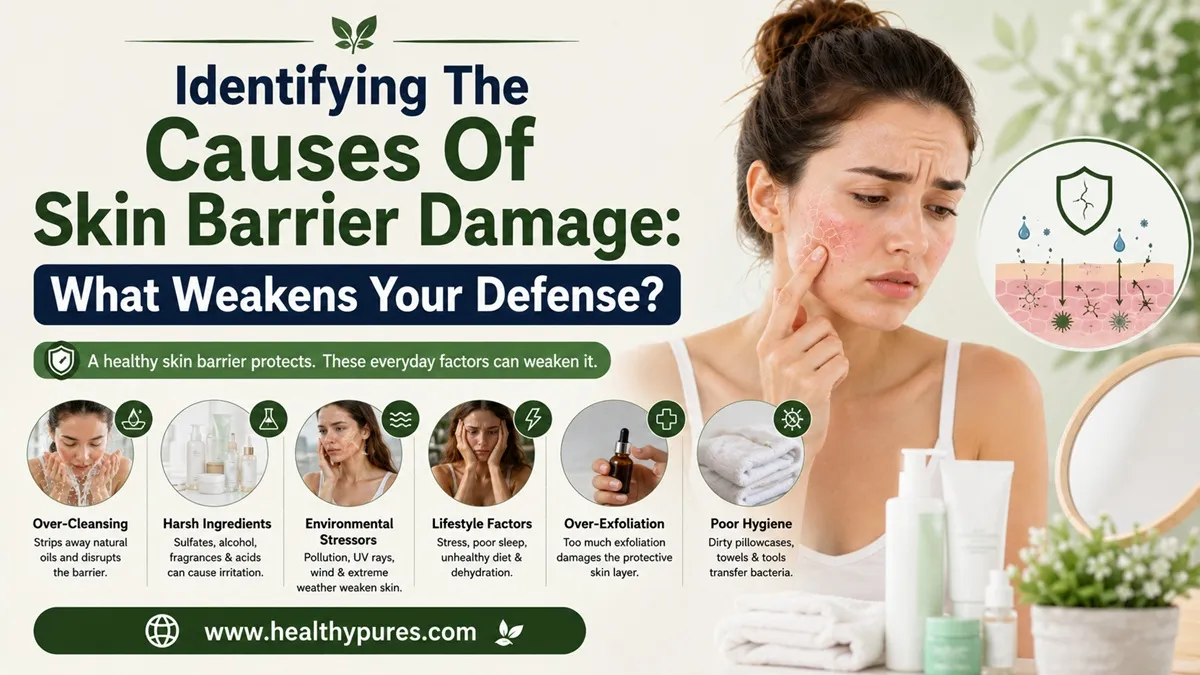
Before deciding how to repair a damaged skin barrier, it helps to identify what is keeping the irritation going. The most common causes are often routine-related.
Over-Exfoliation
Frequent scrubs, strong acids, or other exfoliating products can irritate already sensitive skin. Using several exfoliating products at once can make the problem harder to spot.
When your skin feels raw, stings with basic products, or becomes increasingly dry, taking a break from exfoliation is often a reasonable first step.
Harsh Cleansing
Hot water, aggressive rubbing, and harsh cleansing products can worsen dryness. Dermatologists commonly recommend gentle cleansing and warm rather than hot water for dry or sensitive skin. AAD dry-skin guidance provides practical recommendations.
Fragrance And Other Irritants
Fragrance can trigger irritation or allergic reactions in some people with sensitive skin. “Fragrance-free” is generally more useful than assuming a product labeled “unscented” is free of fragrance-related ingredients.
When your barrier is struggling, simplifying the number of products you use can make it easier to identify what your skin tolerates.
Dry Air And Weather
Low humidity, cold weather, wind, and indoor heating can increase dryness. Your routine may need more frequent moisturizing during these periods.
Sun Exposure
Ultraviolet exposure can contribute to skin damage and premature aging. Sun protection also reduces the chance of adding another source of irritation while your skin is recovering.
How To Repair A Damaged Skin Barrier

The most useful answer to how to repair a damaged skin barrier is usually simple. Focus on reducing irritation, restoring hydration, and giving your skin time to settle before reintroducing stronger products.
1. Stop The Products That Burn Or Sting
Start by looking at what changed. If a new acid, retinoid, scrub, peel, or fragranced product makes your skin burn or sting, pause it while you simplify your routine.
You do not need to keep using an active product just because it is normally helpful for acne, pigmentation, or texture. A damaged or highly irritated barrier may tolerate less than usual.
2. Cleanse Gently
Use lukewarm or warm water rather than very hot water. Choose a mild, fragrance-free cleanser and avoid vigorous rubbing.
You also do not need a long cleansing session. Massage gently, rinse, and pat the skin dry rather than rubbing it with a towel.
For very dry or sensitive skin, cleansing only when needed may be more comfortable than repeatedly washing throughout the day. Your exact routine should match your skin and the products you use when deciding how to repair a damaged skin barrier.
3. Moisturize While Skin Is Slightly Damp
Moisturizer is one of the most useful tools for a damaged barrier. Apply it soon after washing while some moisture remains on the skin.
The American Academy of Dermatology recommends regular use of a fragrance-free moisturizer for dry skin. Creams and ointments can be more effective than lotions for very dry skin. moisturizer selection guidance can help you compare formats.
4. Look For Barrier-Supportive Ingredients
Ceramides, fatty acids, glycerin, and other moisturizing ingredients can be useful in products designed for dry or sensitive skin.
Ceramides and related lipids are naturally part of the skin barrier. Moisturizers that contain them can help support the barrier while reducing dryness.
Petrolatum is another simple option for reducing water loss. Thick creams and ointments can be especially useful when the skin feels very dry.
5. Keep Your Routine Small
A recovery routine for how to repair a damaged skin barrier does not need ten steps. In many cases, a gentle cleanser, moisturizer, and sunscreen provide a more sensible foundation.
Adding several new products at once makes it harder to know what helps and what irritates. Change one thing at a time when possible.
6. Protect Your Skin From The Sun
Use a broad-spectrum sunscreen with SPF 30 or higher on exposed skin when you are outdoors. The American Academy of Dermatology recommends broad-spectrum, water-resistant SPF 30 or higher. Sunscreen selection guidance explains what to look for.
Physical protection also helps. Shade, hats, sunglasses, and protective clothing can reduce direct sun exposure.
7. Give Your Skin Time To Settle
One of the hardest parts of how to repair a damaged skin barrier is resisting the urge to add more treatments too soon.
Dryness and irritation may improve gradually. Focus on consistency rather than trying a new product every few days.
Which Moisturizer Is Best For A Damaged Skin Barrier?
Choosing the right product is an important part of how to repair a damaged skin barrier. The best moisturizer is usually the one your skin tolerates and that you can apply consistently. For very dry or sensitive skin, fragrance-free creams and ointments are often preferable to lightweight lotions.
Ceramides can be useful because they are part of the lipids found in a healthy barrier. Glycerin, petrolatum, and other occlusive or humectant ingredients can also support hydration.
The National Eczema Association notes that creams and ointments can help hold moisture in the skin. It also generally recommends fragrance-free products for sensitive skin. See moisturizer guidance for sensitive skin for more detail.
When learning how to repair a damaged skin barrier, do not assume the most expensive formula is the best one. A simple product that does not sting and fits your routine may be a better choice.
What About Hyaluronic Acid, Niacinamide, And Other Actives?
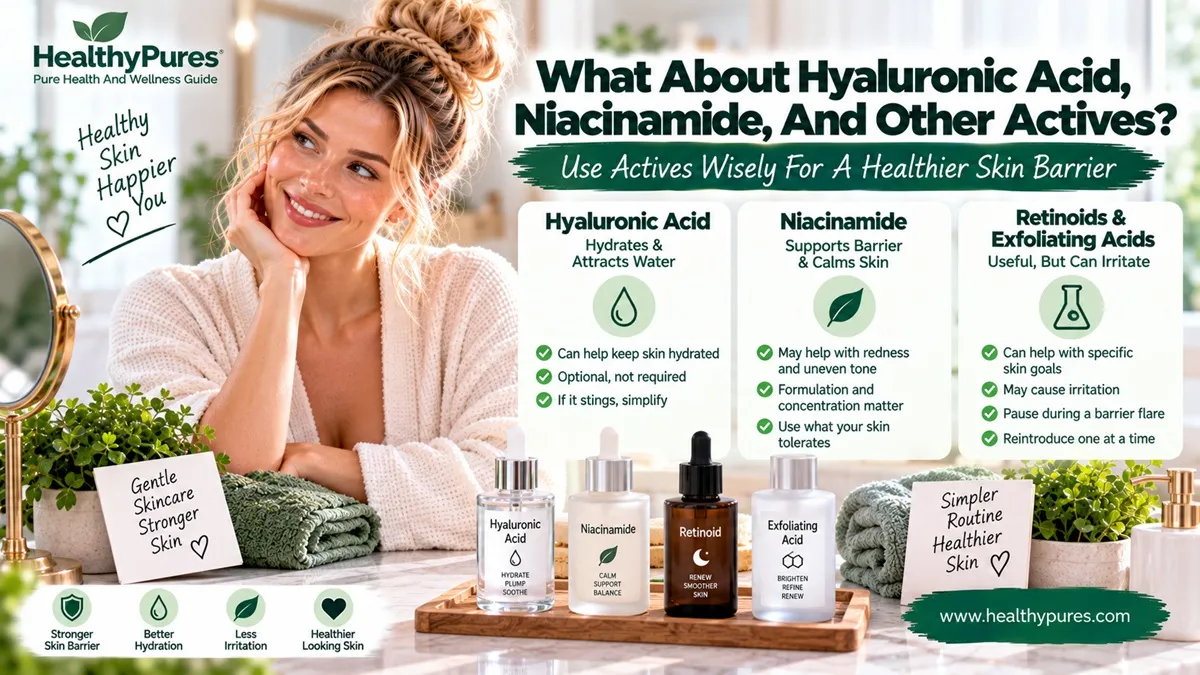
Hyaluronic Acid
Hyaluronic acid is a humectant used in many moisturizers and serums. It can help attract water, but it is not required for barrier recovery.
If a serum feels comfortable, it can be an optional step. If it stings, simplify your routine rather than forcing it.
Niacinamide
Niacinamide is a form of vitamin B3 used in skincare. It can support barrier-related functions and may help some people with redness or uneven tone.
Concentration and formulation matter. A product that is well tolerated at one strength may irritate another person or a highly reactive skin barrier.
Retinoids And Exfoliating Acids
Retinoids and exfoliating acids can be useful for specific skin goals, but they can also cause irritation. During an obvious barrier flare, it is reasonable to reduce or pause stronger actives until your skin is comfortable again.
Reintroduce one active at a time when your skin has settled. Starting less often can help you see how your skin responds.
Should You Use Oils Or Petroleum Jelly?
Oils and petrolatum can reduce water loss by creating an occlusive layer. Petrolatum is especially useful for areas that become very dry or rough.
Oils are more individual. Some people like them, while others find certain oils irritating or unpleasant. You do not need a facial oil to restore your barrier.
When choosing any new product, patch testing a small area first can help reduce the risk of a widespread reaction.
Can Diet, Sleep, And Stress Affect Skin Recovery?
Healthy habits can support overall skin health, but they should not replace basic topical care or medical treatment when needed.
Sleep and stress management are worthwhile for general wellness. However, avoid treating diet changes or supplements as a guaranteed way to repair a damaged skin barrier.
A balanced eating pattern that supplies enough protein, essential fats, vitamins, and minerals supports normal skin function. You do not need a special “skin healing” diet.
A Simple Morning And Evening Routine
A simple reset routine makes how to repair a damaged skin barrier easier to follow. Keep the basics consistent and add active products back only after your skin feels comfortable.
| Time | Simple Routine |
|---|---|
| Morning | Gentle cleanse if needed, fragrance-free moisturizer, broad-spectrum SPF 30+. |
| Evening | Gentle cleanse, fragrance-free moisturizer, optional petrolatum on very dry areas. |
| During the day | Reapply moisturizer when dry and protect exposed skin from sun. |
Barrier Reset Routine
Morning: Cleanse only if needed, moisturize, then apply SPF 30+ to exposed skin.
Evening: Cleanse gently, apply moisturizer, and use petrolatum only where extra protection feels helpful.
For the first phase: Pause products that sting, burn, or cause obvious peeling. Keep the routine simple until your skin settles.
What To Pause vs What To Keep
| Pause For Now | Keep In Your Routine |
|---|---|
| Strong exfoliating acids | Gentle fragrance-free cleanser |
| Physical scrubs | Fragrance-free moisturizer |
| Retinoids when they are irritating | Petrolatum on very dry areas, if tolerated |
| Products that sting or burn | Broad-spectrum SPF 30+ |
| Multiple new actives at once | A small, consistent routine |
Healthy Pures Tip: During recovery, think “less irritation, more consistency.” A short routine is easier to maintain and easier to troubleshoot.
Common Mistakes That Slow Recovery
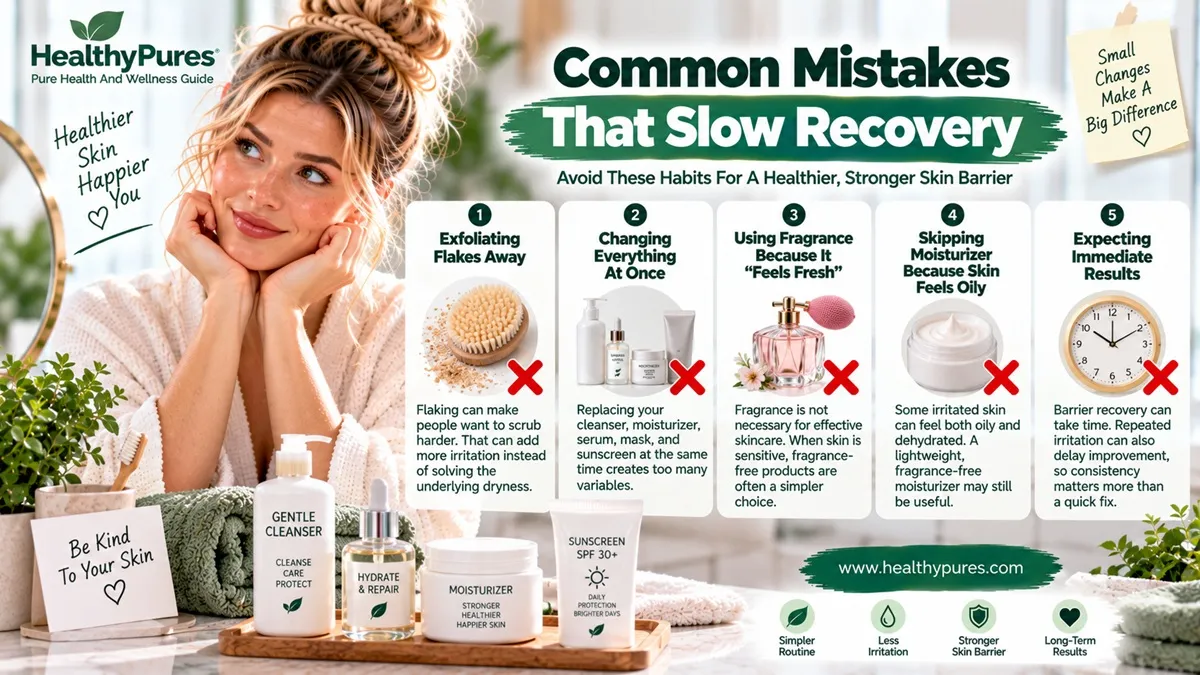
Exfoliating Flakes Away
Flaking can make people want to scrub harder. That can add more irritation instead of solving the underlying dryness.
Changing Everything At Once
Replacing your cleanser, moisturizer, serum, mask, and sunscreen at the same time creates too many variables.
Using Fragrance Because It “Feels Fresh”
Fragrance is not necessary for effective skincare. When skin is sensitive, fragrance-free products are often a simpler choice.
Skipping Moisturizer Because Skin Feels Oily
Some irritated skin can feel both oily and dehydrated. A lightweight, fragrance-free moisturizer may still be useful.
Expecting Immediate Results
Barrier recovery can take time. Repeated irritation can also delay improvement, so consistency matters more than a quick fix.
When To See A Dermatologist
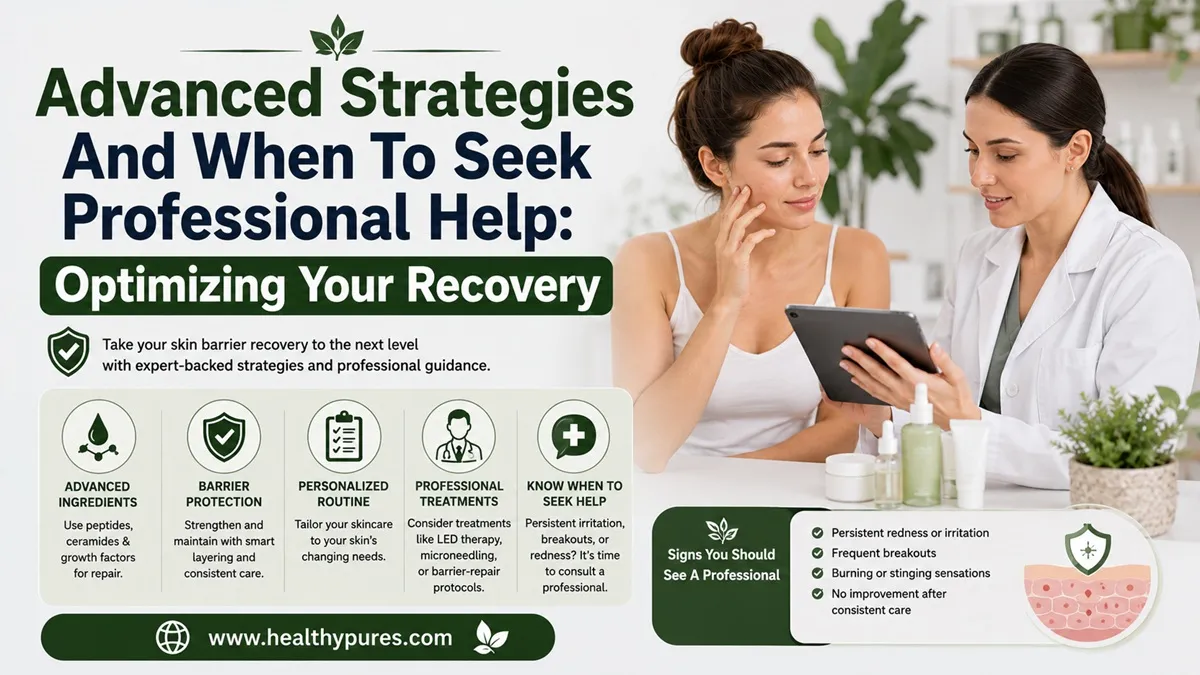
Not every red or irritated face is a damaged skin barrier. Persistent symptoms may reflect eczema, contact dermatitis, rosacea, acne treatment irritation, infection, or another condition.
Consider professional evaluation if you have severe redness, significant pain, intense itching, cracking, bleeding, spreading rash, drainage, pustules, or symptoms that keep returning.
The American Academy of Dermatology also recommends seeking care when dry skin becomes painful, cracked, bleeding, or very irritating despite basic care. AAD guidance on persistent dry skin provides additional context.
How Long Does It Take To Repair A Damaged Skin Barrier?
There is no single recovery timeline when learning how to repair a damaged skin barrier. The cause, severity, skin condition, and ongoing exposure to irritants all matter.
Mild irritation may settle with simpler care, while eczema, contact dermatitis, or another skin condition may need targeted treatment.
Instead of chasing a fixed number of days, look for steady improvement in tightness, stinging, dryness, and sensitivity. If symptoms are not improving or are becoming more severe, get professional advice.
Frequently Asked Questions
Can I Repair My Skin Barrier Naturally?
Your skin has natural repair processes. Gentle cleansing, regular moisturization, and reducing irritation can support those processes. “Natural” does not automatically mean safer, especially for sensitive skin.
Should I Stop All Skincare Products?
Usually, you do not need to stop everything. A basic routine with a gentle cleanser, moisturizer, and sunscreen can provide a useful foundation.
Is Petroleum Jelly Good For A Damaged Skin Barrier?
Petroleum jelly can help reduce water loss and protect very dry areas. It is a simple occlusive option, especially when a thicker product is comfortable for you.
Can A Damaged Skin Barrier Cause Acne?
Barrier irritation and acne can overlap, but a damaged barrier does not explain every breakout. Heavy products, irritation, hormones, clogged pores, and other factors can contribute to acne.
Can I Use Retinol While Repairing My Skin Barrier?
If retinol causes burning, peeling, or significant irritation, consider pausing it until your skin settles. When you restart, introduce it gradually and monitor your response.
Rebuild Your Routine With Less Irritation
Knowing how to repair a damaged skin barrier is less about finding one miracle ingredient and more about reducing repeated irritation. A simpler routine can give your skin the conditions it needs to recover.
Start with gentle cleansing, consistent moisturizer, and daily sun protection when practicing how to repair a damaged skin barrier. Add stronger actives back only when your skin feels comfortable, and change one product at a time.
If symptoms are persistent, painful, or unusually severe, do not assume they are only a barrier problem. A dermatologist can help identify the underlying cause and choose treatment that fits your skin.
For related skincare routines, see our healthy skin tips and morning skincare routine.
Just a friendly reminder from our team: Health needs vary from person to person, so this information is intended to support general wellness and does not replace professional medical advice. Read our full Medical Disclaimer for more information.

