Herbal products can look simple, yet their effects depend on preparation, concentration, dose, and personal health factors.
Reliable herbal medicine guides should explain those differences. They should also separate traditional use from evidence supporting a specific product and purpose.
This Healthy Pures guide provides an evaluation framework, not a treatment plan. Use it before buying, combining, or regularly taking an herbal product.
Quick Summary
- Good herbal medicine guides match one preparation to one specific health question.
- Traditional use can provide context, but it does not establish effectiveness or safety.
- Tea, food, extracts, oils, and capsules are not automatically interchangeable.
- Medication use, pregnancy, surgery, allergies, and chronic conditions change the safety decision.
Quick Facts
| Aspect | Details |
|---|---|
| Main Purpose | Evaluate benefits, limitations, preparation, quality, and safety. |
| Evidence Standard | A specific product should be studied for a clearly defined outcome. |
| Important Distinction | Food amounts may differ substantially from concentrated extracts. |
| Major Risk | Side effects and interactions can occur with medicines or other supplements. |
| Best Use | Use herbal medicine guides to prepare questions for a qualified professional. |
Who This Guide Is For
- ✔ Adults comparing herbal medicine guides before choosing a product.
- ✔ Readers who want evidence and traditional use explained separately.
- ✔ People checking herbal products alongside regular medication.
- ✔ Anyone confused by extracts, tinctures, teas, powders, or essential oils.
What Reliable Herbal Medicine Guides Should Explain
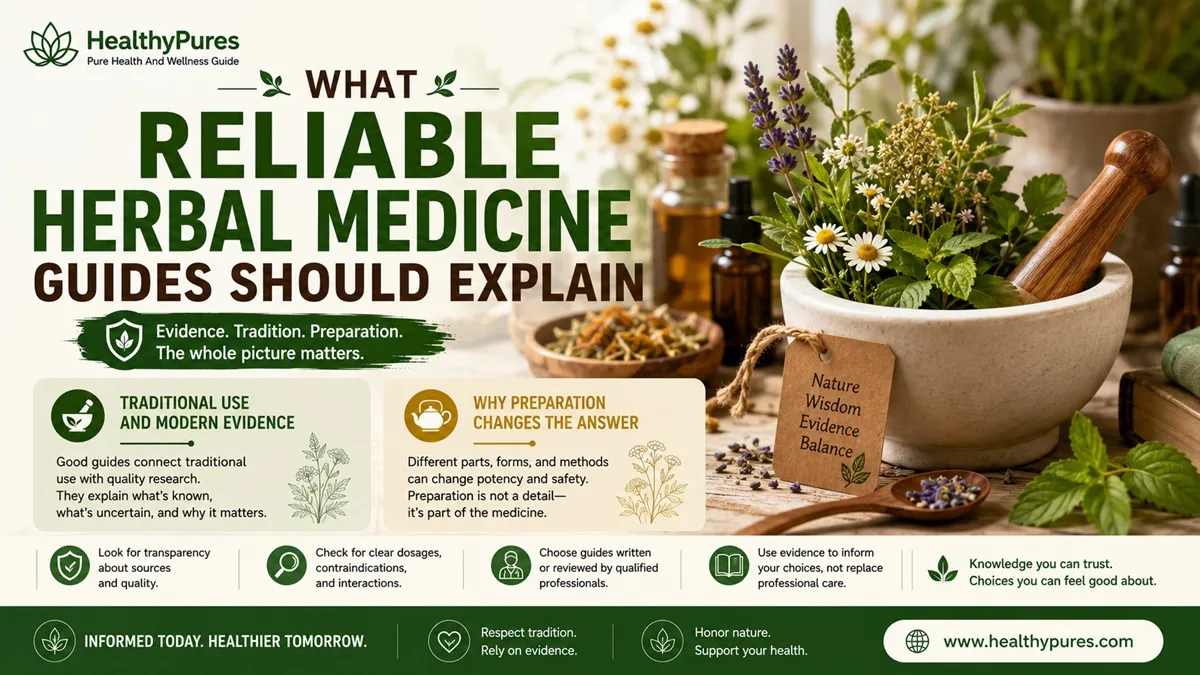
An herb’s common name is only a starting point. A useful resource identifies the species, plant part, preparation, amount, and intended use.
The NCCIH Herbs at a Glance collection provides evidence, side effects, and cautions for individual botanicals. Strong herbal medicine guides provide similar context.
Traditional Use And Modern Evidence
Traditional use describes how an herb has been used within a community or medical system. It does not prove a predictable clinical result.
Modern research may examine a standardized extract, measured dose, and narrowly defined outcome. Those findings cannot automatically support every tea, tincture, or capsule.
Healthy Pures Expert Tip
Ask four questions: Which preparation, which dose, which outcome, and which safety limits? Vague claims usually fail this test.
Why Preparation Changes The Answer
A tea extracts different compounds than an oil or alcohol tincture. Capsules can also contain concentrated or standardized material.
Essential oils are especially concentrated and may be unsafe when swallowed. Responsible herbal medicine guides never treat every format as equivalent.
How To Read Evidence Without Falling For Hype
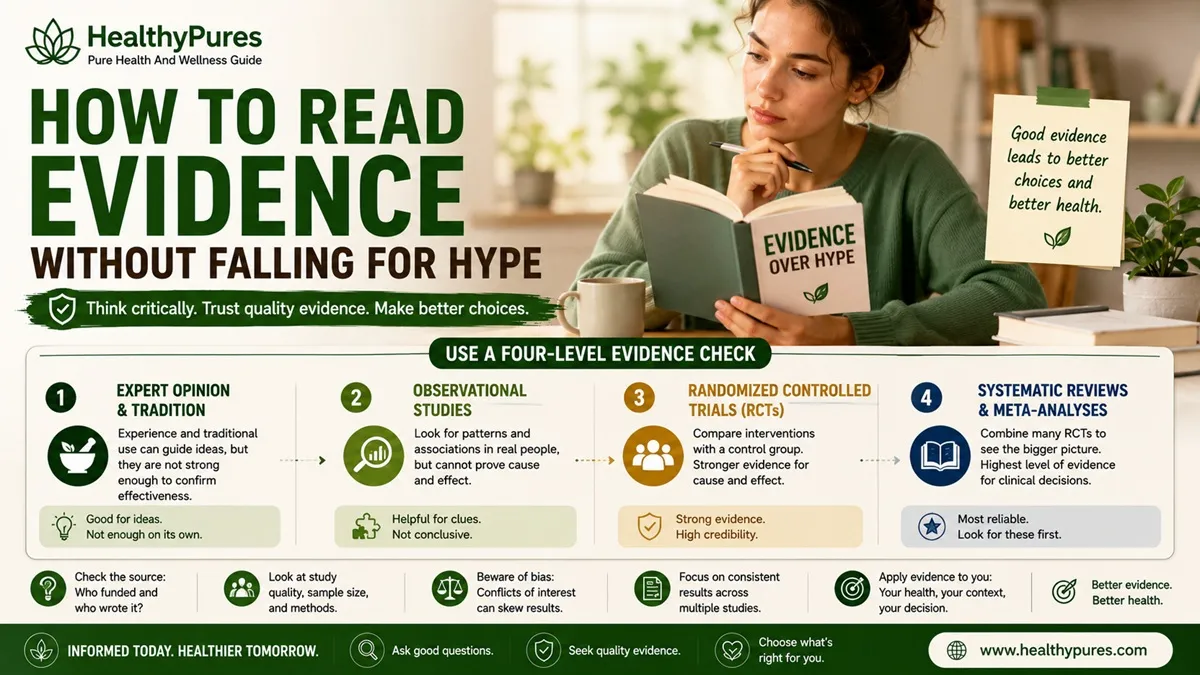
Start by checking whether the research question matches the marketing claim. Evidence for one symptom cannot establish broad ideas like detoxification or total-body healing.
Next, compare the tested preparation with the product being sold. Differences in species, extraction, dose, and duration may change both effects and risks.
Use A Four-Level Evidence Check
- Traditional use: Offers historical context without confirming effectiveness.
- Laboratory research: Identifies possible mechanisms without proving results in people.
- Small human studies: Provide early findings that may remain uncertain.
- Consistent clinical evidence: Offers stronger support for a defined preparation and outcome.
This framework helps herbal medicine guides avoid turning preliminary findings into promises. Study quality and consistency matter more than dramatic headlines.
Common Mistake
Do not apply research on a measured extract to homemade tea. The ingredients and concentrations may differ substantially.
Seven Herbs That Show Why Details Matter
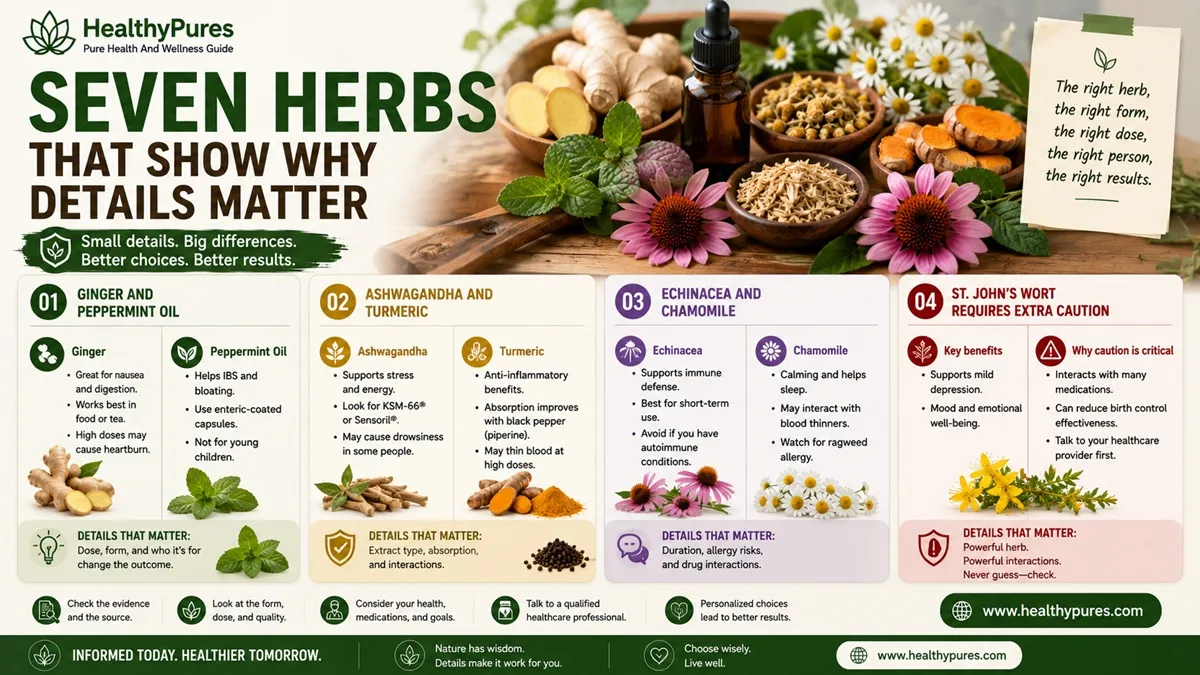
The examples below are not universal recommendations. They demonstrate how herbal medicine guides should connect evidence with preparation and safety.
| Herb | Evidence-Aware Interpretation | Important Caution |
|---|---|---|
| Ginger | Research suggests possible value for some nausea-related uses. | Oral products may cause heartburn, diarrhea, or abdominal discomfort. |
| Peppermint Oil | Enteric-coated products may help some short-term IBS symptoms. | Non-enteric products may worsen heartburn. |
| Ashwagandha | Some preparations may support stress or sleep outcomes short term. | Pregnancy, thyroid conditions, medicines, and liver concerns require caution. |
| Turmeric | Early findings for some osteoarthritis measures remain inconclusive. | Some enhanced-absorption products have been linked with liver injury. |
| Echinacea | It may slightly reduce the chance of catching a cold. | Allergic reactions and possible interactions remain concerns. |
| Chamomile | Tea offers a caffeine-free ritual, but insomnia evidence is limited. | Ragweed-related allergies and medicine interactions are possible. |
| St. John’s Wort | Evidence for depression is inconsistent across settings and studies. | It interacts with many important medicines. |
Ginger And Peppermint Oil
The NCCIH ginger review reports possible benefits for some nausea-related uses. It also lists digestive side effects and medication questions.
The NCCIH peppermint oil review discusses limited evidence for short-term IBS symptoms. Peppermint leaf tea does not have equivalent evidence.
These examples show why herbal medicine guides must name the preparation. “Digestive support” is too broad to guide a safe decision.
Ashwagandha And Turmeric
The NCCIH ashwagandha fact sheet describes limited short-term evidence for stress and sleep. Long-term safety remains uncertain.
The NCCIH turmeric safety review reports inconclusive overall benefits. It also identifies liver concerns involving some enhanced-absorption products.
Food-level use is not equivalent to concentrated supplementation. Accurate herbal medicine guides keep culinary and medicinal amounts separate.
Echinacea And Chamomile
The NCCIH echinacea summary describes a possible small cold-prevention benefit. It remains unclear whether echinacea shortens an existing cold.
The NCCIH chamomile review considers anxiety findings preliminary. It reports insufficient reliable evidence for broad clinical usefulness.
Neither herb deserves an “immune booster” or “natural sedative” guarantee. Balanced herbal medicine guides describe uncertainty directly.
St. John’s Wort Requires Extra Caution
St. John’s wort can reduce the effectiveness of birth control pills, warfarin, cyclosporine, and other medicines. Certain antidepressant combinations can also become dangerous.
The NCCIH St. John’s wort review describes inconsistent evidence for depression. It advises against replacing or delaying established care.
The FDA supplement-interaction guidance highlights these risks. Our herb-drug interaction guide provides a broader checklist.
This example belongs in all safety-focused herbal medicine guides. A familiar plant name does not make a concentrated product harmless.
How Herbal Products Are Regulated In The United States
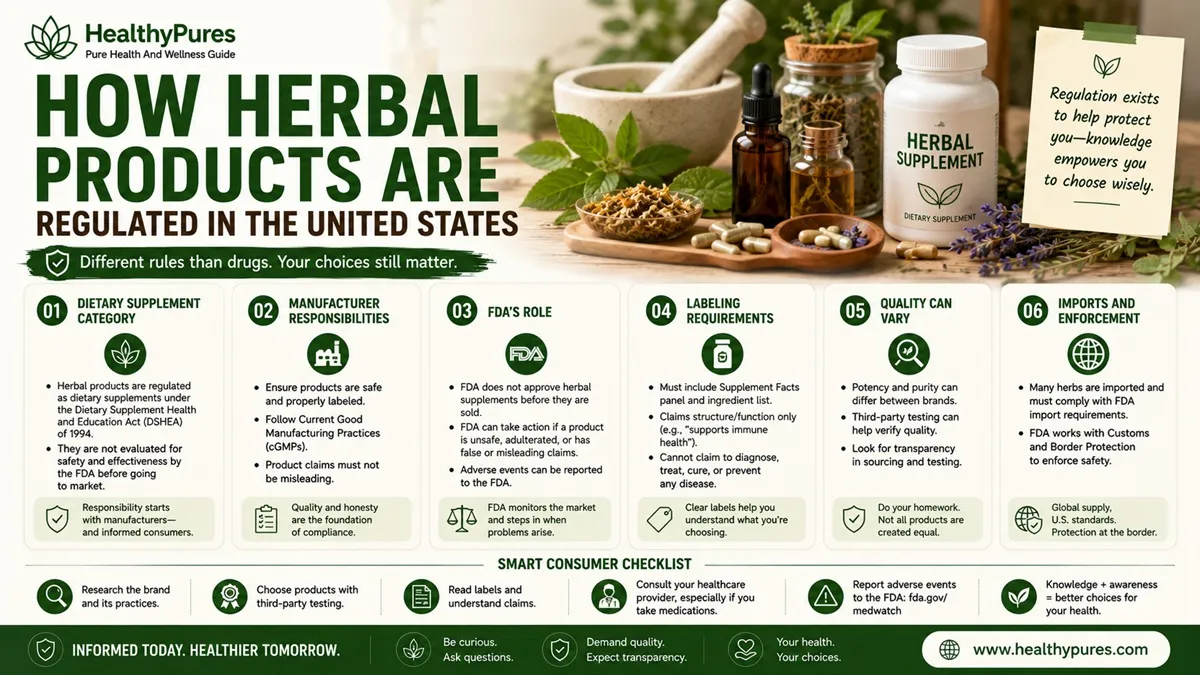
Many oral herbal products are sold as dietary supplements. They do not pass the same premarket approval process required for medicines.
The FDA dietary supplement questions explain manufacturer responsibilities and postmarket enforcement. Therefore, store availability does not prove effectiveness.
Regulation should be a standard section in herbal medicine guides. Readers need this context before interpreting labels or promotional claims.
How To Evaluate An Herbal Supplement Label
- Confirm the identity. Look for common and botanical names.
- Find the plant part. Root, leaf, seed, and extract may differ.
- Identify the preparation. Check extract ratios and standardization details.
- Review the amount. Avoid products hiding quantities inside proprietary blends.
- Read every warning. Check age, pregnancy, allergy, surgery, and medication cautions.
- Check independent verification. Quality testing does not prove a clinical benefit.
The USP Verified Mark information explains what independent verification can confirm. It focuses on identity, strength, quality, and contamination limits.
Even a verified product may not suit your health goal. Reliable herbal medicine guides separate manufacturing quality from clinical effectiveness.
How To Compare Two Herbal Products
Two packages with the same herb name may contain very different products. Evidence-focused herbal medicine guides compare the details below.
| Label Detail | Why It Matters |
|---|---|
| Botanical Name | Related species may not contain the same compounds. |
| Plant Part | Roots, leaves, flowers, and seeds can differ chemically. |
| Extract Information | Ratios and marker compounds help describe concentration. |
| Daily Amount | Serving size alone may hide the full daily exposure. |
| Additional Ingredients | Blends can add allergens, stimulants, or interacting compounds. |
| Lot And Expiry Details | Traceable information supports quality checks and reporting. |
Compare each label with the preparation used in relevant research. Use herbal medicine guides to identify mismatches before comparing prices.
A cheaper bottle is not automatically better value. Missing amounts or unclear botanical identity create uncertainty that price cannot resolve.
A Safer Decision Process
- Define one goal. Avoid vague aims such as cleansing or balancing the body.
- Check the exact evidence. Match preparation, dose, outcome, and duration.
- Review personal risks. Include medicines, conditions, allergies, pregnancy, and upcoming procedures.
- Use one product at a time. Multiple changes make reactions harder to identify.
- Record the response. Track expected effects, side effects, and timing.
This process turns herbal medicine guides into decision aids rather than treatment instructions. It also creates better questions for a pharmacist or clinician.
You can compare preparation-specific examples in our evidence-based natural remedies guide.
Who Should Ask A Professional First?
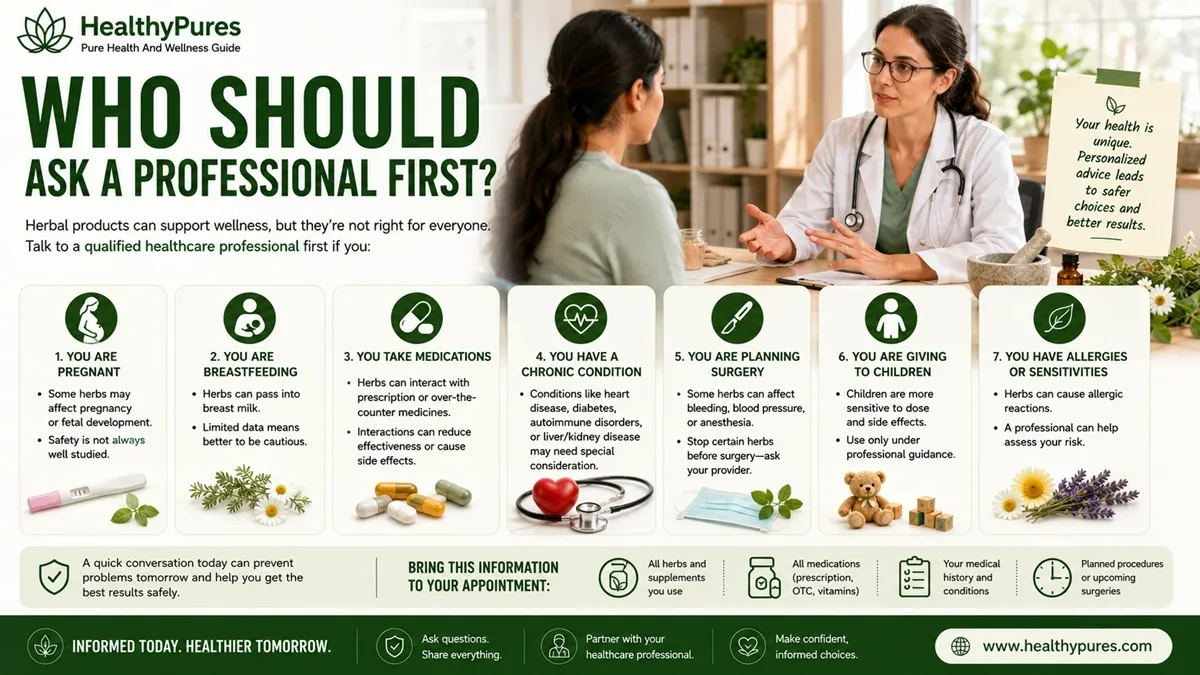
- People taking prescription or over-the-counter medicines.
- Anyone pregnant, breastfeeding, or planning pregnancy.
- Children, older adults, and people preparing for surgery.
- People managing liver, kidney, heart, bleeding, or hormone-sensitive conditions.
- Anyone receiving cancer treatment or using immunosuppressive medication.
Bring the complete label and current medication list. General herbal medicine guides cannot assess an individual’s full medical history.
When To Stop And Seek Help
Stop the suspected product after a serious or rapidly worsening reaction. Seek urgent help for breathing difficulty, fainting, severe swelling, or widespread hives.
Prompt assessment is also appropriate for jaundice, dark urine, unusual bleeding, confusion, or persistent vomiting. Do not use herbs to delay care.
Useful herbal medicine guides include stopping rules instead of only listing benefits. Safety information should be easy to find and understand.
Frequently Asked Questions
Are Herbal Remedies Natural And Therefore Safe?
No. Plants can cause side effects, allergies, toxicity, and medication interactions.
Can Tea And Capsules Provide The Same Effect?
Not necessarily. Extraction, concentration, plant part, and dose can create meaningful differences.
Do Third-Party Seals Prove A Supplement Works?
No. Verification may confirm manufacturing quality, but it does not establish clinical effectiveness.
How Long Should An Herbal Product Take To Work?
No universal timeline exists. The expected response depends on the product, purpose, evidence, and person.
Can Herbs Replace Prescription Treatment?
Do not stop or change prescribed treatment independently. Discuss proposed changes with the professional managing your care.
Can A General Guide Determine A Safe Dose?
General herbal medicine guides cannot calculate a personal dose. Product strength, age, health history, and medicines can change the decision.
Choosing Herbal Medicine Guides That Put Safety First
The best herbal medicine guides define the preparation, evidence, limitations, and main risks. They avoid promises based only on tradition or popularity.
Use these resources to ask better questions and compare products more carefully. They cannot diagnose illness or create an individualized treatment plan.
Individual needs vary. This content provides general education and does not replace medical advice, diagnosis, or treatment.
Review our Medical & Affiliate Disclaimer for more information.

