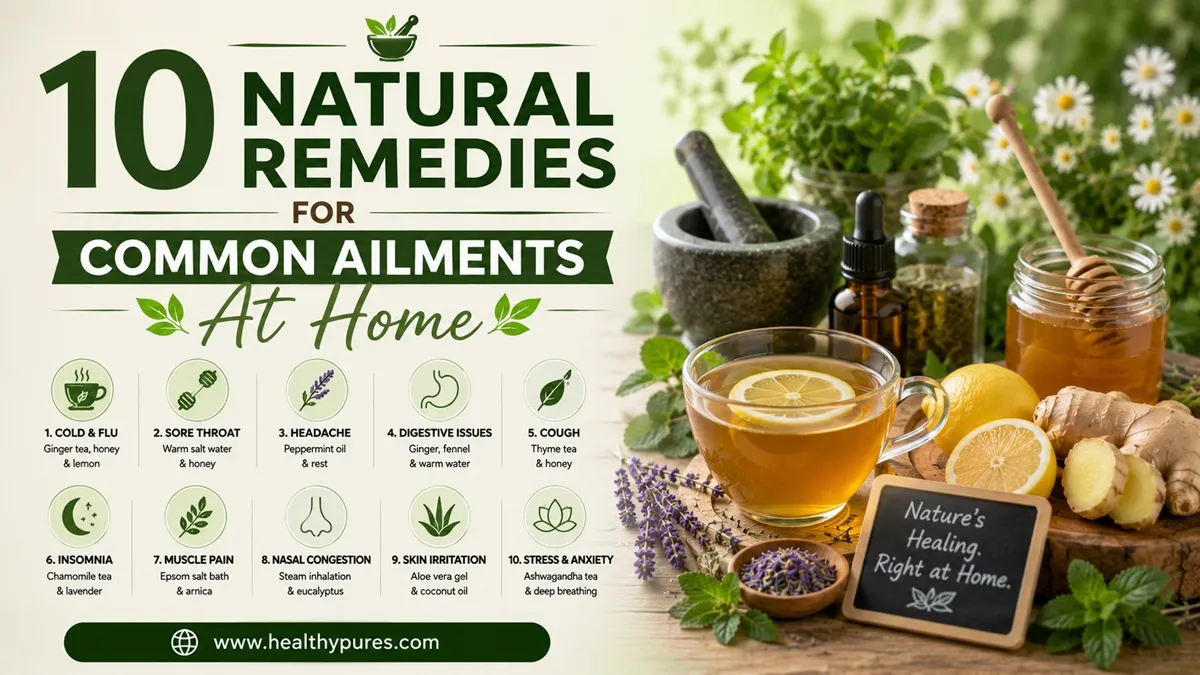
Many everyday symptoms are mild and improve with time, rest, and simple self-care. Some natural remedies for common ailments may also provide comfort when they are used carefully.
This guide focuses on low-risk home approaches for minor symptoms. It also explains when a symptom needs medical attention instead of another home remedy.
Used carefully, natural remedies for common ailments can complement ordinary self-care without promising to treat the underlying cause.
Quick Summary
- Home remedies can support comfort, but they do not replace diagnosis or medical treatment.
- Good natural remedies for common ailments should match the symptom, age, and individual safety considerations.
- Honey may soothe an acute cough in adults and children older than one year.
- Ginger may help some types of nausea, although evidence varies by cause and preparation.
- Saline nasal rinses require distilled, sterile, or previously boiled water.
- Persistent, severe, unusual, or rapidly worsening symptoms need professional evaluation.
Quick Facts
| Topic | Practical Guidance |
|---|---|
| Best Use | Minor, short-lived symptoms and supportive self-care |
| Evidence | Varies by remedy, symptom, preparation, and study quality |
| Main Safety Rule | Do not delay medical care for serious or worsening symptoms |
| Medication Users | Check possible herb and supplement interactions first |
| Children | Age-specific precautions matter, especially with honey and essential oils |
Who This Guide Is For
- ✔ Adults looking for practical self-care options for minor everyday discomforts
- ✔ Readers who want evidence-aware guidance instead of exaggerated “natural cure” claims
- ✔ People who want to understand the limits of home remedies
- ✔ Families seeking basic safety reminders before trying common household approaches
What Natural Remedies Can And Cannot Do
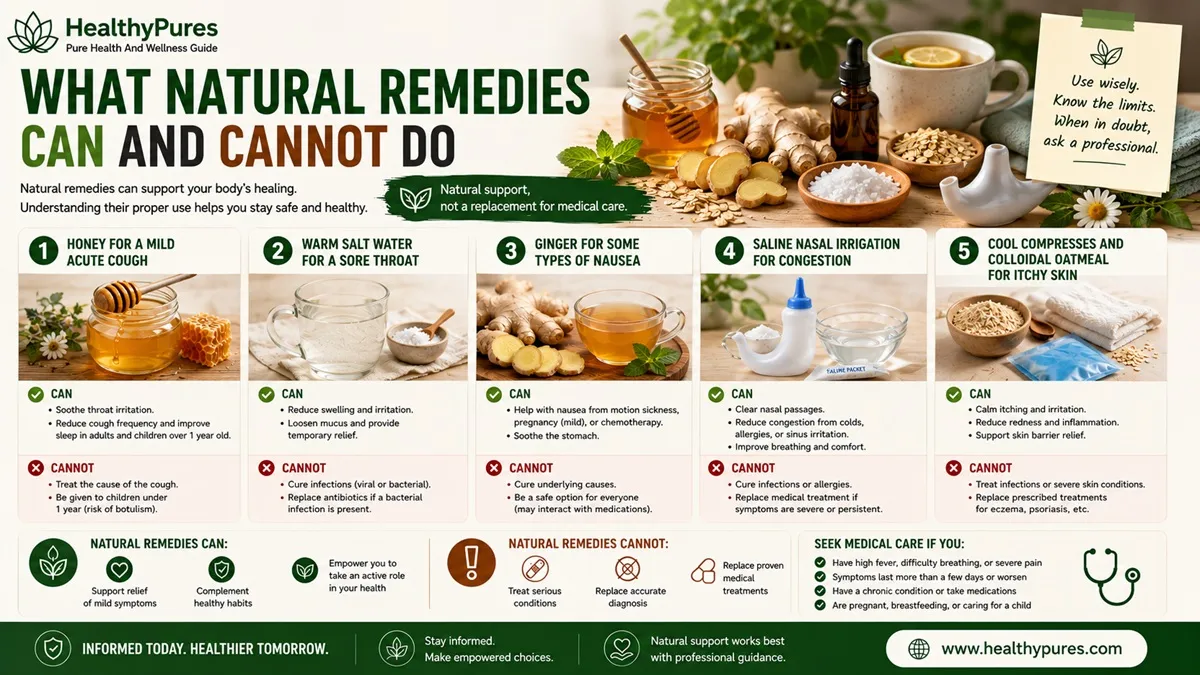
The term natural remedies for common ailments covers many foods, drinks, topical products, and self-care practices. Their evidence ranges from reasonably supportive to uncertain or mostly traditional.
“Natural” does not automatically mean safe or effective. Herbs can cause side effects, essential oils can irritate skin, and supplements can interact with medications.
Healthy Pures evaluates each remedy by its intended symptom and available evidence. We avoid treating traditional use as proof of a medical effect.
Healthy Pures Tip: Start with the simplest low-risk measure that matches the symptom. Stop if the remedy causes irritation, worsening symptoms, or another unexpected reaction.
1. Honey For A Mild Acute Cough
Honey is one of the better-supported natural remedies for common ailments involving an uncomplicated cough. It may help soothe throat irritation and reduce coughing for some people.
The CDC guidance for common cold care lists honey for adults and children aged one year or older.
Try a small spoonful on its own or stir it into warm water. Avoid very hot drinks if your throat is already irritated.
Safety: Never give honey to a child younger than one year. Honey does not treat pneumonia, asthma, influenza, or another underlying cause of persistent coughing.
2. Warm Salt Water For A Sore Throat
A warm salt-water gargle is a simple option for temporary throat comfort. It does not eliminate every cause of a sore throat.
The CDC sore throat guidance includes salt-water gargling among measures that may help people feel better.
Dissolve a small amount of salt in warm water, gargle briefly, then spit it out. This method is suitable only for people who can gargle safely.
Among natural remedies for common ailments, this option is inexpensive and easy to use. Seek care for breathing difficulty, severe swallowing problems, dehydration, or concerning persistent symptoms.
3. Ginger For Some Types Of Nausea
Ginger has been studied for nausea in several settings. Results differ depending on the cause, dose, formulation, and population studied.
The NCCIH review of ginger notes possible benefit in some situations but also important uncertainty.
For mild nausea, some adults prefer ginger tea or ginger used as food. Supplements are more concentrated and deserve additional caution.
These natural remedies for common ailments should not mask repeated vomiting or dehydration. Pregnancy, gallstones, medications, and other health factors can also change what is appropriate.
4. Saline Nasal Irrigation For Congestion
Saline irrigation can rinse mucus and debris from nasal passages. Technique and water safety are more important than many people realize.
The FDA nasal rinsing safety guidance says to use distilled, sterile, or previously boiled water.
Follow the device instructions and keep the container clean. Never use untreated tap water for a nasal rinse.
Saline rinsing is one of the natural remedies for common ailments that requires precise hygiene. Stop and seek advice if symptoms become severe, unusual, or persist.
5. Cool Compresses And Colloidal Oatmeal For Itchy Skin
A cool, damp compress can temporarily calm minor itching. Colloidal oatmeal baths may also soothe some forms of dry or irritated skin.
The American Academy of Dermatology itch-relief advice includes cool compresses and colloidal oatmeal among supportive options.
Use lukewarm rather than very hot water. Avoid fragranced products if they make the irritation worse.
These natural remedies for common ailments are intended for minor skin discomfort. Rapid swelling, breathing difficulty, spreading infection, or a severe reaction needs urgent evaluation.
You can also review our healthy skin tips for everyday skin-care habits.
6. Peppermint Oil For Some Tension Headaches
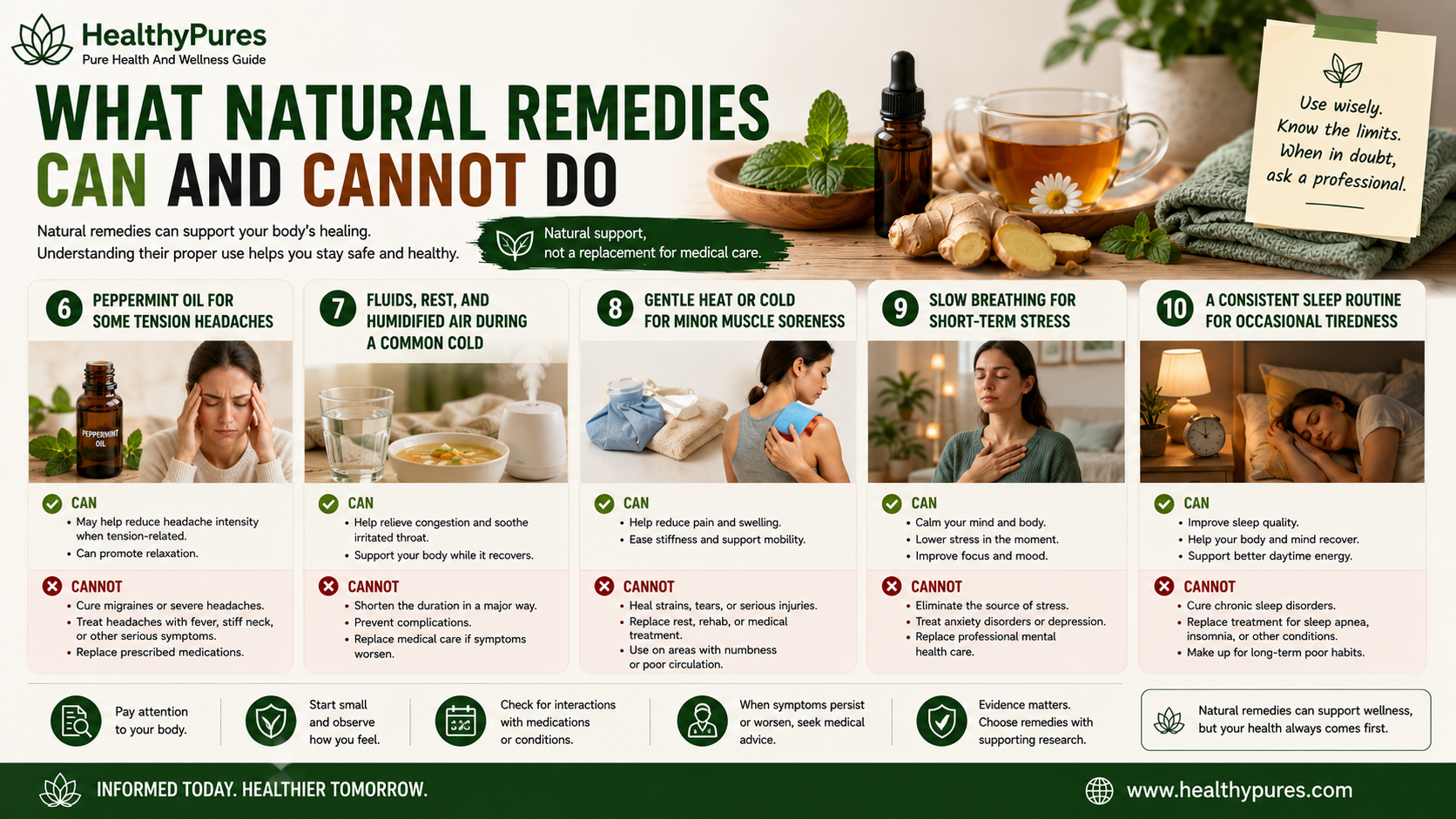
Topical peppermint oil has limited evidence for tension-type headache relief. The evidence is not strong enough to call it a proven headache treatment.
The NCCIH peppermint oil review describes limited research for topical use in tension headaches.
Use only a product intended for topical application and follow its directions. Keep essential oils away from the eyes and irritated skin.
Among natural remedies for common ailments, essential oils need extra caution because they are concentrated. Do not apply peppermint oil to an infant’s or young child’s face.
A sudden severe headache, neurological symptoms, head injury, or an unusual headache pattern requires medical assessment.
7. Fluids, Rest, And Humidified Air During A Common Cold
Most uncomplicated colds improve without a special “immune-boosting” remedy. Rest, fluids, and symptom-focused care can support comfort during recovery.
The CDC recommends measures such as adequate fluids and a clean humidifier or cool-mist vaporizer. These approaches manage symptoms rather than cure the infection.
Simple supportive care belongs among natural remedies for common ailments because it avoids unnecessary products. It also keeps expectations realistic.
Seek medical care for trouble breathing, dehydration, prolonged fever, or symptoms that improve and then worsen. High-risk people may need earlier medical advice.
8. Gentle Heat Or Cold For Minor Muscle Soreness
Minor muscle soreness after unfamiliar activity often improves with time and light movement. Some people also find brief heat or cold application comfortable.
Use a cloth barrier rather than placing an extreme-temperature pack directly on skin. Keep sessions brief and stop if the area becomes numb or painful.
These natural remedies for common ailments are for uncomplicated soreness, not suspected fractures or major injuries. Significant swelling, weakness, deformity, or severe pain needs evaluation.
For prevention, gradual progression matters. Our beginner home workout guide explains a more measured approach to exercise.
9. Slow Breathing For Short-Term Stress
Slow, controlled breathing can provide a short pause during everyday stress. It is a coping skill rather than a treatment for an anxiety disorder.
Try inhaling gently through the nose, then exhaling slowly without forcing the breath. Keep the practice comfortable and stop if you feel lightheaded.
When discussing natural remedies for common ailments, it is important to separate stress management from medical treatment. Persistent anxiety can require professional support.
Our simple stress relief activities offer additional low-pressure ideas for everyday stress.
10. A Consistent Sleep Routine For Occasional Tiredness
Occasional tiredness often follows insufficient or irregular sleep. A consistent wake time and a calmer evening routine may support better sleep habits.
Reduce late caffeine when it affects your sleep. Keep the bedroom quiet, dark, and comfortable when possible.
These habits are low-risk natural remedies for common ailments. They support sleep behavior without promising a medical cure.
Our guide to fixing a sleep schedule provides a structured approach.
Ongoing unexplained fatigue can have many causes. Seek medical evaluation when fatigue is persistent, severe, or accompanied by other concerning symptoms.
Natural Remedies We Would Not Recommend As Default Home Treatments
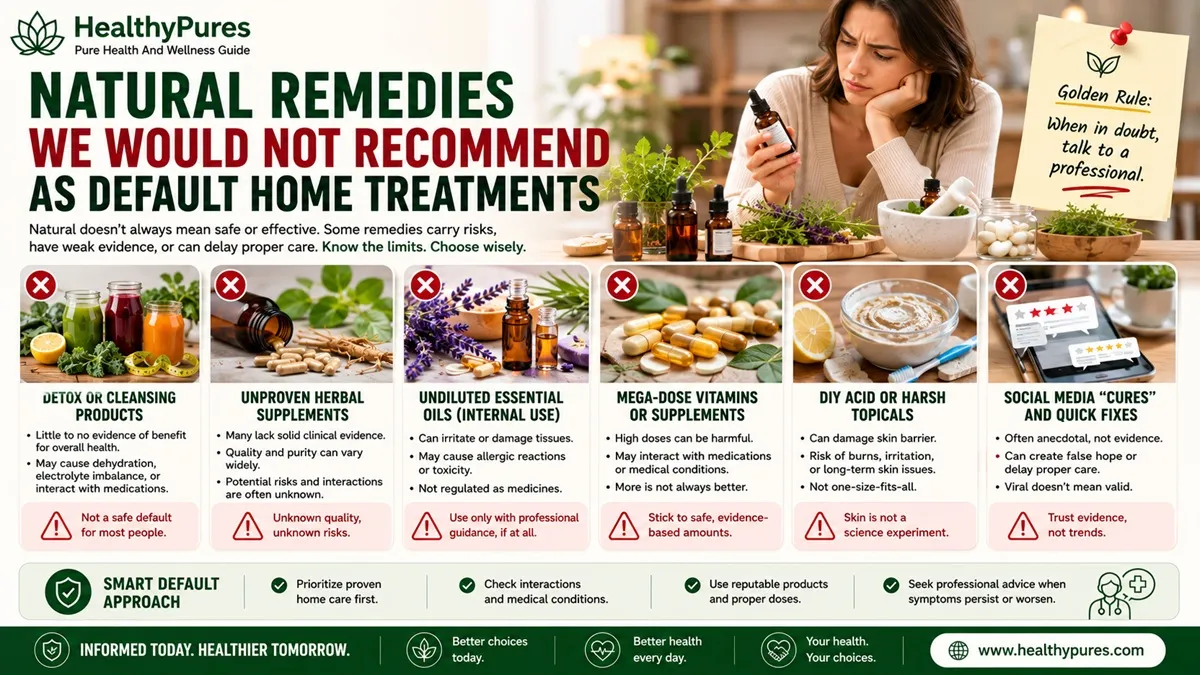
Not every popular home remedy belongs on a practical list of natural remedies for common ailments. Some have weak evidence, unnecessary risk, or can worsen the symptom they target.
We would not recommend drinking apple cider vinegar as a routine heartburn treatment. Acidic products can irritate tissues, and heartburn has multiple possible causes.
We avoid undiluted essential oils on skin or inside the nose. We also consider medications before suggesting herbal supplements.
Raw honey should not be placed on open wounds as a general household treatment. Medical-grade wound products are different from pantry honey.
How To Use Home Remedies More Safely
The safest natural remedies for common ailments are usually simple, symptom-specific, and used for a short period. They should not delay appropriate care.
- Use one new remedy at a time when possible.
- Follow age restrictions and product directions.
- Avoid ingesting essential oils.
- Check medication interactions before using concentrated herbal supplements.
- Stop if a remedy causes irritation or worsening symptoms.
- Keep children and pets away from concentrated oils and supplements.
If you use herbs or supplements, review our guide to herb-drug interactions before assuming a product is harmless.
When Home Care Is Not Enough
Even sensible natural remedies for common ailments have limits. Symptoms can look minor at first while still requiring professional assessment.
Seek urgent care for trouble breathing, chest pain, confusion, fainting, severe allergic symptoms, uncontrolled bleeding, or sudden neurological changes.
Medical advice is also appropriate for persistent fever, dehydration, repeated vomiting, worsening pain, or unexplained weight loss. Persistent symptoms also deserve attention.
Children, older adults, pregnant people, and people with chronic conditions may need earlier guidance. Medication use can also change the safety of herbal products.
Frequently Asked Questions
What Are The Best Natural Remedies For Common Ailments?
The best option depends on the symptom and the evidence supporting that remedy. Honey for acute cough and safe saline rinsing are two practical examples.
There is no single set of natural remedies for common ailments that is appropriate for every person or condition.
Can Natural Remedies Replace Prescription Medication?
No. Home remedies should not replace prescribed medication without guidance from the clinician managing your treatment.
Some herbs and supplements can also interact with prescription medicines. “Natural” does not remove that risk.
How Quickly Should A Home Remedy Work?
There is no universal timeline. Some measures provide temporary comfort, while the underlying minor illness improves on its own.
Evidence for natural remedies for common ailments also differs widely between ingredients and preparations.
If symptoms persist or worsen, repeatedly trying different natural remedies for common ailments can delay appropriate evaluation.
Are Herbal Remedies Safe During Pregnancy?
Not automatically. Pregnancy changes the safety considerations for many herbs, supplements, essential oils, and medications.
Ask a qualified healthcare professional before using concentrated herbal products during pregnancy or breastfeeding.
Can Children Use The Same Home Remedies As Adults?
No. Age restrictions, dosing, choking risks, and ingredient safety differ for children.
For example, honey should never be given to a child younger than one year. Essential oils also require special caution around young children.
Conclusion
Natural remedies for common ailments can be useful when expectations remain realistic. The strongest home strategies often focus on comfort, hydration, rest, safe hygiene, and symptom-specific support.
The goal is not to replace modern medicine with a pantry treatment. It is to use reasonable self-care while recognizing when professional help is the safer choice.
Healthy Pures favors remedies with a sensible safety profile and evidence that matches the claim. We also state uncertainty when the evidence is limited.
This article is for general educational purposes and does not provide medical diagnosis or individualized treatment. Review our Medical & Affiliate Disclaimer for more information.