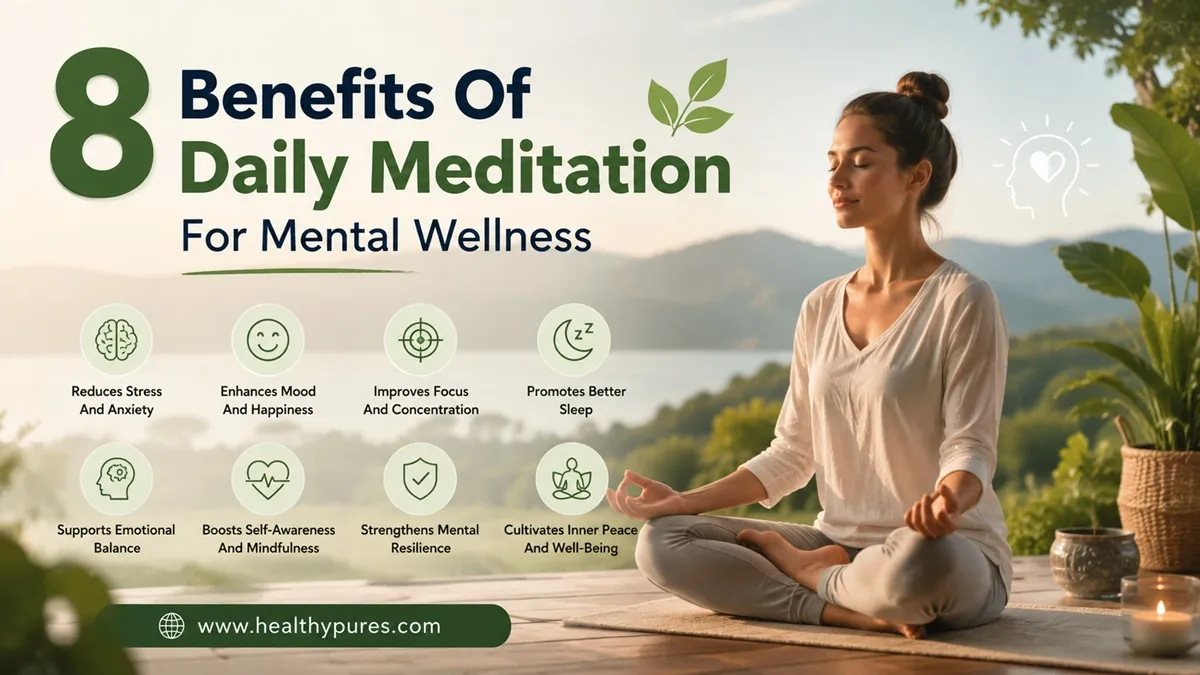
Meditation can create a short pause between daily demands and your next reaction. That simple pause may support several aspects of mental wellness.
The benefits of daily meditation are not guaranteed, and results differ between people. Research also studies many different meditation styles and programs.
This guide separates promising findings from exaggerated claims. It also explains how beginners can build a realistic practice without chasing instant results.
Quick Summary
- Potential benefits of daily meditation include support for stress, attention, and emotional awareness.
- Mindfulness practices may support attention, emotional awareness, and self-regulation.
- Some evidence suggests possible benefits for sleep quality and depressive symptoms.
- Daily practice is optional; consistency matters more than maintaining a perfect streak.
- Meditation should not replace professional mental health treatment when it is needed.
Quick Facts
| Aspect | Details |
|---|---|
| Typical Beginner Session | 5–10 minutes can be a practical starting point |
| Common Styles | Mindfulness, focused attention, body scan, loving-kindness |
| Potential Benefits | Stress management, focus, emotional awareness, sleep support |
| Evidence Quality | Varies by outcome, program, and study design |
| Daily Practice Required? | No; regular practice can be adapted to your schedule |
| Main Limitation | Not a replacement for mental health treatment |
The benefits of daily meditation matter most when expectations remain realistic and the practice fits your needs.
Who This Guide Is For
- ✔ Beginners curious about meditation and mental wellness
- ✔ People looking for a short daily stress-management habit
- ✔ Readers who want evidence-aware guidance without miracle claims
- ✔ Anyone unsure how much meditation is actually necessary
What Does Research Say About Daily Meditation?
Meditation includes many practices rather than one standardized technique. Mindfulness meditation usually involves present-moment attention without judgment.
The NCCIH meditation and mindfulness review reports possible benefits across several areas. These include stress, anxiety, depression, pain, and sleep.
NCCIH also cautions that many studies are preliminary or difficult to compare. Different methods, populations, and outcome measures can produce different findings.
Therefore, the benefits of daily meditation should be described as potential benefits rather than guaranteed effects.
Healthy Pures Tip: Treat meditation as a skill. A distracted session still gives you practice noticing where your attention goes.
1. Daily Meditation May Help With Perceived Stress
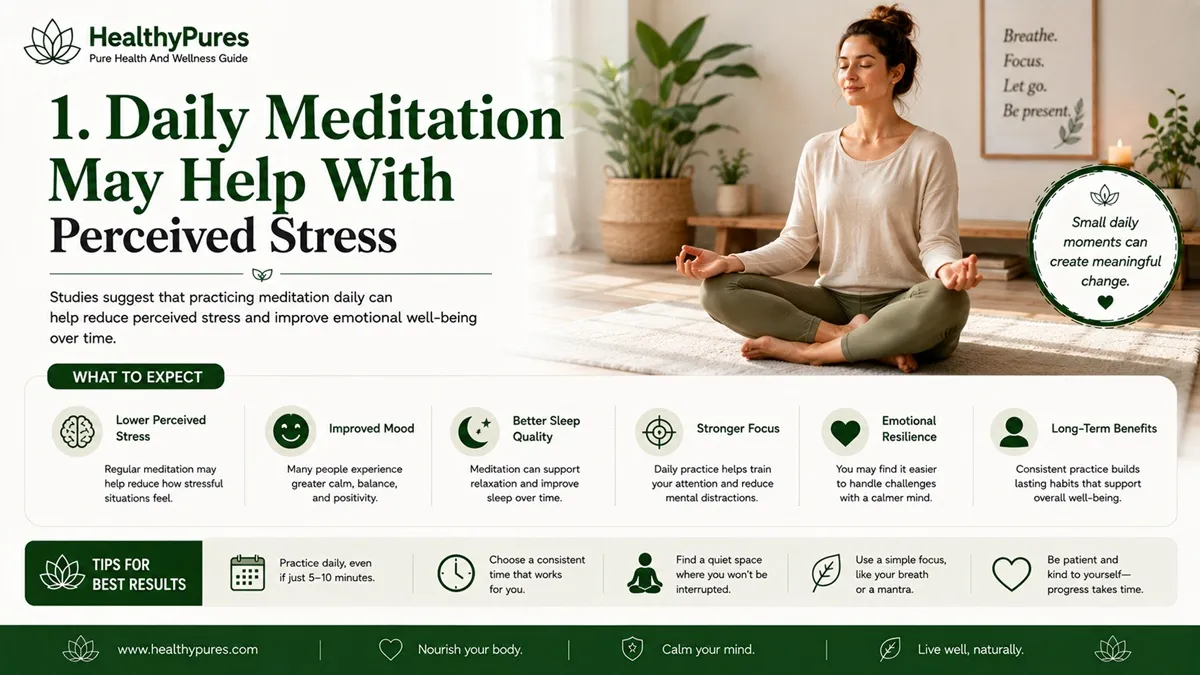
Stress management is one of the most studied benefits of daily meditation. Mindfulness practices may help some people respond differently to stressful thoughts and situations.
The NCCIH stress overview reports that mindfulness meditation may reduce some symptoms of stress. It may also help with anxiety and sleep.
This does not mean meditation removes the source of stress. Workload, finances, relationships, illness, and other stressors may still need practical solutions.
A short meditation can instead create time to notice thoughts, breathing, and physical tension. That awareness may make reactions feel more manageable.
These benefits of daily meditation may develop gradually rather than appearing after one quiet session.
What To Expect
Some sessions may feel calming, while others may not. A difficult meditation does not mean you are doing it incorrectly.
Use stress levels over several weeks as a better measure. Avoid judging the practice from one session.
2. Meditation May Support Anxiety Symptom Management
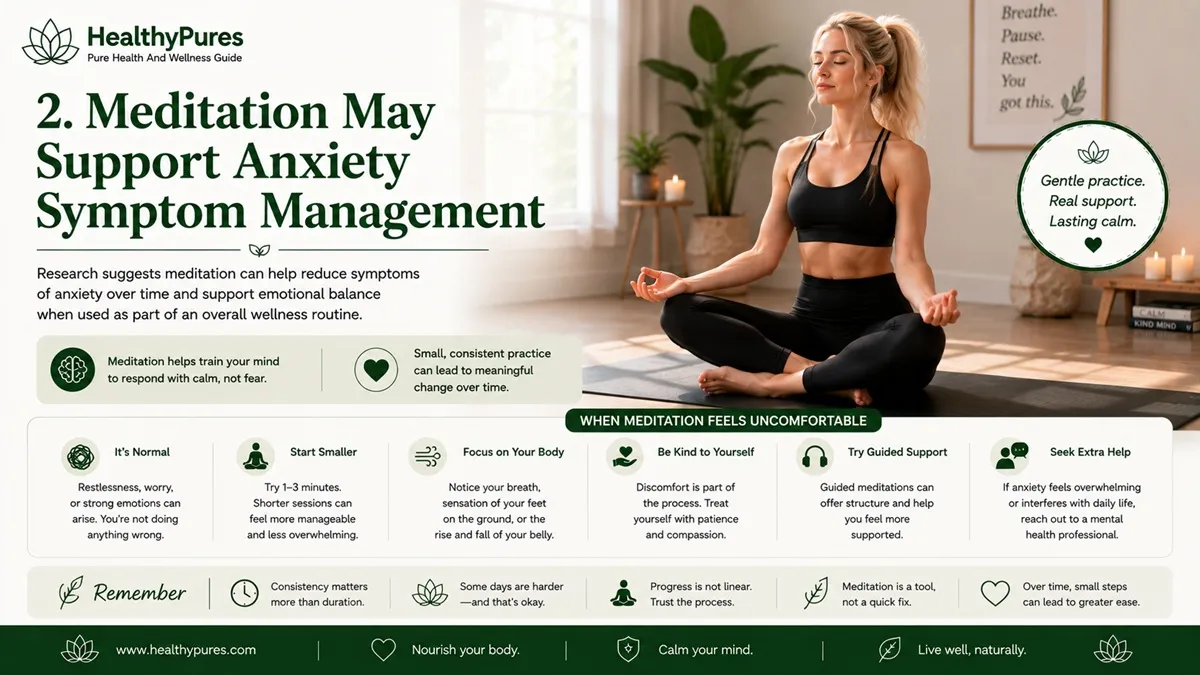
The benefits of daily meditation may include support for some anxiety symptoms. Mindfulness-based programs have been studied in several anxiety conditions.
The NCCIH anxiety guidance describes promising findings for some mindfulness-based approaches. It also notes limitations across the evidence.
Importantly, mindfulness programs are more structured than simply meditating alone for five minutes. Results from clinical programs cannot be assumed for every home practice.
Meditation can complement a broader coping plan. It should not replace psychotherapy, medication, or professional care when those treatments are appropriate.
The benefits of daily meditation do not require ignoring discomfort or forcing an inward focus.
When Meditation Feels Uncomfortable
Focusing inward can sometimes increase discomfort, anxiety, or difficult thoughts. That response deserves attention rather than being pushed through.
Try a shorter session or an eyes-open practice. Stop and seek support if meditation consistently worsens your symptoms.
3. Mindfulness May Help With Depressive Symptoms
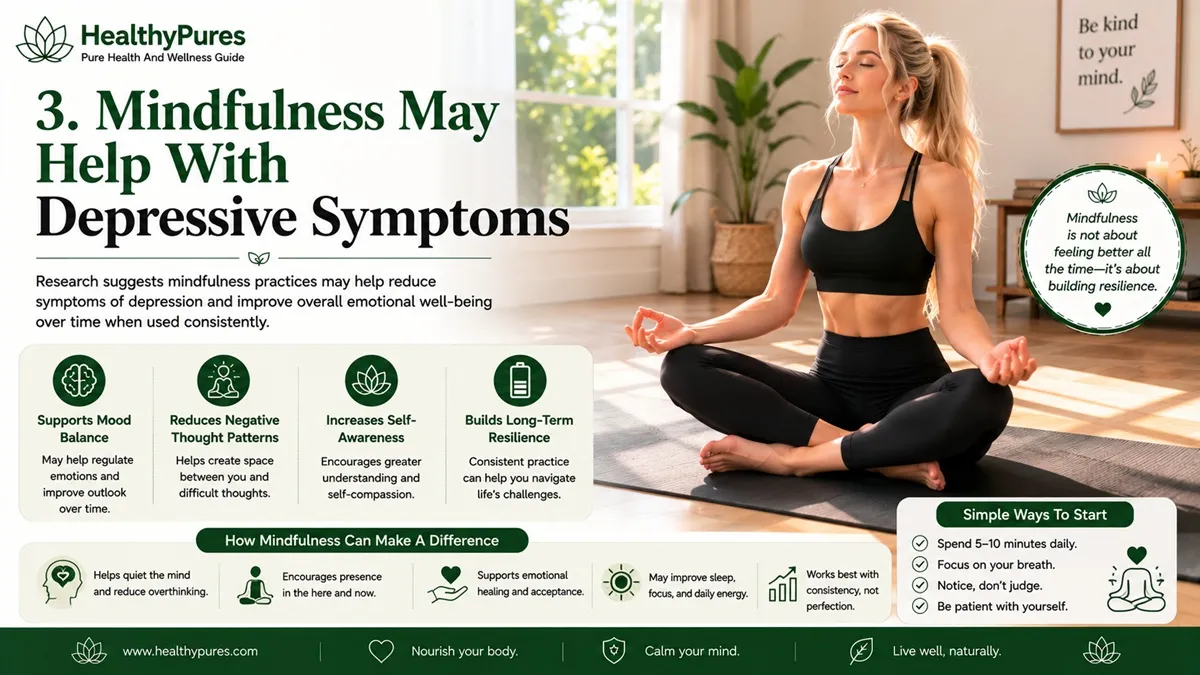
The benefits of daily meditation may include support for depressive symptoms in some settings. Stronger evidence often involves structured mindfulness-based programs.
The same NCCIH evidence summary notes benefits in some studies involving anxiety and depression. Study quality and follow-up periods vary.
Meditation is not a cure for depression. It should never be used to delay assessment when low mood is persistent or severe.
Professional support is especially important when depression affects daily functioning. Immediate help is needed for thoughts of self-harm or suicide.
For lower-pressure coping ideas, see our simple stress relief activities.
4. Meditation May Support Attention And Focus

Training attention is central to many meditation styles. You notice distraction and gently return attention to a chosen anchor.
That repeated process may support attention. Better focus is one of the commonly discussed benefits of daily meditation.
A recent Harvard Health review of mindfulness and focus describes evidence linking mindfulness with sustained attention.
However, meditation does not make the brain permanently distraction-proof. Sleep, workload, environment, and mental health can also affect concentration.
Attention-related benefits of daily meditation should be viewed as skill development, not permanent cognitive enhancement.
A Simple Focus Practice
Choose one sensation, such as breathing at the nose. Notice when your attention moves elsewhere.
Then return without criticizing yourself. Repeating that cycle is the practice rather than a failure of concentration.
5. Meditation May Support Emotional Regulation

Emotional regulation means responding to feelings without automatically acting on every impulse. Meditation may provide practice noticing emotions before reacting.
The American Psychological Association discusses mindfulness and reduced unhelpful reactions during stress. Its mindfulness meditation overview also describes attention and emotion regulation.
Emotional awareness is among the plausible benefits of daily meditation. That does not mean difficult emotions disappear.
The aim is usually to notice thoughts and feelings more clearly. You can then decide how to respond.
The emotional benefits of daily meditation are better framed as awareness and response flexibility than constant calm.
Meditation Is Not Emotional Suppression
Mindfulness does not require forcing yourself to feel calm. It also does not mean ignoring anger, sadness, grief, or fear.
Healthy emotional regulation includes recognizing those experiences. Professional help may be appropriate when emotions become overwhelming or persistent.
6. Meditation May Support Sleep Quality
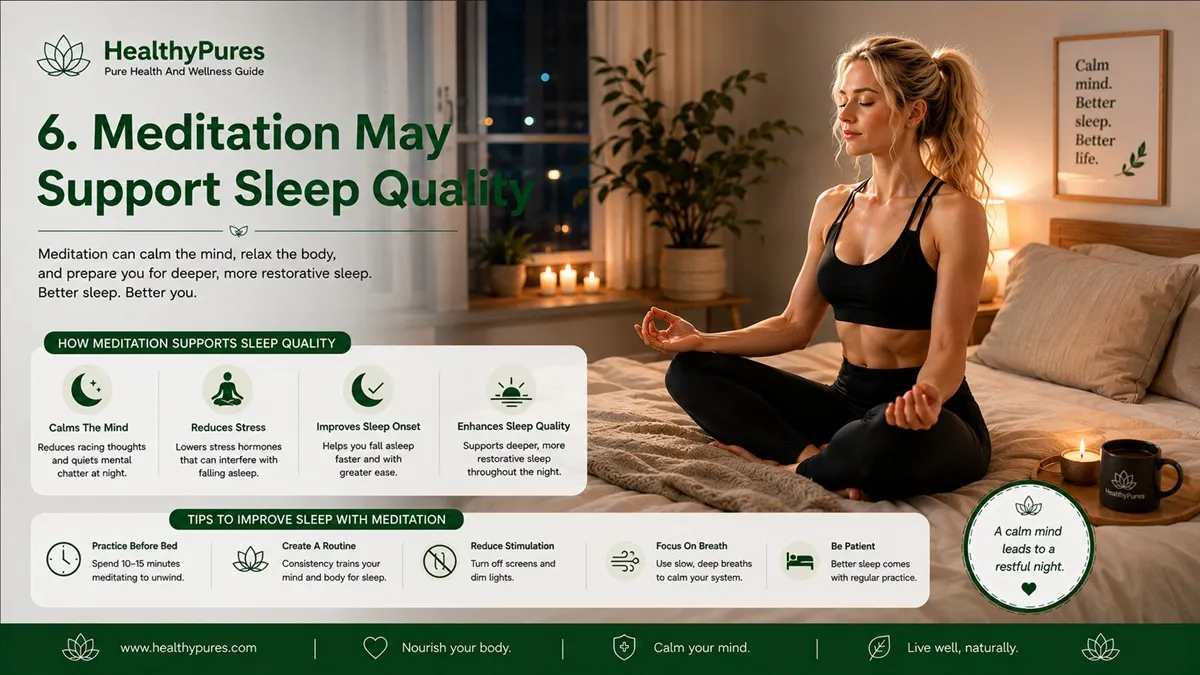
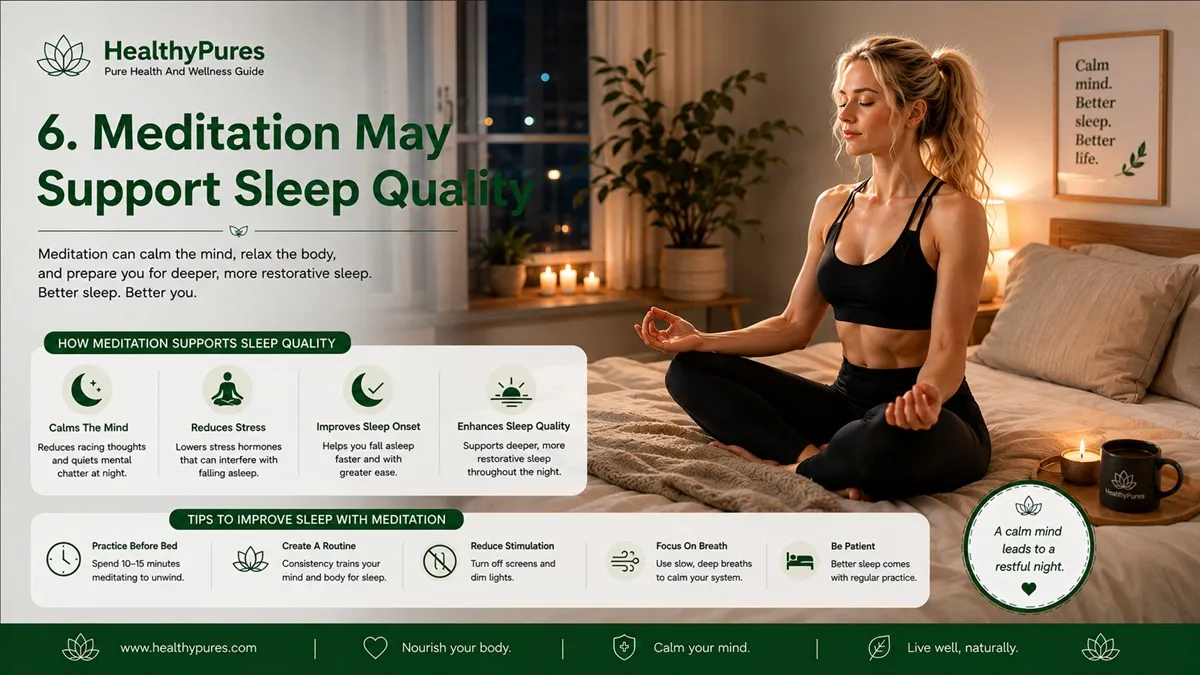
Sleep support is often listed among the benefits of daily meditation. However, findings differ across populations and meditation programs.
The NCCIH sleep evidence review describes mixed results for mindfulness and insomnia. Some studies suggest improved sleep quality.
Other reviews have found insufficient evidence for mindfulness as a stand-alone insomnia treatment. Cognitive behavioral therapy for insomnia has stronger clinical support.
A short evening meditation may still be a useful wind-down habit. It should not be presented as a cure for chronic insomnia.
For broader sleep habits, see our guide to fixing your sleep schedule.
7. Meditation Can Build Greater Self-Awareness
Self-awareness is another practical area within the benefits of daily meditation. Meditation gives you repeated opportunities to observe thoughts, habits, and reactions.
You may begin noticing recurring patterns without immediately following them. That observation can help you understand triggers and automatic responses.
Self-awareness does not require analyzing every thought. In mindfulness practice, the emphasis is often on noticing and returning attention.
This skill can also support other healthy habits. You may notice when stress affects eating, sleep, movement, or communication.
Our yoga and meditation guide explores another way to combine mindful awareness with movement.
8. Some Practices May Encourage Compassion And Connection

Not every meditation technique focuses on attention alone. Loving-kindness practices intentionally cultivate goodwill toward yourself and other people.
Compassion can therefore be included among the broader benefits of daily meditation. The strength of evidence depends on the practice and outcome studied.
These exercises often use short phrases of goodwill. They are different from simply trying to force positive emotions.
If loving-kindness feels uncomfortable, choose another meditation style. A practice does not need to fit everyone to be useful for some people.
The benefits of daily meditation vary by technique, consistency, and individual circumstances.
The 8 Benefits At A Glance
| Potential Benefit | Evidence-Aware Take |
|---|---|
| Stress | May reduce perceived stress for some people |
| Anxiety | May help symptoms within some structured programs |
| Depressive Symptoms | Possible supportive role; not a replacement for treatment |
| Focus | Attention training may support concentration |
| Emotional Regulation | May help people notice reactions before acting |
| Sleep | Possible sleep-quality benefit; insomnia evidence remains mixed |
| Self-Awareness | Can encourage observation of thoughts and habits |
| Compassion | Some meditation styles intentionally train compassion |
How Long Should You Meditate Each Day?
You do not need a long session to begin exploring the benefits of daily meditation. Five minutes can be a manageable starting point.
There is no universal minimum dose that guarantees a mental wellness benefit. Research uses different session lengths, frequencies, and program structures.
Start with five to ten minutes if that feels realistic. Increase the duration only when you want more practice.
Daily meditation is also not mandatory. Three or four sessions each week may be easier to maintain for some beginners.
A Simple 5-Minute Meditation For Beginners
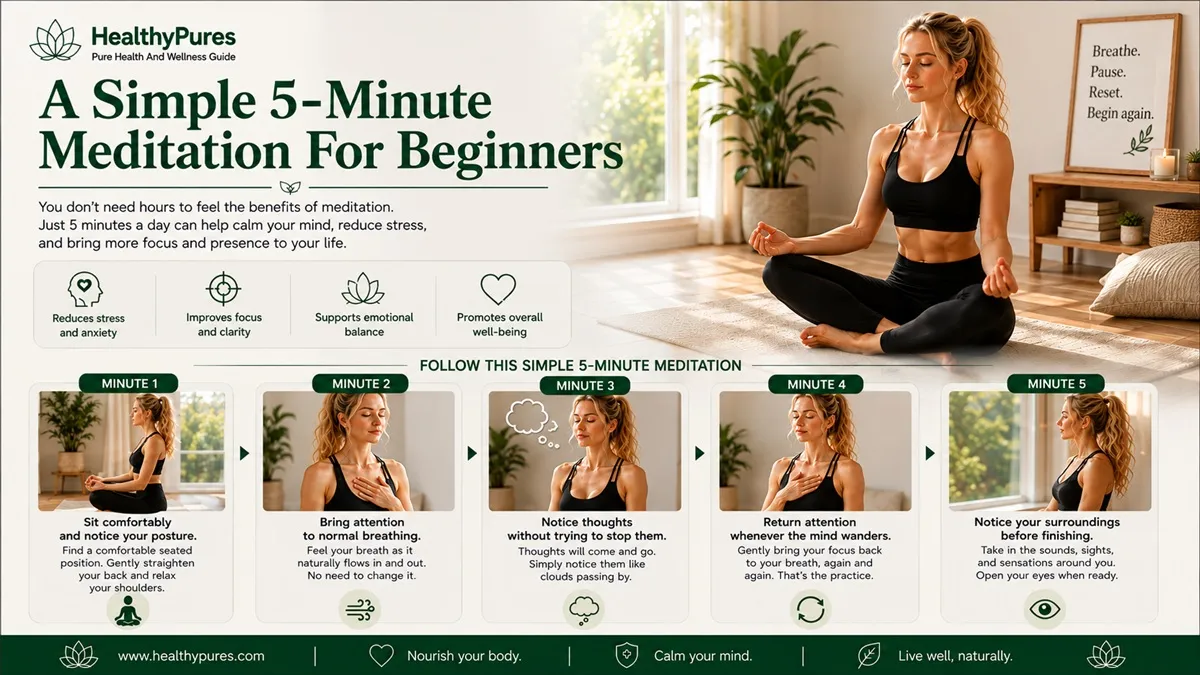
- Minute 1: Sit comfortably and notice your posture.
- Minute 2: Bring attention to normal breathing.
- Minute 3: Notice thoughts without trying to stop them.
- Minute 4: Return attention whenever the mind wanders.
- Minute 5: Notice your surroundings before finishing.
This short practice is enough to learn the basic process. It does not guarantee all eight benefits of daily meditation.
If sitting still feels uncomfortable, try mindful walking instead. Meditation can be adapted to different preferences and abilities.
Common Meditation Mistakes
Unrealistic expectations can make meditation harder to maintain. Beginners often assume the goal is to eliminate thoughts completely.
- Do not treat mind-wandering as failure.
- Do not force yourself through worsening anxiety or distress.
- Do not assume longer sessions are automatically better.
- Do not expect immediate changes after one practice.
- Do not replace needed mental health care with meditation.
The benefits of daily meditation are more realistic when the practice remains flexible. Consistency should support your life rather than become another source of pressure.
Are There Any Risks?
Meditation is often considered low risk, but it is not completely risk-free. Some people report unpleasant psychological experiences.
NCCIH notes that negative effects have been reported in meditation research. Anxiety and depression were among the more commonly reported experiences.
That finding does not mean meditation is generally dangerous. It does mean “natural” should not be confused with guaranteed safety.
People with trauma histories or significant psychiatric symptoms may prefer professional guidance. Stop if the practice repeatedly increases distress.
Frequently Asked Questions
What Are The Main Benefits Of Daily Meditation?
Potential benefits of daily meditation include stress management, attention, emotional awareness, and possible sleep support. Some mindfulness programs also show benefits for anxiety or depressive symptoms.
Effects vary between individuals and techniques. Evidence is stronger for some outcomes than others.
Do I Need To Meditate Every Day?
No. Daily practice can make the habit easier to remember, but it is not mandatory.
Choose a schedule you can maintain comfortably. A missed day does not erase previous practice.
How Soon Will I Notice A Difference?
There is no reliable timeline that applies to everyone. Some people notice immediate relaxation, while others do not.
Many studies examine multiweek programs. Avoid promises that a few minutes will create lasting mental health changes.
Can Meditation Improve Focus?
Focused-attention meditation directly practices returning attention after distraction. Research suggests mindfulness may support attention in some people.
Concentration also depends on sleep, stress, environment, and health. Meditation is only one factor.
Can Meditation Help With Anxiety?
Mindfulness-based approaches may help anxiety symptoms for some people. Results vary, and structured clinical programs differ from casual home meditation.
Persistent anxiety deserves professional assessment. Meditation should not delay effective treatment.
Can Meditation Replace Therapy Or Medication?
No. Meditation can be a complementary wellness practice, but it is not a universal substitute for psychotherapy or prescribed medication.
Discuss treatment changes with the appropriate healthcare professional. Do not stop prescribed medication because meditation feels helpful.
Conclusion
The benefits of daily meditation are promising but should be described realistically. Research supports several potential mental wellness applications without guaranteeing results.
Meditation may support stress management, attention, emotional awareness, and sleep quality. Some structured programs may also help anxiety or depressive symptoms.
Start small, notice how you respond, and adapt the practice. Mental wellness is broader than any single habit.
For a movement-based option, try our 10-minute yoga for stress relief routine.
This article provides general educational information and does not replace individualized medical or mental health care. Review our Medical & Affiliate Disclaimer for more information.