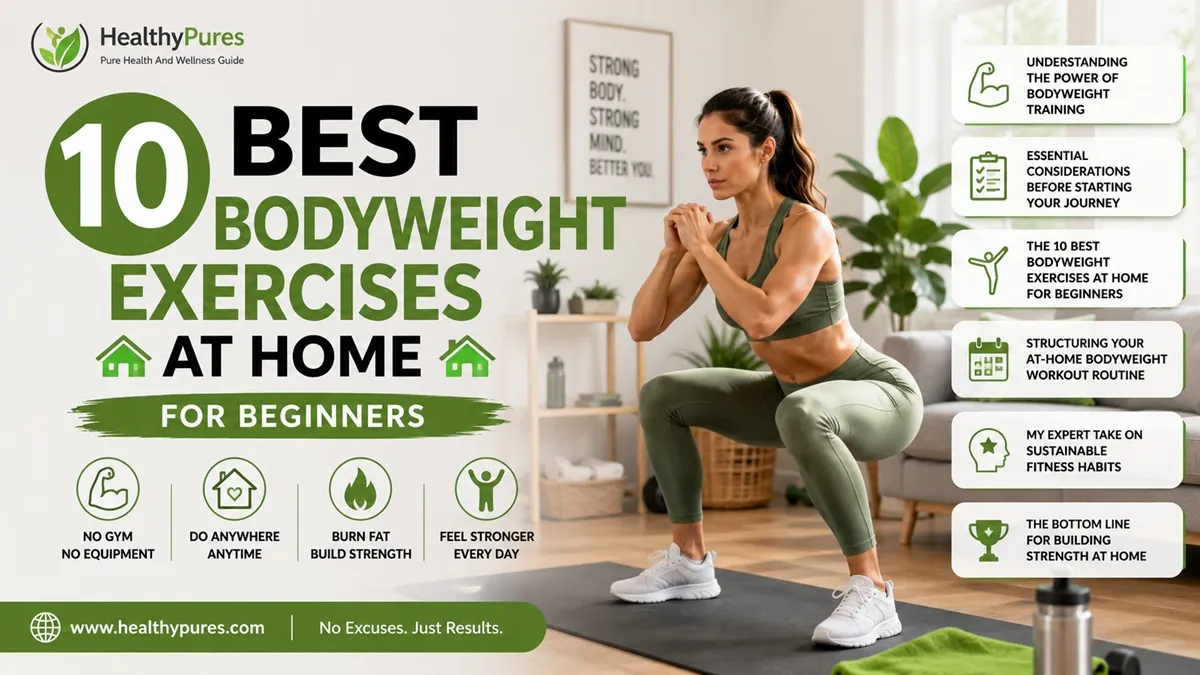
The relentless pursuit of fitness often feels like an uphill battle, especially when gym memberships are too expensive, time is scarce, or you simply prefer the comfort of your own space. Many of us yearn for a stronger, healthier body but feel overwhelmed by where to start, believing that effective workouts require complex equipment or specialized settings. The good news? You already have the most powerful fitness tool at your disposal: your own body. Mastering bodyweight exercises at home can be the most accessible, effective, and empowering step you take on your wellness journey.
As Lucas Miller, Lead Health Content Researcher & Editor at Healthy Pures, I focus on practical, evidence-based approaches to building strength and maintaining consistent movement. This comprehensive guide introduces 10 beginner-friendly bodyweight exercises that you can easily incorporate into your daily routine from the comfort of home. We’ll cover essential form tips, ways to structure your workouts, and practical guidance to help you build sustainable fitness habits without needing a gym.
Understanding The Power Of Bodyweight Training
Utilizing your own body as resistance is an incredibly effective strategy for building strength and improving overall fitness. These movements require no special equipment, making them ideal for anyone starting their fitness journey or looking for convenient alternatives.
Accessibility And Convenience
Bodyweight exercises at home eliminate common barriers to fitness, such as costly gym fees, lengthy travel time, and the need for specialized equipment. This approach offers unparalleled flexibility, allowing you to work out anytime and anywhere that suits your schedule.
The ease of access makes consistency easier to achieve. Whether you have 10 minutes or an hour, you can engage in beneficial physical activity without external constraints.
Building Foundational Strength And Stability
Bodyweight movements are fundamental to human movement patterns, engaging multiple muscle groups simultaneously and significantly improving core stability. These exercises serve as a bedrock for all other forms of exercise and daily activities.
The benefits extend to overall functional fitness, balance, and coordination, which are crucial for navigating daily life with ease and preventing injuries. Mastering these basic movements prepares your body for more advanced training down the line.
Essential Considerations Before Starting Your Journey
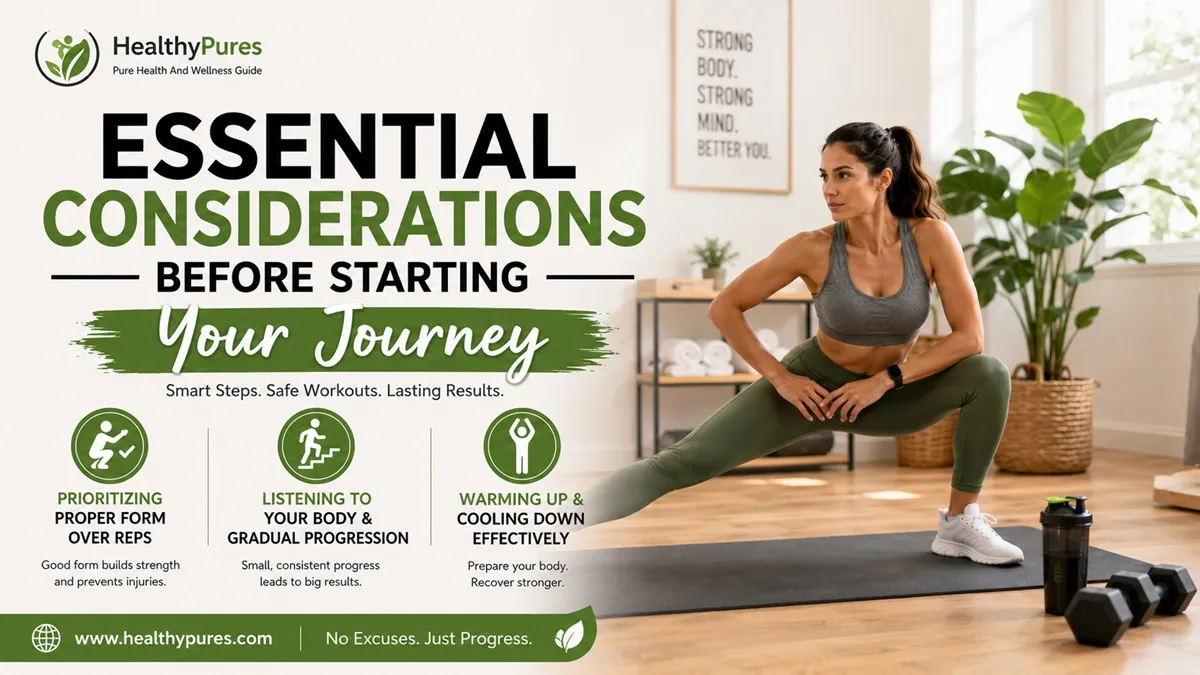
Before you dive into your at-home workouts, it’s critical to establish a solid foundation. Outline these guidelines to ensure safety and maximize the effectiveness of your bodyweight exercises at home.
Prioritizing Proper Form Over Reps
Correct technique is far more important than the number of repetitions you complete. Focusing on proper form prevents injury and ensures you are truly engaging the target muscles for optimal results.
We recommend watching instructional videos or even recording yourself to check your form. Small adjustments can make a significant difference in muscle activation and safety.
Listening To Your Body And Gradual Progression
Always pay close attention to your body’s signals. Learn to differentiate between healthy muscle fatigue and sharp, acute pain, taking adequate rest when needed to prevent overtraining or injury.
The concept of progressive overload is key to sustained progress in bodyweight training. As you grow stronger, gradually increase the difficulty of your full body home workout for beginners by adding more repetitions, sets, or moving to more challenging variations of the same bodyweight exercises at home.
Warming Up And Cooling Down Effectively
A dynamic warm-up before exercise prepares your muscles and joints for activity, increasing blood flow and flexibility. This vital step helps prevent strains and enhances performance.
Following your workout with a static cool-down aids flexibility and recovery. Simple stretches held for 20-30 seconds can improve range of motion and reduce post-exercise muscle soreness.
The 10 Best Bodyweight Exercises At Home For Beginners
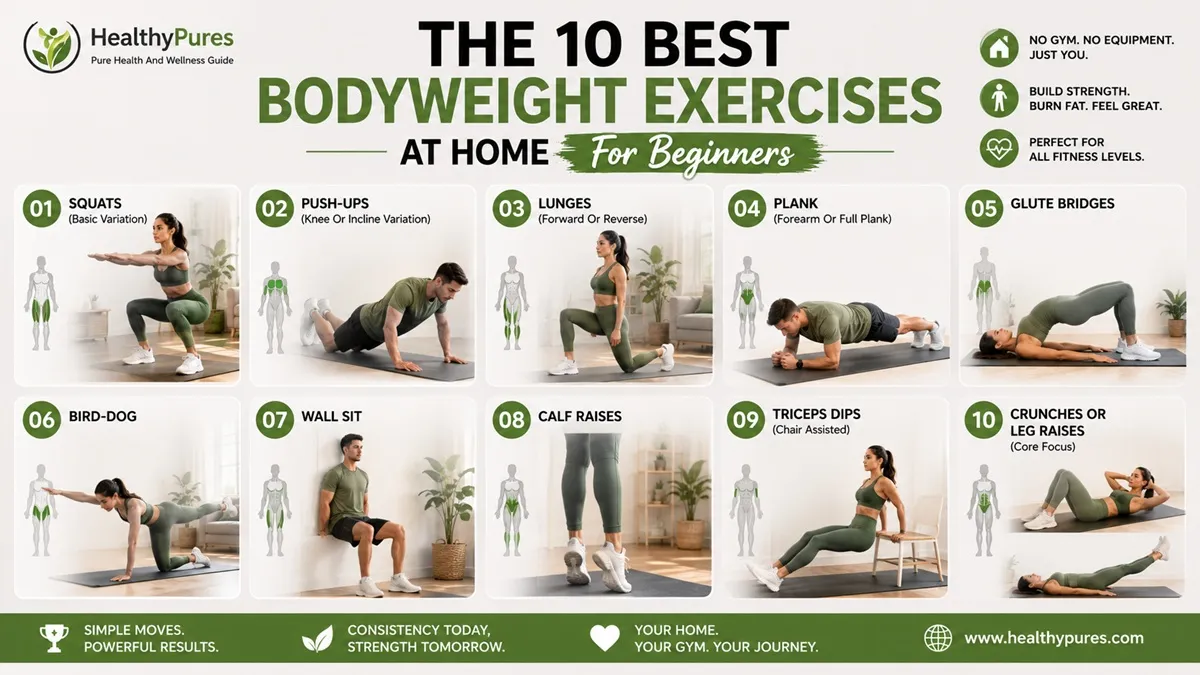
This section provides a clear, detailed breakdown of each exercise, including how to perform it, its primary benefits, and common beginner mistakes to avoid. This is the core of mastering bodyweight exercises at home.
Squats (Basic Variation)
Description: Stand with feet shoulder-width apart, toes slightly out. Lower your hips as if sitting in a chair, keeping your chest up, back straight, and core engaged. Ensure your knees track over your toes, not past them. Push through your heels to return to the starting position.
Benefits: This foundational movement builds strong legs, glutes, and significantly improves hip mobility. It’s a full-body exercise that develops functional strength.
Push-Ups (Knee Or Incline Variation)
Description: Start in a high plank position, hands slightly wider than shoulder-width. Lower your chest towards the floor, keeping your body in a straight line from head to heels. Push back up. Modify by performing on your knees or against a wall/elevated surface to reduce the intensity.
Benefits: A powerful exercise for strengthening your chest, shoulders, triceps, and core. Progressive variations allow for continuous improvement.
Lunges (Forward Or Reverse)
Description: Step one leg forward (or backward), lowering your hips until both knees are bent at approximately 90 degrees. Ensure your front knee is directly above your ankle and your back knee hovers just above the floor. Push off the front heel to return to the start.
Benefits: Lunges improve leg strength, balance, and actively engage the glutes. They are excellent for unilateral strength development.
Plank (Forearm Or Full Plank)
Description: Hold a rigid body position, supported on your forearms or hands and toes. Keep a straight line from your head to your heels, engaging your core and glutes. Avoid sagging hips or arching your back.
Benefits: The plank is unrivaled for developing strong core stability and muscular endurance. It strengthens your entire midsection without needing movement.
Glute Bridges
Description: Lie on your back with knees bent, feet flat on the floor, hip-width apart, and heels close to your glutes. Lift your hips off the floor, squeezing your glutes intensely at the top, until your body forms a straight line from shoulders to knees. Lower with control.
Benefits: This exercise effectively strengthens the glutes, hamstrings, and lower back, essential for overall posterior chain strength and counteracting prolonged sitting.
Bird-Dog
Description: Start on your hands and knees, with hands under shoulders and knees under hips. Engage your core, then extend your opposite arm and leg simultaneously, keeping your back flat and hips stable. Return to the starting position with control.
Benefits: The Bird-Dog enhances core stability, balance, and coordination, making it a powerful addition to your regimen of bodyweight exercises at home.
Wall Sit
Description: Lean against a sturdy wall with your feet shoulder-width apart, then slide down until your knees are bent at a 90-degree angle, as if sitting in an invisible chair. Hold this seated position for as long as possible, keeping your back flat against the wall.
Benefits: The wall sit builds impressive quadriceps endurance and static leg strength. It’s a challenging yet simple way to work your lower body.
Calf Raises
Description: Stand tall with your feet hip-width apart. Slowly raise up onto the balls of your feet, lifting your heels as high as possible. Hold briefly at the top, then lower with control. You can do this on a flat surface or with your toes elevated on a step for greater range of motion.
Benefits: This exercise specifically strengthens the calf muscles and improves ankle stability, crucial for walking, running, and jumping.
Triceps Dips (Chair Assisted)
Description: Position a sturdy chair or bench behind you. Place your hands on the edge of the chair, fingers pointing forward. Extend your legs out in front of you. Lower your body by bending your elbows until they reach a 90-degree angle, keeping your back close to the chair. Push back up to the starting position.
Benefits: This movement isolates and strengthens the triceps muscles in the back of your arms, contributing to upper body definition and strength.
Crunches Or Leg Raises (Core Focus)
Description: For crunches, lie on your back with knees bent, feet flat. Place hands behind your head or crossed over your chest. Lift your head and shoulders off the floor, engaging your upper abs. For leg raises, lie flat, keeping legs straight. Lift your legs towards the ceiling, engaging your lower abs, then lower slowly without letting your feet touch the floor.
Benefits: These exercises effectively target and strengthen the abdominal muscles for a stronger core, which supports posture and overall body function.
Structuring Your At-Home Bodyweight Workout Routine
Knowing the exercises is one thing, but combining them into an effective and sustainable routine is another. Here’s how to structure your bodyweight exercises at home.
Creating A Balanced Weekly Schedule
For beginners, we recommend aiming for 3-4 full-body workouts per week, allowing adequate rest days in between. This frequency provides enough stimulus for progress while allowing your body to recover.
A sample week might involve working out Monday, Wednesday, and Friday, with active recovery or rest on other days. Focus on consistent effort rather than sporadic, intense sessions.
Sets, Reps, And Time-Based Approaches
To build strength and endurance, aim for 2-3 sets of 8-15 repetitions for each exercise. Adjust the number of reps based on your current fitness level, ensuring you maintain proper form throughout.
Alternatively, a time-based approach can be effective: perform each exercise for 30-45 seconds, followed by 15-30 seconds of rest before moving to the next. This keeps intensity up and builds endurance.
Incorporating Active Recovery And Stretching
On your non-workout days, consider light activities like walking, gentle cycling, or yoga for active recovery. These activities boost blood flow and aid muscle repair without overtaxing your body.
Regular stretching, either as part of your cool-down or on separate days, is crucial for maintaining flexibility and reducing muscle soreness. It supports your overall physical well-being.
My Expert Take On Sustainable Fitness Habits
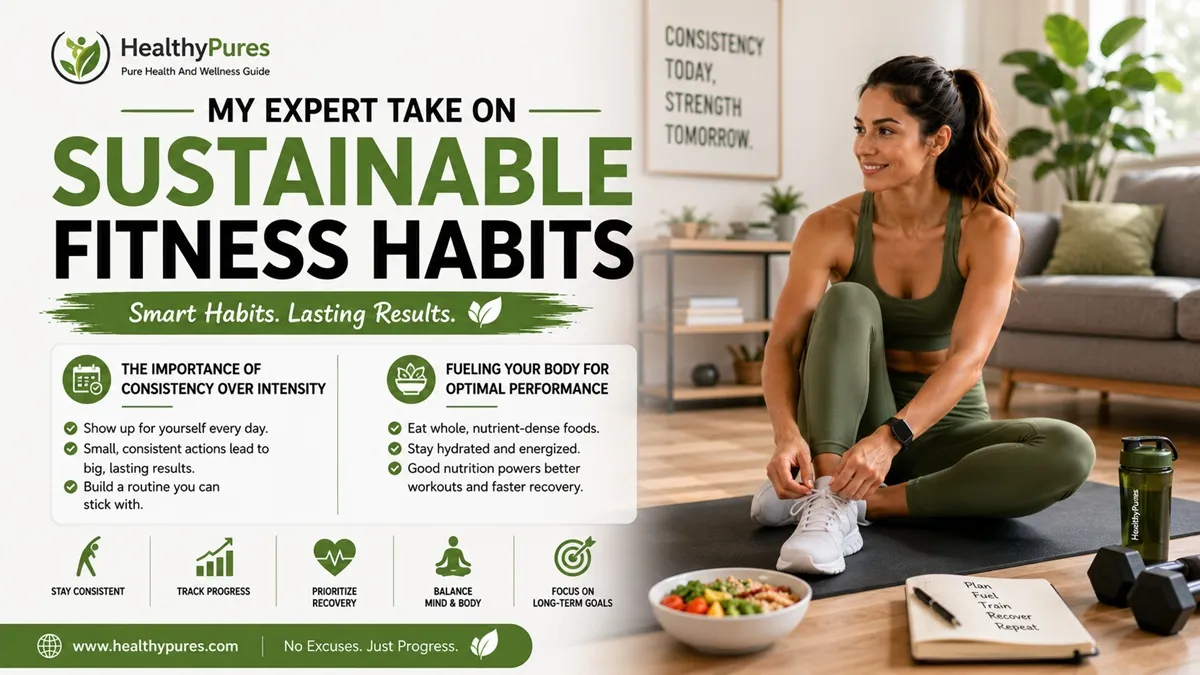
Making fitness a lasting part of your lifestyle extends beyond the exercises themselves. As Lucas Miller, Lead Health Content Researcher & Editor at Healthy Pures, I emphasize the importance of consistency, proper guidance, and realistic routines that can be maintained over time.
The Importance Of Consistency Over Intensity
The biggest misconception I encounter is that workouts must be grueling to be effective. In reality, showing up regularly, even for shorter sessions, yields greater long-term results than sporadic, intense workouts. Consistency builds momentum, mental resilience, and makes sticking with your regimen of bodyweight exercises at home much easier.
Small, regular efforts compound over time, leading to significant improvements in strength and overall health. Don’t underestimate the power of showing up day after day, even when motivation wanes. For additional strategies to build mental resilience, consider exploring simple stress relief activities that complement your physical routine.
Fueling Your Body For Optimal Performance
Exercise is only half the equation; what you consume directly impacts your energy levels, muscle recovery, and overall metabolic health. Focus on a balanced diet rich in whole foods to support your new exercise routine.
Simple, actionable dietary tips include prioritizing lean protein, complex carbohydrates, and healthy fats. Ensuring adequate hydration and nutrient intake will accelerate your results and enhance your well-being. Looking for nutritious options to support your fitness goals? Discover healthy snacks for weight loss that complement your active lifestyle.
Frequently Asked Questions About Bodyweight Exercises
Beginners often have similar questions when embarking on their bodyweight training journey. We’re here to address some of the most common inquiries.
Can I Build Muscle With Only Bodyweight Exercises?
Absolutely. While often associated with endurance, bodyweight training can effectively stimulate muscle growth. You can apply progressive overload by increasing repetitions, adding more sets, decreasing rest times between sets, or incorporating more advanced variations of the exercises.
For instance, moving from knee push-ups to full push-ups, or from standard squats to jump squats, will challenge your muscles in new ways, promoting hypertrophy.
How Often Should A Beginner Do Bodyweight Workouts?
For optimal results and to allow for adequate rest and recovery, beginners should aim for 3-4 full-body workout sessions per week. This schedule provides sufficient stimulus for adaptation while preventing overtraining when focusing on bodyweight exercises at home.
Listen to your body; if you feel excessively sore, a day of active recovery or complete rest might be more beneficial.
What If I Can’t Do A Full Push-Up Or Squat Yet?
That’s perfectly normal, and modifications are key! For push-ups, start with incline push-ups against a wall or a sturdy counter, or perform them on your knees. For squats, try chair squats, where you lower yourself to a chair and stand back up.
Every exercise has scalable variations to meet you at your current fitness level. Focus on mastering the modified version with good form before progressing.
Do I Need To Buy Any Equipment For Bodyweight Training?
The beauty of bodyweight training is its minimal equipment requirement. You literally only need your body. However, items like a yoga mat for comfort, or resistance bands for added challenge, can be optional enhancements as you progress.
You can achieve significant results with zero investment in equipment, which is why bodyweight exercises at home are so popular.
Is Bodyweight Training Good For Weight Loss?
Yes, bodyweight exercises at home contribute significantly to weight loss. They build muscle, which in turn boosts your metabolism, leading to more calories burned even at rest. Consistent effort and challenging your muscles will increase calorie expenditure during workouts.
When combined with a balanced, calorie-controlled diet and sufficient rest, bodyweight training is a powerful tool for achieving sustainable weight loss. For dietary support, consider exploring affordable clean eating recipes to complement your fitness journey.
The Bottom Line For Building Strength At Home
Embarking on a fitness journey doesn’t require a gym membership or fancy equipment. With the right approach to bodyweight exercises at home, you have everything you need to build foundational strength, improve your fitness, and cultivate lasting healthy habits. Remember that consistency, proper form, and listening to your body are your greatest allies. Start small, celebrate every step, and witness the incredible transformations your body is capable of achieving.
What is your favorite simple bodyweight exercise that makes you feel strong? Let us know in the comments below!
Because everyone s body is different, please make sure to consult with your doctor or a nutritionist before making any major changes to your diet. You can also read through our complete Medical Disclaimer here.