A short morning yoga routine for beginners can make morning movement feel more manageable. You do not need advanced flexibility, expensive equipment, or a long class.
This routine combines gentle movement, balance, breathing, and a brief rest. The goal is to help you move comfortably and build a repeatable morning habit.
Yoga may support general wellness, balance, flexibility, and stress management when practiced appropriately. It should not be treated as a cure for pain, anxiety, or other health conditions.
Quick Summary
- This routine takes about 10 minutes from start to finish.
- It uses beginner-friendly poses with simple modifications.
- A yoga mat is helpful but not required.
- Move slowly and stay within a comfortable range.
- Stop if you feel sharp pain, dizziness, or unusual symptoms.
Quick Facts
| Aspect | Details |
|---|---|
| Duration | About 10 minutes |
| Experience | Complete beginner |
| Equipment | Mat optional; chair or blocks may help |
| Primary Focus | Mobility, balance, breathing, and gentle movement |
| Frequency | Several mornings each week or as comfortable |
| Intensity | Gentle and adjustable |
Who This Guide Is For
- ✔ People trying yoga for the first time
- ✔ Anyone wanting a short morning movement habit
- ✔ Readers who prefer a gentle routine before work or daily activities
- ✔ Beginners who need modifications for balance or limited flexibility
What A Short Morning Yoga Practice May Offer

A morning yoga routine for beginners can combine physical movement with focused breathing. Research suggests yoga may support several aspects of general wellness.
The NCCIH overview of yoga notes possible benefits for stress management, balance, sleep, and general well-being.
However, yoga studies use different styles, durations, and populations. A 10-minute sequence should not be assumed to produce the same outcomes as longer research programs.
Regular physical activity also supports health in many ways. The CDC physical activity guidance describes benefits related to sleep, anxiety, bone health, and balance.
Healthy Pures Tip: Treat this routine as a simple movement habit. You do not need to chase a dramatic stretch or perfect pose.
Before You Start Your Morning Yoga Routine For Beginners
Choose a clear area where you can move without hitting furniture. Wear clothing that allows comfortable bending and reaching.
A mat can improve grip. A sturdy chair, folded blanket, or yoga blocks can also make several positions more accessible.
The Cleveland Clinic beginner yoga guidance recommends moving at your own pace, using modifications, and focusing on breathing.
If you are new to exercise, recovering from injury, or managing a health condition, professional guidance may be useful.
Your 10-Minute Morning Yoga Routine For Beginners At A Glance
| Time | Movement | Main Focus |
|---|---|---|
| 0:00–1:00 | Comfortable Breathing | Settle and notice your breath |
| 1:00–2:00 | Cat-Cow | Gentle spinal movement |
| 2:00–3:00 | Child’s Pose to Tabletop | Shoulders, hips, and breathing |
| 3:00–4:00 | Downward-Facing Dog Or Wall Dog | Whole-body mobility |
| 4:00–5:30 | Low Lunge | Hips and legs |
| 5:30–6:30 | Standing Forward Fold | Back-body mobility |
| 6:30–7:30 | Mountain Pose | Posture awareness and breathing |
| 7:30–8:30 | Supported Tree Pose | Balance |
| 8:30–9:30 | Seated Gentle Twist | Comfortable trunk rotation |
| 9:30–10:00 | Quiet Rest | Slow breathing and finish |
Morning Yoga Routine For Beginners: Steps 1–5
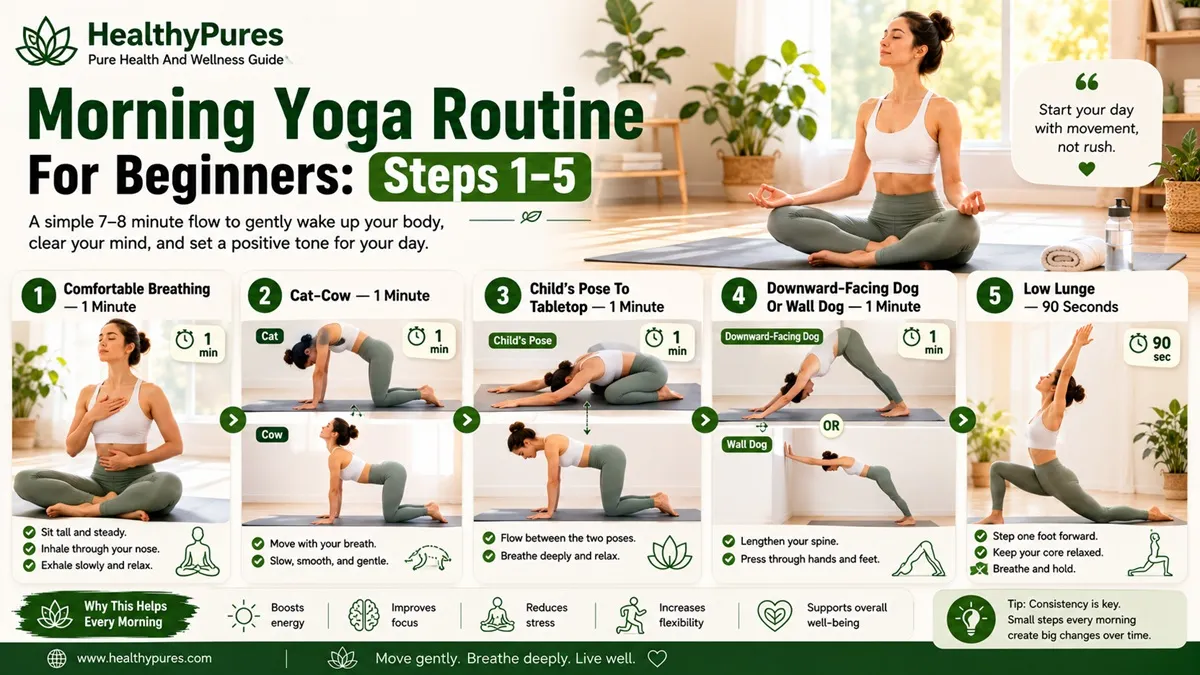
1. Comfortable Breathing — 1 Minute
Sit on a mat, cushion, or chair. Let your shoulders relax and keep your spine comfortably upright.
Breathe naturally through your nose if that feels comfortable. Notice each inhale and exhale without forcing a very deep breath.
This first minute of your morning yoga routine for beginners gives you time to settle before moving.
2. Cat-Cow — 1 Minute
Come onto your hands and knees. Place your hands near shoulder width and your knees near hip width.
On an inhale, gently lift your chest and allow your abdomen to soften. On an exhale, slowly round your back.
Repeat at a comfortable pace. Keep the movement small if your back feels stiff in the morning.
Beginner modification: Perform a seated version by gently arching and rounding your spine from a chair.
3. Child’s Pose To Tabletop — 1 Minute
From hands and knees, move your hips toward your heels. Reach your arms forward only as far as comfortable.
Return to tabletop on the next breath. Repeat slowly rather than holding a deep stretch.
This part of the morning yoga routine for beginners creates an easy transition before standing poses.
Beginner modification: Place a cushion beneath your hips or skip the backward movement if your knees object.
4. Downward-Facing Dog Or Wall Dog — 1 Minute
Choose the floor version or start with Wall Dog if you want more support. Both options can fit this beginner sequence.
For Downward-Facing Dog, tuck your toes from tabletop and gently lift your hips. Keep a generous bend in your knees.
Press through your hands without locking your elbows. Let your neck remain relaxed and avoid forcing your heels downward.
Beginner modification: Place your hands on a wall or sturdy counter. Step back until your torso forms a comfortable angle.
5. Low Lunge — 90 Seconds
Bring one foot forward between your hands. Lower the opposite knee onto the mat and keep the front foot stable.
Bring your hands to your front thigh or use blocks. Keep the position comfortable rather than pushing deeper.
Spend about 40 seconds on each side. Use the remaining time to change sides carefully.
The morning yoga routine for beginners uses this pose for gentle hip and leg mobility.
Beginner modification: Hold a chair for support or keep your hands on blocks.
Morning Yoga Routine For Beginners: Steps 6–10
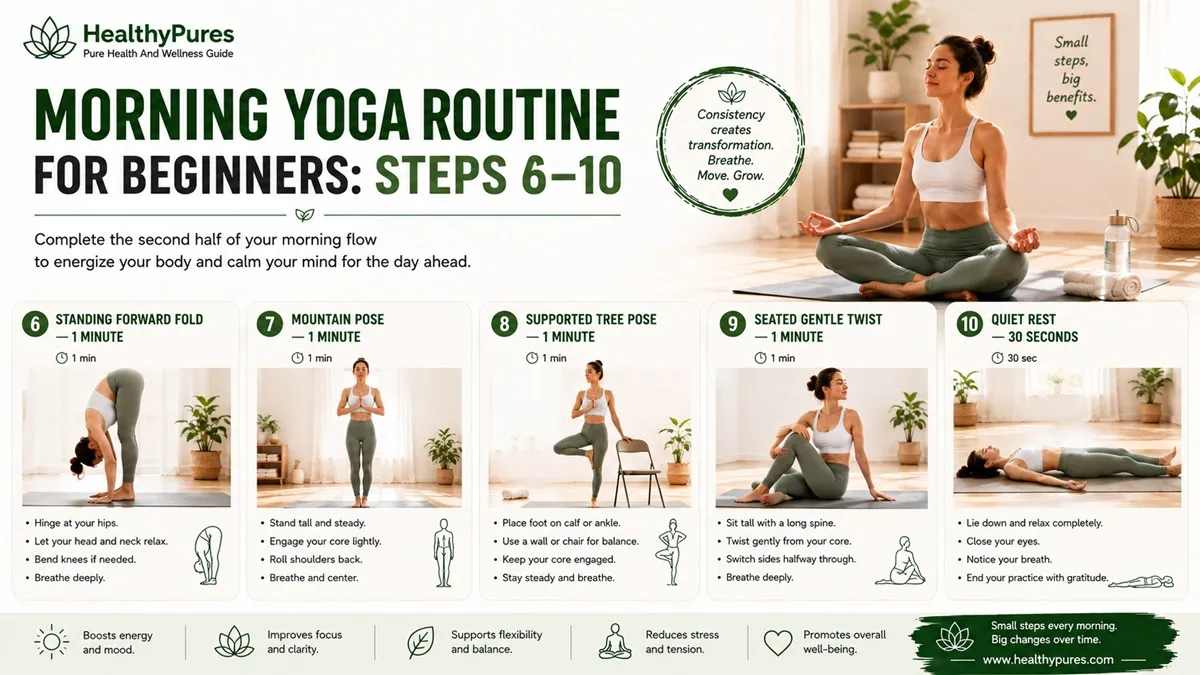
6. Standing Forward Fold — 1 Minute
Come to standing with your feet comfortably apart. Hinge forward from your hips and bend your knees slightly.
Rest your hands on your thighs, shins, blocks, or another stable surface. Do not force your fingers toward the floor.
Keep your neck relaxed. Rise slowly if you become lightheaded.
Beginner modification: Use a chair seat for support and keep your torso higher.
7. Mountain Pose — 1 Minute
Stand tall with your feet in a stable position. Let your arms rest naturally beside your body.
Notice your contact with the floor. Keep your knees soft and your shoulders relaxed.
Take several comfortable breaths. Think about standing with ease rather than holding a rigid posture.
This quiet standing position gives your morning yoga routine for beginners a simple reset before balance work.
8. Supported Tree Pose — 1 Minute
Stand beside a wall or chair. Shift your weight onto one foot and keep a hand on the support.
Place the other heel near your ankle. You can keep the toes touching the floor.
Hold for about 20 seconds, then switch sides. Repeat if time remains.
Beginner modification: Keep both feet down and practice shifting weight from side to side.
9. Seated Gentle Twist — 1 Minute
Sit comfortably on the floor or a chair. Keep your spine tall without forcing it straight.
Turn your chest gently toward one side. Avoid using your arms to pull yourself into a deeper twist.
Spend about 25 seconds on each side. Return to center slowly between sides.
Unlike some traditional claims, twisting should not be described as “detoxing” or massaging organs into better function.
10. Quiet Rest — 30 Seconds
Sit comfortably or lie down if that feels better. Let your breathing return to its natural rhythm.
Use this short pause to notice how your body feels. Then transition back into your morning gradually.
You have completed the full morning yoga routine for beginners in about 10 minutes.
Beginner Modifications That Make Yoga More Accessible
Yoga does not require extreme flexibility. Props and smaller ranges of motion can make a morning yoga routine for beginners more comfortable.
| If This Feels Difficult | Try This Modification |
|---|---|
| Kneeling hurts | Use folded padding or choose chair-based movements |
| Downward Dog feels intense | Use a wall or counter |
| Forward folds feel tight | Bend your knees and support your hands |
| Balance feels unstable | Use a wall or sturdy chair |
| Floor transitions are difficult | Use a chair-based sequence instead |
Our chair yoga for beginners guide provides another option for people who prefer more support.
How Often Should Beginners Practice Morning Yoga?
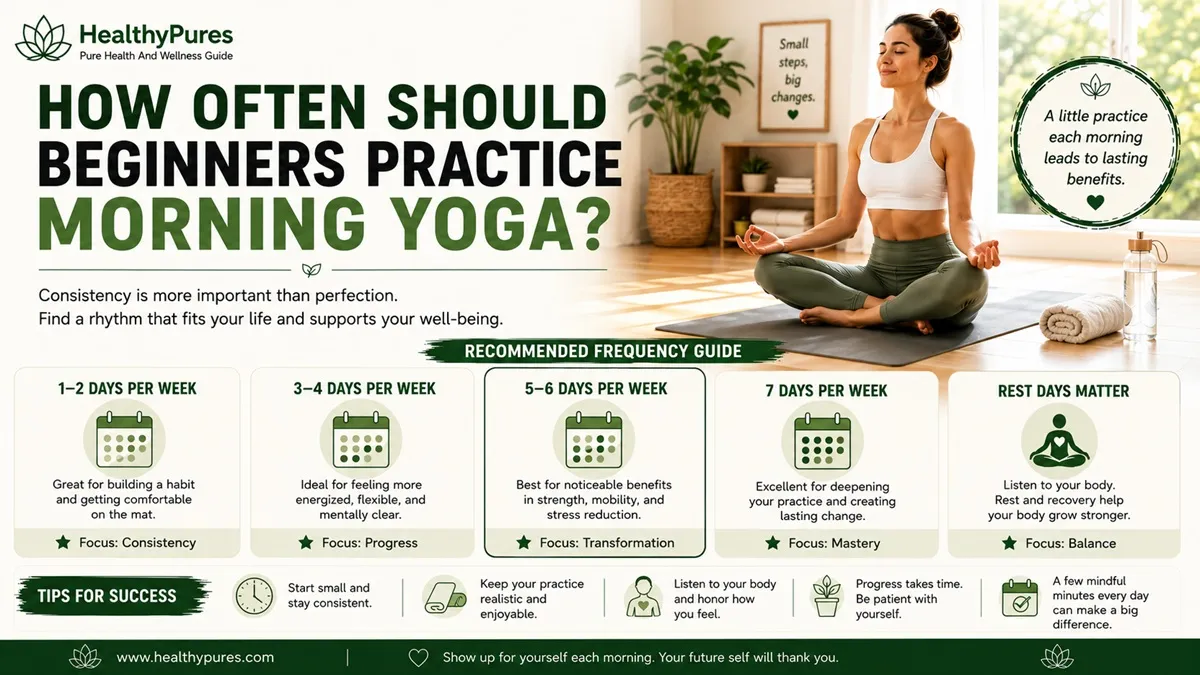
There is no required frequency for this morning yoga routine for beginners. Start with a schedule you can repeat without creating soreness or frustration.
Two or three mornings each week may be enough to build familiarity. You can practice more often if the routine remains comfortable.
Consistency matters more than forcing a daily streak. A shorter practice that fits your life is often easier to maintain.
For another short option, see our 10-minute yoga routine for stress relief.
Common Morning Yoga Mistakes To Avoid
The most common mistake is treating flexibility as the goal. A useful morning yoga routine for beginners should feel controlled, not competitive.
- Do not force a stretch because a pose looks different in a photo.
- Do not hold your breath during difficult positions.
- Do not rush transitions when you feel stiff after waking.
- Do not ignore sharp pain, numbness, or dizziness.
- Do not attempt advanced inversions without appropriate instruction.
The NCCIH yoga safety guidance notes that injuries can occur despite yoga’s generally favorable safety profile.
Cleveland Clinic also recommends learning proper technique and using modifications during home practice. Its home yoga guidance cautions beginners about advanced poses without instruction.
When To Modify Or Seek Professional Guidance
A morning yoga routine for beginners is not appropriate in exactly the same way for every body. Existing injuries and medical conditions may require changes.
NCCIH advises extra caution for older adults, pregnant people, and people with some health conditions. Balance problems and certain joint or spine conditions may also require modifications.
Pregnancy changes balance and exercise considerations. The ACOG pregnancy exercise guidance recommends discussing activity with an obstetric clinician when appropriate.
Stop and seek medical advice for chest pain, fainting, severe shortness of breath, or new neurological symptoms. Significant or persistent pain also deserves evaluation.
How To Make A Morning Yoga Habit Stick
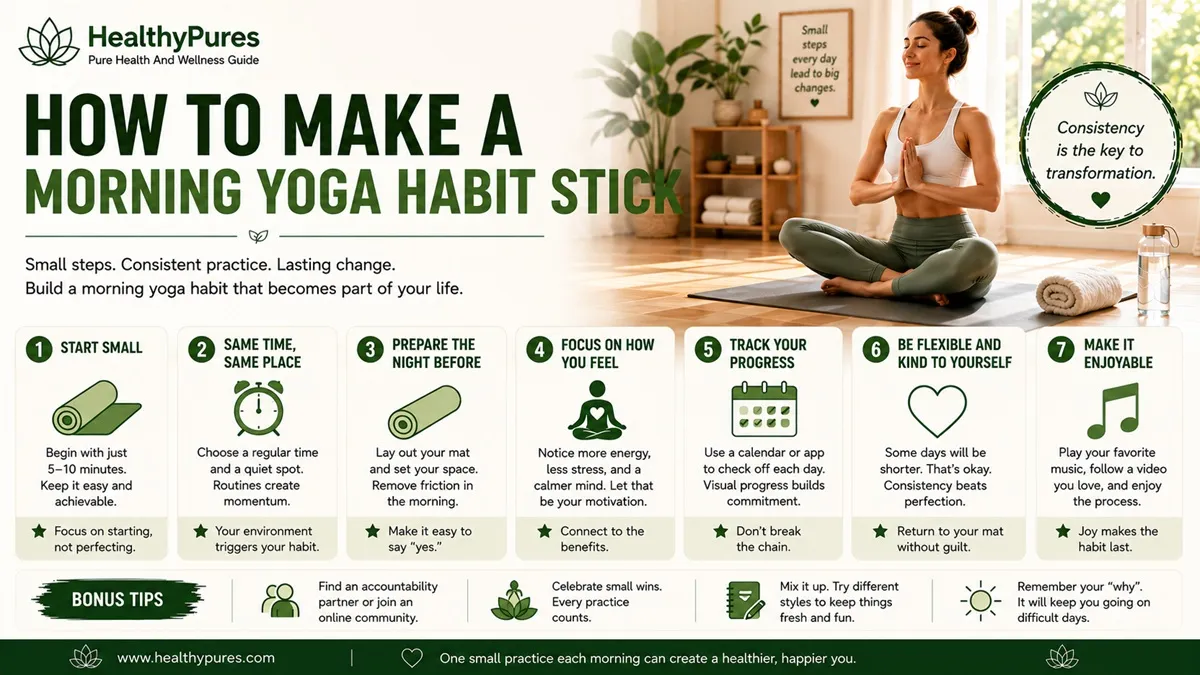
Make your morning yoga routine for beginners easy to start. Leave your mat or chair where you can see it.
Choose a consistent cue, such as after brushing your teeth or before breakfast. A visible reminder reduces the need to make a fresh decision.
On busy mornings, complete only the first three movements. Keeping the habit alive can matter more than completing every minute.
If you prefer a more active start, our 10-minute morning home workout offers another beginner-friendly option.
Frequently Asked Questions
Is 10 Minutes Of Morning Yoga Enough For A Beginner?
Ten minutes is enough to practice basic movements and establish a habit. It should not be viewed as a complete fitness program.
A morning yoga routine for beginners can complement walking, strength training, and other physical activity.
Should Beginners Do Yoga Every Morning?
Daily practice is not required. Start with a frequency that feels comfortable and adjust based on recovery and interest.
A morning yoga routine for beginners can be practiced several times weekly without requiring a rigid schedule.
Do I Need To Be Flexible Before Starting Yoga?
No. Flexibility is not a prerequisite for yoga.
Use bent knees, props, and smaller movements. Your goal is controlled movement within your current range.
Should I Do Morning Yoga Before Breakfast?
There is no universal rule. Some people prefer moving before breakfast, while others feel better after eating.
If you eat first, allow enough time for comfort. Large meals immediately before bending may feel unpleasant.
Can Morning Yoga Help With Stress?
Yoga may support stress management for some people, according to research summarized by NCCIH. Effects vary between people and programs.
A morning yoga routine for beginners should not replace treatment for persistent anxiety, depression, or another mental health condition.
What If I Cannot Get Down To The Floor?
Use a chair-based version. You can practice breathing, seated Cat-Cow, gentle twists, and supported standing movements.
The goal of a morning yoga routine for beginners is accessible movement, not matching a fixed sequence perfectly.
A morning yoga routine for beginners can provide structure for movement, breathing, and body awareness before the day begins.
This 10-minute sequence prioritizes comfortable ranges, realistic timing, and beginner modifications. It does not require advanced flexibility or complicated poses.
Practice consistently, adapt positions when needed, and avoid pushing through pain. A morning yoga routine for beginners should become easier to follow over time.
This article provides general educational information and does not replace individualized medical or fitness guidance. Review our Medical & Affiliate Disclaimer for more information.

