Searches for signs your body needs a detox often begin with fatigue, bloating, headaches, skin changes, or feeling generally unwell. These symptoms are real, but they do not prove that toxins are building up.
Your liver, kidneys, lungs, skin, and digestive system already handle normal waste processing. A safer approach is to address everyday habits and investigate persistent symptoms appropriately.
Quick Summary
- There is no validated symptom checklist proving that a healthy person needs a detox.
- Fatigue, bloating, headaches, skin changes, and weight shifts can have many causes.
- Commercial detox diets have limited evidence for removing unspecified toxins.
- Regular meals, hydration, sleep, movement, and less alcohol support general health.
- Persistent or severe symptoms deserve medical evaluation rather than a cleanse.
Quick Facts
| Question | What To Know |
|---|---|
| Do symptoms prove toxin buildup? | No. Common symptoms can have many unrelated causes. |
| Do detox diets remove toxins? | Evidence for commercial detox programs is limited. |
| Should you fast? | Extreme fasting is unnecessary and can cause side effects. |
| What should you start with? | Regular meals, water, sleep, movement, and realistic routines. |
| When should you seek help? | When symptoms are persistent, severe, sudden, or concerning. |
Who This Guide Is For
- ✔ Adults searching for signs your body needs a detox without wanting extreme cleanses.
- ✔ People experiencing mild fatigue, bloating, headaches, or temporary routine changes.
- ✔ Readers confused by online toxin, cleanse, or detox claims.
- ✔ Anyone wanting practical steps before buying detox supplements.
Are There Really 6 Signs Your Body Needs A Detox?
There is no medical test that diagnoses a general need for a wellness detox. The phrase is mostly used in consumer wellness content.
The NCCIH guide to detoxes and cleanses reports limited evidence for detox programs. It also notes safety concerns with some restrictive approaches.
That changes how we should interpret signs your body needs a detox. The symptoms below deserve context rather than a toxin-based diagnosis.
The 6 Signs People Often Mistake For Needing A Detox
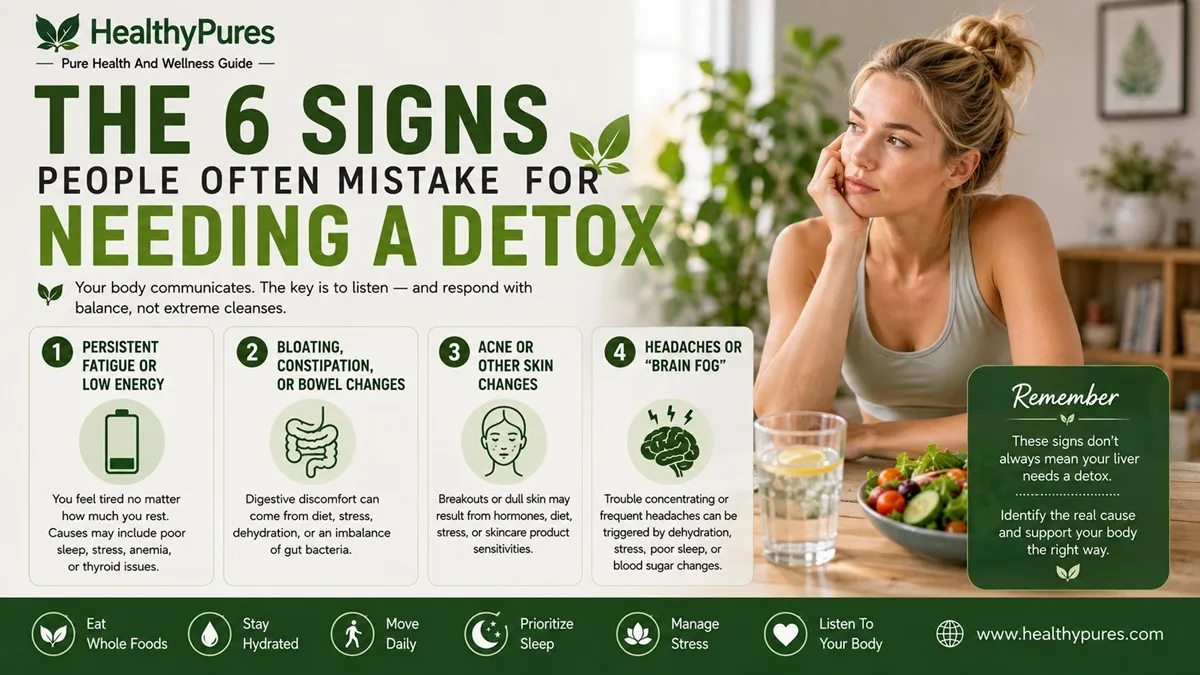
These six experiences are commonly marketed as detox signals. None of them can confirm toxin accumulation on their own.
1. Persistent Fatigue Or Low Energy
Fatigue can follow poor sleep, stress, irregular meals, illness, medications, or many other factors. It is not a specific detox signal.
If you are searching signs your body needs a detox because of fatigue, start by reviewing sleep and daily routines. Persistent fatigue deserves proper assessment.
2. Bloating, Constipation, Or Bowel Changes
Bloating and constipation are common digestive symptoms. They can relate to fiber intake, hydration, activity, medications, routine changes, or digestive conditions.
The NIDDK constipation guidance lists many possible causes. It does not describe constipation as evidence of toxin buildup.
Digestive changes can appear on lists of signs your body needs a detox. Treat them as symptoms to understand, not proof that cleansing is required.
3. Acne Or Other Skin Changes
Acne develops through factors involving clogged pores, oil, inflammation, and hormones. Skin changes do not show that the liver or kidneys are overloaded.
The American Academy of Dermatology acne guidance discusses several recognized contributors. Detoxification is not presented as an acne treatment.
Skin problems are often included among signs your body needs a detox. Persistent acne, rashes, or eczema deserve appropriate skin care and evaluation.
4. Headaches Or “Brain Fog”
Headaches and concentration problems can occur for many reasons. Sleep loss, stress, dehydration, caffeine changes, illness, or medication effects may contribute.
These symptoms are too nonspecific to prove a chemical burden. Severe, sudden, or unusual headaches require appropriate medical attention.
Calling them signs your body needs a detox can delay attention to more likely explanations. Start with basic routines and symptom context.
5. Temporary Weight Changes Or Difficulty Losing Weight
Body weight changes with energy intake, water balance, sodium, carbohydrates, digestion, and many other factors. Toxin storage is not a useful default explanation.
Difficulty losing weight can also involve sleep, medications, activity, health conditions, and calorie intake. It should not automatically trigger a detox program.
When weight concerns appear beside signs your body needs a detox, avoid rapid cleanses. Sustainable eating and activity habits are more practical.
6. Increased Sensitivity To Smells Or Chemicals
Strong scents can bother some people or trigger headaches, nausea, or respiratory symptoms. That does not prove the body’s detoxification systems are overwhelmed.
New or worsening sensitivity deserves context, especially when symptoms interfere with daily life. Exposure reduction can be sensible without claiming toxin accumulation.
This final item is often listed among signs your body needs a detox. It is better viewed as a symptom with multiple possible explanations.
Why These Symptoms Do Not Confirm “Toxin Buildup”
The word toxin has a specific meaning in toxicology, but wellness marketing often uses it vaguely. A symptom alone cannot identify an unknown substance.
True toxic exposures require specific assessment and treatment. A juice cleanse cannot replace medical care for poisoning or hazardous exposure.
Understanding signs your body needs a detox means separating vague marketing language from actual health evaluation. That distinction improves safety.
How Your Body Handles Normal Waste
Your liver processes many substances, while your kidneys filter blood and remove waste through urine. Your lungs and digestive system also perform normal elimination functions.
These systems work continuously. They do not need a weekend cleanse to switch back on.
For a deeper explanation, read our guide to supporting liver health naturally. It focuses on habits instead of liver-cleanse claims.
How To Start If You Notice These Signs
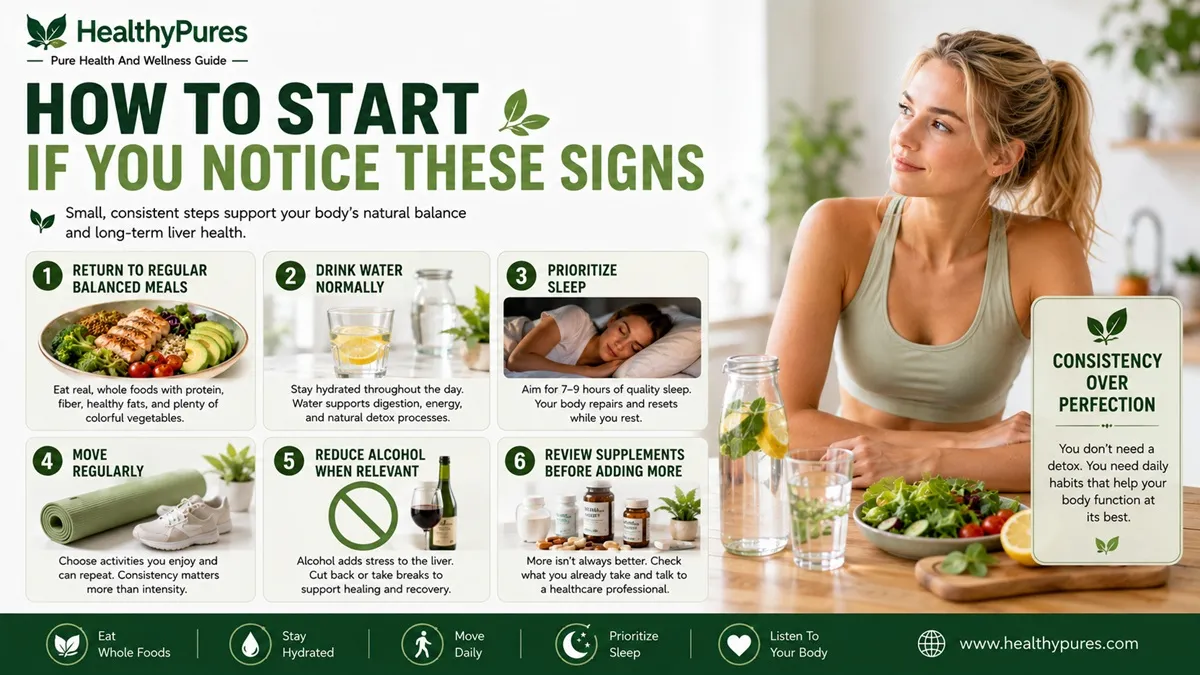
If signs your body needs a detox brought you here, start with ordinary health behaviors. They are easier to evaluate and maintain.
1. Return To Regular Balanced Meals
Build meals with vegetables or fruit, a protein source, fiber-rich carbohydrates, and healthy fats. Avoid compensating with severe restriction after overeating.
The current Dietary Guidelines for Americans emphasizes nutrient-dense foods. This is a stronger foundation than a short detox diet.
Our balanced three-day reset menu uses normal meals without claiming to remove toxins.
2. Drink Water Normally
Hydration supports normal body functions, but excessive water does not create faster detoxification. Fluid needs vary between people.
Keep water available and respond to thirst. Extra fluids may be needed with heat, exercise, illness, pregnancy, or other circumstances.
3. Prioritize Sleep
Poor sleep can affect energy, concentration, appetite, and how you feel during the day. A consistent sleep routine may address several vague symptoms.
Do not frame sleep as a way to flush toxins. Treat it as a normal health behavior with broad benefits.
4. Move Regularly
Walking, resistance training, cycling, yoga, or other activity can support fitness and metabolic health. Choose movement that matches your current ability.
You do not need to sweat toxins out. Sweating mainly helps regulate body temperature.
5. Reduce Alcohol When Relevant
Alcohol can affect sleep, hydration, digestion, and liver health. Reducing intake may improve several factors people mistakenly label as detox symptoms.
This is often more useful than searching for another list of signs your body needs a detox. Avoid using a cleanse to compensate for heavy drinking.
6. Review Supplements Before Adding More
Detox teas, powders, and herbal blends can contain biologically active ingredients. Some may also interact with medications.
The FDA dietary supplement safety guide warns that natural does not automatically mean safe. Professional advice can help with medication interactions.
Healthy Pures Tip: Start by simplifying your routine. Do not add several detox products when the cause of symptoms is unclear.
What To Eat Instead Of Doing A Cleanse
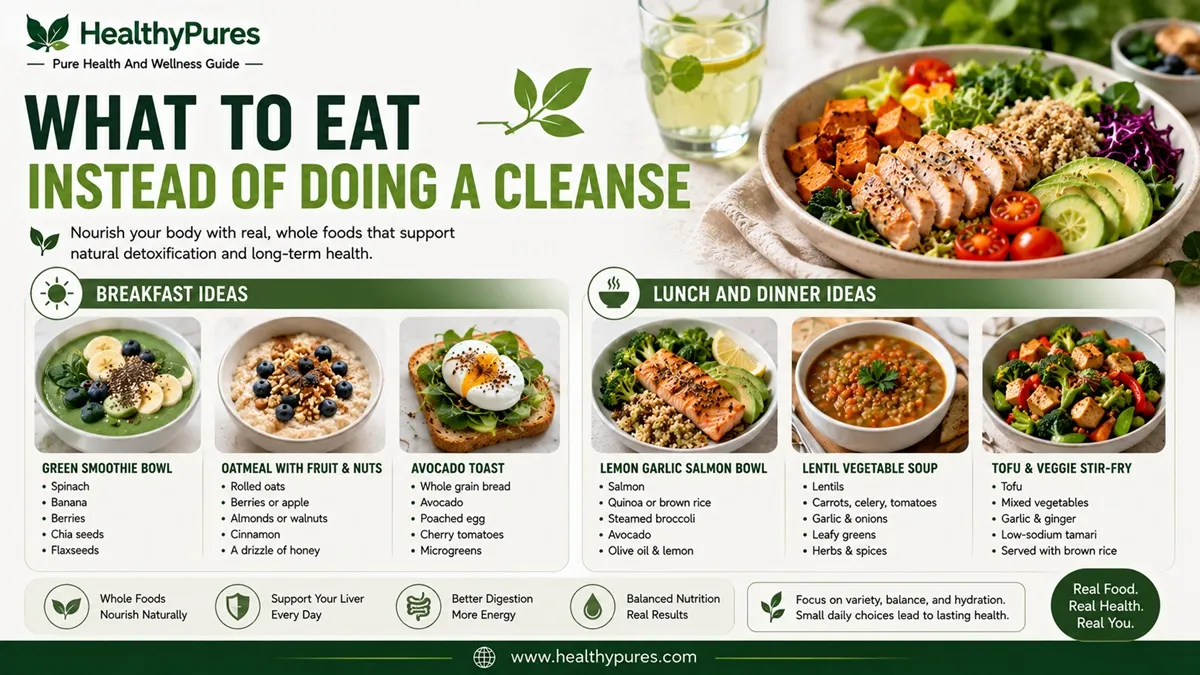
A practical eating pattern does not need special detox foods. For signs your body needs a detox, balanced meals are a safer starting point.
Breakfast Ideas
Try oatmeal with berries and yogurt, or eggs with vegetables and whole-grain toast. A smoothie can also work when it contains balanced ingredients.
See our balanced cleansing smoothie recipes. They are framed around nutrition rather than toxin removal.
Lunch And Dinner Ideas
Use vegetables, beans, whole grains, fish, poultry, tofu, or other protein foods. Add olive oil, nuts, seeds, or avocado when desired.
These meals support normal nutrition without treating food as medicine. See our affordable clean eating recipes for more ideas.
Common Mistakes After Noticing Detox-Like Symptoms

One mistake is assuming all vague symptoms share the same cause. Another is using extreme restriction before understanding what is happening.
Doing A Juice-Only Cleanse
Juice-only plans can be low in protein, fat, or total energy. NCCIH also notes that restrictive detox programs may create safety concerns.
Using Laxatives To “Clean The Gut”
Laxatives are not general detox tools. Some detox programs use them in ways that can cause diarrhea and dehydration.
Expecting A “Healing Crisis”
Feeling worse during a cleanse is not proof that toxins are leaving. Headache, weakness, dizziness, or diarrhea can reflect the cleanse itself.
Do not normalize severe symptoms as part of signs your body needs a detox. Stop the program and seek help when symptoms are concerning.
When To See A Healthcare Professional
Persistent fatigue, digestive problems, skin changes, headaches, or unexplained weight changes deserve evaluation when they do not improve. Symptoms can have many causes.
Seek prompt care for severe abdominal pain, blood in stool, persistent vomiting, fainting, jaundice, or sudden neurological symptoms. Do not rely on detox products.
NIDDK also advises medical care for constipation with bleeding, constant abdominal pain, vomiting, fever, or unintentional weight loss.
Frequently Asked Questions
What Are The Most Common Signs Your Body Needs A Detox?
There is no validated medical list of signs your body needs a detox. Fatigue, bloating, headaches, and skin changes are nonspecific symptoms.
Can Bloating Mean I Need A Detox?
Bloating can have many causes, including dietary patterns and digestive conditions. It does not prove that toxins are accumulating.
Does Acne Mean My Liver Needs Cleansing?
No. Acne is not evidence that your liver is overloaded with toxins. Appropriate skin care and medical treatment may be more relevant.
Can A Detox Help With Weight Loss?
Restrictive detox diets may cause short-term scale changes because intake changes. They do not provide a reliable strategy for lasting weight management.
How Long Should A Detox Last?
A healthy person does not need a scheduled wellness detox. Focus on sustainable habits rather than choosing a three-day or seven-day cleanse.
What Is The Safest Way To Start?
If signs your body needs a detox concern you, start with regular meals, hydration, sleep, and normal activity. Investigate persistent symptoms appropriately.
The Bottom Line On Signs Your Body Needs A Detox
The phrase signs your body needs a detox is useful for describing a common search concern. It is not a medical diagnosis.
Fatigue, bloating, skin changes, headaches, weight shifts, and scent sensitivity can have many causes. Do not assume toxins are responsible.
Choose balanced meals, regular hydration, sleep, activity, and sensible supplement use. Seek medical care when symptoms are persistent, severe, or unusual.
Disclaimer: This article provides general educational information and does not provide individualized medical or nutritional advice. Read our full Medical Disclaimer for more information.

