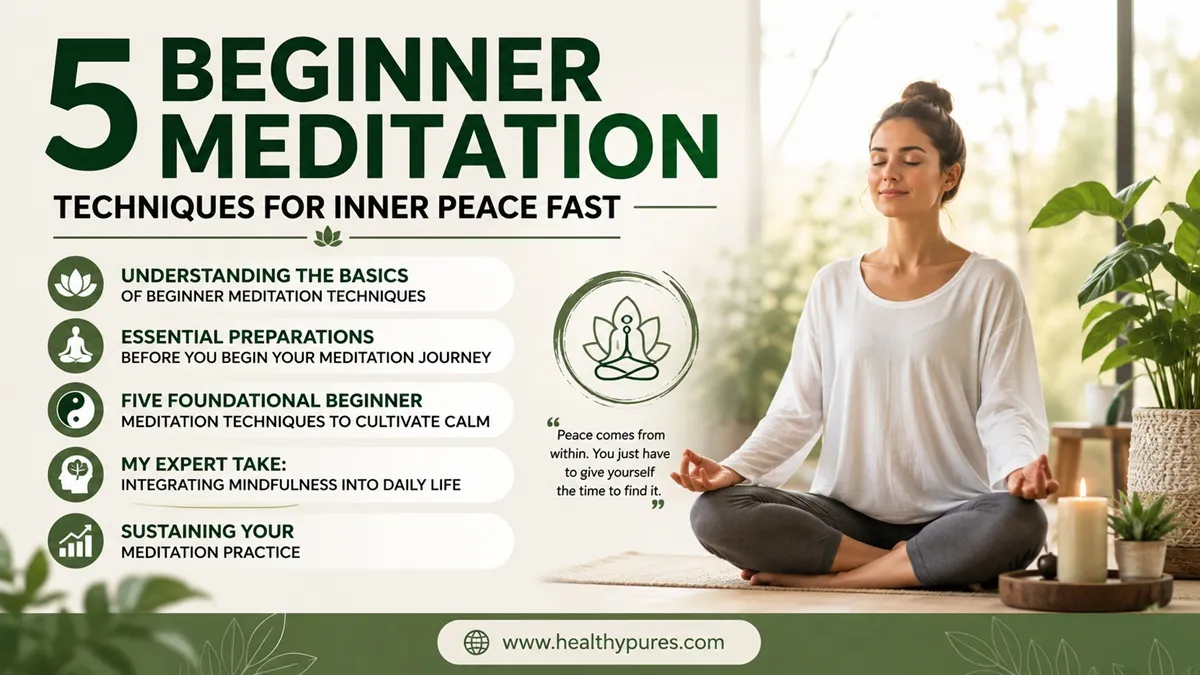
Starting meditation can feel confusing when every method sounds different. You may also wonder whether you are practicing correctly.
The five beginner meditation techniques below use simple anchors and flexible instructions. None promises instant inner peace or guaranteed stress relief.
Quick Summary
- Meditation involves directing attention and noticing when it moves elsewhere.
- These beginner meditation techniques use breathing, body sensations, kind phrases, walking, or spoken guidance.
- Beginners can start with one to five minutes and adjust gradually.
- Stop or modify any practice that increases discomfort, panic, or disorientation.
- Meditation can complement appropriate care, but it cannot replace professional treatment.
Quick Facts
| Aspect | Details |
|---|---|
| Main Goal | Practice attention without demanding a particular emotional result |
| Starting Time | One to five minutes can be enough for a first session |
| Equipment | A safe location and a supportive position are usually sufficient |
| Best Technique | The method that feels manageable and suitable for your needs |
| Safety Limit | Meditation cannot diagnose or treat a physical or mental health condition |
Who This Guide Is For
- ✔ Adults who are completely new to meditation.
- ✔ Readers who want clear and self-directed practice steps.
- ✔ People who find long or complicated sessions discouraging.
- ✔ Anyone comparing several beginner meditation techniques before choosing one.
- ✔ Readers using meditation alongside appropriate professional care.
Understanding Beginner Meditation Techniques
Meditation includes many practices rather than one fixed routine. Most methods ask you to notice an anchor, distraction, and return.
The anchor may be breathing, sound, movement, imagery, or body sensations. Wandering attention is expected and does not mean failure.
The NCCIH overview of meditation and mindfulness describes several common forms. It also explains that research results can be difficult to interpret.
What Meditation Can Realistically Offer
Some meditation programs may support stress management for certain people. Results vary by practice, setting, duration, and individual circumstances.
Simple beginner meditation techniques can provide structured moments for noticing present experience. They do not guarantee calm, clarity, focus, or emotional balance.
Why Fast Results Are The Wrong Goal
A peaceful feeling may occur during one session, but it is not required. Other sessions may include restlessness, boredom, frustration, or no obvious change.
Expecting immediate transformation can make normal experiences seem disappointing. Approach beginner meditation techniques as experiments rather than performance tests.
Meditation Versus Relaxation
Meditation may feel relaxing, yet relaxation is not always its primary purpose. The practice often involves noticing experience without trying to control it.
A relaxation exercise usually aims to reduce tension directly. Our simple stress relief activities offer additional options when meditation feels unsuitable.
Preparing For Your First Session
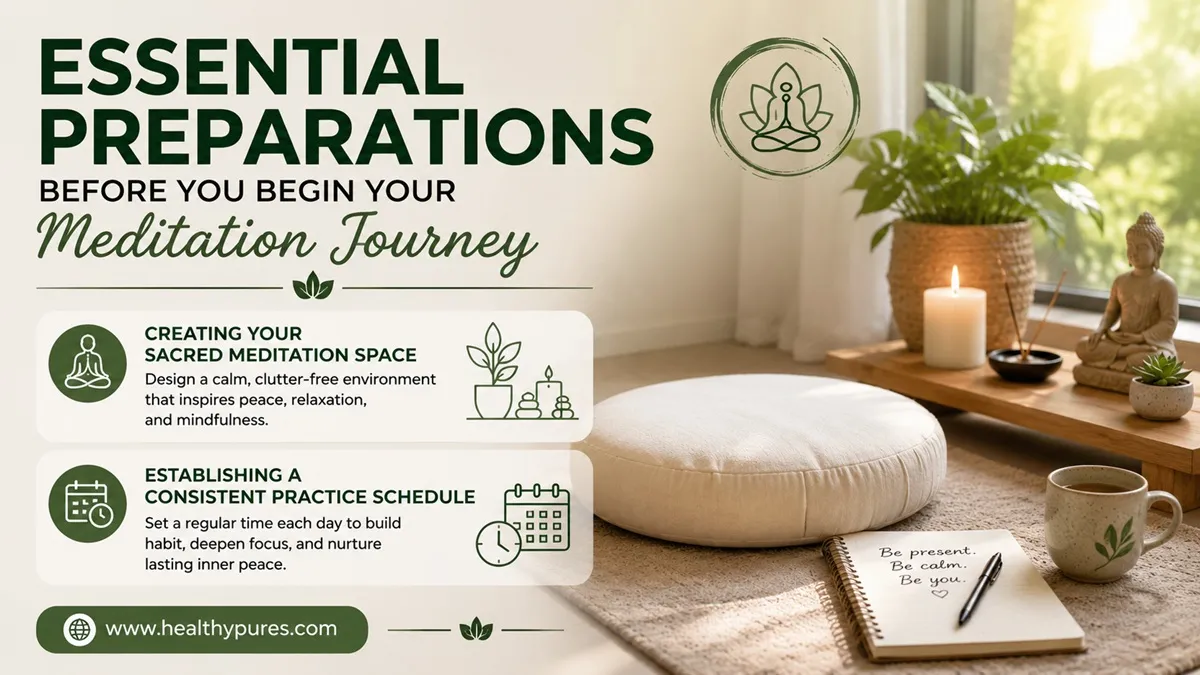
Preparation should make the practice easier, not turn it into another task. A special room, cushion, candle, or spiritual ritual is unnecessary.
Choose A Safe Place
Sit, stand, or lie somewhere physically safe. Avoid meditation while driving, operating equipment, or performing tasks that require full attention.
Reduce avoidable interruptions when possible. Keeping your eyes open is always acceptable among these beginner meditation techniques.
Use A Supportive Position
There is no required meditation posture. A chair, cushion, bed, wall, or walking path can provide support.
Change position when you notice pain, numbness, dizziness, or breathing discomfort. Physical discomfort does not prove that meditation is working.
Our chair yoga guide provides gentle seated movement options. Use professional guidance when movement requires individual modification.
Set A Manageable Time
Begin with one to five minutes. A short session gives you enough time to learn without creating unnecessary pressure.
Use a gentle timer if needed. These beginner meditation techniques do not require a daily streak or rigid schedule.
5 Beginner Meditation Techniques To Explore

These beginner meditation techniques provide different points of attention. Try one practice at a time and notice how your body responds.
1. Natural Breath Awareness
Sit in a comfortable position and notice where breathing feels clearest. You might observe the nose, chest, abdomen, or whole body.
Let breathing continue naturally without forcing deeper breaths. Count each exhale from one to five if a simple structure helps.
When attention wanders, acknowledge it gently and return. Breath awareness is one of the most portable beginner meditation techniques.
Stop breath-focused practice if it increases panic or air hunger. Switch to sound, movement, or external objects instead.
2. Gentle Body Scan
A body scan moves attention through different physical areas. Begin with your feet and continue upward at a comfortable pace.
Notice temperature, pressure, contact, tingling, or the absence of sensation. Your task is observing rather than relaxing each body part.
Skip painful or emotionally difficult areas. Body-focused beginner meditation techniques may feel intense for some people.
Open your eyes and reconnect with the room when needed. A body scan should remain optional and adjustable.
3. Loving-Kindness Practice
Choose a short phrase expressing goodwill. Examples include “May I feel safe” or “May I meet this moment gently.”
Repeat the phrase slowly without demanding a particular emotion. You may later direct a neutral phrase toward someone else.
Avoid forcing forgiveness or warmth toward difficult people. Loving-kindness is among the beginner meditation techniques that can be adapted to personal boundaries.
Use neutral wording when positive phrases feel unrealistic. The goal is practice, not manufactured happiness.
4. Mindful Walking
Choose a clear and level route without traffic or obstacles. Walk slowly enough to notice movement while maintaining safe balance.
Observe lifting, moving, and placing each foot. You can also notice sounds, air temperature, and changes in pressure.
Return attention whenever planning or daydreaming takes over. Walking is useful when seated beginner meditation techniques feel uncomfortable.
Keep your eyes open and remain aware of the surroundings. Safety matters more than maintaining uninterrupted concentration.
5. Guided Meditation
Select a short recording with a comfortable voice and clear description. Preview its theme before starting the full session.
Good guidance permits movement, open eyes, and stopping. Avoid recordings promising cures, trauma release, manifestation, or guaranteed transformation.
Our guide to seven guided meditation styles can help you compare structured options. Guided practice is one of several beginner meditation techniques, not a superior method.
Remove headphones if they reduce awareness of your environment. Keep volume at a safe and comfortable level.
Comparing The Five Techniques
| Technique | Main Anchor | Consider Another Method When |
|---|---|---|
| Breath Awareness | Natural breathing sensations | Breathing focus increases panic or discomfort |
| Body Scan | Physical sensations | Body awareness feels painful or overwhelming |
| Loving-Kindness | Brief goodwill phrases | Emotional language creates pressure or distress |
| Mindful Walking | Foot movement and surroundings | Balance, space, or mobility creates safety concerns |
| Guided Meditation | Spoken instructions | The guide feels controlling, distracting, or unsuitable |
There is no universally best choice. Comparing beginner meditation techniques helps you select a suitable anchor for each situation.
Building A Sustainable Meditation Habit
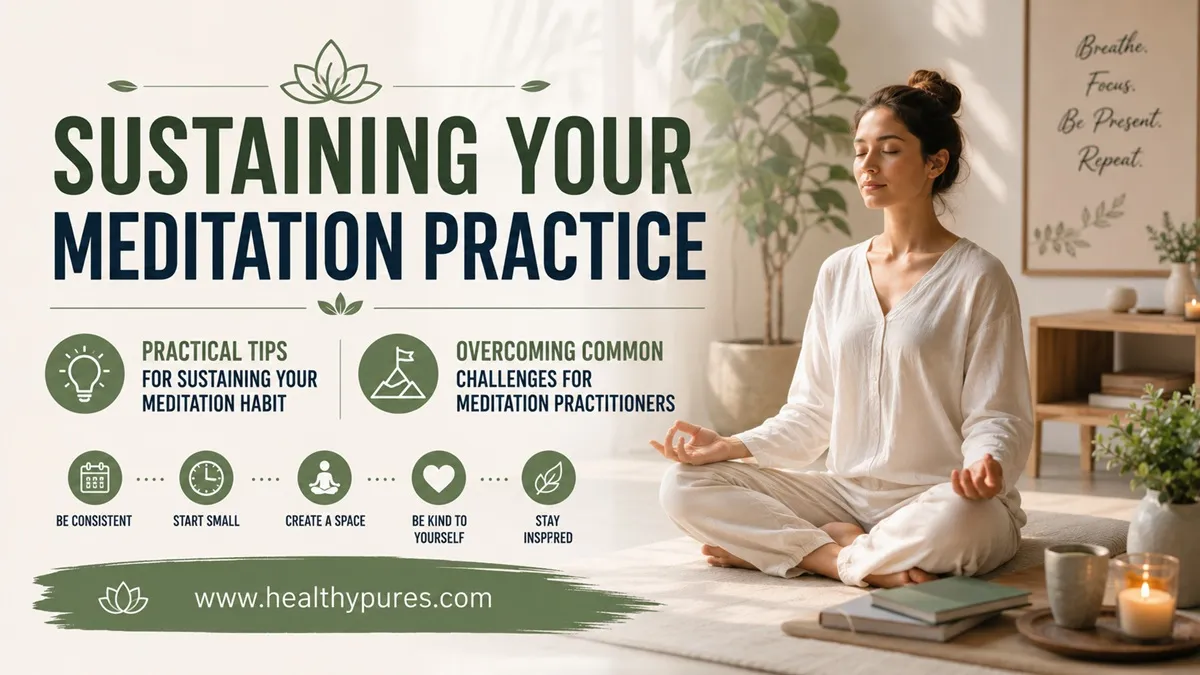
A sustainable routine should fit real responsibilities and changing energy levels. Consistency can help familiarity, but daily practice is not mandatory.
Connect Practice To A Flexible Cue
Choose a recurring moment instead of a perfect time. Examples include after breakfast, before lunch, or after closing your computer.
Keep the cue flexible when work, sleep, travel, or caregiving changes. Missing a session does not erase earlier practice.
Track Comfort Instead Of Performance
After each session, record the method, duration, and comfort level. Avoid rating whether you meditated “well.”
This brief note can reveal which beginner meditation techniques feel manageable. Stop tracking if the process creates pressure.
Healthy Pures Expert Tip
Keep one seated option and one movement-based option available. This gives you a practical alternative when your needs change.
Common Mistake: Trying To Empty The Mind
Thoughts do not need to disappear during meditation. Noticing distraction is part of the practice rather than evidence of failure.
Name the distraction briefly, then return to your chosen anchor. Gentle repetition is more useful than criticizing yourself.
Safety And Evidence Limits
Meditation is often described as low risk, but research about harmful effects remains limited. NCCIH reports that negative experiences can occur.
Some people have reported anxiety, depression, or other unwanted effects. This does not mean that everyone will have those experiences.
Pause beginner meditation techniques that increase panic, intrusive thoughts, fear, or disorientation. Open your eyes and notice familiar objects nearby.
People with trauma histories or certain psychiatric conditions may need individualized guidance. A trauma-informed professional can help assess suitable practices.
Meditation should not replace conventional care. NCCIH specifically advises against postponing healthcare because of a meditation practice.
Meditation, Anxiety, And Depression
Anxiety disorders and depression are health conditions, not failures of attention. The NIMH anxiety resource and NIMH depression resource explain symptoms and care options.
Meditation may complement an established plan when a clinician agrees. It should not replace psychotherapy, medication, diagnosis, or professional assessment.
The NIMH self-care guidance includes meditation among several relaxing activities. It also recommends help for severe or distressing symptoms.
Seek immediate assistance if you cannot stay safe. United States readers can find crisis and treatment resources on the NIMH help page.
A Flexible Five-Day Starter Plan
| Day | Practice | Suggested Starting Time |
|---|---|---|
| 1 | Natural breath awareness | One to three minutes |
| 2 | Gentle body scan | Three to five minutes |
| 3 | Loving-kindness practice | Two to five minutes |
| 4 | Mindful walking | Three to five minutes |
| 5 | Short guided meditation | Three to seven minutes |
This plan introduces all five beginner meditation techniques without requiring mastery. Repeat, shorten, replace, or skip any session.
After five days, choose one method that felt comfortable. Continue only when the practice fits your needs and circumstances.
For a broader routine, see our yoga and meditation guide. It combines attention practice with gentle movement and realistic expectations.
Frequently Asked Questions
How Long Should A Beginner Meditate?
One to five minutes is a reasonable experiment. Increase the duration only when the session remains comfortable and manageable.
No universal duration guarantees better results. Shorter beginner meditation techniques still count as practice.
Is Mind Wandering Normal?
Yes. Minds produce thoughts, memories, plans, and reactions throughout meditation.
Notice what happened and return without self-criticism. Repeated returning is a core part of meditation practice.
How Quickly Should I Expect Inner Peace?
There is no reliable timeline for inner peace or stress reduction. Some people notice temporary calm, while others notice little change.
Treat beginner meditation techniques as attention practices rather than fast solutions. Choose another activity when meditation does not help.
Can I Meditate Lying Down?
Yes, if lying down feels safe and supportive. You may become sleepy, which is not dangerous in an appropriate setting.
Try sitting or walking when alertness matters. Avoid lying meditation in places where falling asleep creates risk.
Do I Need A Meditation App?
No. A timer and a simple anchor are enough for many practices.
Apps can provide structure, but quality and claims vary. Preview recordings and protect your privacy when creating an account.
Can Meditation Replace Therapy Or Medication?
No. Do not stop therapy or medication without professional guidance.
Meditation may complement care when your clinician considers it appropriate. Self-guided practice cannot determine which treatment you need.
What Should I Do If Meditation Feels Worse?
Stop the session and orient yourself to the room. Move, speak with someone trusted, or choose another grounding activity.
Seek qualified support when symptoms persist or worsen. Not every meditation method suits every person.
Conclusion
These five beginner meditation techniques offer different ways to practice attention. Breath, sensations, phrases, movement, and guidance each provide a distinct anchor.
Start briefly and keep the setting safe. Adjust or stop any method that increases distress.
No technique guarantees fast inner peace. A suitable practice should respect your comfort, boundaries, health needs, and existing care.
Just a friendly reminder from our team: Health needs vary from person to person, so this information is intended to support general wellness and does not replace professional medical advice. Read our full Medical Disclaimer for more information.