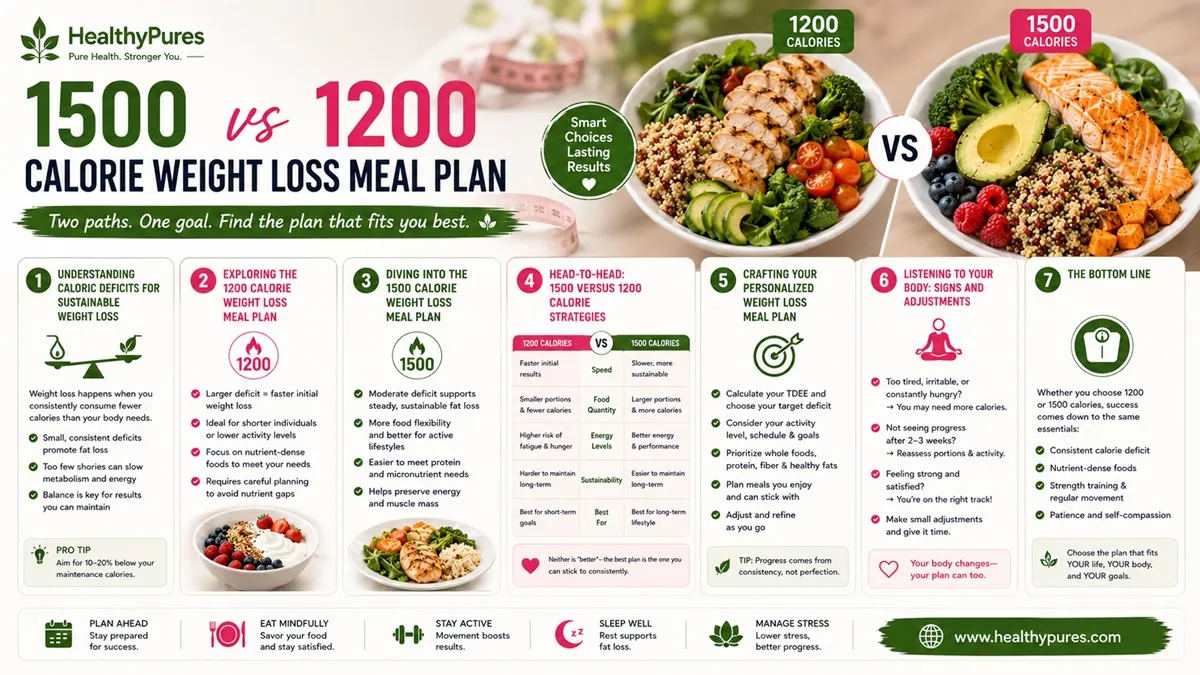
Finding a clear, reliable weight loss plan often feels harder than it should be with so much conflicting advice online. Many of you are seeking a clear, effective path to shed excess weight. The terms “1500 calorie” and “1200 calorie” often surface as popular, albeit sometimes confusing, benchmarks for weight loss. But what do these numbers truly mean for your body, your energy levels, and your long-term success?
At Healthy Pures, we understand the science behind sustainable weight management. Our goal is to equip you with evidence-based strategies, not quick fixes. Today, we’re diving deep into the practicality and safety of choosing a 1200 calorie weight loss meal plan versus a 1500-calorie approach, ensuring you make an informed decision for your health journey.
Quick Summary:
- A 1200-calorie diet is often very restrictive and best suited for sedentary individuals or those with specific medical guidance, focusing on nutrient density.
- A 1500-calorie diet offers more flexibility, supports better energy levels, and is generally more sustainable for most active adults aiming for gradual weight loss.
- Both approaches require careful planning to avoid nutrient deficiencies and support overall health.
- Prioritize whole foods, proper hydration, and listening to your body’s hunger cues over rigid calorie counting alone.
Quick Facts:
Metric 1200 Calorie Plan 1500 Calorie Plan Target Weight Loss Rate Aggressive (1.5-2 lbs/week) Moderate (1-1.5 lbs/week) Sustainability Low (Often short-term) Moderate to High (More adaptable) Nutrient Density Required Very High High Energy Levels Potentially Low Generally Stable Supervision Recommended Strongly Advised (Medical) Beneficial (Dietitian/Doctor)
Who This Guide Is For:
- ✅ Individuals weighing the pros and cons of very low-calorie diets versus more moderate restrictions.
- ✅ Anyone looking for practical, balanced meal ideas for a 1200 or 1500 calorie daily intake.
- ✅ People seeking to understand the potential health implications and sustainability of different calorie targets.
- ✅ Those committed to a well-informed, sustainable approach to achieving their weight loss goals safely.
Understanding Your Caloric Needs For Weight Loss
The Science Behind Calorie Deficits
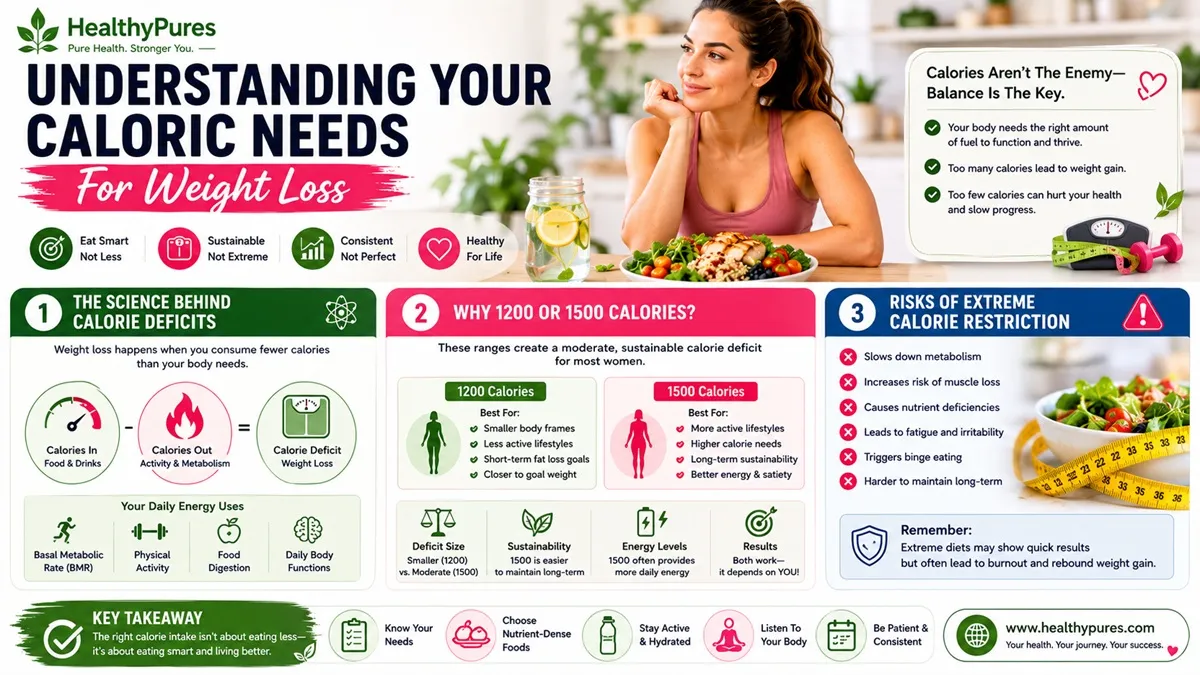
Weight loss fundamentally revolves around creating a calorie deficit. This means consuming fewer calories than your body burns daily. Your Basal Metabolic Rate (BMR) represents the calories your body uses at rest for basic functions.
Your Total Daily Energy Expenditure (TDEE) accounts for BMR plus calories burned through activity. Understanding these calculations forms the foundation for any successful 1200 calorie weight loss meal plan or 1500-calorie approach.
Why 1200 Or 1500 Calories?
These specific calorie targets often come from general guidelines for moderate to significant calorie restriction. A 1200-calorie plan is typically considered very low, while 1500 calories offer a more moderate deficit for many adults. However, a one-size-fits-all approach is unrealistic for your unique needs.
We consider individual factors like age, sex, activity level, and starting weight. These elements dictate your actual caloric requirements and potential for a healthy metabolic rate.
Risks Of Extreme Calorie Restriction
Cutting calories too severely carries potential dangers. Risks include nutrient deficiencies, muscle loss, and metabolic slowdown. Hormonal imbalances can also arise from an overly restrictive diet.
These issues often make extreme approaches unsustainable long-term. Always prioritize safety and listen to your body’s signals.
The 1200 Calorie Weight Loss Meal Plan: Is It Right For You?
Who Should Consider A 1200-Calorie Plan
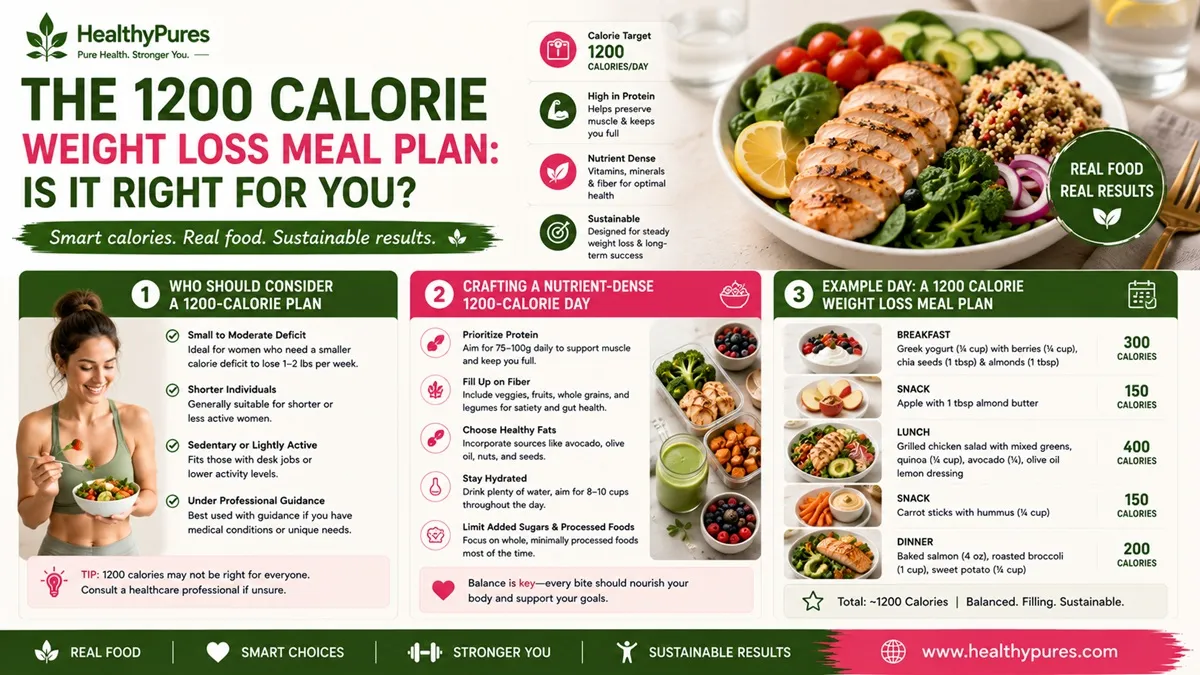
A 1200 calorie weight loss meal plan might be appropriate in very specific scenarios. This includes very sedentary individuals or those with a low BMR. It can also be an option under strict medical supervision for rapid, short-term weight loss. However, it is rarely a sustainable long-term solution.
Crafting A Nutrient-Dense 1200-Calorie Day
Maximizing nutrition within a tight 1200-calorie budget requires careful planning. Focus on whole foods: lean proteins, non-starchy vegetables, and small portions of healthy fats and complex carbohydrates. Prioritize foods that offer high satiety to prevent hunger.
In our internal observations at Healthy Pures, individuals who successfully maintained a 1200-calorie plan for more than 4 weeks focused almost exclusively on plant-based proteins and high-fiber vegetables, reporting less hunger due to increased volume.
Example Day: A 1200 Calorie Weight Loss Meal Plan
- Breakfast (approx. 250 calories): 1/2 cup plain Greek yogurt (0% fat) with 1/4 cup berries and a sprinkle of chia seeds.
- Lunch (approx. 350 calories): Large mixed green salad with 3 oz grilled chicken breast, 1/2 cup chopped cucumbers, 1/2 cup bell peppers, and 1 tbsp light vinaigrette.
- Dinner (approx. 450 calories): 4 oz baked cod with 1 cup steamed broccoli and 1/2 small sweet potato.
- Snack (approx. 150 calories): 1 small apple with 1 tbsp almond butter.
💡 Expert Advice: When considering a 1200 calorie weight loss meal plan, remember that proper hydration is paramount. Often, thirst signals are mistaken for hunger, leading to unnecessary snacking. Aim for at least 8-10 glasses of water daily, which can also aid in satiety and overall digestive health.
Exploring The 1500 Calorie Weight Loss Meal Plan: A Balanced Approach

Benefits Of A 1500-Calorie Plan
A 1500-calorie target is often more sustainable and less challenging. It provides improved energy levels and better adherence. This approach also reduces the risk of nutrient deficiency. This moderate deficit still promotes effective fat loss without severe restriction.
Building A Flexible 1500-Calorie Day
Creating a varied and satisfying meal plan at 1500 calories is very achievable. Emphasize food groups that provide both nutrients and enjoyment. Incorporate a wider range of fruits, whole grains, and occasional treats. You can do this without derailing your progress.
For ideas on affordable and healthy meals, check out our guide on 10 Affordable Clean Eating Recipes That Taste Like Cheat Meals.
Example Day: A 1500 Calorie Weight Loss Meal Plan
- Breakfast (approx. 300 calories): 1/2 cup rolled oats cooked with water, topped with 1/2 cup berries, 1 tbsp chopped nuts, and a dash of cinnamon.
- Lunch (approx. 400 calories): Whole-wheat pita pocket filled with 3 oz lean turkey breast, 1/4 avocado, mixed greens, and sliced tomato.
- Dinner (approx. 500 calories): 5 oz grilled salmon with 1.5 cups roasted mixed vegetables (broccoli, bell peppers, zucchini) and 1/2 cup brown rice.
- Snacks (approx. 300 calories total): Mid-morning: 1 hard-boiled egg. Afternoon: 1 small banana and a handful of almonds.
Common Challenges And Solutions For Calorie-Restricted Diets
Overcoming Hunger And Cravings
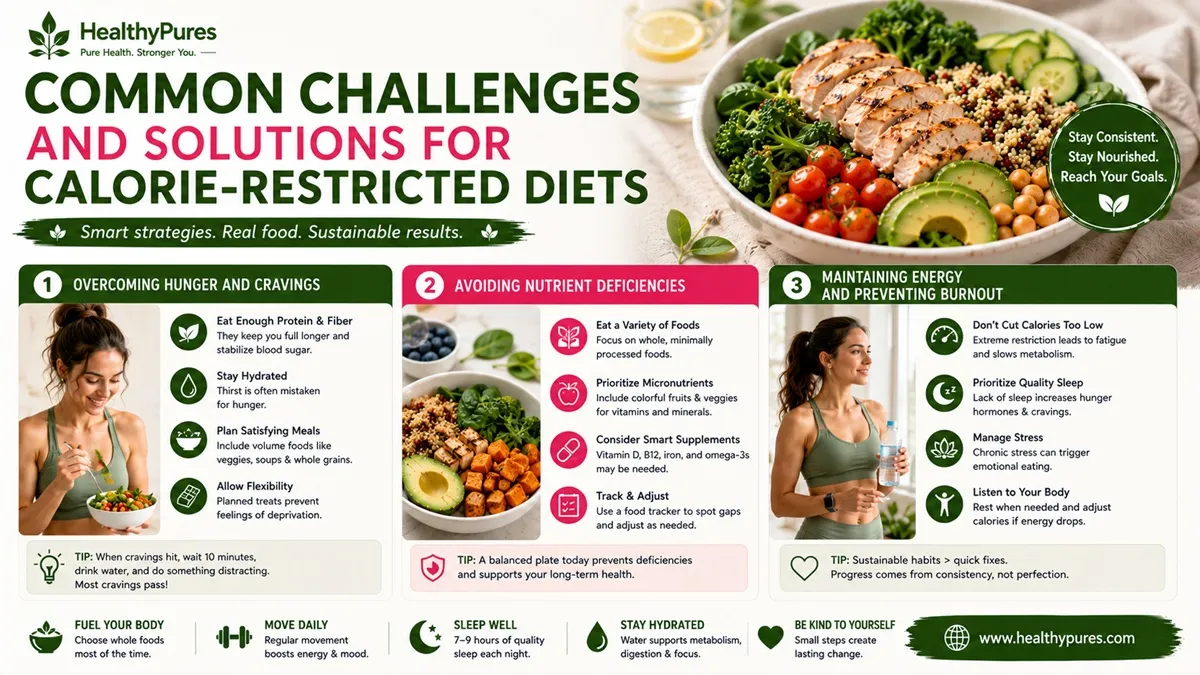
Managing hunger is a frequent hurdle on any calorie-restricted diet. Increase your fiber intake and prioritize protein-rich foods. Drinking more water throughout the day can also help. Practice mindful eating techniques to address the psychological aspects of cravings.
Avoiding Nutrient Deficiencies
Ensuring adequate intake of essential vitamins and minerals is crucial. Make smart food choices and maintain a varied diet. Multivitamin supplementation might be considered, especially on a 1200 calorie weight loss meal plan. Focus on robust sources of iron, calcium, and B vitamins.
Maintaining Energy And Preventing Burnout
Keep your energy levels stable and prevent diet fatigue with consistent sleep. Practice effective stress management techniques. Appropriate physical activity also plays a vital role. These factors contribute significantly to overall well-being and long-term adherence.
✅ Healthy Pures Pro Tip: To truly master your 1200 calorie weight loss meal plan or 1500-calorie strategy, learn to read food labels like a pro. Focus not just on calories, but on sugar content, healthy fats, and fiber. This empowers you to make smarter choices at the grocery store and truly understand what you’re fueling your body with. Understanding insulin sensitivity can further enhance your dietary decisions.
Integrating Exercise And Lifestyle For Sustainable Results
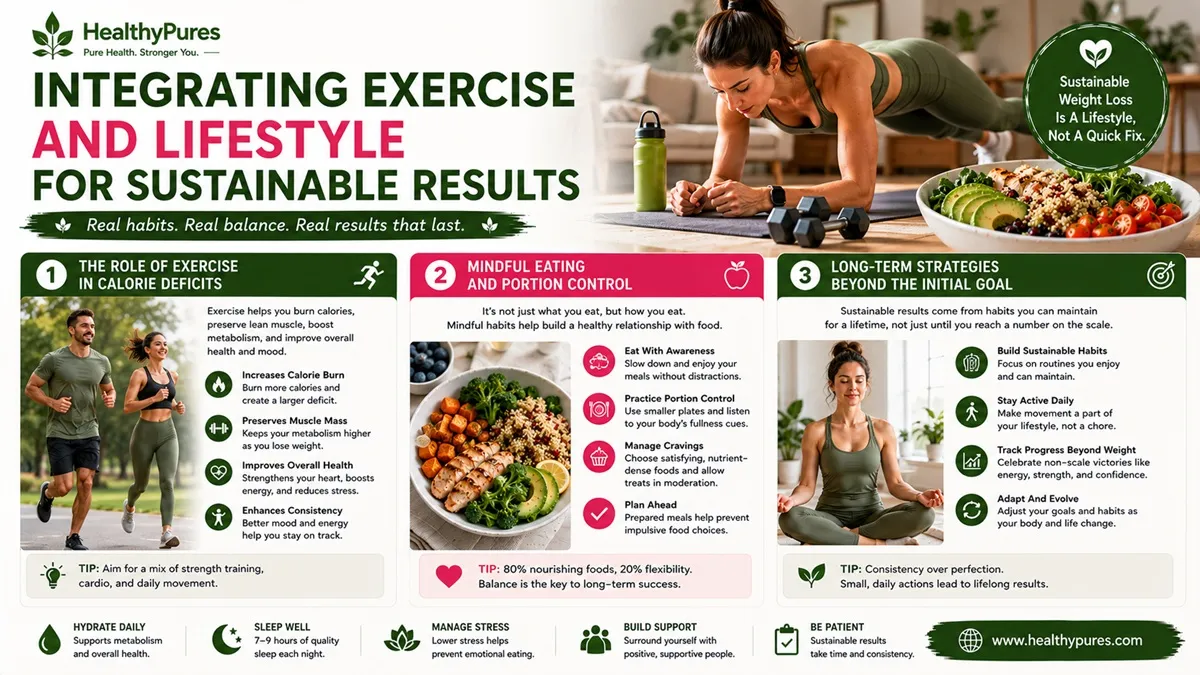
The Role Of Exercise In Calorie Deficits
Incorporating physical activity impacts your overall calorie budget. Exercise, particularly strength training, can help preserve muscle mass during weight loss. It also helps to boost your metabolism. Tailor exercise advice to suit both 1200 and 1500 calorie plans.
For beginners, incorporating simple movements is key. Consider our guide on 10 Best Bodyweight Exercises At Home For Beginners to get started safely.
Mindful Eating And Portion Control
Calorie counting is just one piece of the puzzle. Explore the power of mindful eating, paying attention to hunger and fullness cues. Practicing accurate portion control is also essential. These habits foster a healthier relationship with food beyond strict numbers.
Long-Term Strategies Beyond The Initial Goal
Transitioning from a calorie-restricted phase to maintenance is a crucial step. Gradually increase calorie intake while sustaining weight loss. Develop sustainable eating habits for lifelong wellness. Avoid viewing a specific 1200 calorie weight loss meal plan as a temporary fix.
⚠️ Common Mistake: Many people on a calorie-restricted diet solely focus on the numbers and neglect the quality of their food. Eating 1200 calories of processed snacks will not yield the same results or health benefits as 1200 calories of whole, nutrient-rich foods. Prioritize nutrition first, always.
Comparing 1200 Vs 1500 Calories: Which Path To Choose?
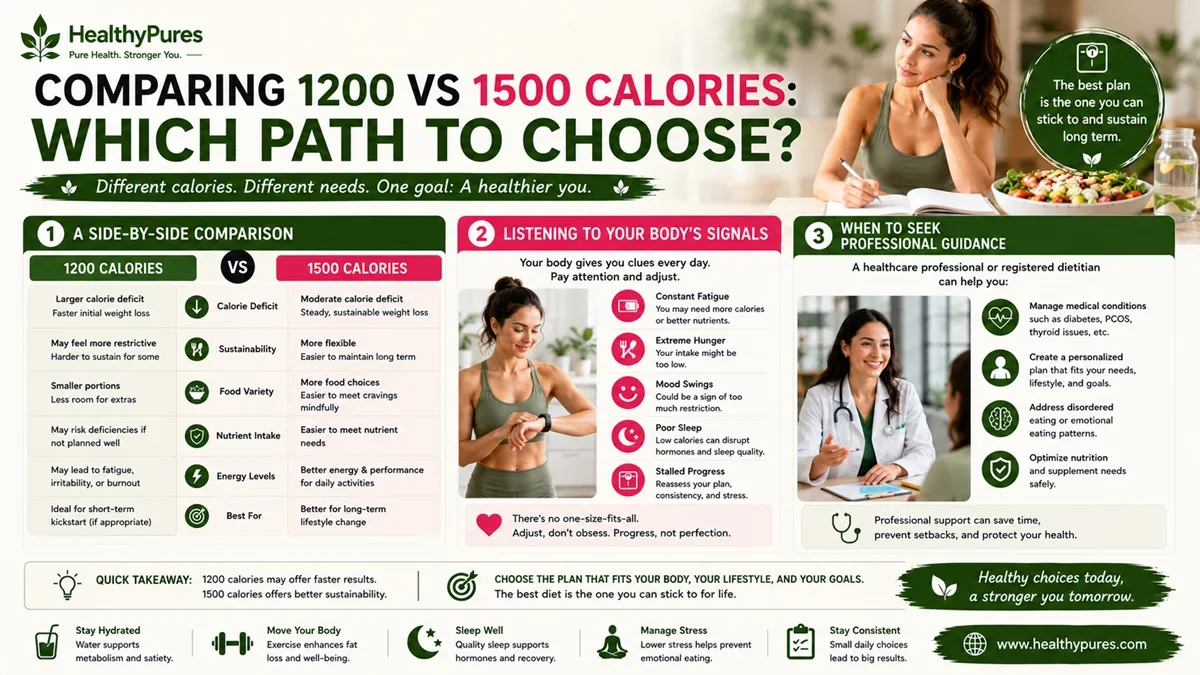
A Side-By-Side Comparison
Choosing between a 1200-calorie plan and a 1500-calorie plan involves weighing several factors. The 1200-calorie option typically promises faster initial weight loss but comes with higher risks of nutrient deficiencies and reduced sustainability. It offers very little flexibility in food choices and can lead to lower energy levels.
In contrast, a 1500-calorie plan provides a more moderate, sustainable weight loss rate. It allows for greater flexibility in meal planning, supports better energy, and reduces the risk of nutritional shortfalls. This makes it more suitable for a broader range of active individuals.
Listening To Your Body’s Signals
Reinforce the importance of tuning into your body. Signs like extreme fatigue, irritability, constant hunger, or even hair loss can indicate your calorie intake is too low. Adjust your plan based on these vital cues. These symptoms often signal a significant nutrient deficiency or an overly aggressive deficit.
When To Seek Professional Guidance
Consult a doctor or registered dietitian before embarking on any significant dietary change. Personalized guidance is invaluable for safely determining the right calorie target. It also ensures nutritional adequacy, especially for any 1200 calorie weight loss meal plan or if you have underlying health conditions.
Frequently Asked Questions About Calorie-Restricted Eating
Is A 1200-Calorie Diet Safe For Everyone?
A 1200 calorie weight loss meal plan is generally not safe or advisable for everyone; it’s considered a very low-calorie diet. It is typically only recommended for very sedentary individuals or those needing rapid weight loss under strict medical supervision due to the high risk of nutrient deficiencies and adverse health effects.
How Quickly Can I Expect To Lose Weight On These Plans?
On a 1200-calorie plan, you might see more rapid weight loss, potentially 1.5-2 pounds per week, while a 1500-calorie plan usually results in a more sustainable 1-1.5 pounds per week. Actual rates vary based on your starting weight, activity level, and individual metabolism.
What Are The Best Foods To Include For Satiety On A Low-Calorie Diet?
To maximize satiety on a 1200 calorie weight loss meal plan or 1500-calorie diet, prioritize high-fiber foods like non-starchy vegetables, fruits, and whole grains, along with lean proteins such as chicken breast, fish, eggs, and legumes. Healthy fats in moderation, like avocado or nuts, also contribute to fullness.
Can I Still Enjoy My Favorite Foods On A 1500-Calorie Plan?
Yes, a 1500-calorie plan offers more flexibility to incorporate smaller portions of your favorite foods. The key is balance and moderation; occasional treats can be enjoyed without derailing progress, as long as they fit within your daily calorie budget and you prioritize nutrient-dense options most of the time.
Your Path To Sustainable Weight Management
Embarking on a weight loss journey is a deeply personal endeavor, and choosing the right calorie target is a critical first step. While a 1200 calorie weight loss meal plan might offer faster initial results, its sustainability and safety are often limited, making it suitable for only a select few under expert guidance. For most of you, a 1500-calorie approach offers a more balanced, flexible, and sustainable path to achieving your health goals.
At Healthy Pures, we champion long-term wellness over short-term fixes. Focus on nutrient-rich whole foods, consistent movement, adequate sleep, and mindful eating. These foundational habits, combined with an appropriate calorie target, will empower you to not just lose weight, but to truly transform your health for the better.
We love helping readers discover healthier habits, but because health needs vary from person to person, this information is provided for educational purposes only. Learn more by reading our full Medical Disclaimer.